At a glance
Colorful
Peaceful
Plant-safe
Shy
Description
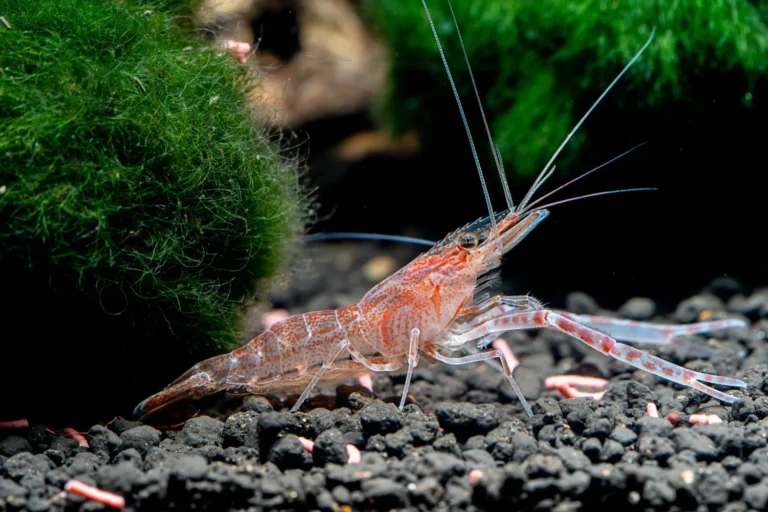
Pink Suphan Dwarf Shrimp (Macrobrachium dayanum) is a small freshwater prawn known for its delicate pink tones and active foraging. It is gentle with plants and spends most of its time grazing on biofilm and detritus without harming leaves. Care is straightforward with stable water, calcium for molts, and plenty of hiding spots. This shrimp suits planted tanks where biofilm and gentle flow are present.
Quick overview
Pink Suphan Dwarf Shrimp, Pink Suphan Prawn
40 liters (10 gallons) for a colony
Ideal aquarium setup
A densely planted nano to medium tank with stable parameters and gentle filtration mimics the shrimp’s natural habitat. Include mosses and fine-leaved plants to boost biofilm growth and provide grazing surfaces. Plenty of hiding spots and gentle water movement keep them stress-free and secure.
Aim for at least 40 liters (10 gallons) for a small colony, larger tanks allow more stable water and room for juveniles. Provide horizontal space and plenty of cover rather than relying on height alone.
Moderate lighting encourages algal and biofilm growth without stressing shrimp, and helps plants that host grazing surfaces. Avoid intense light that promotes nuisance algae and forces shrimp into hiding.
Fully plant-safe; use mosses, java fern, anubias and fine-leaved stem plants to provide grazing surfaces and shelter. Plants also help stabilize water chemistry and supply natural food.
Moderate, to bring food particles and oxygen without creating strong currents that exhaust shrimp.
Neutral inert substrates like sand or fine gravel are preferred; avoid strongly acidic or buffering soils unless matching species-specific needs.
Use moss-covered driftwood, smooth rocks, and crevices to offer hiding spots and surfaces for biofilm. Dense moss patches and caves help juveniles hide after molts.
Behavior and temperament
These shrimp are peaceful and typically avoid conflict, preferring to graze and explore in groups. They are most active during low light and early morning or evening. Molting makes them vulnerable so they retreat to hides until their new exoskeleton hardens. Socially they do well in small colonies and display little aggression toward conspecifics.
Molting and health
Molting occurs regularly as shrimp grow and can slow with age or poor conditions; healthy adults molt less frequently than juveniles. Failed molts or lethargy often signal mineral deficiencies or unstable water. Maintaining calcium and stable parameters reduces molting stress and mortality.
- Provide a mineral-rich diet or supplement for calcium
- Keep water parameters stable with regular small changes
- Offer plenty of hides and moss for shelter during molts
- Use cuttlebone or commercial mineral blocks in the tank
Diet and feeding
Omnivorous scavengers that spend hours grazing on biofilm, algae, and detritus; supplemental feeding keeps colonies healthy in planted tanks. Offer a mix of sinking shrimp pellets, blanched vegetables and occasional protein treats to maintain color and energy. Avoid overfeeding to prevent water quality issues.
What they eat in nature
biofilm, algae, detritus, plant matter, microorganisms
What to feed in the aquarium
- Sinking shrimp pellets
- Blanched spinach or zucchini
- Algae wafers
- Biofilm boosters
- Occasional frozen daphnia or brine shrimp
Feeding schedule
Feed small portions 2–3 times per week, only what the colony consumes within a few hours to avoid fouling the tank.
Special dietary needs
Requires adequate minerals and calcium for healthy molts and shell building.
Daily:
Check for active grazing and remove visible uneaten food to protect water quality.
Weekly:
Perform small water changes and offer a variety of foods to support nutrition and biofilm growth.
Always:
Maintain stable parameters and continuous access to calcium sources to support successful molts.
Tankmate compatibility
Generally peaceful but vulnerable to predation; pair with cautious, small tankmates and avoid boisterous species. They do best in species-only setups or with small, non-aggressive fish.
Yes with caution. They can coexist with other peaceful shrimp but monitor for competition and size differences that may stress smaller individuals.
Snails usually coexist well and help with algae control without competing heavily for food.
Small nano fish like ember tetras, celestial pearl danios, and otocinclus are typically safe and will not harass the shrimp.
Larger or semi-aggressive fish will see shrimp as food; avoid cichlids, barbs, and larger tetras in shrimp tanks.
They are social and do better in small colonies where a natural hierarchy forms and juveniles find shelter; provide ample space to reduce stress.
Breeding
Breeding is possible in captivity but can be challenging because some Macrobrachium species have larval stages with different requirements. If larvae develop, they may need very stable water and additional food sources not found in a standard planted tank.
Difficulty
Breeding ranges from medium to difficult due to possible larval care and salinity shifts some species require; careful monitoring and experience improve success rates.
How they breed
Females carry eggs under the abdomen until hatching.
Best setup for breeding
Provide dense moss beds and fine-leaved plants for juveniles and maintain rock-steady parameters; use a separate rearing tank if larvae appear to need different conditions. A well-established biofilm-rich environment increases juvenile survival.
Feeding the babies
Newly hatched juveniles rely on biofilm and microscopic foods; offer infusoria, powdered fry foods and finely crushed pellets to supplement natural grazing.
Pro tips
Introduce ample moss to boost natural biofilm and hiding spots for juveniles.
Use gentle sponge filtration to protect babies and maintain water clarity.
Provide a small cuttlebone piece to slowly release calcium into the water.
Poor molt
Failed or incomplete molts often stem from low calcium or unstable water chemistry and can be fatal if not addressed quickly.
Water swings
Rapid changes in temperature, pH or hardness cause stress and molting problems; keep changes slow and predictable.
Predation risk
Housing with larger or fast fish often leads to predation on juveniles and adults, especially immediately after molts.
Typical beginner mistakes
- Keeping with large or aggressive fish
- Overfeeding and poor water quality
- Ignoring mineral supplementation
Short summary
The Pink Suphan Dwarf Shrimp (Macrobrachium dayanum) is a small, colorful prawn ideal for planted aquaria with stable water and abundant biofilm. They are peaceful and plant-safe but need calcium and hiding places for successful molts. With moderate care they make an attractive, active addition to nano and medium aquascapes.
Frequently asked questions (FAQs)
Are these shrimp plant safe?
Yes, they are plant-safe and generally do not eat healthy plants.
What water parameters do they prefer?
They prefer pH 6.5–7.8 and moderate hardness around 6–12 dGH with stable temperature.
How much space do they need per shrimp?
A colony is comfortable in 40 liters (10 gallons) or more with plenty of hiding spots.
Do they need special food?
No special food is required, but a varied diet and calcium supplements improve health and molting.
Can beginners keep them successfully?
Yes, with attention to water stability, hiding places, and mineral supplementation beginners can keep them.
Is breeding difficult in home tanks?
Breeding can be challenging because larvae may need special conditions; many hobbyists rear juveniles in a separate tank.