At a glance
Peaceful
Filter-feeder
Plant-safe
Shy
Description
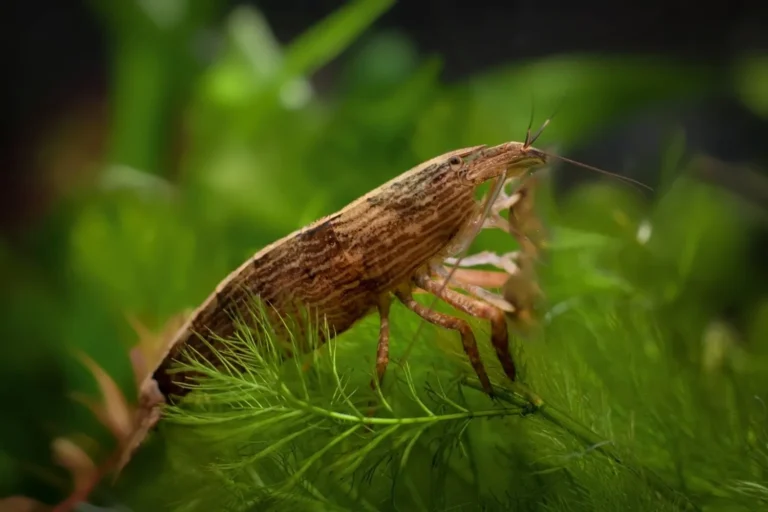
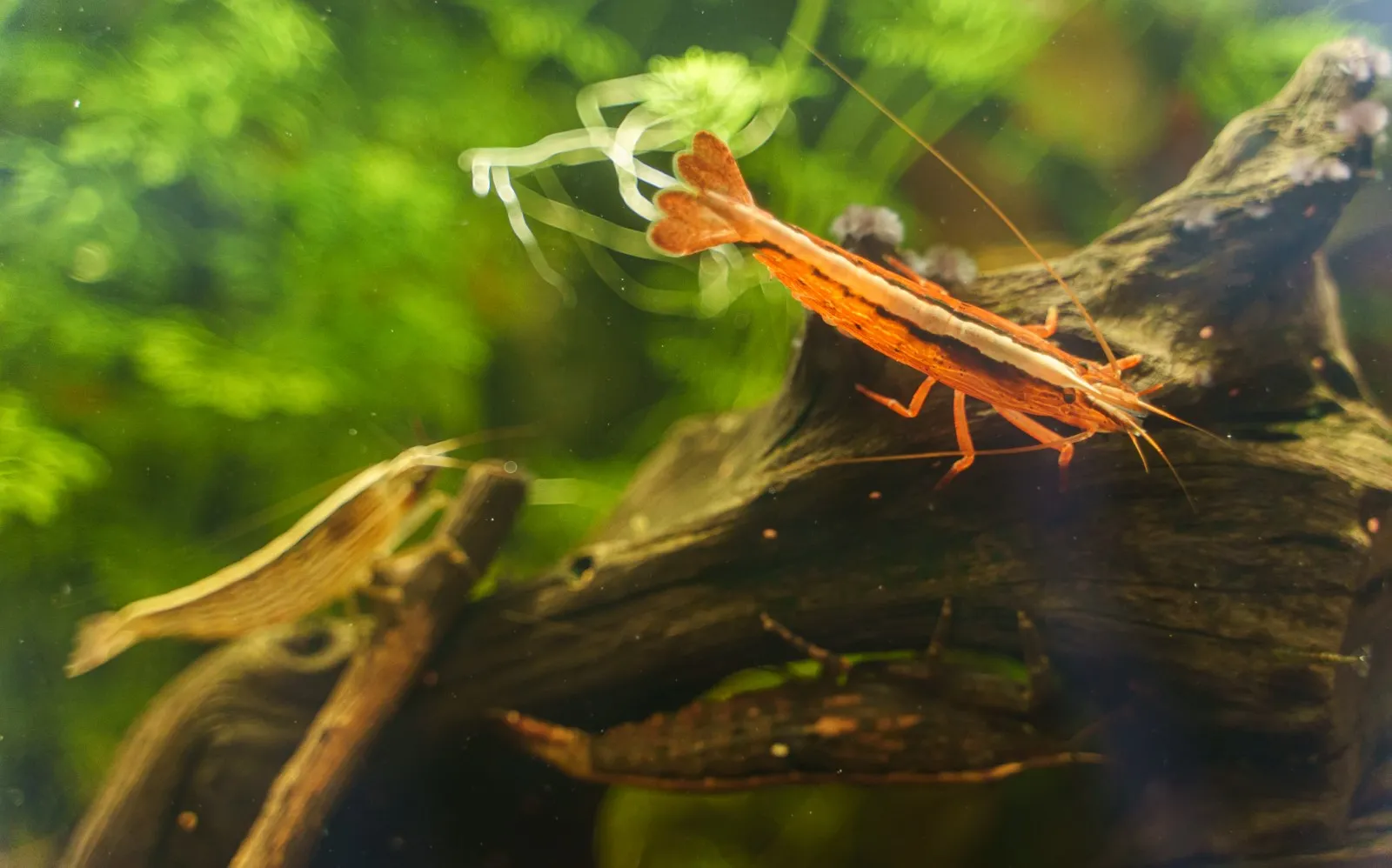
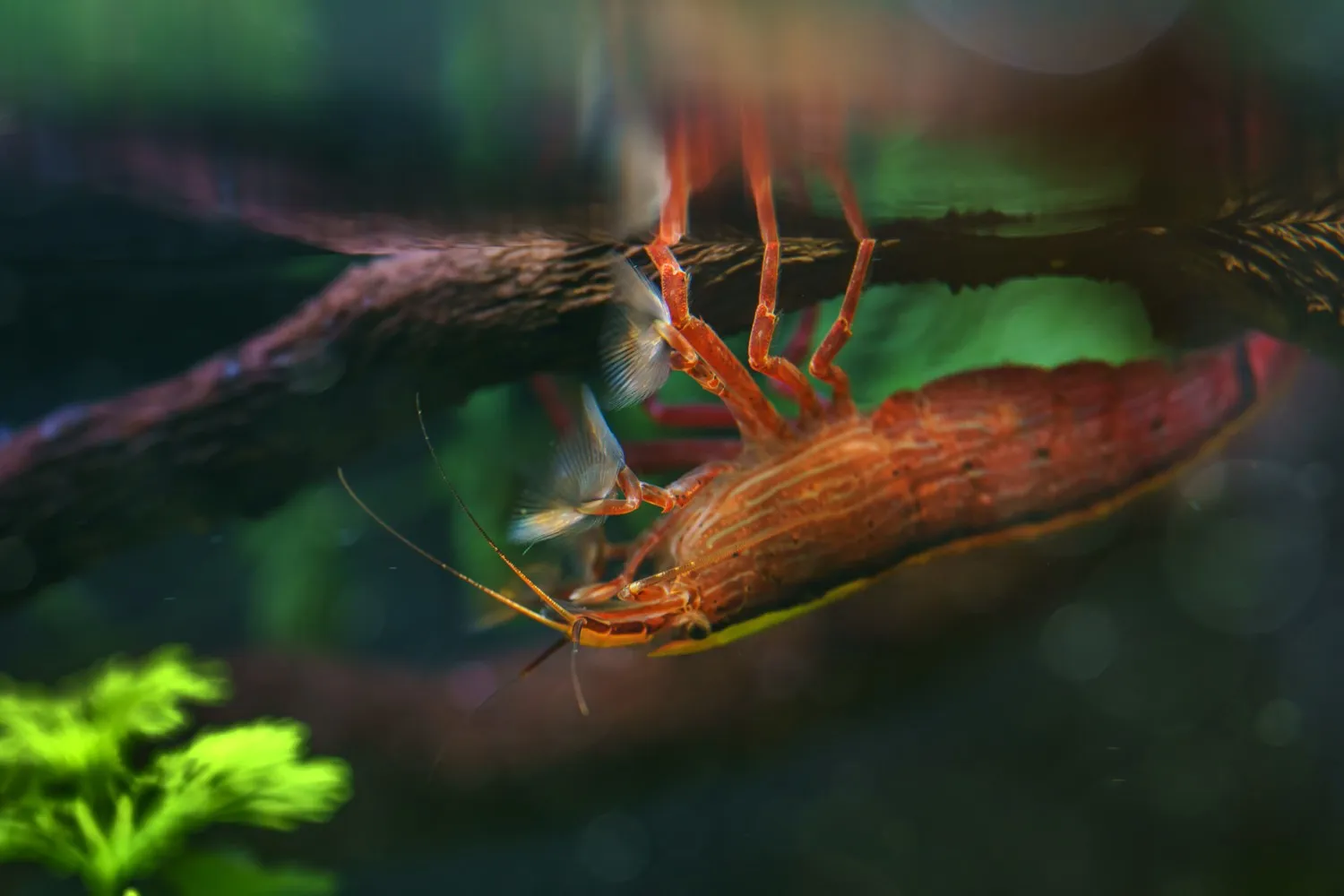
Bamboo Shrimp (Atyopsis moluccensis) is a large, graceful filter-feeding freshwater shrimp known for its fan-like front appendages and mottled brown to reddish coloration. It is plant-safe and spends most of its time anchored on rocks or wood, waving its fans to catch suspended food. Behavior is peaceful and relatively shy around fast-moving fish, and general care focuses on steady water flow, frequent food in the water column, and stable parameters. These shrimp do well in planted aquascapes where biofilm and suspended particulates are abundant.

Quick overview
Bamboo Shrimp, Fan Shrimp, Wood Shrimp
80 liters (20 gallons) for a colony
Ideal aquarium setup
Provide a planted tank with plenty of surface current and stable water conditions; bamboo shrimp prefer tanks with gentle vertical flow and places to perch. Include driftwood, smooth rockwork, and dense mosses to create sheltered feeding stations and surfaces for biofilm. Avoid aggressive tankmates and ensure good filtration with gentle outflow to keep particles in suspension for feeding.
Keep single specimens in tanks of at least 40–60 liters (10–15 gallons); for multiple shrimp allow 80 liters (20 gallons) or more to ensure enough suspended food and territories. They need room to station themselves in different flow zones so the colony does not compete heavily.
Moderate lighting that supports biofilm and algae growth is ideal; very bright light can increase algae but also stress shy shrimp. Lighting also influences plant growth which helps produce the micro-particles bamboo shrimp feed on.
Fully plant-safe; include a mix of foreground mosses, midground stem plants, and shaded areas so biofilm can grow and shrimp have sheltered feeding spots. Mosses and floating plants help maintain steady microfauna and provide attachment points.
Moderate, to provide a steady supply of suspended food particles for its fan feeding.
Neutral, inert substrate is fine; these shrimp are not highly sensitive to substrate type but a planted soil can be used if you want richer plant growth. Avoid substrates that raise KH or GH dramatically if your plants or other livestock require different parameters.
Provide vertical elements like driftwood, leaf litter, and rock crevices where shrimp can anchor and wave their fans; mosses on wood and rocks create ideal feeding stations. Smooth caves and overhangs offer hiding spots during molts and low-light periods.
Behavior and temperament
Bamboo shrimp are peaceful and non-aggressive, spending much of their time perched in current waving their fan-like chelae to catch food. They are shy around fast or large fish and often retreat to hides when disturbed. In groups they are tolerant of each other but may station in separate feeding spots to avoid competition. Molting is a vulnerable time so they prefer plenty of cover and stable water.
Molting and health
Bamboo shrimp molt regularly as they grow, with juveniles molting more often than adults; healthy molts require stable water chemistry and available minerals. Problems such as stuck molts usually indicate low calcium/mineral levels or sudden parameter swings, and stressed shrimp may hide and refuse to feed before a problematic molt.
- Provide mineral supplements or crushed cuttlebone for calcium
- Maintain very stable water parameters and avoid sudden changes
- Keep gentle hiding places for molting shrimp
Diet and feeding
These shrimp are filter feeders and primarily eat suspended micro-particles, biofilm, and microalgae; in aquariums they need a steady supply of fine foods in the water column. Supplement with powdered foods, liquid or powdered phytoplankton, and finely crushed algae wafers to ensure they receive enough nutrition, especially in well-filtered tanks with low natural particulates.
What they eat in nature
biofilm, algae, detritus, plant matter, microorganisms
What to feed in the aquarium
- Powdered shrimp foods and micro pellets
- Liquid phytoplankton and plankton supplements
- Crumbled algae wafers and powdered flake
- Blanched vegetable particles
Feeding schedule
Feed small portions once daily or every other day, ensuring particles remain suspended for several hours and avoiding large uneaten deposits.
Special dietary needs
Require sufficient mineral content and calcium for healthy molts and shell formation; supplements can help in soft water.
Daily:
Provide a small portion of fine food daily to keep them fed without overloading the tank; observe fans to ensure they are actively feeding.
Weekly:
Offer a richer feeding such as liquid plankton or a slightly larger portion once a week to supplement natural biofilm.
Always:
Always maintain stable water quality and avoid copper-containing medications or additives, which are toxic to shrimp.
Tankmate compatibility
Bamboo shrimp are peaceful and do best with other non-aggressive species that will not outcompete them for food. Avoid fin-nipping or predatory fish and fast feeders that will harass them at feeding stations.
Yes with caution, They can coexist with Neocaridina and many Caridina if tank space and food are sufficient, but monitor competition for suspended food.
Yes, snails generally coexist well and can help with detritus while not competing directly for suspended particles.
Small peaceful fish like ember tetras, rasboras, and otocinclus are good companions because they do not harass bamboo shrimp and do not outcompete them for plankton.
Avoid semi-aggressive or larger fish such as cichlids and large gouramis which may nip fans or eat smaller shrimp; these pose a predation and stress risk.
Bamboo shrimp can live in small groups but require enough flow and feeding spots to prevent competition; in crowded setups individuals may fight for the best currents.

Breeding
Breeding in home freshwater aquaria is difficult because larvae require brackish to marine conditions to develop. While females carry eggs in freshwater, the hatchlings need specialized brackish setups and planktonic food to complete development.
Difficulty
Advanced to expert, Successful breeding requires moving larvae to controlled brackish or saltwater rearing tanks and providing live microplankton feeds.
How they breed
Females carry eggs under the abdomen until hatching.
Best setup for breeding
Provide a separate larval rearing tank with controlled salinity changes, strong microplankton cultures, and very stable conditions; adults can be left in the main freshwater tank. Ensure you can supply live rotifers, phytoplankton, and gradual salinity adjustments for larval stages.
Feeding the babies
Larvae must be fed live microplankton such as rotifers and phytoplankton initially, progressing to larger particulate foods as they grow; powdered feeds alone rarely suffice.
Pro tips
Position a gentle outflow or sponge on the filter to create a steady suspended food stream for their fans.
Rotate liquid plankton and powdered foods to vary nutrition and keep them actively feeding.
Provide lots of moss and vertical surfaces so multiple shrimp can station without direct competition.
Poor feeding
Often caused by insufficient suspended food or strong competition; observe fan movement to check feeding and adjust food delivery.
Stuck molt
Usually due to low minerals or sudden water changes; ensure stable parameters and supplement calcium.
Predation
Fast or large fish can nip fans or eat shrimp, so choose tankmates carefully and provide hiding spots.
Typical beginner mistakes
- Keeping with aggressive or large fish
- Insufficient suspended food or flow
- Sudden parameter changes and copper exposure
Short summary
Bamboo shrimp (Atyopsis moluccensis) are peaceful, plant-safe filter feeders prized for their delicate fan-feeding behavior. They require stable water, moderate flow, and a steady supply of fine suspended foods, making them suitable for aquascapers willing to meet those needs. While easy to care for in terms of water chemistry, successful breeding and larval rearing are advanced challenges.
Frequently asked questions (FAQs)
Do bamboo shrimp eat plants?
No, they are plant-safe and feed on suspended particles and biofilm.
How much flow do they need?
Provide moderate flow that carries food particles without blasting the shrimp off perches.
Can they live with tetras?
Yes, small peaceful tetras are compatible as long as they do not harass the shrimp.
Will they eat flakes from the surface?
They prefer fine particles; crumble flakes into very small pieces or use powdered foods.
Is breeding possible in freshwater?
Not practically; larvae require brackish or marine conditions and specialized rearing.
How do I help during molting?
Provide stable water, mineral supplements like crushed cuttlebone, and plenty of hiding spots during molts.