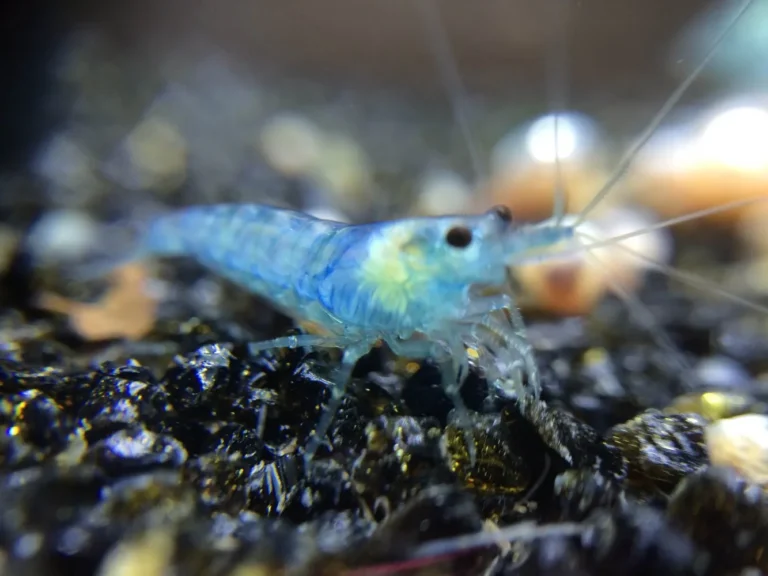
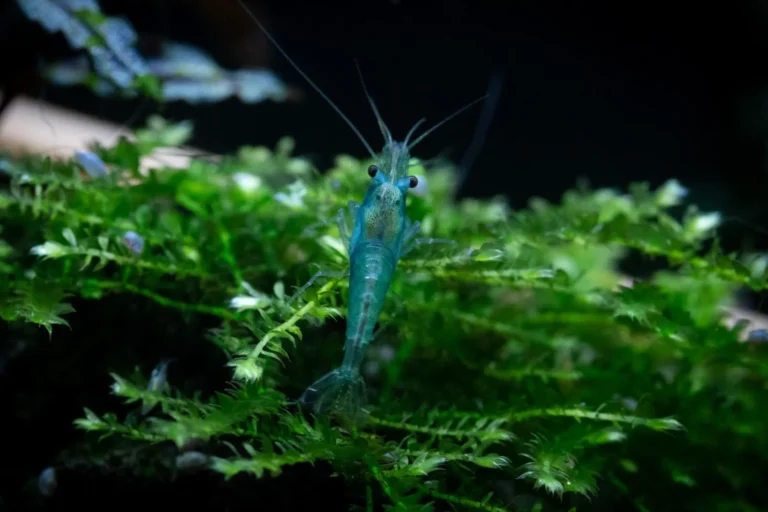
Blue Jelly is a translucent to semi-opaque blue morph of Neocaridina davidi that adds a cool, subtle splash of colour to planted aquaria. Colour ranges from pale jelly-blue to richer, more saturated tones depending on grading and conditions. The body often shows clear or paler sections that create a layered, glassy effect. It works well in both dark and light aquascapes when presented with complementary plants and hardscape.
This morph is defined by a glassy, jelly-like blue that combines translucent and semi-opaque areas rather than a solid block of colour. Tone and opacity vary across individuals and grading, producing a layered visual effect where body sections can appear paler or clearer. Colour stability is generally good but vibrancy depends on diet, mineral levels and background contrast. Environmental factors influence perceived shade more than genetic hue shifts.
Quick overview
Common name(s)
Blue Jelly, Blue Jelly shrimp, Blue Neocaridina
Color line
Blue Jelly
Latin name
Neocaridina davidi
Size
Size ~2–3 cm
Temperament
Peaceful
Tank level
Middle to bottom
Minimum tank size
5 gallons (19 L)
Water type
Freshwater
Difficulty
Easy
Ideal aquarium setup
Blue Jelly stands out in mossy foregrounds and shaded midground pockets where its translucent blue shows against darker tones. Substrate colour affects perception strongly, with dark substrate making blues pop and pale substrates softening the tone, and balanced lighting highlights the jelly effect while too bright light can wash the colour out. Complement with fine-leaved plants and low-contrast hardscape, and include mosses, ferns, driftwood to give hiding spots and grazing surfaces.
Behavior and temperament
These shrimp are peaceful and spend most of their time grazing on surfaces and in plant clumps. They are reasonably visible when comfortable but can be shy after disturbances. They do well in groups and show natural social grazing behaviour.
Molting, health and color quality
Colour quality closely reflects overall health and water stability; shrimp with regular, successful molts and a varied diet show stronger, more even blue tones. Low minerals, poor diet or frequent stress will pale the colour and impede growth. Juvenile shrimp develop colour gradually over molts and require steady conditions and sufficient minerals to reach adult tone.
Diet and feeding
They graze all day on biofilm and detritus; feed 2–3 times per week with supplemental foods. Exceptionally clean tanks may need slightly more feeding to maintain colour and growth.
How to improve their color with food
Spirulina flakes or powder
Chlorella-based foods
Specialist colour foods with carotenoids
Biofilm support gels and supplements
Tankmates
Suitable tankmates include small, non-aggressive species such as small rasboras, otocinclus and snails; avoid any fish known to nip shrimp. Juveniles are vulnerable and may be eaten by larger or opportunistic fish, so use caution if keeping fish with adults. If breeding or raising juveniles matters, a shrimp-only tank or well-planted species-only setup is recommended.
Breeding Blue Jelly Shrimp
Breeding is straightforward in stable tanks with ample hiding places and a steady food supply; females carry multiple batches of eggs throughout the year. Maintaining line quality requires culling the palest throwbacks and selecting the most vivid offspring, as colour grading can vary and some juveniles will revert to paler types.
How to keep the colony strong
Maintain stable water and steady mineral levels
Provide varied diet including colour foods
Remove weak or very pale individuals when breeding
Keep dense planting and refuges for juveniles
Common problems
Colour fading
Fading often results from poor nutrition, low mineral content or stress; improve diet with colour foods and stabilise minerals to restore vibrancy. Maintain consistent water conditions and avoid frequent large changes.
Failed molts
Failed or incomplete molts are usually caused by low general hardness or mineral deficiency; adding a mineral supplement and ensuring stable conditions helps. Keep temperature steady and provide hiding spots during molts.
Predation risk
Small carnivorous or nippy fish can eat juveniles or stress adults; remove risky species and add dense planting or refuges. Consider a shrimp-only tank to protect young shrimp.
Water parameter swings
Sudden parameter changes, ammonia or nitrite spikes will cause losses and colour loss; test water, perform prompt partial changes and fix the source of contamination. Aim for gradual, stable maintenance routines.
Similar color variants (and how they compare)
Blue Velvet
Blue Velvet is usually a deeper, more opaque blue with fuller coverage compared to Blue Jelly, giving a more solid visual impact. It lacks the same translucent, glassy sections and often appears darker against similar backgrounds.
Blue Dream
Blue Dream often displays a more even mid-tone blue with moderate opacity, sitting between the deep Blue Velvet and the translucent Blue Jelly. It tends to have more consistent coverage but less of the jelly-like clarity.
Blue Rili
Blue Rili shows clear, patterned windows of non-pigmented areas typically on the head or tail, producing high contrast against blue sections unlike the more uniformly distributed translucency of Blue Jelly. The patterned look is the main distinguishing feature.
Short summary
Blue Jelly is a translucent blue morph of Neocaridina davidi that suits both beginners and experienced aquascapers. It is easy to keep with stable water, varied diet and good grazing surfaces. With proper care it breeds readily and adds a subtle, glassy blue accent to planted tanks.
Frequently asked questions (FAQs)
How blue will they get?
Colour ranges from pale translucent blue to richer tones depending on grading, diet and substrate contrast. They rarely reach the opaque solid blue of some heavy-duty colour lines but have a distinctive jelly look.
Are they suitable for beginners?
Yes, they are generally easy to keep for beginners as long as you maintain stable water and provide grazing surfaces. Regular feeding and basic water testing are usually sufficient.
Do they breed easily in a community tank?
They will breed in community tanks but juveniles may be eaten by curious fish, reducing survival rates. A well-planted tank with hiding spots or a shrimp-only tank improves juvenile survival.
What water parameters do they prefer?
They prefer stable, neutral to slightly acidic water with moderate GH and KH and a temperature around 20-26°C. Avoid sudden swings in parameters and keep ammonia and nitrite at zero.
Will lighting affect their colour?
Balanced lighting brings out the jelly sheen and contrast, while overly bright light can make colours look washed out. Provide shaded areas so shrimp can choose their preferred level.
How long until juveniles show colour?
Juveniles hatch translucent and colour develops over several weeks, with visible blue tones appearing after successive molts as they mature. Good diet and minerals speed healthy development.
Mette Tulin
Mette Tulin is the creator of Aquascapedia, with more than 15 years of hands-on experience in aquascaping, planted aquariums, and freshwater fish, shrimp, crayfish, and snails. She shares practical insights, curated aquatic life profiles, and inspiration to help others build thriving underwater landscapes.
Aquascapedia uses cookies to ensure the website functions properly and to understand how visitors interact with the content. Analytics cookies are only used with your consent.
Necessary
Always active
Required for the website to function properly. These cookies cannot be disabled.
Preferences
The technical storage or access is necessary for the legitimate purpose of storing preferences that are not requested by the subscriber or user.
Analytics
The technical storage or access that is used exclusively for statistical purposes.Used to understand how visitors interact with the website. No personally identifiable information is used, and analytics cookies are only set with your consent.
Marketing
The technical storage or access is required to create user profiles to send advertising, or to track the user on a website or across several websites for similar marketing purposes.