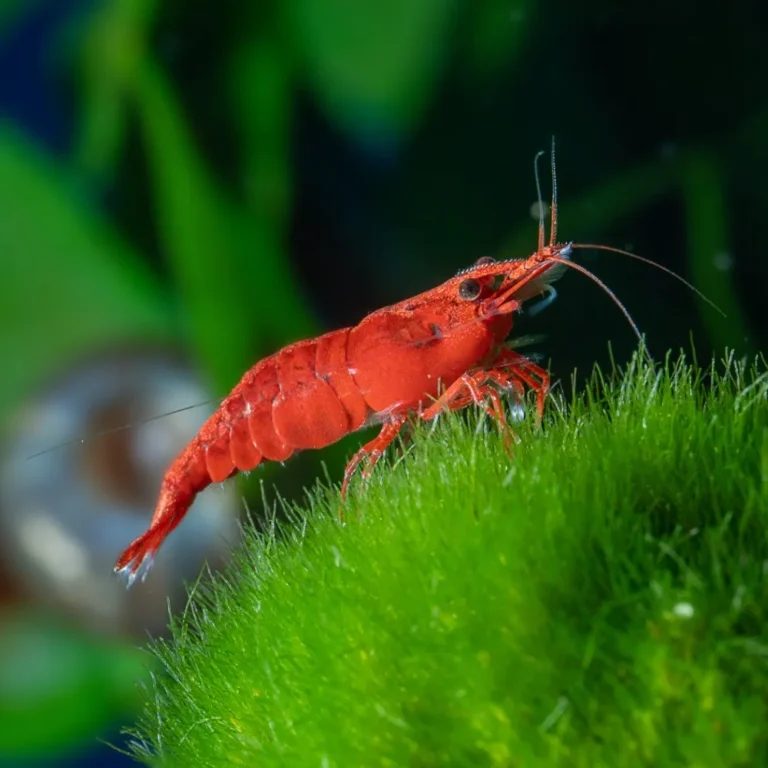
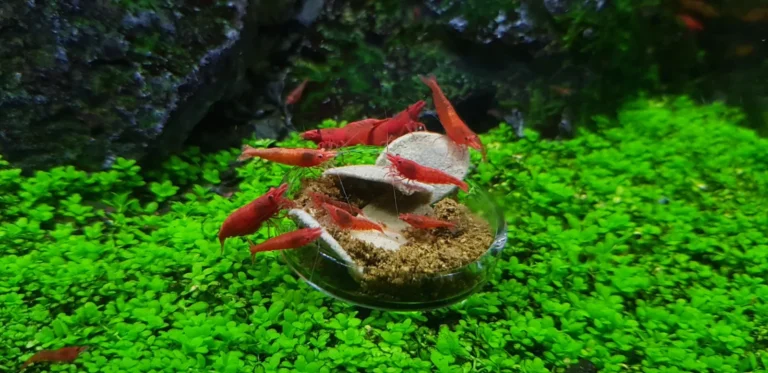
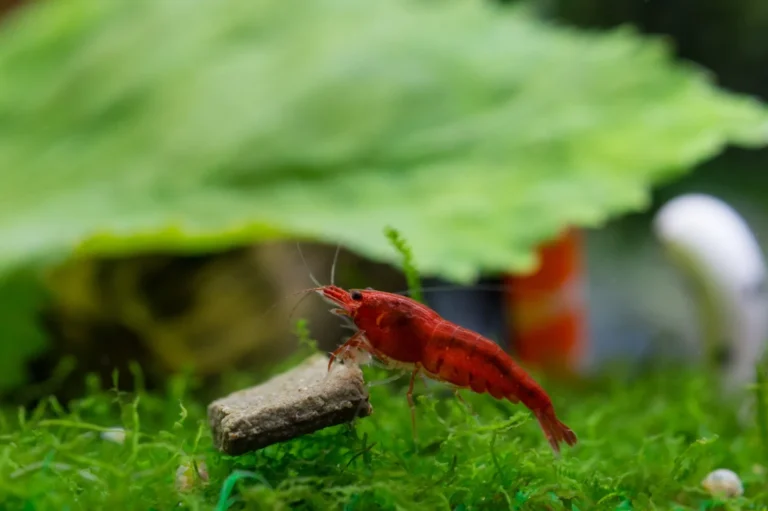
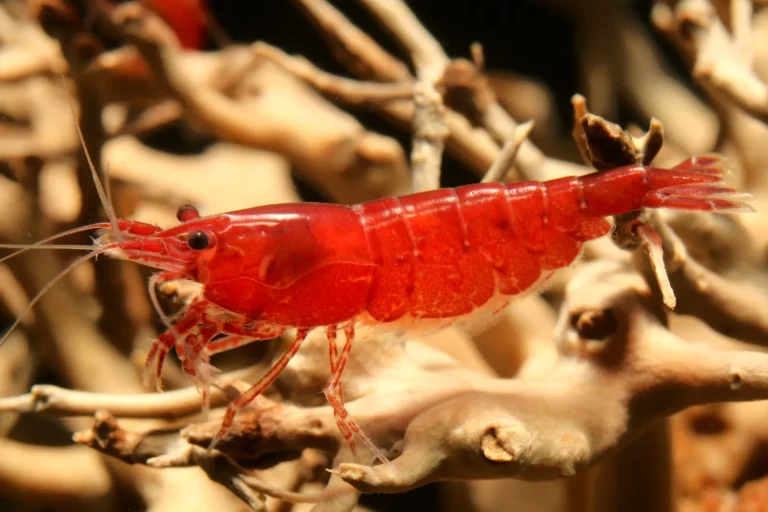
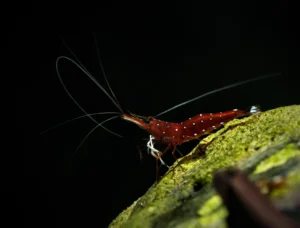
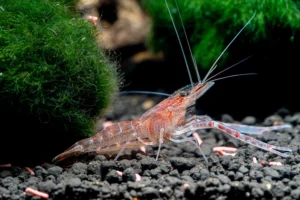
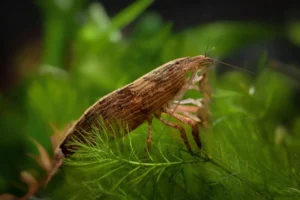
Red Sakura is a vibrant, solid-red morph of Neocaridina davidi prized for its saturated colour and reliable temperament. High-grade individuals show dense, uniform coverage while lower grades may be speckled or translucent. This shrimp provides a striking focal point in planted aquascapes and is well suited to beginners and hobbyists alike. Colour intensity can change slightly with diet, minerals and the moult cycle.
Red Sakura is distinguished by its warm, saturated red tone and a tendency toward solid, even coverage in higher grades. It is valued for overall opacity rather than patterns or striping, and grading separates deep, uniform specimens from paler, speckled ones. Stability of colour depends on diet, mineral balance and moult timing, with some subtle shifts occurring after moults or with changes in water chemistry. Breeders select for density and consistency to maintain the rich red across generations.
Quick overview
Common name(s)
Red Sakura, Sakura shrimp, Red Cherry
Color line
Red Sakura
Latin name
Neocaridina davidi
Size
Size ~2–3 cm
Temperament
Peaceful
Tank level
Middle and bottom
Minimum tank size
5 gallons (19 L)
Water type
Freshwater
Difficulty
Easy
Ideal aquarium setup
In aquascapes the Red Sakura gives a bold pop of red that contrasts well with lush green plants and dark rocks and it reads best against a dark substrate. Moderate lighting helps maintain deep colour while overly bright light can cause fading; pair with mosses, ferns, driftwood to provide grazing surfaces and visual balance.
Behavior and temperament
They are active, peaceful grazers that spend most of their time foraging across leaves and hardscape. Visibility is generally good in open areas but they appreciate cover and shaded spots. They thrive in small groups and show sociable behaviour with conspecifics.
Molting, health and color quality
Colour quality is closely tied to health; bright, consistent red usually indicates good mineral balance, regular moulting and a nutrient-rich diet. Juveniles start dull and translucent and develop stronger pigment after several successful moults, so stable water and ample biofilm support faster colour maturation.
Diet and feeding
They graze all day on biofilm and detritus and you should supplement with sinking foods 2–3 times per week. Exceptionally clean tanks may need slightly more feeding to ensure juveniles and shy individuals get enough nutrition.
How to improve their color with food
Spirulina flakes
Chlorella supplements
Specialist colour foods
Biofilm support foods like blanched vegetables
Tankmates
Suitable tankmates include very small, peaceful fish such as micro rasboras, small otocinclus, and snails like nerites, but avoid larger or aggressive species. Juveniles are vulnerable and may be eaten by most fish, so consider a shrimp-only tank if breeding or high survival of young is important.
Breeding Red Sakura Shrimp
Breeding Red Sakura is straightforward as they reproduce readily in stable tanks with good food and cover. To preserve line quality, select the deepest-coloured adults for breeding, remove or separate lighter throwbacks and avoid mixing with other Neocaridina colour lines.
How to keep the colony strong
Maintain very stable water parameters and regular small water changes
Feed a varied diet including colour-enhancing foods
Remove or isolate lighter throwbacks when breeding for colour
Provide abundant hiding places and surfaces for biofilm
Common problems
Low colouration
Faded or weak red often stems from poor diet or low mineral levels; improve feeding with colour-enhancing foods and stabilise water chemistry to boost pigment.
Molting difficulties
Difficulty moulting is usually caused by unstable parameters or low GH; maintain gentle mineral levels and provide consistent conditions to prevent moult failures.
Poor water quality
High nitrates, ammonia or sudden parameter swings stress shrimp and reduce vitality; regular small water changes and good filtration will resolve this.
Predation risk
Larger or opportunistic fish will eat juveniles and stress adults; choose peaceful tankmates or house them in a shrimp-only setup to protect the colony.
Similar color variants (and how they compare)
Red Cherry
Red Cherry is the common red Neocaridina and can look similar but is often more variable in saturation and coverage compared with selectively bred Red Sakura.
Sakura
Sakura tends to describe mid-grade red shrimp with decent coverage but usually shows more translucence or patching than higher-grade Red Sakura.
Vermilion
Vermilion variants push towards a deeper, sometimes slightly orange-leaning red and may appear richer under specific lighting compared with classic Red Sakura specimens.
Short summary
Red Sakura is a solid red Neocaridina davidi prized for its saturated, even colour and approachable care needs. It suits beginners and aquascapers seeking a strong red contrast, provided you maintain stable water and a varied diet.
Frequently asked questions (FAQs)
How red do they usually get?
Most show a strong, uniform red with higher-grade specimens displaying deeper, denser pigment; lighting, diet and water stability all influence intensity.
Are they easy to keep and breed?
Yes, they are among the easiest Neocaridina to keep and breed when provided stable water, regular feeding and plenty of hiding places.
Do they need special water parameters?
They tolerate a wide range but prefer neutral to slightly acidic pH and stable temperatures; moderate GH helps healthy moulting and shell formation.
Will they hybridise with other Neocaridina?
Yes, Red Sakura can cross with other Neocaridina colour forms and produces mixed-colour offspring, so keep separate lines if you want pure colouring.
What do the juveniles look like?
Juveniles are usually paler and more translucent at hatching and gain full red pigment over several moults as they mature.
Can I keep them with small fish?
Some tiny peaceful fish are acceptable but many will eat shrimplets; provide ample cover and monitor interactions or opt for a shrimp-only tank for breeding.
Mette Tulin
Mette Tulin is the creator of Aquascapedia, with more than 15 years of hands-on experience in aquascaping, planted aquariums, and freshwater fish, shrimp, crayfish, and snails. She shares practical insights, curated aquatic life profiles, and inspiration to help others build thriving underwater landscapes.
Aquascapedia uses cookies to ensure the website functions properly and to understand how visitors interact with the content. Analytics cookies are only used with your consent.
Necessary
Always active
Required for the website to function properly. These cookies cannot be disabled.
Preferences
The technical storage or access is necessary for the legitimate purpose of storing preferences that are not requested by the subscriber or user.
Analytics
The technical storage or access that is used exclusively for statistical purposes.Used to understand how visitors interact with the website. No personally identifiable information is used, and analytics cookies are only set with your consent.
Marketing
The technical storage or access is required to create user profiles to send advertising, or to track the user on a website or across several websites for similar marketing purposes.