Jungle style aquascaping: How to create a wild and natural underwater forest
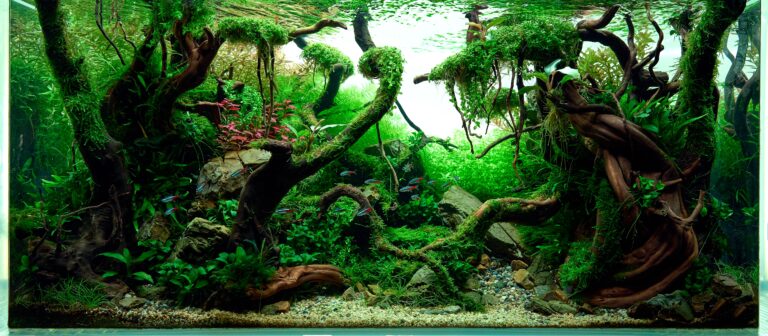
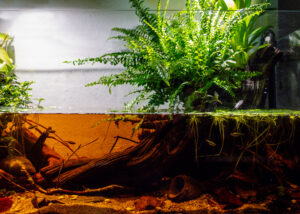
Jungle style aquascaping is vibrant, immersive, and intentionally a little untamed. Instead of strict lines or carefully pruned groupings, this style embraces fullness, height, shadows, and natural growth. The result feels like a slice of rainforest: dense plants, twisting roots, and a rich sense of age and life.
If you want an aquascape that grows freely, evolves on its own, and offers deep atmosphere with minimal fuss, jungle style is a perfect match.
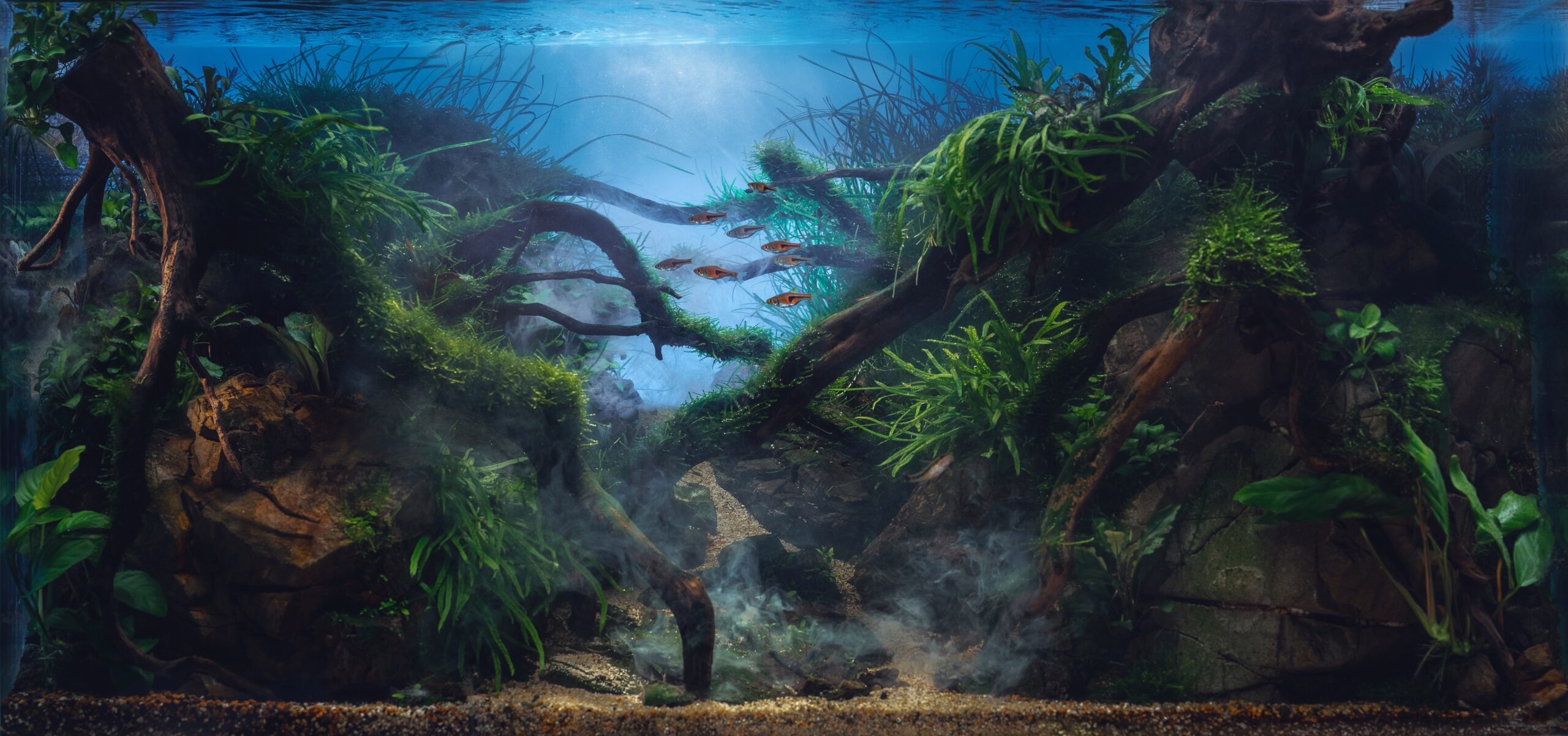
Jungle tanks celebrate organized disorder. Unlike Dutch layouts that rely on structure, or Iwagumi with its rock-focused minimalism, jungle style leans into natural overgrowth. Plants are allowed to reach the surface, driftwood disappears under moss and epiphytes, and pockets of light and shadow create a sense of depth that feels alive.
The style is dense, somewhat uncontrolled, and lower-maintenance and about partnering with nature, letting the tank fill out rather than shaping every detail.
Even though jungle style looks wild, good layouts follow a few intentional design ideas:
When these elements come together, the tank feels mature, lush, and constantly evolving.
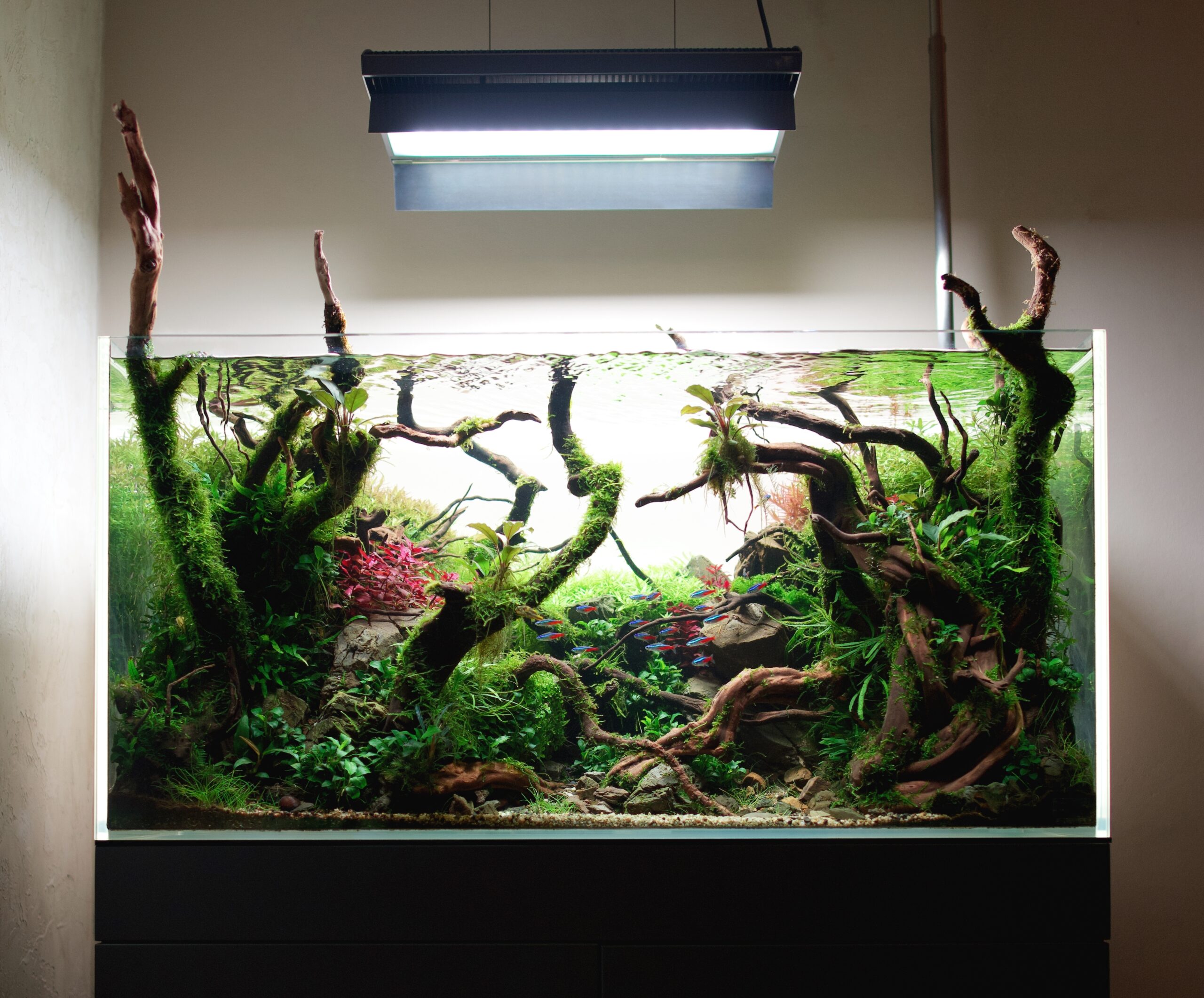
In jungle aquascaping, hardscape plays a quiet but important role. Instead of dramatic rock formations or centerpiece stones, the focus is on wood and root-like shapes that blend into the plants.
How to use hardscape effectively:
As the tank matures, much of the hardscape becomes partially hidden, adding to the “overgrown” feel.
Plants are the core of jungle style aquascaping. To achieve height, fullness, and that wild tropical look, select species that grow vigorously and offer bold shapes.
These create vertical lines and form the canopy:
They grow quickly and help the tank fill out fast.
These add drama and weight to the layout:
Large leaves instantly create that dense, deep-jungle impression.
Attached to wood and stone, these plants age the scape beautifully:
They thrive even in moderate light and give the layout a mature look.
Floating species are essential for creating soft, diffused light:
They provide surface cover, help with nutrient absorption, and cast the dappled shadows that define the style.
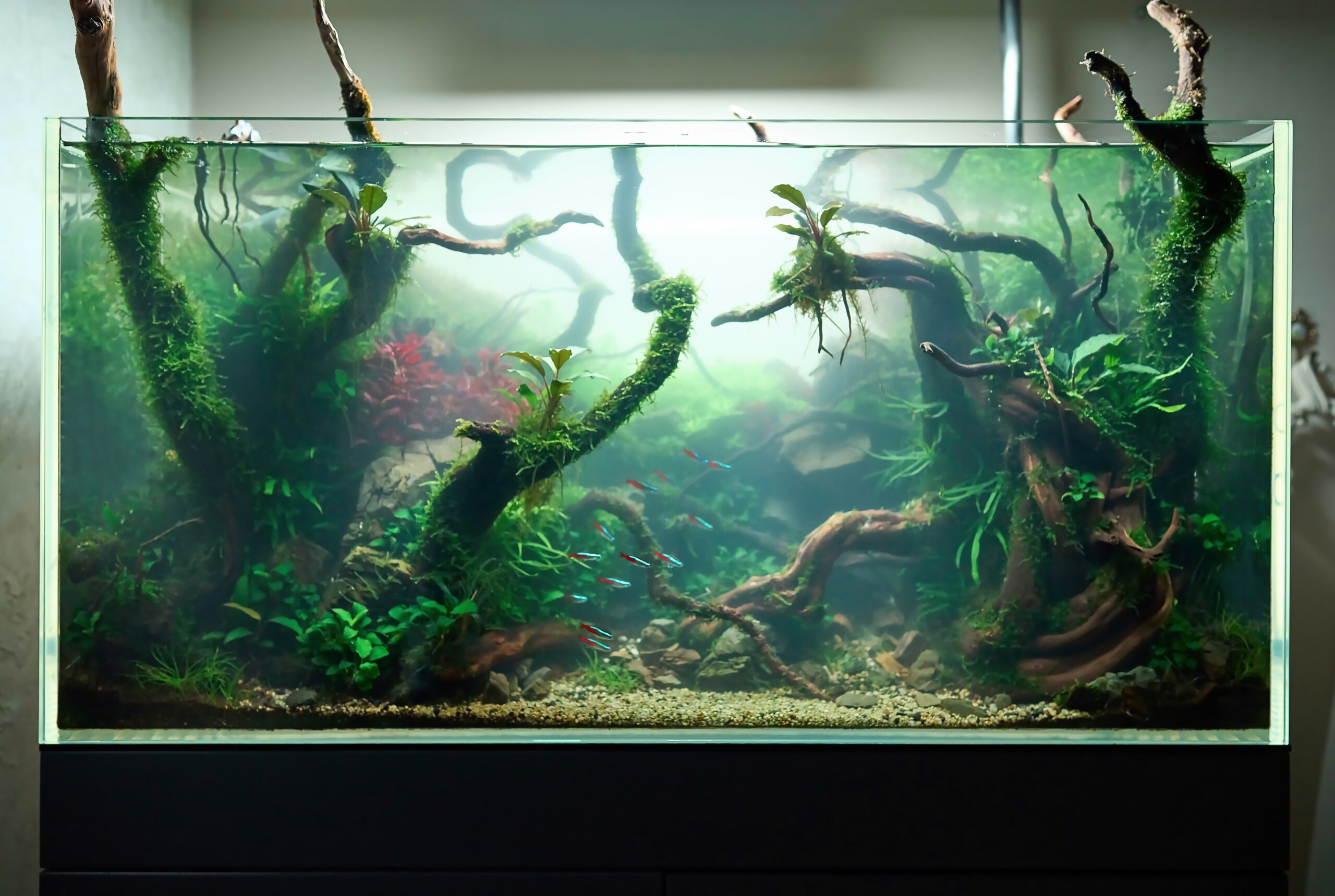
Jungle aquascapes look best under moderate, slightly diffused lighting. Intense, high-powered lighting can make a jungle tank look harsh and flat. Instead, aim for a soft, natural effect.
Tips:
This lighting approach supports healthy growth while keeping the atmosphere warm and natural.
Jungle aquascapes can be set up as either low-tech or high-tech:
Both work beautifully, you simply choose the pace and intensity you prefer.
General guidance:
The goal is steady, balanced growth rather than rapid trimming cycles.

Most plants suited for jungle style aquascapes prefer:
Flow should be gentle but steady, ensuring nutrients and CO₂ circulate through dense vegetation. Use a filter with a wide, even outflow rather than a strong directional blast. This keeps the layout calm and natural while preventing dead spots.
One of the advantages of jungle style is that it’s lower maintenance than more manicured styles. Still, consistency matters.
Thin out fast growers when they block too much light. Remove decaying leaves and maintain some open swim areas.
Weekly 30–50% water changes help keep nutrients balanced and water clear.
Healthy plant mass and stable conditions are your best tools. Clean-up crews (like Amano shrimp, otocinclus, and nerite snails) are especially helpful in dense layouts.
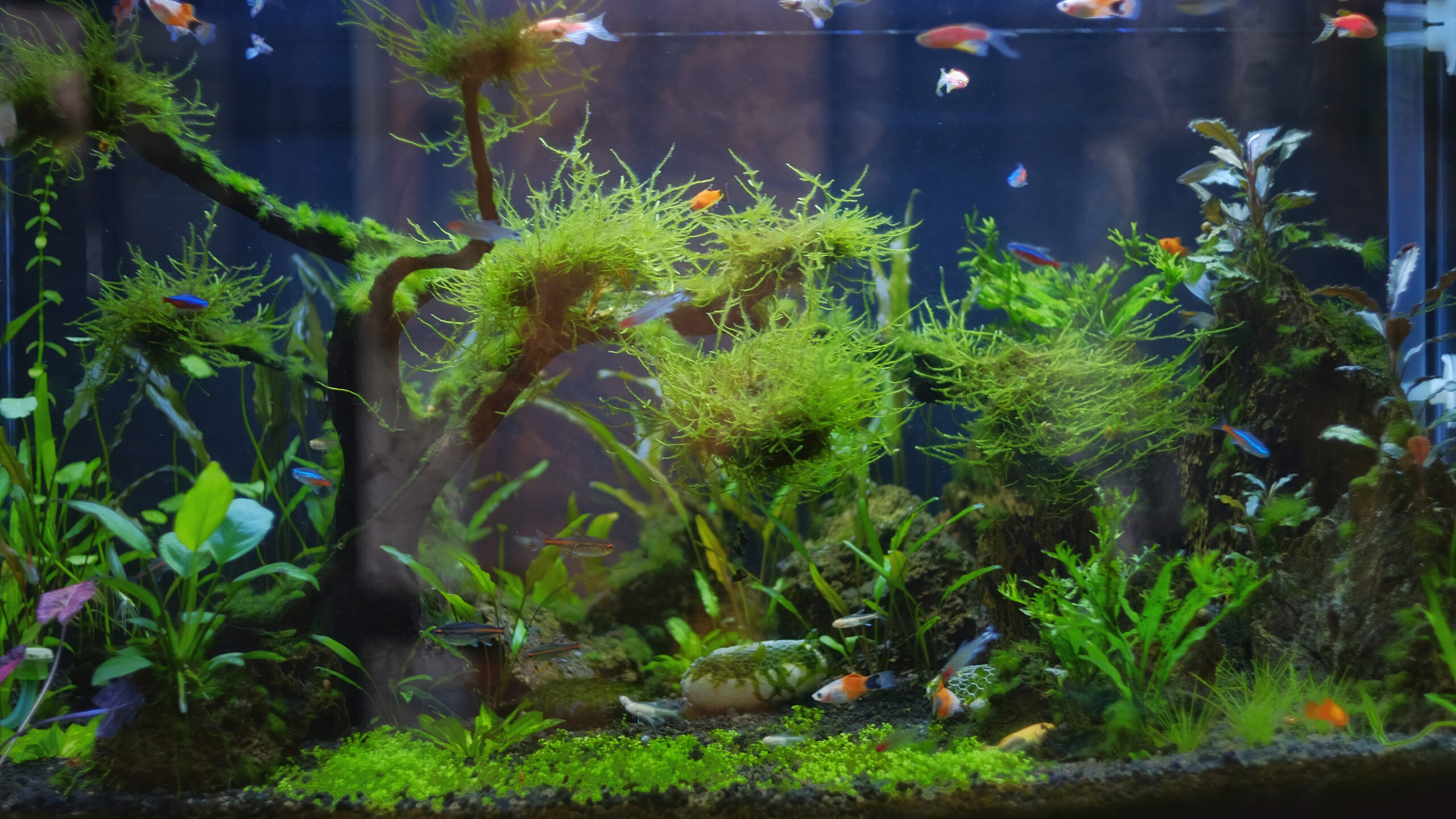
Dense vegetation makes fish feel secure and enhances natural behavior.
Great matches:
Invertebrates:
Your research confirms these are among the most effective cleanup crew species.
A jungle layout should feel wild but never neglected.
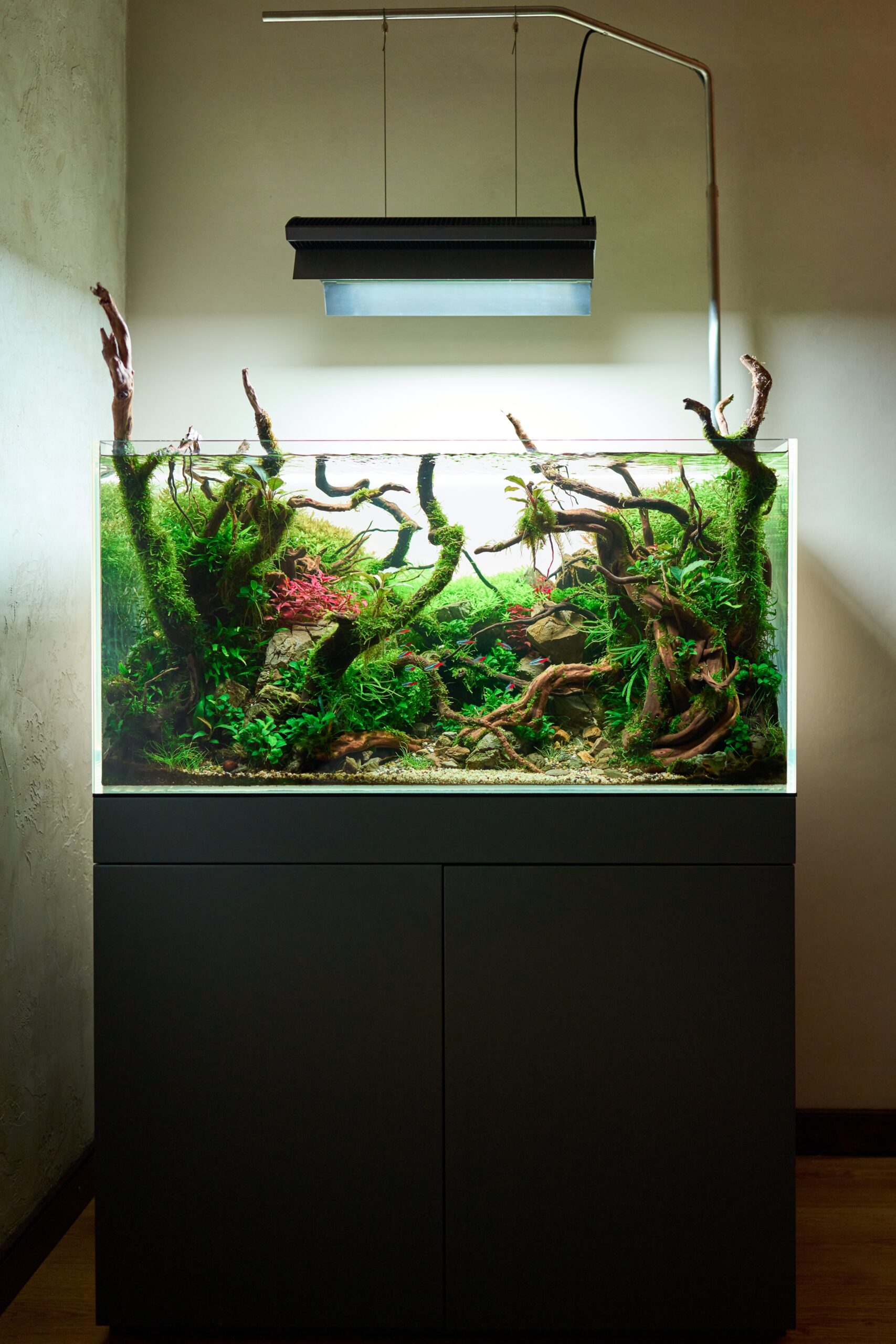
Jungle style aquascaping is lush, atmospheric, and beginner-friendly. It doesn’t demand strict pruning or perfect structure, just healthy plant mass, consistent care, and a willingness to let nature take the lead.
If you want an aquascape that feels deep, immersive, and a bit mysterious, a jungle layout is one of the most rewarding styles to create.


Dutch style aquascaping is one of the oldest and most colorful planted-aquarium styles. Instead of dramatic rocks or twisted driftwood,…

What is Iwagumi? Iwagumi is one of those aquascaping styles you instantly recognize: clean, calm, and seriously beautiful. It might…

Introduction to aquascaping styles Aquascaping is the art of creating underwater landscapes using plants, rocks, wood, and fish. It’s a…
Nature style aquascaping is one of the most beloved approaches in the planted tank world. It’s calm, organic, atmospheric, and…
If you want an aquarium that feels like a real slice of nature (not just inspired by it, but built…


