
Table of contents
At a glance
Tall rosette
Red leaves
Fast growth
Easy care
Description
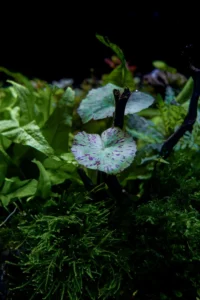
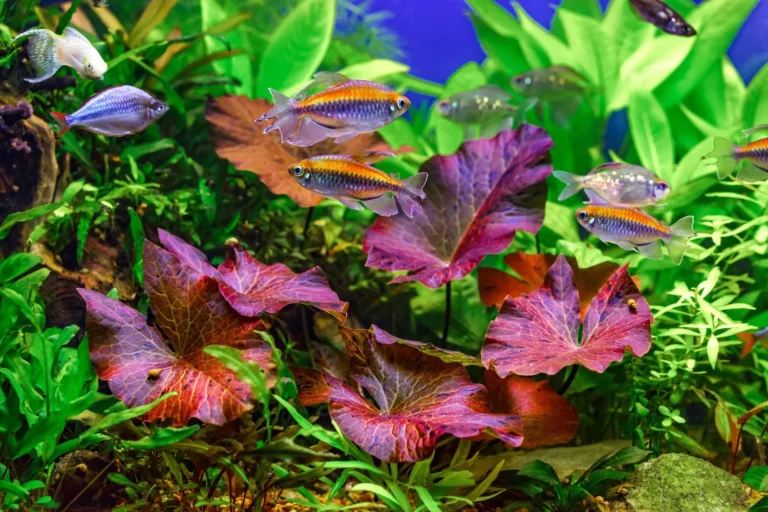
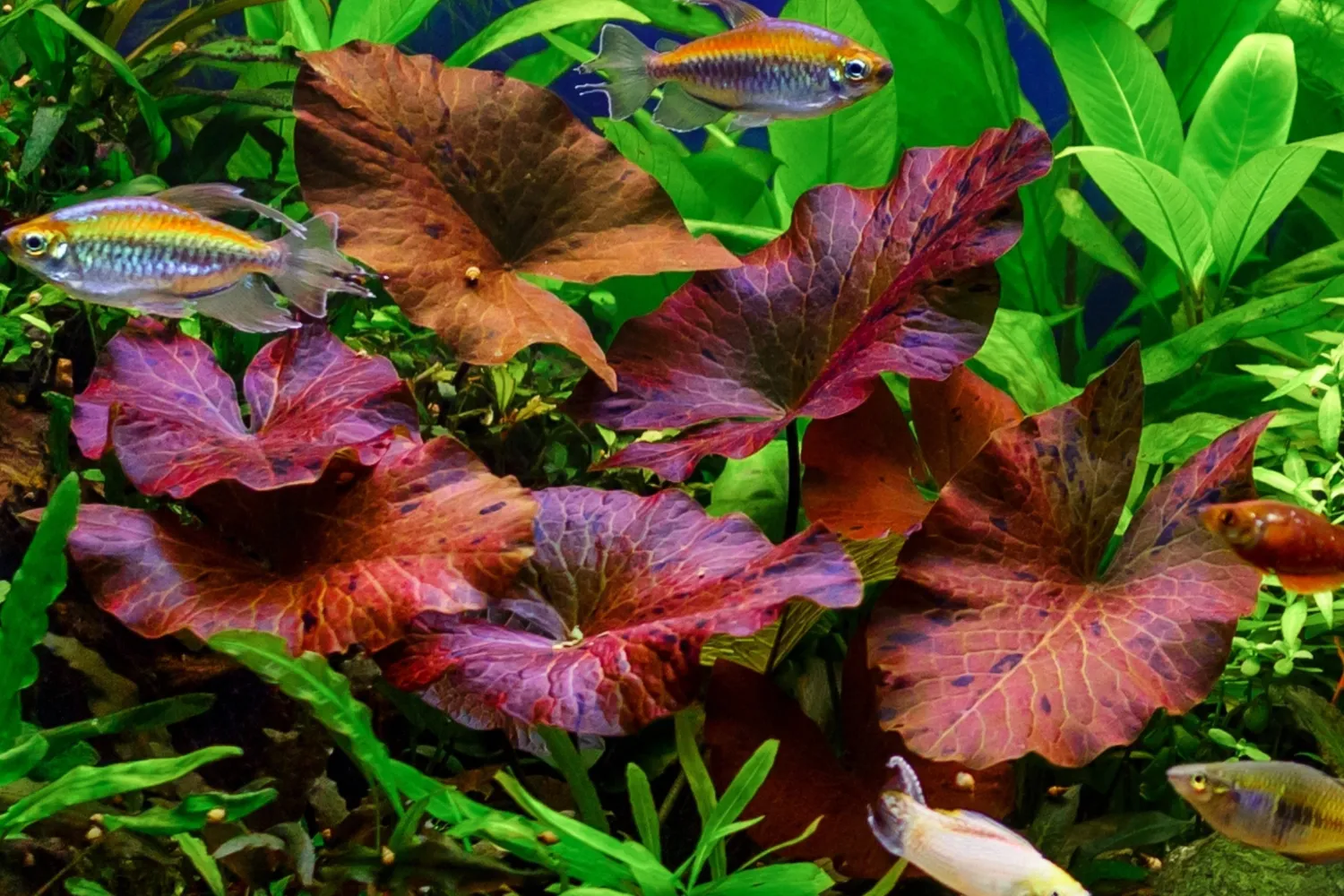
Tiger Lotus (Nymphaea lotus) is a bold rosette water plant with round lily-like leaves that range from green to deep red depending on variety and light. It grows from a tuber and produces both submerged leaves and occasional emergent pads, making it a strong focal plant. Care is straightforward for most hobbyists and it responds well to root fertilization and moderate to strong light. Regular pruning prevents it from overtopping smaller layouts.
Quick overview
Tiger Lotus, Red Tiger Lotus, Egyptian Lotus
Nymphaea lotus
Nymphaeaceae
Rosette plant
Fast
Background
Freshwater
22–28 °C
Leaves ~5–25 cm
Medium–high
Optional
Easy
Ideal use in aquascaping
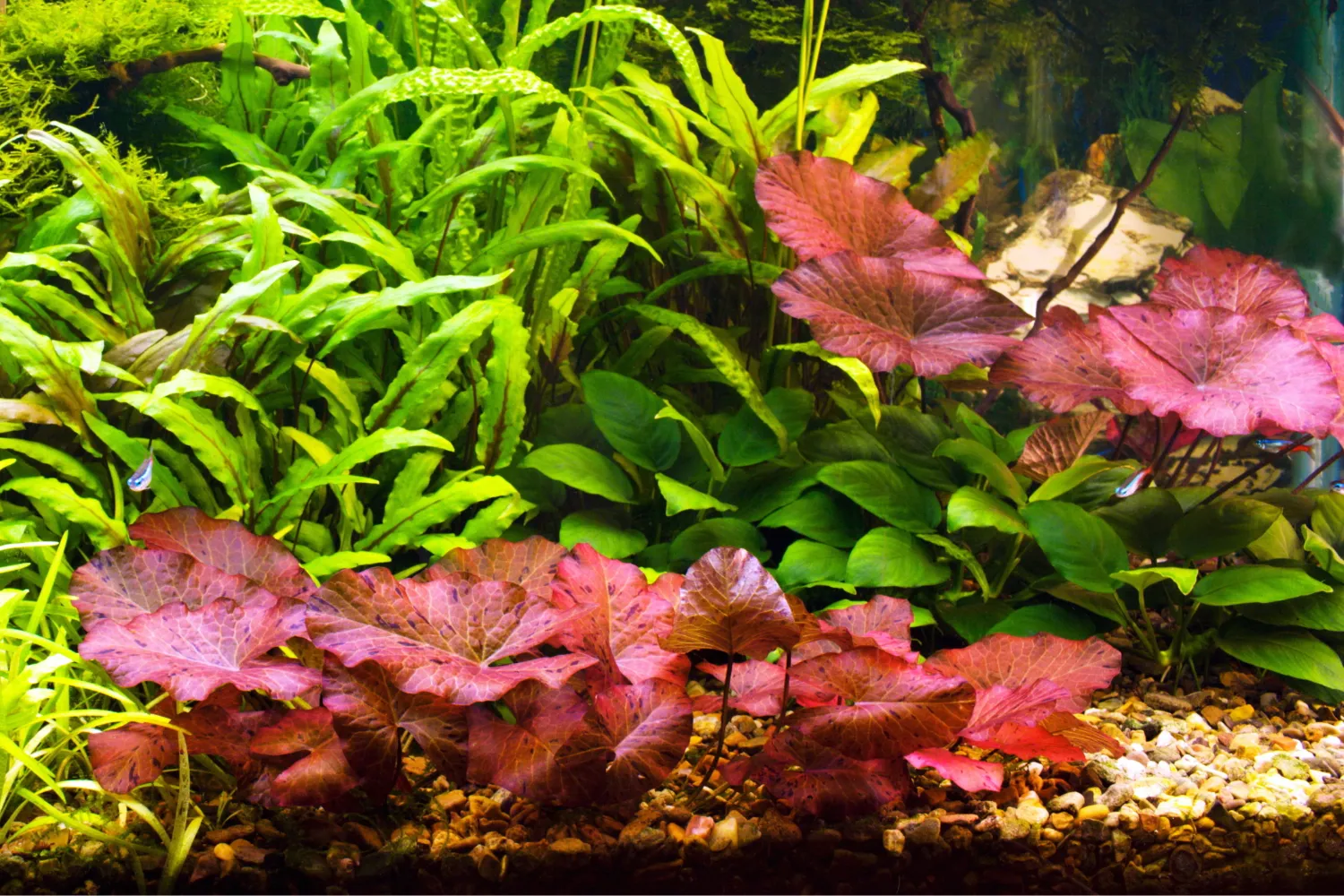
Tiger Lotus makes an excellent focal specimen because of its large round leaves and strong color contrast. It provides vertical structure and a natural lily-pad look without the complexity of true emergent water lilies. Use it to add a dramatic centerpiece or to break up dense stem plantings.
Place it in the background or central midground where its large rosette can be seen; a single specimen on a small mound works well. It functions as a focal point and can visually anchor the layout while offering shade to lower plants.
Works well in nature-style, jungle-style, and Dutch-influenced layouts where a bold leaf shape helps contrast fine-leaved species. It can also suit biotope tanks that mimic slow tropical waters.
Round, often mottled or red-tinged leaves create bold color blocks and contrast with fine-textured foreground plants. The strong leaf shapes add architectural interest and depth to a scape.
Tiger Lotus can quickly dominate small tanks so it is best in medium to large aquaria or kept as a single specimen in smaller setups. Frequent trimming or removing outer leaves helps control its footprint in tighter tanks.
Light and CO₂
Light requirement
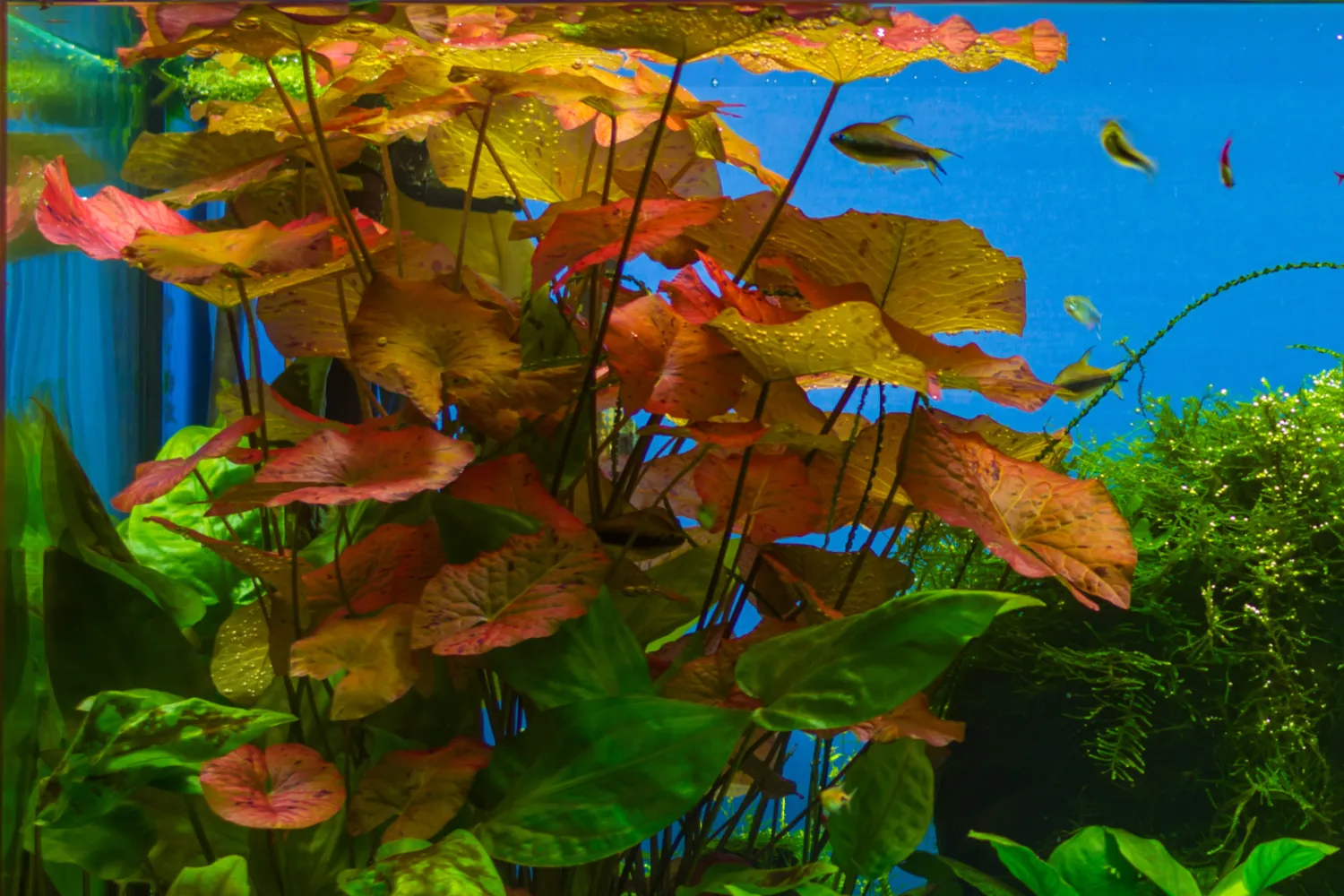
Medium–high. Brighter light encourages compact growth and stronger red pigmentation on red varieties while lower light often yields greener and more stretched leaves.
CO₂ requirement
CO₂ is optional and will boost growth rate and color intensity but is not strictly required for healthy plants in most setups.
Photoperiod
8–10 hours daily. A consistent schedule helps maintain color and reduces the risk of algae overgrowth.
Substrate and nutrients
Tiger Lotus is a heavy root feeder that benefits from a nutrient-rich substrate or regular root tabs. While it will take some nutrients from the water column, most of its nutrition comes through the tuber and roots.
Substrate preference
A fertile aquarium soil or clay-rich substrate is ideal, but it will also do well in sand if supplemented with root tabs. Keep the crown shallow and avoid burying it too deep.
Nutrient needs
Requires steady macronutrients and micros with emphasis on root-delivered fertilizer; iron and potassium help maintain red coloration. Regular root tab placement near the tuber keeps growth robust without excess water column dosing.
- Place root tabs beside the tuber every 8–12 weeks to feed its roots.
- Supplement with liquid trace elements weekly to support leaf color.
- Avoid burying the crown when adding fertilizer to prevent rot.
Planting and propagation
Plant the tuber with the crown slightly exposed and anchor lightly so it does not float. Propagation is typically by dividing tubers or separating offsets once the plant produces daughter tubers.
How to plant
- Inspect the tuber and remove any damaged portions
- Bury the tuber shallowly with the crown just above the substrate
- Press substrate around the base and secure with a small rock if it floats
Propagation method
Propagate by dividing healthy tubers or separating offsets from the parent rosette; seeds are possible but rarely used in the hobby. Divisions establish quickly when planted properly.
- Divide only healthy, firm tubers to avoid spreading rot
- Plant new divisions immediately to prevent drying out
- Keep new divisions in lower flow and moderate light until established
Pruning and maintenance
Remove yellowing or damaged leaves at the base to keep the rosette tidy and prevent decaying material from fouling the tank. Cut flower stalks or emergent pads if you want to keep everything submerged and compact.
Trimming style
Trim by cutting old leaves and flower stalks at the base to maintain a neat compact rosette and control spread.
Maintenance frequency
Check and remove damaged leaves weekly and perform light thinning as needed. Expect to do a more thorough pruning or division every 4–8 weeks if growth is vigorous.
What healthy growth looks like
A healthy Tiger Lotus forms a dense rosette with regular new leaves emerging from the center and strong pigmentation in red varieties. Leaves should be firm and free of large holes or translucent patches.
Signs it needs attention
Yellowing, translucent leaves, large holes, or a lack of new leaf production indicate nutrient or lighting issues. Rapid stretching with thin leaves often means insufficient light or low nutrients.
Tankmates and compatibility
Generally compatible with peaceful community tanks but avoid species that dig or uproot plants. It coexists well with many midwater and surface-dwelling community fish.
Use caution with
Avoid fish that dig or uproot plants such as large cichlids, some loaches, and goldfish.
Special notes
Tiger Lotus often produces emergent leaves that can break the water surface, which may be undesired in fully submerged aquascapes. The tuber stores nutrients and can survive periods of lower light but do not bury the crown to avoid rot.
Pro tips for this plant
Plant the tuber shallow with the crown exposed to prevent rot and encourage new shoots.
Use root tabs near the tuber for consistent feeding rather than relying solely on water column dosing.
Trim outer leaves regularly to keep a single tidy rosette and prevent it from overtaking the tank.
Yellowing leaves
Yellowing usually signals nutrient deficiency or aging leaves; add root fertilizer and remove old leaves. Check lighting and replace or top up substrate nutrients as needed.
Leaves melting
Melting often happens after transplant or due to poor water parameters; ensure the tuber is not buried and maintain stable temperature and water quality. Remove decaying leaves to prevent ammonia spikes.
Poor color
Dull green instead of red is usually from low light or insufficient iron and micronutrients; increase light moderately and add trace elements or iron-rich root tabs.
Typical beginner mistakes
- Burying the crown too deep causing rot
- Failing to provide root nutrition for this heavy feeder
- Placing in too small a tank where it quickly overcrowds the layout
Short summary
Tiger Lotus (Nymphaea lotus) is a bold rosette plant valued for its round leaves and striking red varieties. It is easy to care for with a nutrient-rich substrate, moderate to strong light, and occasional pruning to control spread.
Frequently asked questions (FAQs)
Is Tiger Lotus easy to grow?
Is Tiger Lotus easy to grow?
Yes, it is considered easy for most hobbyists provided it has root nutrition and adequate light.
Will it grow emersed leaves?
Will it grow emersed leaves?
Yes, Tiger Lotus often produces emergent pads and can grow emersed if water levels change or under high light.
How do I propagate it?
How do I propagate it?
Propagate by dividing healthy tubers or separating offsets and replanting them with the crown shallowly exposed.
Does it need CO2 injection?
Does it need CO2 injection?
CO2 is optional and will enhance growth and coloration but is not strictly required for healthy plants.
Can it be kept in small tanks?
Can it be kept in small tanks?
It can be kept in small tanks as a single specimen with frequent trimming but it prefers more space in medium to large aquaria.
What fertilizer is best?
What fertilizer is best?
Root tabs placed beside the tuber plus occasional liquid trace elements give the best results for strong growth and color.

Mette Tulin
Mette Tulin is the creator of Aquascapedia, with more than 15 years of hands-on experience in aquascaping, planted aquariums, and freshwater fish, shrimp, crayfish, and snails. She shares practical insights, curated aquatic life profiles, and inspiration to help others build thriving underwater landscapes.