At a glance
Rhizome plant
Slow growth
Low light
Hardy species
Description
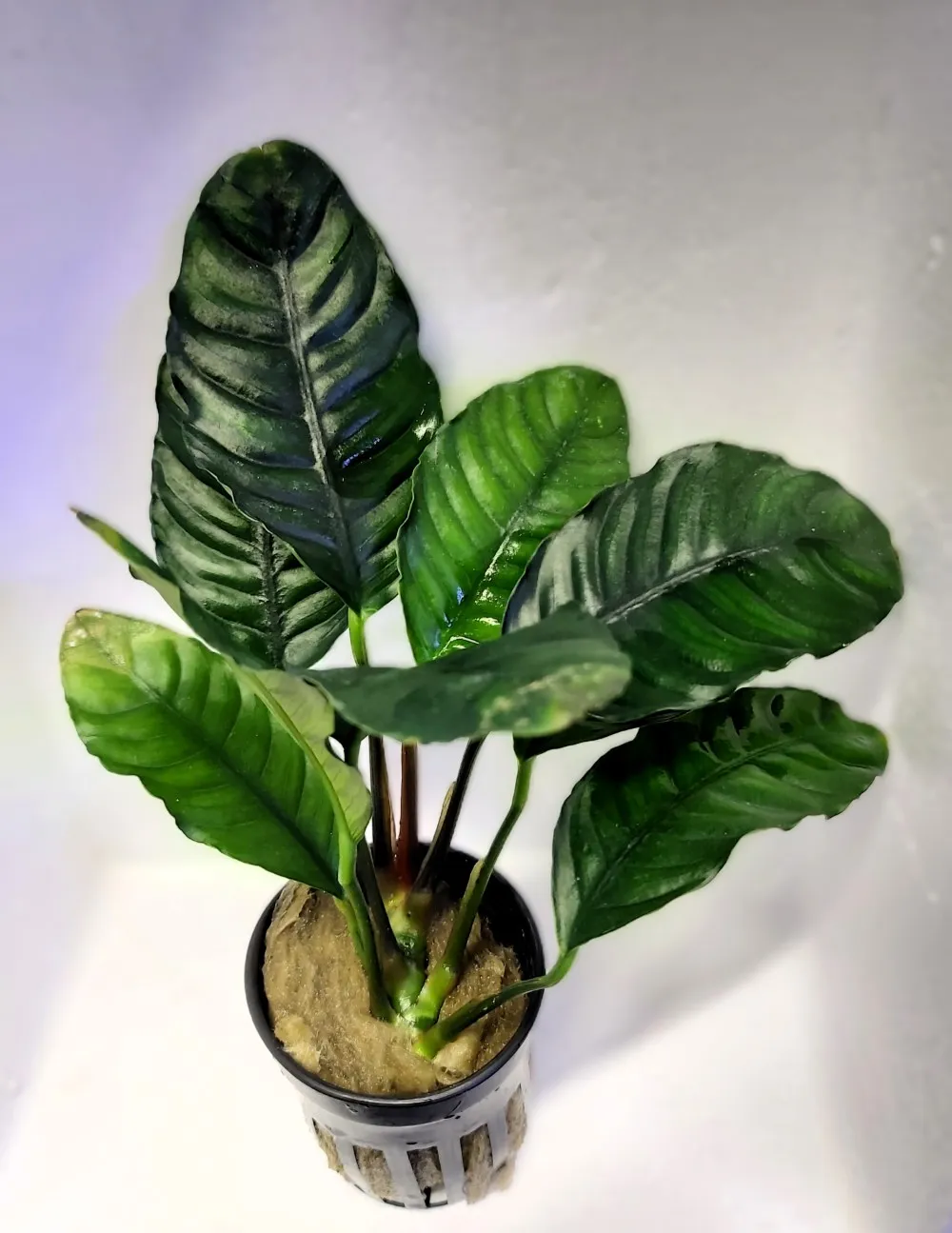
Barter's anubias (Anubias barteri) is a compact rhizome plant with thick, dark green leaves and a slow, steady habit. It tolerates low light and a wide range of water conditions while adding solid leaf contrast in aquascapes. Care is simple: keep the rhizome above substrate, attach to hardscape, and provide modest fertilization for the best color and health.
Quick overview
Anubias barteri, Barter's anubias, Anubias, Broadleaf anubias
Leaves ~2–12 cm, height ~5–20 cm
Ideal use in aquascaping
Anubias barteri is excellent for anchoring driftwood and rockwork while providing dense leaf structure without requiring intense care. Its slow growth makes it a long-lasting choice for shaded corners and busy community tanks. Use it to create midground focal points or to soften hardscape edges.
Attach to wood or stone in foreground or midground where its broad leaves add contrast and shelter. It serves as a durable focal plant and a refuge for shrimp and small fish.
Good styles for this plant
Works well in nature aquascapes, Iwagumi layouts that need texture contrast, and low-tech community tanks that favor hardy species. It also complements biotope setups where rugged, broad-leaved plants are appropriate.
Dark glossy leaves provide bold contrast against fine-leaved carpets and grasses. The thick leaf texture adds a sculptural, low-maintenance element to the layout.
Scales nicely from nano tanks to larger aquariums because it remains compact and spreads slowly. In small tanks choose smaller varieties or trim regularly to prevent overcrowding.
Light and CO₂
Low to medium. Anubias tolerates shaded conditions and will do poorly under very strong direct light which can encourage algae.
CO₂ is optional and can speed growth and vigor but is not required for healthy plants in most setups.
8–10 hours daily. A consistent schedule helps steady growth and reduces algae pressure.
Substrate and nutrients
The rhizome must not be buried; roots can be planted in substrate but the plant more commonly attaches to hardscape. It is not demanding but benefits from regular liquid fertilization and occasional root tabs placed near the roots if planted in substrate.
Substrate preference
Substrate is not critical since Anubias is usually attached to wood or rock, but fine gravel or sand is fine for the roots. Avoid burying the rhizome to prevent rot.
Nutrient needs
Moderate nutrient levels and regular micro dosing support steady leaf color and growth, with iron helping keep leaves deep green. Root tabs help if the plant's roots are buried in substrate.
- Use liquid trace fertilizers weekly to supply iron and micronutrients.
- Place a root tab nearby if the roots are in substrate to boost local nutrients.
- Keep dosing moderate to avoid algae on slow-growing leaves.
Planting and propagation
Plant by attaching the rhizome to wood or rock and securing until roots take hold; do not bury the rhizome. Propagate by dividing the rhizome into sections with several leaves and roots using a clean blade.
How to plant
- Position the rhizome on wood or rock with roots hanging down
- Tie gently with fishing line or cotton thread or use aquarium-safe glue
- Remove ties after roots attach
Propagation method
Divide the rhizome with a clean cut so each section has leaves and some roots, then attach each section to hardscape. New shoots will emerge from the cut nodes.
- Use a sharp sterile blade to split the rhizome
- Ensure each piece has at least two leaves or growing points
- Allow a short drying period on the cut before submerging if practical
Pruning and maintenance
Remove old or damaged leaves at their base to keep the plant tidy and prevent debris buildup. Clean leaves gently if algae appears and detach sections that become overcrowded.
Trimming style
Trim by cutting individual petioles at the rhizome base and remove older leaves to encourage new shoots.
Maintenance frequency
Inspect every 2–4 weeks and remove damaged leaves as needed; light cleaning or pruning is usually sufficient. Replace ties after a few weeks once roots have attached.
Growth and health indicators
What healthy growth looks like
Healthy plants produce new shoots from the rhizome with firm dark green leaves and short sturdy petioles. Leaves are glossy and free of holes or brown spots.
Signs it needs attention
Yellowing or translucent leaves, a soft or mushy rhizome, or excessive algae on leaf surfaces indicate issues. If the rhizome is buried you may see rot and stunted growth.
Tankmates and compatibility
Very compatible with small peaceful community species and invertebrates but avoid fish that dig or scrape hardscape. Its tough leaves tolerate most tankmates except large plant eaters.
Small peaceful tetras and rasboras alongside shrimp and snails make good companions.
Avoid large digging fish and aggressive cichlids that uproot or damage plants.
Always keep the rhizome exposed above the substrate to prevent rot. Secure new plants until roots form to ensure good attachment.
Pro tips for this plant
Attach to hardscape instead of burying the rhizome to prevent rot.
Use liquid trace fertilizers for consistent color without heavy dosing.
Smaller varieties are best in nano tanks to maintain scale.
Algae on leaves
Algae often grows on slow-moving leaves exposed to high light or excess nutrients; reduce light, improve flow, and wipe or trim affected leaves.
Rhizome rot
Rhizome rot occurs when the rhizome is buried or injured; lift the plant, remove rotten tissue, and reattach the healthy rhizome above the substrate.
Yellowing leaves
Yellow leaves commonly indicate nutrient deficiency or old leaf die-off; add a balanced liquid fertilizer and check for adequate iron and micros.
Typical beginner mistakes
- Burying the rhizome causing rot
- Placing plant in overly bright zones leading to algae
- Expecting fast carpet-like spread despite slow growth
Short summary
Anubias barteri is a hardy, slow-growing rhizome plant ideal for low-light and low-tech aquariums. Keep the rhizome above substrate, attach to hardscape, and provide moderate fertilization for reliable, low-maintenance growth.
Frequently asked questions (FAQs)
Can Anubias barteri be buried in substrate?
No, burying the rhizome can cause rot; only the roots should be in substrate while the rhizome stays exposed.
It grows slowly and will not quickly overtake a tank, making it easy to manage with occasional trimming.
Is CO2 required for good growth?
CO2 is optional; it encourages faster growth but healthy plants do fine without added CO2.
Can I attach it to driftwood?
Yes, attaching to driftwood or rock is ideal and the plant will root into the hardscape over time.
What lighting level is best?
Low to medium light is best because high light can promote algae on the slow-growing leaves.
How do I propagate Anubias barteri?
Propagate by dividing the rhizome into sections with leaves and roots and attaching each section to hardscape.