
Table of contents
At a glance
Rhizome plant
Low light
Slow growth
Small leaves
Description
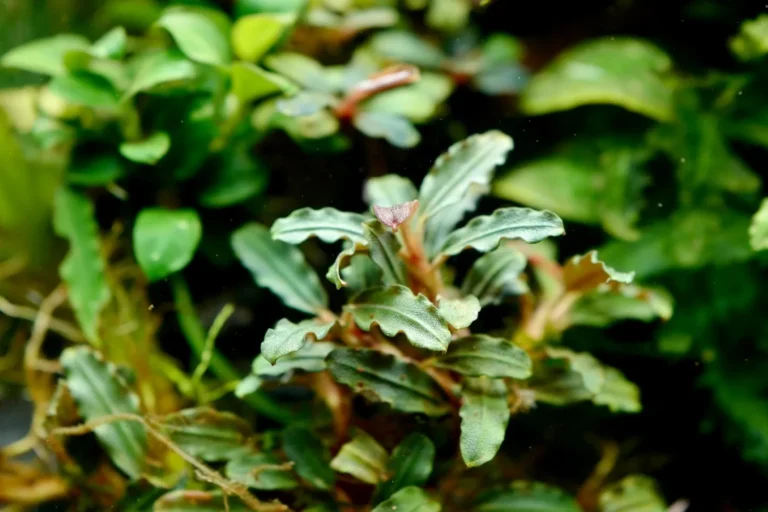
Bucephalandra are a diverse group of compact rhizome plants prized for aquascaping because of their textured leaves and slow steady growth. The genus Bucephalandra includes many color and shape variations that attach easily to wood and rock. They tolerate a wide range of freshwater conditions and prefer stable parameters with moderate lighting. Care is straightforward with regular liquid fertilization and occasional trimming.
Quick overview
Bucephalandra, Buce, Buce plant
Bucephalandra spp.
Araceae
Rhizome plant
Slow
Foreground to midground
Freshwater
22–28 °C
Leaves ~1–6 cm
Low–medium
Recommended
Easy to medium
Ideal use in aquascaping
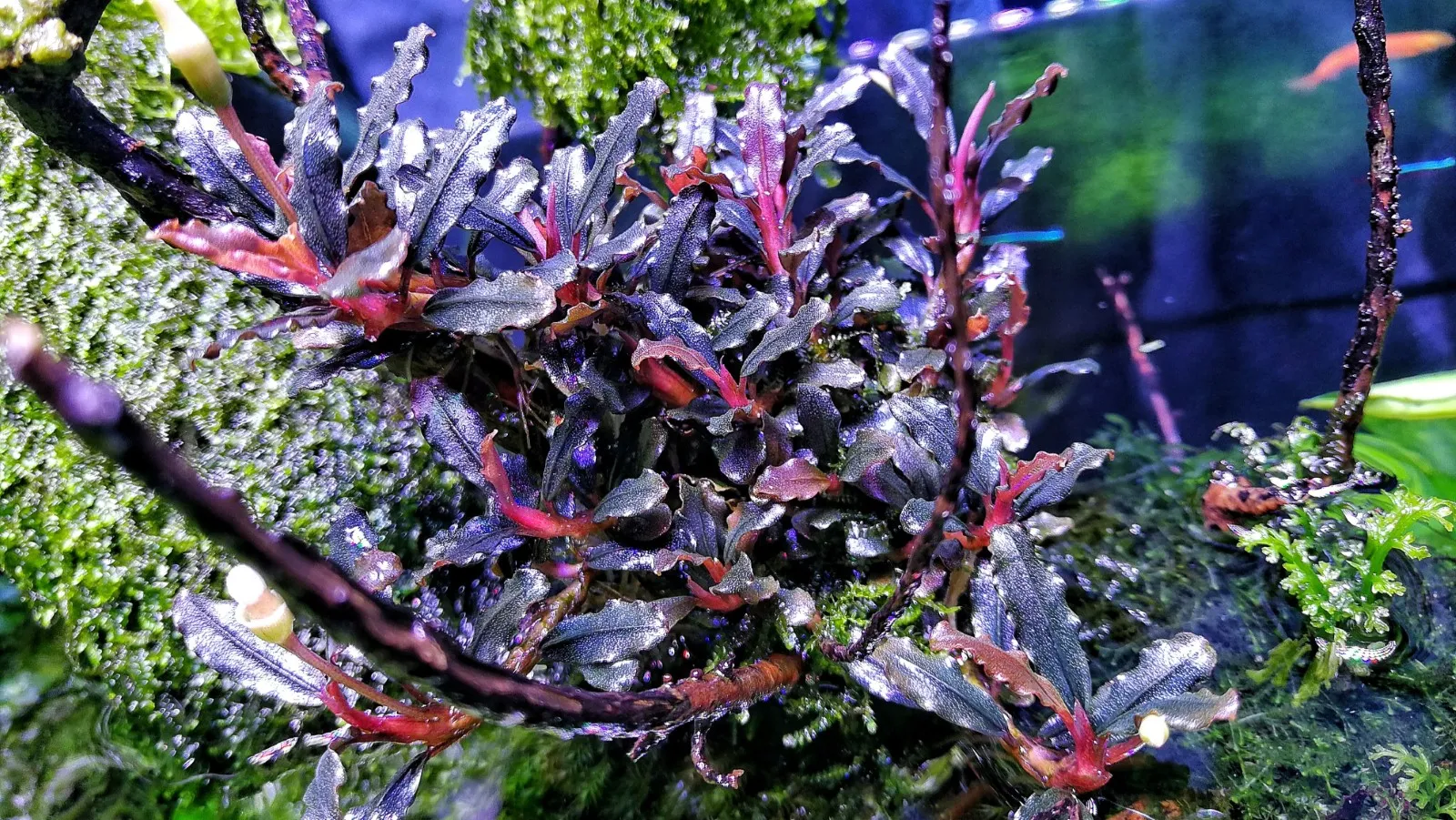
Bucephalandra is ideal for attaching to driftwood and rocks to create textured clumps and focal accents. Their slow growth and variety of leaf forms make them excellent for detailed foreground and midground work. They also suit paludariums and low-light layouts where subtle color variation is desired.
Attach small groups to hardscape in the foreground or midground to form layered textures and focal points. Use them to break up moss or stem plant areas and add fine detail around stones and wood.
Works well in nature aquarium, Iwagumi accents, and biotope layouts where low maintenance plants are preferred. It also fits well in jungle-style tanks as underplanting around hardscape.
Leaves range from deep green to bronze and red with varied rippling and veins that add fine texture. Small glossy leaves provide contrast against broader-leaved plants and mosses.
Small species and cuttings are perfect for nano tanks while larger species form attractive clumps in mid-sized aquaria. Because growth is slow, Buce scales well to tanks of almost any size.
Light and CO₂
Light requirement
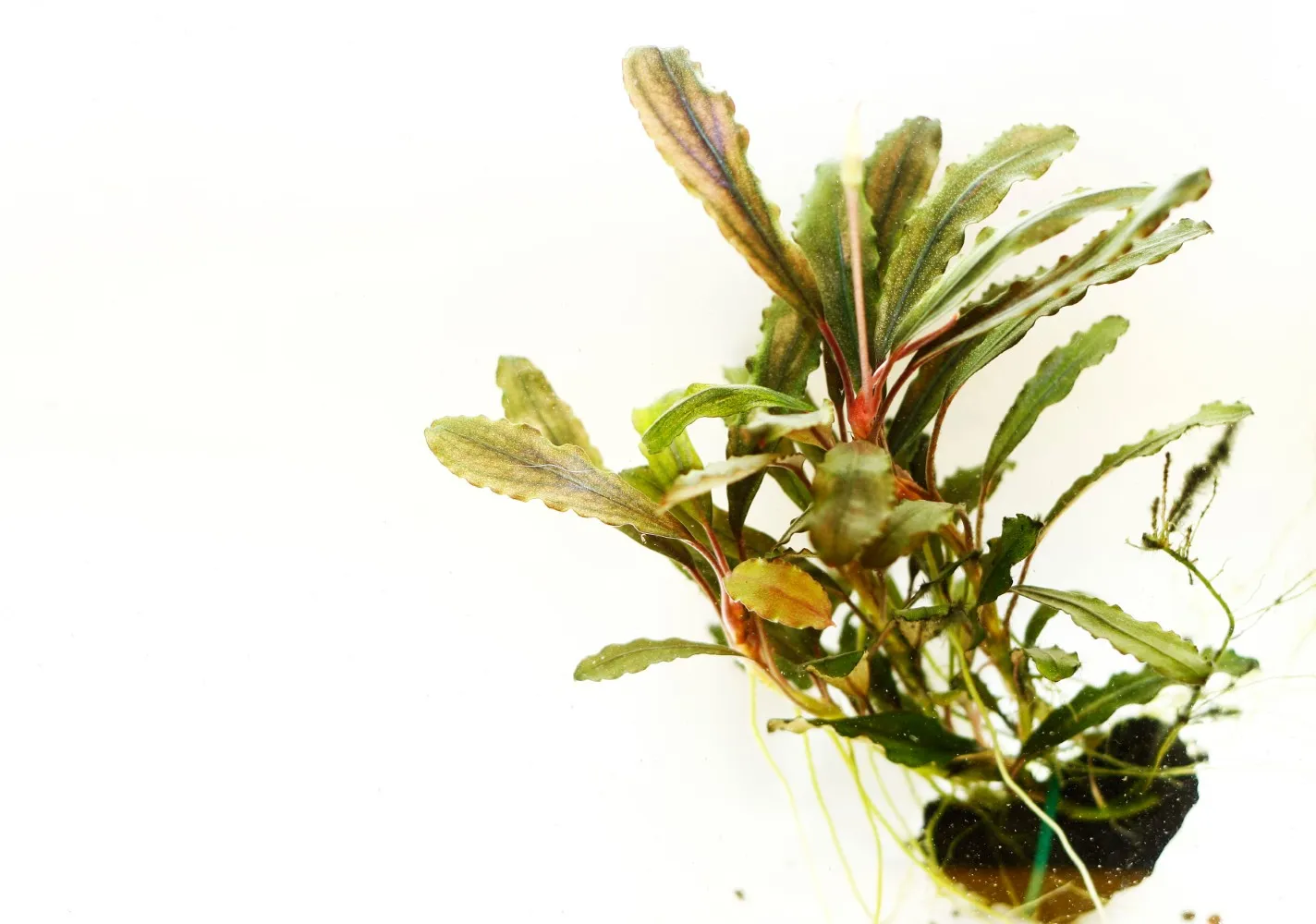
Low to medium. Bucephalandra tolerates low light but will show better color and more compact form under moderate light.
CO₂ requirement
CO₂ is recommended for faster, more compact growth and improved coloration but Buce will survive without it.
Photoperiod
6–8 hours daily. A consistent schedule helps prevent algae and keeps growth steady.
Substrate and nutrients
Buce attach to hardscape and do not need a deep nutrient substrate, but they benefit from dissolved macronutrients and micronutrients. Regular liquid fertilization and occasional root tabs near planted bases improve leaf color and vigor.
Substrate preference
Best when tied or glued to wood and rock rather than planted with the rhizome buried. If placed on substrate, avoid covering the rhizome and use root tabs sparingly.
Nutrient needs
Moderate macro and micro nutrients are enough; iron helps bring out red and bronze tones. Combine weekly liquid dosing with occasional root tabs if portions are close to the substrate.
- Dose a comprehensive liquid fertilizer weekly to supply macros and micros
- Add an iron-rich supplement to intensify red and bronze tones
- Place root tabs near crowded bases if parts are planted but never bury the rhizome
Planting and propagation
Plant by attaching pieces to hardscape using thread or glue and allow roots to form naturally; propagation is done by dividing the rhizome or separating side shoots. Small sections with leaves will establish and slowly form new clumps.
How to plant
- Trim damaged leaves and clean the rhizome
- Tie or glue the piece to wood or rock
- Position securely and leave undisturbed until roots anchor
Propagation method
Divide the rhizome with a clean blade or separate naturally occurring side shoots and reattach the sections to hardscape. Each piece with at least one healthy leaf and node will develop roots and new shoots.
- Keep small sections with a node and some roots for faster establishment
- Secure pieces with thread or super glue gel until roots form
- Provide stable water and moderate light to encourage attachment
Pruning and maintenance
Maintenance is low; remove old, damaged, or melting leaves to keep clumps tidy and reduce detritus. Divide overcrowded sections every few months to maintain airflow and prevent shading of lower leaves.
Trimming style
Remove individual old leaves and separate the rhizome into smaller sections rather than shearing across the top.
Maintenance frequency
Inspect and remove dead leaves every 2–8 weeks and divide crowded clumps as they thicken. Regular light pruning keeps the plant healthy without frequent trimming.
What healthy growth looks like
Healthy Buce shows firm glossy leaves, clear veins, and new shoots appearing from rhizome nodes with small roots attaching to hardscape. Color should be consistent and leaves should not be translucent or slimy.
Signs it needs attention
Yellowing or translucent leaves, holes, or melted tissue indicate nutrient or water quality issues and should prompt testing and adjustment. Excessive brown spots or rapid leaf loss suggest poor water stability or ammonia problems.
Tankmates and compatibility
Bucephalandra is compatible with most peaceful community fish and invertebrates and is often used in shrimp and plant tanks. Avoid species that dig, nip, or graze heavily on plants.
Good with
Most small peaceful fish, shrimp, snails, and similar community species.
Use caution with
Avoid goldfish, large cichlids, and bottom digging species that will uproot or graze on the plants.
Special notes
Buce are slow growers and appreciate stable water parameters and steady nutrient input. Small shrimp and snails help keep leaves clean and improve appearance.
Pro tips for this plant
Use fine thread or super glue gel to attach rhizomes to hardscape for quick anchoring.
Be patient with growth; Buce spreads slowly but establishes permanent clumps over months.
Trim only dead leaves and divide rhizomes rather than aggressive shearing to preserve form.
Brown spots
Brown spots often appear from poor water quality, low CO2, or abrupt light changes and removing affected leaves while stabilizing conditions usually helps. Adjust lighting and nutrient dosing and monitor parameters until new growth is healthy.
Melting leaves
Melting commonly occurs after transplant or sudden parameter shifts and will subside if water is stabilized and damaged leaves are removed. Ensure gentle handling when attaching and allow time for roots to form.
Algae buildup
Algae can collect on Buce leaves when light and nutrients are unbalanced; reducing light duration, improving circulation, and adding algae-eating shrimp or snails will help. Regular maintenance and spot cleaning keep leaves attractive.
Typical beginner mistakes
- Burying the rhizome when planting which causes rot
- Expecting rapid carpeting which leads to unnecessary changes
- Neglecting micronutrients especially iron that affect color
Short summary
Bucephalandra is a slow-growing rhizome plant ideal for attaching to wood and rock to create textured foreground and midground accents. It thrives in low to moderate light with steady nutrients and minimal pruning, making it a flexible choice for many aquascapes.
Frequently asked questions (FAQs)
Can Buce grow without CO₂?
Can Buce grow without CO₂?
Yes, Buce survives without CO2 but grows more slowly and shows less vivid color than when CO2 is provided.
How do I attach Buce to wood or rock?
How do I attach Buce to wood or rock?
Use cotton thread, fishing line, or aquarium-safe super glue gel to secure the rhizome until roots anchor to the surface.
How fast does Buce spread?
How fast does Buce spread?
Buce is generally slow to very slow and can take months to form noticeable clumps or spread across hardscape.
Do Buce need a special substrate?
Do Buce need a special substrate?
No special substrate is required because Buce prefer to attach to hardscape, though nearby root tabs can help if parts sit on the substrate.
Are Buce safe with shrimp and snails?
Are Buce safe with shrimp and snails?
Yes, Buce are shrimp and snail safe and these invertebrates also help keep leaves free of algae.
What is the best way to propagate Buce?
What is the best way to propagate Buce?
Propagate by cutting the rhizome into sections that include at least one node and leaf, then attach the pieces to new hardscape until roots develop.

Mette Tulin
Mette Tulin is the creator of Aquascapedia, with more than 15 years of hands-on experience in aquascaping, planted aquariums, and freshwater fish, shrimp, crayfish, and snails. She shares practical insights, curated aquatic life profiles, and inspiration to help others build thriving underwater landscapes.