
Table of contents
At a glance
Large leaves
Bulb plant
Background
Low maintenance
Description
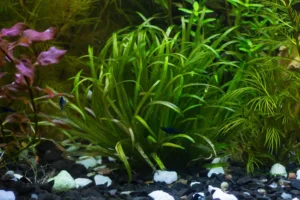
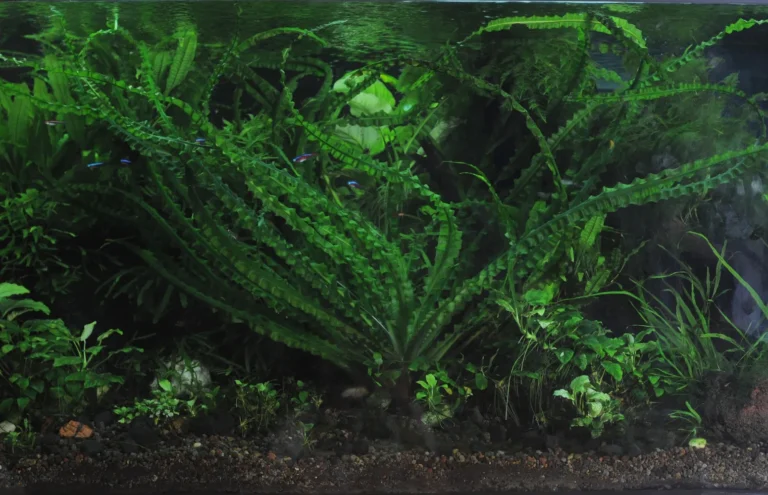
Crinum natans is a bulbous aquatic plant with long strap-like leaves that add bold vertical structure to aquariums. Crinum natans forms a compact rosette of arching leaves and can produce tall flower stalks when grown emersed. It performs well in nutrient-rich substrate and moderate to bright light and is tolerant of a range of water conditions. Regular removal of old leaves keeps clumps tidy and helps new growth.
Quick overview
Crinum natans, Water crinum, Aquatic crinum, River crinum
Crinum natans
Amaryllidaceae
Bulb plant
Slow
Background
Freshwater
22–28 °C
Leaves ~20–60 cm long
Medium–high
Optional
Easy to medium
Ideal use in aquascaping
Crinum natans provides strong vertical focal points and contrasts well with fine-leaved foreground plants. Its bold leaves are excellent for creating height and framing hardscape elements.
Place in the background or near the midground if the variety is smaller to create a leafy backdrop and hide equipment. Use as an anchor plant to draw the eye upward.
Works well in nature and Dutch-style layouts where large leaf contrast is wanted, and in biotope or Amazonian setups. It can also suit low-maintenance community tanks.
The long glossy green leaves provide bold texture and a tropical look while catching light and creating shadow patterns. New leaves are usually brighter and add visual interest.
Best in medium to large tanks where its leaves have room to unfurl, though smaller specimens can work in compact setups. Give bulbs spacing so clumps can expand without crowding.
Light and CO₂
Light requirement
Medium–high. This plant benefits from steady bright light to keep leaves full and avoid legginess but tolerates moderate levels.
CO₂ requirement
CO₂ is optional and will boost growth and leaf color but is not required for healthy specimens in most setups.
Photoperiod
8–10 hours daily. A consistent schedule helps steady growth and reduces algae issues.
Substrate and nutrients
Crinum natans does best with a nutrient-rich substrate because it is a heavy root feeder from its bulb. Supplement with root tabs placed near the bulb and occasional liquid fertilization for trace elements.
Substrate preference
A loamy or enriched aquarium soil is ideal to supply nutrients and support the bulb. Avoid very coarse gravel unless supplemented regularly with root fertilizer.
Nutrient needs
Requires good root-zone nutrients and regular micronutrients; iron and potassium help prevent yellowing. Combine a rich substrate with periodic root tabs for best results.
- Place root tabs beside the bulb every 8–12 weeks to feed heavy root growth.
- Use a complete liquid fertilizer weekly for micronutrients and iron.
- Supplement potassium if older leaves yellow despite regular feeding.
Planting and propagation
Plant bulbs with the neck and top of the bulb at or slightly above the substrate level to avoid rot. Propagate by separating offsets from the parent bulb during repotting when clumps become crowded.
How to plant
- Dig a small hole in the substrate
- Set the bulb with the top slightly exposed
- Cover the base and press substrate gently around it
Propagation method
Propagated mainly by division of offsets produced around the parent bulb; sexual reproduction from seeds is rare in aquaria. Separate offsets when they are large enough to have their own roots.
- Wait until offsets are several centimeters across before separating
- Handle bulbs gently to avoid damaging roots and the bulb neck
- Plant divisions in rich substrate and reduce light briefly after transplant
Pruning and maintenance
Remove damaged or yellowing leaves by cutting them at the base to keep the clump tidy and reduce decay. Lift and replant bulbs every few years if the clump becomes crowded to maintain vigor.
Trimming style
Trim by cutting old leaves at the base and remove decaying foliage promptly to prevent nutrient loss and algae development.
Maintenance frequency
Inspect and remove dead leaves as needed, typically every 2–6 weeks depending on growth. Repot or divide bulbs every 1–3 years to refresh substrate and control size.
What healthy growth looks like
Healthy growth shows a tight rosette of upright, glossy green leaves with new shoots emerging from the center. Leaves are firm and free of holes or translucent patches.
Signs it needs attention
Yellowing or translucent leaves, stunted new growth, and a soft bulb indicate nutrient problems or poor substrate conditions. Excessive algae on leaves can signal imbalance in light or nutrients.
Tankmates and compatibility
Generally compatible with most peaceful community fish and invertebrates that do not dig aggressively. Its sturdy leaves tolerate occasional grazing but are not suited to tanks with large plant-eating species.
Good with
Most small peaceful fish, shrimp, snails, and similar community species are compatible with Crinum natans.
Use caution with
Avoid keeping Crinum natans with digging or uprooting fish such as large cichlids, some loaches, or goldfish as these will disturb bulbs and substrate.
Special notes
Bulbs should not be buried too deep or they may rot and always leave the neck slightly exposed. If grown emersed the plant may flower, but submerged flowering is uncommon.
Pro tips for this plant
Use root tabs near the bulb for steady heavy-rooted nutrition.
Keep the top of the bulb slightly above substrate to reduce rot risk.
Divide overcrowded clumps during maintenance to maintain vigor.
Leaf melt
Leaf melt can occur after transplanting or from sudden parameter changes; trim melted leaves and stabilize water conditions while providing good substrate nutrition.
Nutrient deficiency
Yellowing leaves with green veins or slow growth usually indicate missing micronutrients or iron; add root tabs and a complete liquid fertilizer to correct deficiencies.
Algae buildup
Algae can form on broad leaves in high light or excess nutrients; reduce photoperiod slightly, maintain water quality, and consider adding algae-eating tankmates.
Typical beginner mistakes
- Planting bulbs too deep causing rot
- Using inert coarse gravel without root fertilization
- Sudden large water parameter swings after planting
Short summary
Crinum natans is a sturdy bulbous foreground to background plant prized for its long arching leaves and vertical presence. It prefers nutrient-rich substrate, moderate to bright light, and is easy to maintain with occasional division and root fertilization.
Frequently asked questions (FAQs)
How fast does Crinum natans grow?
How fast does Crinum natans grow?
Growth is generally slow to moderate and seasonal, with bursts after repotting or improved nutrients.
Can it flower underwater?
Can it flower underwater?
Flowering is rare when fully submerged and more likely when grown emersed where tall stalks and blooms develop.
Do I need CO₂ for this plant?
Do I need CO₂ for this plant?
CO₂ is optional; it will accelerate growth and improve leaf color but is not required for healthy plants.
How deep should I plant the bulb?
How deep should I plant the bulb?
Plant the bulb so the top or neck is just at or slightly above substrate level to prevent rot.
How do I propagate Crinum natans?
How do I propagate Crinum natans?
Propagate by dividing offsets from the parent bulb when they are large enough to have their own roots.
Is it suitable for small tanks?
Is it suitable for small tanks?
Smaller specimens can work in compact tanks, but give careful attention to adult leaf size and allow space for clump expansion.

Mette Tulin
Mette Tulin is the creator of Aquascapedia, with more than 15 years of hands-on experience in aquascaping, planted aquariums, and freshwater fish, shrimp, crayfish, and snails. She shares practical insights, curated aquatic life profiles, and inspiration to help others build thriving underwater landscapes.