At a glance
Stem plant
Medium light
Moderate growth
Cool water
Description
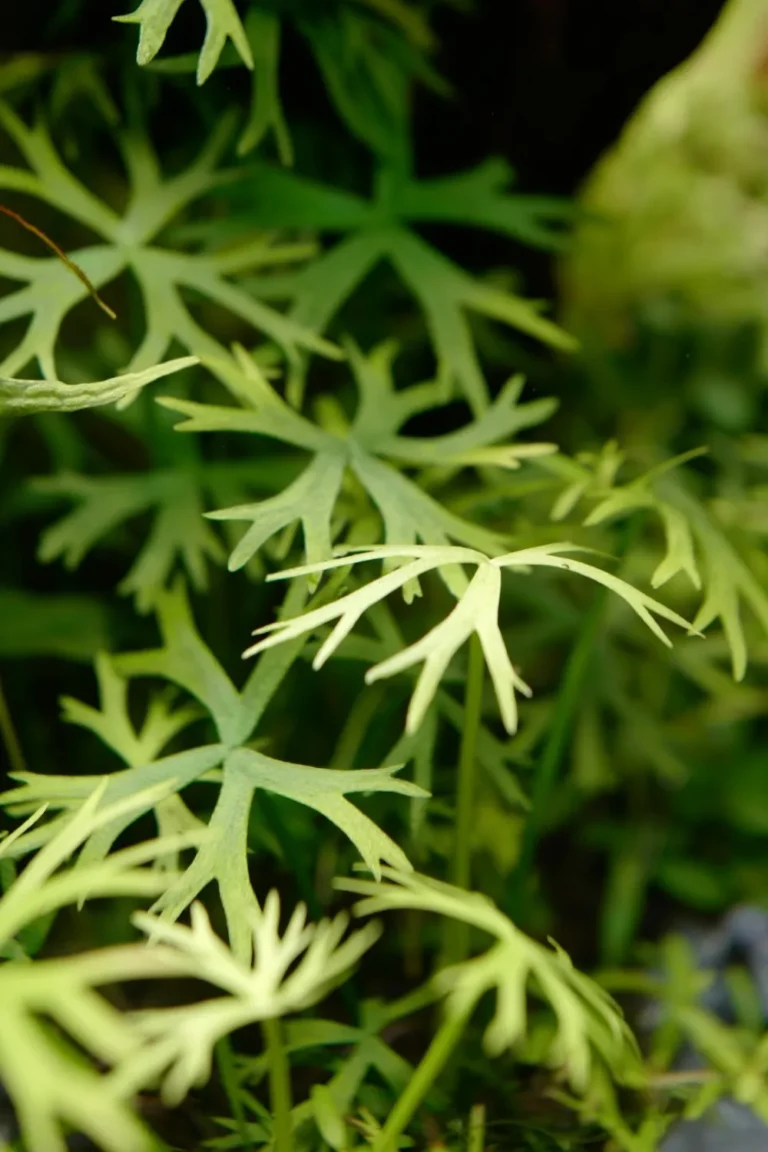
River Buttercup (Ranunculus flabellaris) is a fine-leaved submerged stem plant with delicate divided leaves and occasional yellow surface flowers. It forms airy upright stems that add movement and a soft feathery texture to background areas. River buttercup prefers cool to moderate temperatures, steady water conditions, and moderate light with regular nutrients. It is approachable for hobbyists willing to trim and propagate stem cuttings.
Quick overview
River buttercup, Water buttercup, Brook buttercup
Leaves ~5–25 mm, stems ~10–40 cm
Ideal use in aquascaping
River buttercup is useful as a background or tall midground plant that provides height and soft motion. Its divided leaves create a delicate contrast next to broader-leaved plants and hardscape. Use it to add depth and a natural riverbank look in planted layouts.
Place in the background or tall midground where stems can reach the surface and create a layered backdrop. It works well as a filler behind shorter carpets or rosettes to give a sense of scale.
Good styles for this plant
Fits well in naturalistic, riverbed, and biotope layouts where cool clear water and a flowing look are desired. It also complements Dutch and jungle-style aquascapes when used in groups.
Leaves are bright to mid green with a fine feathery texture that contrasts nicely with broad or round leaves. The plant adds lightness and movement when stems sway in the current.
Scales well to medium and large tanks due to its height; in small tanks keep stems trimmed to maintain proportion. In large tanks plant in clusters to form a convincing background stand.
Light and CO₂
Medium–high. Under moderate to higher light the stems stay compact and dense, while lower light produces longer, sparser stems.
CO₂ is optional and boosts growth and vigor but is not strictly necessary in low-tech setups with good nutrients.
8–10 hours daily. A consistent schedule helps minimize algae and supports steady growth.
Substrate and nutrients
River buttercup benefits from a nutrient-rich substrate or periodic root tabs because it sends many leaves from the lower stems. It will also take nutrients from the water column, so regular liquid fertilization helps in planted tanks.
Substrate preference
Prefers a mineral substrate with organic content or a planted aquarium soil to support root development. Loose gravel over nutrient-rich soil works if you need porosity.
Nutrient needs
Moderate macro and micronutrients are needed for steady healthy growth and to prevent yellowing. Supplement with root tabs for long-term nutrient supply if using inert substrate.
- Use root tabs near established plants every 6–12 weeks.
- Dose liquid fertilizer weekly to maintain micronutrients.
- Increase potassium and iron if you see yellowing or pale leaves.
Planting and propagation
Plant as individual stems or small bunches; the plant establishes quickly from cuttings. Propagation is straightforward by trimming and replanting stem tips or dividing dense bunches.
How to plant
- Trim stems to 5–10 cm lengths
- Plant small bunches 2–4 cm apart in the background
- Press gently into substrate so stems stand upright
Propagation method
Primarily by stem cuttings and by dividing dense clumps; new shoots root from lower nodes when anchored. Occasional surface flowering and seed are possible in open systems but are not typical in tanks.
- Cut healthy tops and replant immediately for fastest results
- Keep cuttings upright and spaced to encourage branching
- Trim regularly to promote bushier regrowth
Pruning and maintenance
Trim long or leggy stems at the base or mid-stem to encourage side shoots and a fuller look. Remove older lower leaves if they turn brown to prevent decay and algae buildup.
Trimming style
Cut stems back to a node or to the base to encourage multiple side branches and a denser background stand.
Maintenance frequency
Every 1–3 weeks depending on growth speed and desired shape. Faster growth under strong light or CO₂ may require weekly trimming.
Growth and health indicators
What healthy growth looks like
Healthy plants show bright green finely divided leaves with new shoots at multiple nodes and a compact overall habit when trimmed regularly. Upright stems should be sturdy and not limp.
Signs it needs attention
Pale or yellowing leaves, melted sections, and excessive algae on leaves indicate nutrient imbalance or poor light and require adjustment. Rapidly elongating thin stems suggest low light or low nutrients.
Tankmates and compatibility
Generally compatible with typical community species but avoid large plant-eating or digging fish that uproot stems. It pairs well with other background plants that prefer cooler water.
Most small peaceful fish, shrimp, snails, and similar community species.
Avoid fish that dig or uproot plants, such as cichlids, large loaches, and goldfish.
It prefers cooler water compared with many tropical stem plants so monitor temperature in mixed-species tanks. Regular trimming and nutrient maintenance keep it looking its best.
Pro tips for this plant
Plant in small tight bunches for a fuller background effect that fills out quickly.
Use root tabs if you see slow growth or yellowing from the substrate.
Trim tops regularly to encourage multiple branches and prevent legginess.
Algae buildup
Algae can settle on delicate leaves if light and nutrients are unbalanced; reduce light slightly and maintain regular fertilization and water changes to control it.
Leaf yellowing
Yellowing often indicates nutrient deficiency, especially iron or potassium, and can be corrected with targeted dosing or root tabs near the plants.
Leggy growth
Leggy elongated stems typically mean low light or insufficient nutrients; increase light or fertilization and trim stems to stimulate branching.
Typical beginner mistakes
- Planting stems too far apart leading to slow fill-in
- Neglecting substrate nutrients and relying only on water column dosing
- Waiting too long to trim which causes sparse regrowth
Short summary
River buttercup (Ranunculus flabellaris) is a fine-leaved stem plant that makes an attractive, airy background in cool to moderate temperature aquariums. It grows moderately fast, responds well to nutrients and trimming, and is suitable for hobbyists who want a natural flowing look. Regular maintenance and balanced fertilization keep it healthy and free of algae.
Frequently asked questions (FAQs)
Is River Buttercup easy to grow?
Yes, it is generally easy to medium in difficulty and responds well to basic care like consistent light and nutrients.
Does it need CO₂ injection?
CO₂ is optional and will boost growth and compactness but is not required in low-tech setups with good fertilization.
How often should I trim it?
Trim every 1–3 weeks depending on growth to keep a dense background and encourage branching.
Can it tolerate tropical temperatures?
It prefers cooler to moderate temperatures but will tolerate typical tropical ranges up to around 24 °C if other conditions are stable.
Will fish eat or damage it?
Most small peaceful fish will not eat it, but diggers and large omnivores can uproot or damage stems.
How do I propagate River Buttercup?
Propagate by taking stem cuttings or dividing clumps and replanting them; new shoots root quickly from nodes.