At a glance
Fast growth
Background plant
Large leaves
Easy care
Description
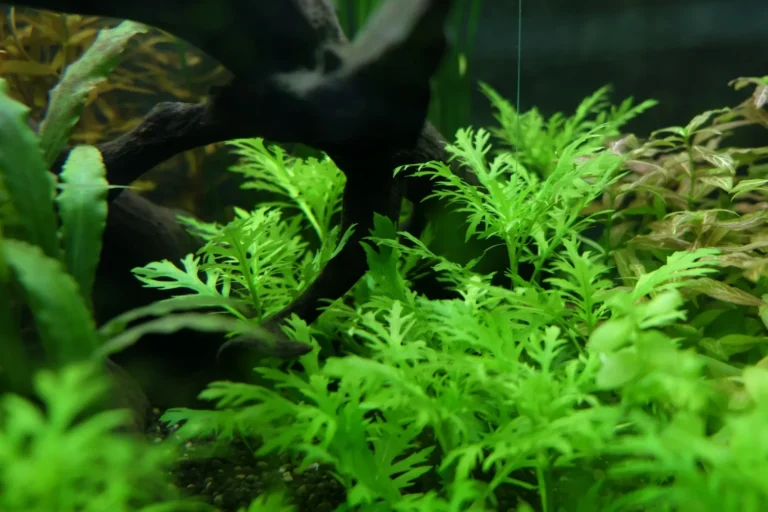
Water wisteria is a popular, fast-growing aquarium stem plant valued for its lacy, variable leaves and easy propagation. The species Hygrophila difformis adapts to a wide range of conditions and responds strongly to light and nutrients. It can be kept loose and tall or trimmed into dense bushes, making it forgiving for beginners and useful for experienced aquascapers. Routine trimming and steady fertilization keep it healthy and prevent overshadowing other plants.
Quick overview
Water wisteria, Wisteria, Asian wisteria, Hygrophila
Ideal use in aquascaping
Water wisteria makes an excellent background or midground filler where a fast-growing, textural element is needed. Its lacy leaves add vertical interest and can provide hiding places for fry and invertebrates. It also acts as a nutrient sink to help competing algae in new setups.
Plant in the background or grouped in midground clusters to create lush vertical structure; use trimmed tops to plant smaller foreground or midground islands. It works well as a fast-growing backdrop that can be regularly shaped.
Good styles for this plant
Suited to nature aquascapes, jungle tanks, and community layouts where quick coverage and a wild look are desired. It can be used in loose, natural groupings or more controlled, trimmed hedges.
Leaves range from bright to deep green with a slightly ruffled texture that softens hardscape lines. The feathery leaf forms create contrast against broad-leafed or carpeting plants.
Performs well in both small and large tanks but can quickly dominate small aquaria without regular trimming. In large tanks it scales easily by repeating planting groups.
Light and CO₂
Medium–high. Under medium light it grows well but can stretch; higher light produces denser, more compact foliage while low light yields larger sparse leaves.
CO₂ is optional but supplemental CO₂ promotes faster, bushier growth and more compact leaf development.
8–10 hours daily. A consistent schedule helps prevent algae and supports steady growth.
Substrate and nutrients
Water wisteria takes nutrients from both the substrate and the water column and benefits from a nutrient-rich base and regular liquid dosing. Iron and balanced macronutrients support good leaf color and growth. Use root tabs if your substrate is inert.
Substrate preference
Prefers a fertile planted substrate but will grow in gravel or sand if the water column is regularly fertilized or root tabs are used. A fine to medium grain helps anchor stems.
Nutrient needs
Moderate to high nutrient demand under good light; regular NPK and trace element dosing is recommended to prevent yellowing. Iron supplementation helps maintain deep green leaves.
- Dose a balanced liquid fertilizer weekly to supply macronutrients.
- Place root tabs near older clumps if using an inert substrate.
- Add iron if you notice interveinal yellowing on new leaves.
Planting and propagation
Plant as individual stem cuttings grouped for a fuller look and propagate easily by cutting tops and replanting. New cuttings root quickly and will branch to form dense masses when trimmed.
How to plant
- Cut healthy stems to 6–12 cm lengths
- Remove lower leaves from each cutting
- Insert stems vertically into substrate and press gently
Propagation method
Mainly by stem cuttings; trimmed apical pieces root readily when replanted and form new shoots from nodes. Occasional side shoots can be separated and replanted as well.
- Replant tops immediately after trimming to speed rooting
- Keep flow gentle to avoid dislodging new cuttings
- Trim regularly to encourage branching and multiple root points
Pruning and maintenance
Regular pruning prevents legginess and encourages bushy growth; cut stems back to a node or junction to promote side shoots. Remove older lower leaves and any decaying material to keep water quality high.
Trimming style
Trim by cutting stems back to a node or branch point to force lateral shoots and create a fuller appearance.
Maintenance frequency
Every 1–3 weeks depending on growth rate and tank conditions; faster under high light and CO₂. Monitor for shading of other plants and trim accordingly.
Growth and health indicators
What healthy growth looks like
Healthy plants display vibrant green, slightly ruffled leaves with multiple side shoots and a dense crown. New growth appears from nodes and the overall mass fills out rather than stretching tall and sparse.
Signs it needs attention
Leggy stretching, pale or yellowing leaves, and slow new growth indicate light or nutrient deficiencies. Sudden melting or brown spots suggest water parameter changes or transplant stress.
Tankmates and compatibility
Generally hardy and compatible with most peaceful community tanks and planted layouts. It provides cover and spawning sites for small fish and shrimp.
It pairs well with small peaceful community fish and invertebrates that do not uproot plants.
Use caution with digging fish and large herbivores that will uproot or eat the stems.
It can grow emersed in humid conditions and may tolerate temporary emersed growth during propagation. Remove floating debris and trim regularly to maintain light penetration.
Pro tips for this plant
Trim the tops and replant immediately to create multiple rooted stems quickly.
Use root tabs if your substrate is inert to boost long-term root nutrition.
Increase light gradually to avoid algae outbreaks when boosting growth.
Leggy growth
Leggy, stretched stems usually result from low light or insufficient pruning; increase lighting or trim stems and replant cuttings to encourage bushier growth.
Yellow leaves
Yellowing can signal nutrient deficiencies, especially iron or nitrogen, or poor water quality; correct by dosing a balanced fertilizer and checking water parameters.
Melting stems
Melting or rotting stems often follows sudden parameter changes or transplant shock; remove decaying parts, stabilize water conditions, and plant healthy cuttings.
Typical beginner mistakes
- Planting stems too deeply so leaves rot near the substrate
- Overcrowding without regular trimming which blocks light to lower leaves
- Neglecting fertilization under medium to high light leading to nutrient deficiencies
Short summary
Water wisteria (Hygrophila difformis) is a fast, adaptable stem plant prized for its lacy foliage and easy propagation. It thrives across a wide range of conditions but rewards moderate to high light and regular fertilization with compact, dense growth. Regular trimming keeps it attractive and prevents it from overpowering a tank.
Frequently asked questions (FAQs)
How fast does water wisteria grow?
It grows quickly under good light and nutrients and may need weekly trimming in optimal conditions.
Does water wisteria need CO₂ injection?
CO₂ is optional but will accelerate growth and produce denser, more compact foliage when provided.
Can water wisteria be used as a carpet?
No, it is a stem plant suited to background or midground placements, though very low trimming can make small clumps appear carpet-like.
What is the easiest way to propagate it?
Cut stem tips and replant them; they usually root within days to a few weeks and begin producing side shoots.
Why are my stems becoming leggy?
Leggy stems are typically caused by low light or lack of pruning, so increase light or trim and replant cuttings to restore density.
Is water wisteria safe with shrimp?
Yes, shrimp are safe with water wisteria and help keep leaf surfaces clean without damaging the plant.