At a glance
Stem plant
Fast growth
Background
Hardy species
Description
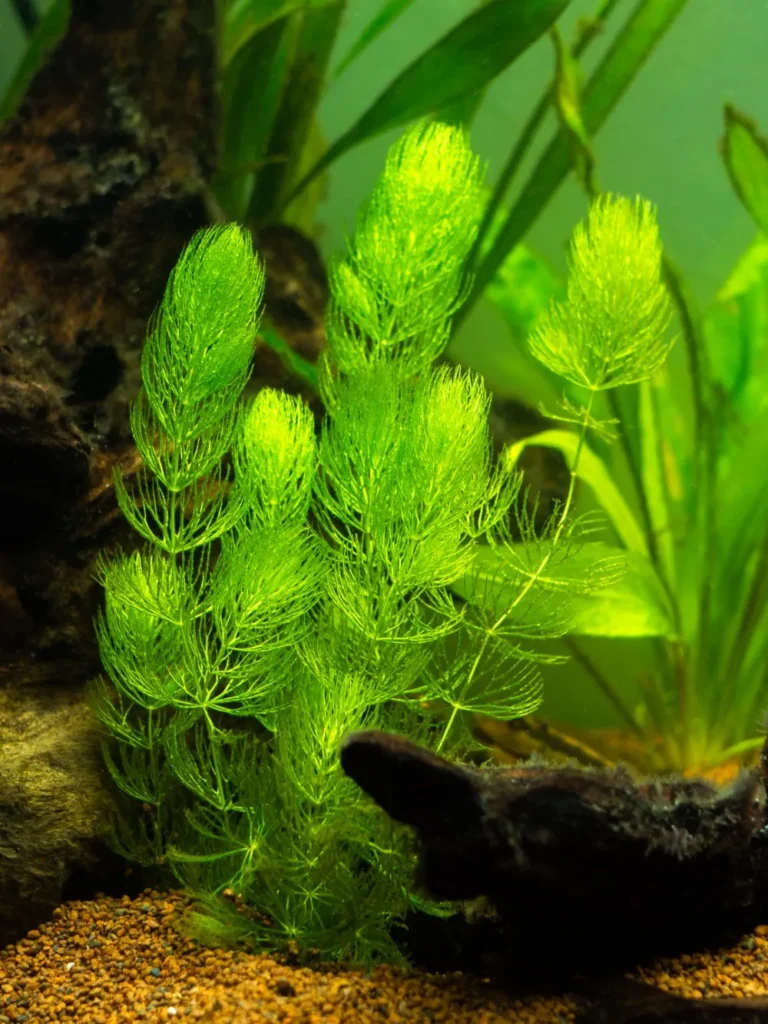
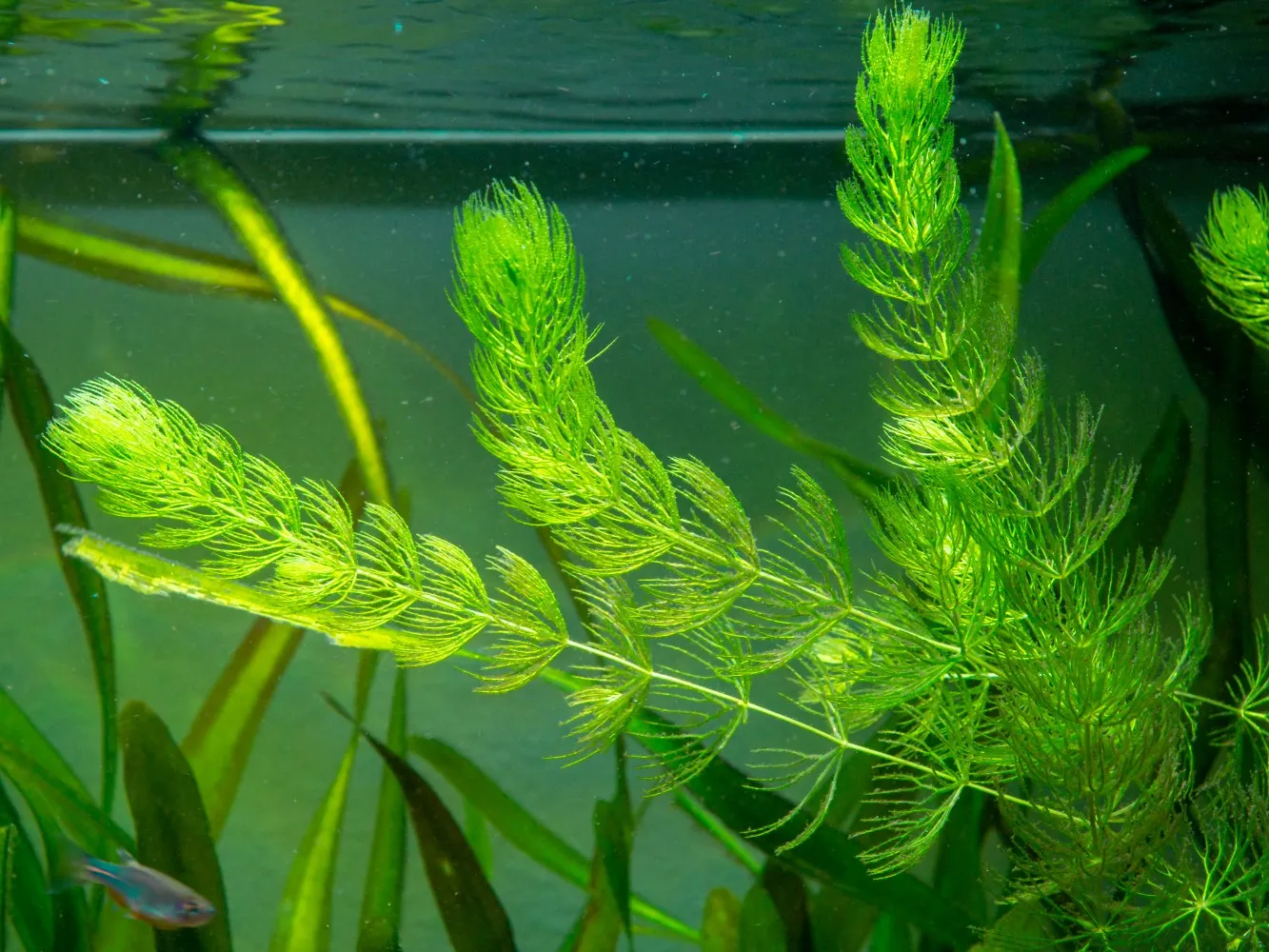
Hornwort (Ceratophyllum demersum) is a feathery, free‑or‑anchored stem plant with dense whorls of needlelike leaves that create a soft green backdrop. It forms long flexible stems that can float or be fixed to the substrate or hardscape and often develops a bushy appearance. Hornwort is tolerant and fast growing, making it useful for nutrient export, oxygenation, and providing shelter for fry. Care is straightforward but regular trimming is needed to prevent overgrowth and shading of other plants.
Quick overview
Hornwort, Coontail, Rigid hornwort
Ideal use in aquascaping
Hornwort is ideal as a fast background filler or floating mass that quickly establishes volume and hides equipment. It is excellent for nutrient export and creating refuges for fry and shrimplets. Use it where a loose natural look and quick coverage are desired.
Place hornwort in the background tied to wood or rock or let it float midwater to provide vertical structure and shelter. It functions as an oxygenator, a visual backdrop, and a biological filter when allowed to grow densely.
Good styles for this plant
Hornwort fits naturalistic, jungle, and low‑maintenance planted styles and also works well in tanks aiming for a wild look. It is less suited to tightly controlled high‑detail layouts that require precise trimming.
Bright to medium green with fine feathery texture that softens hardscape edges and contrasts with broadleaf plants. Its airy stems add depth and movement when allowed to sway with flow.
In small tanks hornwort can quickly dominate and reduce light to lower plants so frequent trimming is necessary. In medium and large tanks it scales well as a background or floating plant and can be used to control excess nutrients.
Light and CO₂
Medium to high. Hornwort grows faster and denser under stronger light but will tolerate low light where it elongates and becomes leggier.
CO₂ is optional and can boost growth rate and vigor but is not required for healthy plants in most setups.
8–10 hours daily. A consistent lighting schedule helps limit algae and keeps growth predictable.
Substrate and nutrients
Hornwort does not root and takes nutrients from the water column, so regular liquid fertilization is more important than substrate feeding. It benefits from available macronutrients and micros in the water and will respond quickly to improved water column fertility.
Substrate preference
Because it does not root, substrate type is not critical; inert gravel or sand works fine when anchoring stems. It can also be left floating or tied to hardscape without any substrate.
Nutrient needs
Relies on water column nutrients, especially nitrate and iron, so pair with regular liquid fertilization or a planted tank dosing routine. Ensure nitrate is present to avoid yellowing and melting.
- Use regular liquid trace and macronutrient dosing to support rapid water‑column uptake.
- Add iron if tips yellow and perform frequent water changes to balance nutrients.
- Monitor nitrates and reduce dosing if algae becomes problematic.
Planting and propagation
Hornwort propagates easily from stem fragments and trimmed tips and can be left floating or anchored. New plants establish quickly from short cuttings and will form bushy growth if trimmed back periodically. It is one of the easiest plants to propagate and manage.
How to plant
- Trim stems to desired length
- Anchor base with a weight or bury 1–2 cm in substrate
- Or allow stems to float freely for midwater cover
Propagation method
Propagation is by cuttings and natural fragmentation; simply trim healthy tips and replant or let them float to form new plants. Pieces that break off root into drifts of growth rather than true roots but will quickly form new lateral shoots.
- Use trimmed tips as new plants by anchoring or floating them
- Tie stems to wood with thread until they take hold
- Collect and reuse fast‑growing fragments to control nutrient levels
Pruning and maintenance
Trim hornwort frequently to prevent it from overtaking the tank and to encourage bushier growth near the tips. Remove decaying sections and thin crowded areas to maintain water flow and light penetration. Keep trimmed material out of filters to avoid clogging.
Trimming style
Cut back long stems to the desired height and remove excess side branches to keep a compact bushy appearance while maintaining open swim space.
Maintenance frequency
Every 1–2 weeks for fast growth tanks and monthly in low‑light setups depending on vigor. Remove floating fragments and prune after heavy growth spurts to prevent shading.
Growth and health indicators
What healthy growth looks like
Healthy hornwort is bright green with dense whorls of evenly spaced leaves and no brown or translucent sections. Growth appears bushy with multiple lateral shoots along the stem.
Signs it needs attention
Yellowing, loss of leaf density, or browning tips indicate nutrient deficiency or poor water quality, and heavy algae attachment suggests an imbalance in light or nutrients. Excessive floating fragments that fail to establish may signal poor water parameters or damage.
Tankmates and compatibility
Generally compatible with most community aquariums but can be eaten or stripped by large herbivores and may clog intakes if not trimmed. It provides cover and breeding shelter for small fish and invertebrates.
Most small peaceful fish, shrimp, snails, and similar community species make good tankmates with hornwort because it provides shelter and does not require rooting.
Use caution with large plant‑eating fish such as goldfish, large cichlids, and some plecos that may strip or uproot hornwort rapidly.
Hornwort can clog filters and pumps so use a prefilter sponge or tie stems away from intakes. As a floating or anchored plant it is valuable for nitrate control and providing refugia for fry.
Pro tips for this plant
Trim regularly and use trimmed tips to propagate new plants quickly.
Tie stems to hardscape for a controlled background instead of allowing unlimited floating.
Use hornwort in nutrient‑rich tanks to help reduce nitrate spikes quickly.
Algae growth
Fast hornwort growth can fuel algae if light and nutrients are unbalanced; reduce photoperiod and adjust dosing to control outbreaks. Increase water changes and remove algae manually to restore balance.
Yellowing leaves
Yellow or translucent leaves usually mean a nutrient deficiency, often iron or nitrate, or poor water quality; add appropriate liquid fertilizers and test water parameters to correct the issue.
Filter clogging
Broken or trimmed fragments can enter and clog filter intakes; prevent this by using prefilter sponges and tying plants away from strong flow paths while removing loose debris regularly.
Typical beginner mistakes
- Allowing unchecked floating growth that shades lower plants
- Failing to trim and remove fragments that clog filters
- Relying on substrate fertilization instead of water column dosing
Short summary
Hornwort is a hardy, fast‑growing stem plant that works well as a background or floating mass and is excellent for nutrient export and shelter. It tolerates a wide range of conditions and is easy to propagate, but requires regular trimming and water column fertilization to stay healthy.
Frequently asked questions (FAQs)
Can hornwort float or be planted?
Yes, hornwort can be left to float or anchored by burying the stem slightly or tying it to hardscape for a fixed background.
Is hornwort suitable for beginners?
Yes, hornwort is very forgiving and easy to grow, making it a good choice for beginners looking for fast coverage and low maintenance.
Does hornwort need CO2 injection?
No, CO₂ is optional; hornwort grows well without injection but will grow faster and denser with additional CO₂ and nutrients.
Will hornwort harm fish or invertebrates?
Hornwort is generally safe and beneficial, providing shelter for fish and shrimp, though large plant‑eating species may damage it.
How often should I trim hornwort?
Trim every one to two weeks in fast setups and monthly in slower tanks to prevent overcrowding and shading of other plants.
How do I prevent hornwort from clogging my filter?
Use a prefilter sponge over intakes, secure stems away from strong flow, and remove loose fragments promptly to keep filters clear.