At a glance
Carpet plant
Fine texture
Low light
Slow growth
Description
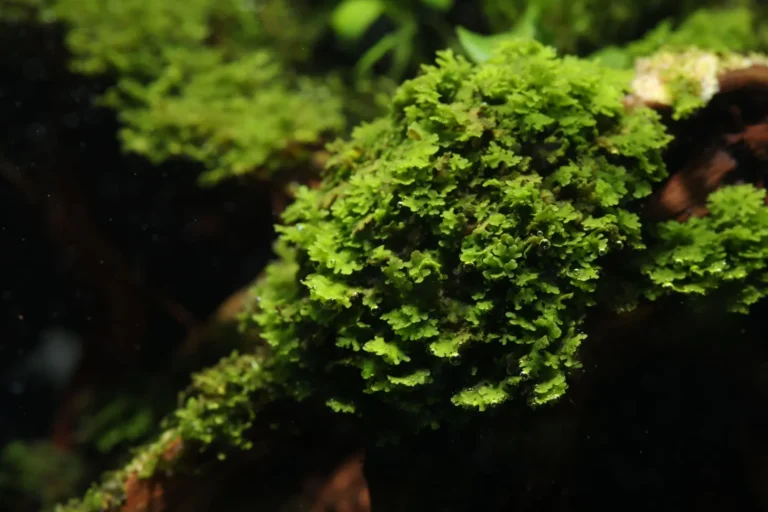
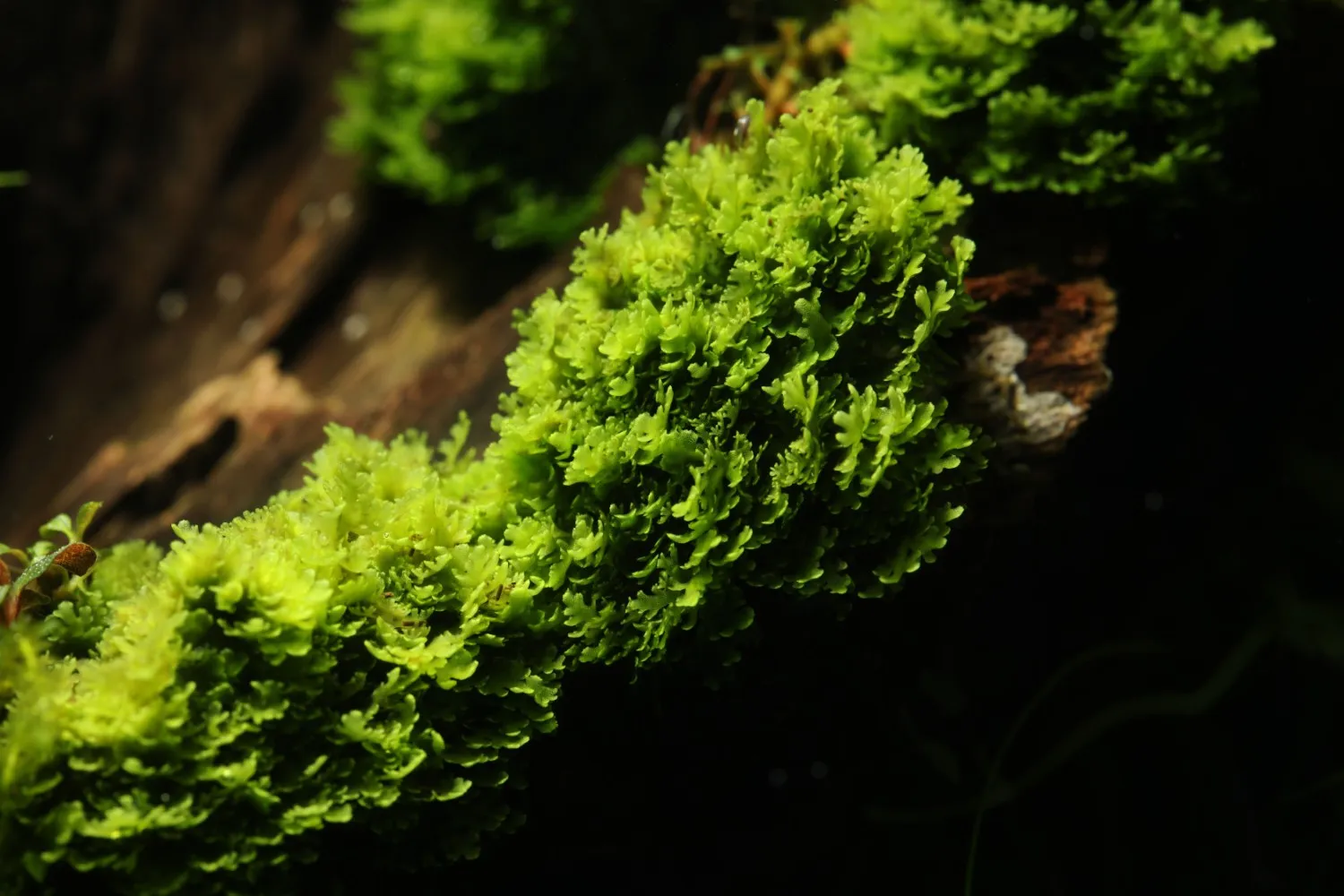
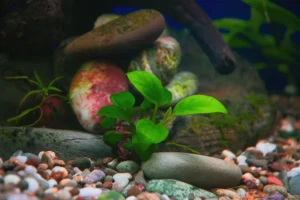
Mini Pellia (Riccardia chamedryfolia) is a tiny aquatic liverwort often sold as coral moss that forms a dense, low mat of branching fronds. It has a delicate texture and bright to deep green color that adds a soft carpet or accent to hardscape. Care is straightforward but patience is needed because it grows slowly and establishes best when attached to rock or wood. With gentle light and stable water parameters it rewards aquascapers with an attractive miniature carpet.
Quick overview
Mini Pellia, Coral moss, Riccardia, Pellia
Leaves ~1–3 mm, carpet height ~1–3 cm
Ideal use in aquascaping
Mini Pellia makes a great soft carpet or focal accent on rock and wood where tiny texture is needed. It works well in small pockets, on crevices, and in foreground mats to contrast larger-leaved plants.
Place it on flat rock faces, driftwood, or shallow substrate patches in the foreground where it can form a low carpet and be easily observed. It functions as a delicate foreground carpet or a living accent around hardscape.
Good styles for this plant
It suits Iwagumi, nature, and nano scapes where fine texture and intricate detail are desired. It also works well in low-tech layouts as a gentle foreground element.
Mini Pellia offers a soft, coral-like texture and a fresh green color that contrasts well with coarser plants and dark hardscape. Its tiny fronds add visual depth without overwhelming the layout.
It scales well in nano and larger tanks but is especially striking in smaller aquariums where its detail is visible. In large tanks plan multiple attachment points or frequent propagation to cover areas evenly.
Light and CO₂
Low–medium. It tolerates low light and stays compact under gentle illumination but will grow denser and faster with moderate light.
CO₂ is recommended to speed growth and improve density but the plant can survive without injection if nutrients and water quality are stable.
6–8 hours daily. A consistent schedule helps establishment and reduces algae pressure.
Substrate and nutrients
Mini Pellia is primarily a water-column feeder and attaches with rhizoids to hardscape rather than relying on substrate. It benefits from regular liquid fertilization and stable trace elements rather than heavy root feeding.
Substrate preference
Best attached to rock or wood where it can spread across surfaces; it can sit on sand but does not root into deep substrate. Avoid burying the rhizoids beneath gravel.
Nutrient needs
Requires steady micro and macro dosing for healthy green color, with attention to iron and trace elements. Nitrate levels should be stable and not completely depleted to support slow steady growth.
- Use regular liquid fertilizer that includes trace elements.
- Add a dedicated iron supplement if color pales.
- Keep nitrate levels moderate to support steady growth.
Planting and propagation
Plant by attaching small fragments to rock or wood using thread or aquarium glue and allow rhizoids to secure. Propagation is by division and fragmentation as tiny pieces will attach and expand into new mats.
How to plant
- Divide the plant into small patches
- Tie or glue patches to rock or wood
- Hold in place until rhizoids attach
Propagation method
Propagation is by cutting or dividing the mat into small pieces and attaching them to new surfaces where they will grow outward. Fragments readily produce rhizoids and form new carpets under stable conditions.
- Use fine thread or superglue gel to secure pieces
- Keep flow gentle until attachments form
- Start with many small fragments for even coverage
Pruning and maintenance
Maintenance is minimal but periodic thinning helps water flow and light penetration; trim ragged or brown areas and lift sections to remove debris. Remove trapped detritus and gently comb to prevent compacting the mat.
Trimming style
Trim with fine scissors by snipping the top layer to shape and remove long runners leaving a thin healthy carpet.
Maintenance frequency
Every 2–4 weeks is typical for light trims to maintain shape and prevent buildup. More frequent checks help catch algae or trapped debris early.
Growth and health indicators
What healthy growth looks like
Healthy growth is a dense, uniformly green mat of short branching fronds that spreads slowly across hardscape. New growth appears from multiple tiny shoots and fills gaps over time.
Signs it needs attention
Watch for browning, thinning, or melting of fronds which indicate poor lighting, nutrient imbalance, or inadequate attachment. Persistent algae on the surface or pale color also signal care adjustments are needed.
Tankmates and compatibility
Mini Pellia is compatible with most small peaceful community species and benefits from algae-eating shrimp and snails. Avoid fish that dig or graze heavily on carpets.
Most small peaceful fish, shrimp, snails, and similar community species are compatible with mini pellia.
Avoid large digging or grazing fish because they will uproot or consume the mat.
Attach to hardscape for best results and be patient while it establishes. Shrimp and snails help keep the mat clean and encourage healthy growth.
Pro tips for this plant
Start with many small fragments for quicker uniform coverage.
Use low to moderate flow so debris does not settle on the carpet.
Stabilize water parameters and keep trace dosing consistent for steady color.
Slow growth
Growth is naturally slow and will be even slower without stable nutrients and gentle lighting, so increase water column dosing and consider CO₂ to speed coverage.
Browning
Browning usually means poor attachment, lack of light, or nutrient deficiency; check that fragments are secured, adjust light gently, and dose trace elements.
Algae takeover
Algae can smother the mat when light, nutrients, or flow are unbalanced; reduce photoperiod, improve circulation, and control excess nutrients to curb algae.
Typical beginner mistakes
- Placing under intense light leading to melting or algae
- Burying rhizoids in substrate instead of attaching to hardscape
- Expecting rapid coverage and trimming too aggressively
Short summary
Mini Pellia (Riccardia chamedryfolia) is a delicate low-growing liverwort ideal for foreground carpets and hardscape accents. It prefers low to moderate light, stable nutrients, and attachment to rock or wood and rewards patience with a fine textured green mat.
Frequently asked questions (FAQs)
Is mini pellia easy to keep?
Yes it is manageable but it requires stable conditions and patience because it grows slowly and likes gentle light.
Can it grow on substrate?
It can sit on substrate but performs best attached to rock or wood where rhizoids can secure the mat.
CO2 is not strictly necessary but it is recommended to speed growth and improve density in most setups.
Spread is slow and depends on light, nutrients, and attachment; expect gradual coverage over weeks to months.
Shrimp generally graze lightly and help keep surfaces clean without destroying healthy mats.
How do I attach it to hardscape?
Use fine thread or a small dab of aquarium-safe glue and hold fragments until rhizoids take hold.