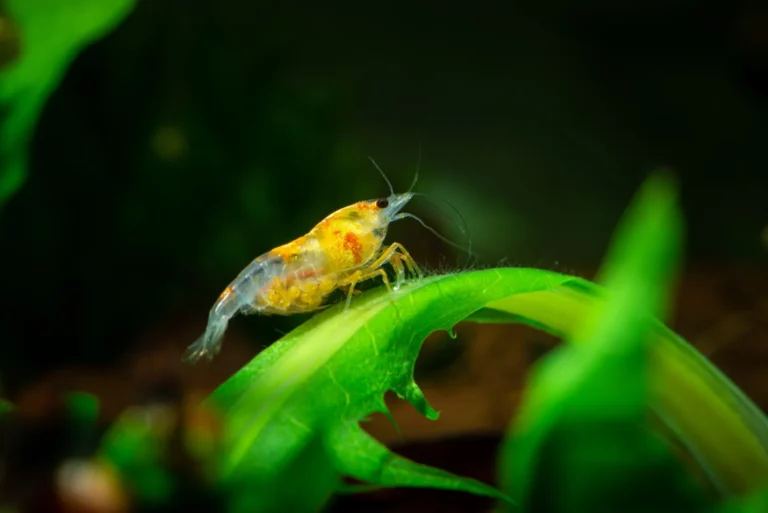
Yellow Rili shows warm yellow bands or patches combined with transparent or white areas, creating a striking two-tone effect in the aquarium. The patterning and intensity vary between individuals, and the morph belongs to Neocaridina davidi. It works well in planted layouts where the yellow contrasts with greenery. With stable water and proper diet the colours remain vivid.
Yellow Rili stands out because its warm yellow pigmentation contrasts with clear or white areas to produce a striking two-tone, rili-style pattern. The yellow tone is generally translucent and can vary in intensity between individuals and across grades. Pattern grading affects how much yellow versus clear shows, and some levels have strong, stable patches while others are more delicate. Environmental factors such as diet, minerals and lighting can shift intensity slightly, but good husbandry keeps the colour true.
Quick overview
Common name(s)
Yellow Rili, Yellow Rili Shrimp
Color line
Rili
Latin name
Neocaridina davidi
Size
Length ~2–3 cm
Temperament
Peaceful
Tank level
Middle to bottom
Minimum tank size
5 gallons (19 L)
Water type
Freshwater
Difficulty
Easy
Ideal aquarium setup
This morph stands out in densely planted aquascapes where the yellow bands add warmth and contrast to green foliage. Substrate choice changes the look: dark substrate makes the yellow pop while light substrate softens the contrast; include mosses, ferns, driftwood to provide hiding spots and biofilm surfaces.
Behavior and temperament
They are peaceful grazers that spend most time on plants and hardscape, often visible as they forage. They do best in groups and show more confident behaviour in established colonies.
Molting, health and color quality
Colour quality is tightly linked to overall health; a steady supply of minerals, stable water parameters and a varied diet support vivid tone and successful molts. Juveniles need consistent conditions to develop full pigmentation, so avoid swings in hardness or pH that can delay colouration and increase mortality.
Diet and feeding
They graze all day on biofilm and detritus, and you should supplement with sinking food 2–3 times per week. Exceptionally clean tanks may need slightly more feeding to ensure juveniles and shy adults get enough.
How to improve their color with food
Spirulina supplements to boost natural pigments
Chlorella flakes for green and yellow enhancement
Carotenoid-rich colour foods for brighter yellow tones
Foods that support biofilm growth such as leaf litter pieces
Tankmates
Safe tankmates include other small peaceful fish like emperor tetras, rasboras, and snails; avoid larger or aggressive fish that nip or hunt. Juveniles can be taken by curious fish, so choose calm species or keep them in a shrimp-only tank if breeding is a priority.
Breeding Yellow Rili Shrimp
Breeding Yellow Rili is straightforward in a stable, well-planted tank where females carry eggs and release numerous tiny young; they do not need special induced measures. To maintain line quality, select adults showing the clearest yellow patches and avoid crossing with vastly different colour lines, though some throwbacks to paler or more transparent forms are common and expected.
How to keep the colony strong
Maintain stable water parameters and regular, small water changes
Provide varied diet including biofilm-promoting foods and colour supplements
Select breeders that show strong yellow patches to reinforce the trait
Offer plenty of hiding places and dense planting for juvenile survival
Common problems
Molting issues
Inadequate minerals or stress can cause failed molts; improve water stability and provide calcium sources such as mineral-rich foods or cuttlebone. Regular, gentle water changes and hiding places help shrimp moult successfully.
Colour fading
Pale or washed-out yellow usually signals poor diet, low minerals or prolonged stress; boost carotenoid-rich foods and check mineral levels to restore tone. Avoid rapid parameter changes and provide biofilm-rich surfaces.
Parameter swings
Sudden changes in temperature, pH or hardness stress shrimp and reduce survival; maintain stable parameters with gradual adjustments. Test water regularly and use buffering media or remineralisers if needed.
Predation
Small or curious fish may pick off juveniles, reducing recruitment; separate breeders or dense planting to protect young shrimp. A shrimp-only tank eliminates predation risk and preserves colony growth.
Similar color variants (and how they compare)
Red Rili
Red Rili swaps the yellow for deep red patches and usually offers stronger, more opaque coverage compared with the subtler yellow tones of Yellow Rili.
Blue Rili
Blue Rili displays cooler blue hues and often appears more muted or translucent, creating a different contrast effect against foliage than Yellow Rili.
Yellow Sakura
Yellow Sakura tends to have more uniform yellowation across the body rather than the clear banding of a Rili pattern, so it reads as a solid-colour shrimp rather than two-toned.
Short summary
Yellow Rili is a vibrant Rili-line Neocaridina davidi prized for warm yellow patches paired with transparent areas, making it an eye-catching addition to planted tanks. It is suitable for beginners who keep stable water and provide regular, balanced feeding. With basic care and group housing they breed readily and display their best colours.
Frequently asked questions (FAQs)
How bright should my lighting be?
Moderate lighting that supports plant growth is ideal; too bright light can stress shrimp and encourage algal blooms. Provide shaded areas with moss or floating plants to increase comfort.
Will Yellow Rili breed easily?
Yes, they breed readily in stable aquaria with mixed sexes and good nutrition; females carry eggs under the abdomen until they hatch. Keep water stable and provide biofilm and leaf litter to boost survival.
Do they need special water chemistry?
They prefer stable, neutral to slightly alkaline pH and moderate hardness; extreme or fluctuating chemistry causes stress. Use a remineraliser if your source water is very soft to supply necessary minerals.
How many should I keep together?
A group of at least 10 is recommended for confident behaviour and successful breeding, with larger colonies giving better stability. Small groups may hide more and breed less reliably.
Can I keep them with small fish?
You can keep them with peaceful, non-aggressive fish but any species that nips or is large enough to swallow juveniles is a risk. For reliable breeding and maximum survival, a shrimp-only tank is best.
How long until juveniles show colour?
Juveniles hatch fully formed but are tiny and mostly transparent; noticeable yellow patterning develops over weeks as they grow. Colour maturity often occurs after several molts and a few months of growth.
Mette Tulin
Mette Tulin is the creator of Aquascapedia, with more than 15 years of hands-on experience in aquascaping, planted aquariums, and freshwater fish, shrimp, crayfish, and snails. She shares practical insights, curated aquatic life profiles, and inspiration to help others build thriving underwater landscapes.
Aquascapedia uses cookies to ensure the website functions properly and to understand how visitors interact with the content. Analytics cookies are only used with your consent.
Necessary
Always active
Required for the website to function properly. These cookies cannot be disabled.
Preferences
The technical storage or access is necessary for the legitimate purpose of storing preferences that are not requested by the subscriber or user.
Analytics
The technical storage or access that is used exclusively for statistical purposes.Used to understand how visitors interact with the website. No personally identifiable information is used, and analytics cookies are only set with your consent.
Marketing
The technical storage or access is required to create user profiles to send advertising, or to track the user on a website or across several websites for similar marketing purposes.