At a glance
Colorful
Shy
Plant-safe
Sensitive
Description
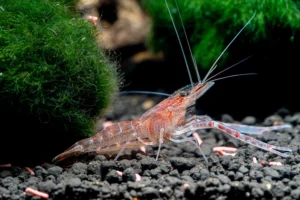
The Orange Eye Blue Tiger Shrimp is a striking variant of Caridina mariae known for its blue body and contrasting orange eyes. It is peaceful and fully plant-safe, happily grazing on biofilm and algae without harming plants. The species prefers soft, slightly acidic water and stable conditions, making consistent maintenance important. With proper care it is an attractive addition to a planted nano aquascape.

Quick overview
Orange Eye Blue Tiger Shrimp, Blue Tiger Shrimp, Orange Eye Tiger
20 liters (5 gallons) for a colony
Ideal aquarium setup
A planted nano aquascape with lots of surface area for biofilm, stable water chemistry, and plenty of hiding spots suits this shrimp. Use mosses and dense foreground plants to provide grazing surfaces and security. Keep parameters steady and avoid copper and harsh medications to keep shrimp safe.
A 20–40 liter tank is fine for a small colony but larger volumes make stability easier. Aim for a good number of hiding spots and at least 10–15 adults for healthy social behavior.
Moderate lighting encourages plant growth and biofilm without stressing the shrimp; avoid overly intense light that promotes nuisance algae. Balanced lighting helps food sources form naturally while keeping shrimp visible and comfortable.
Fully plant-safe; these shrimp will not eat healthy plants and benefit from dense planting and mosses for grazing and shelter. Java moss, Christmas moss, and foreground carpeting plants are excellent choices.
Low to moderate flow, providing gentle circulation that prevents debris buildup while allowing shrimp to forage comfortably.
Prefer soft, slightly acidic aquarium soils that help maintain lower pH and gentle buffering, though inert substrates are acceptable if water chemistry is managed.
Include mosses, driftwood, and crevices to create grazing surfaces and molt shelters; caves and leaf litter give added security during molts.
Behavior and temperament
These shrimp are peaceful and generally timid, spending most time grazing on biofilm and hiding in dense plants or crevices. They do well in groups and display interesting social foraging without aggression. Molting makes them vulnerable so they retreat to cover until their new shell hardens. Activity peaks near feeding times and during stable, quiet periods in the tank.
Molting and health
Molting occurs every few weeks for adults and more frequently for juveniles, and a healthy cycle depends on stable water chemistry and minerals. Failed molts or repeated delays often point to mineral deficiencies, poor water quality, or stress. Providing consistent parameters and trace minerals reduces molting problems and supports overall health.
- Provide a quality mineral supplement or remineralizer designed for Caridina
- Keep water parameters stable with regular gentle water changes
- Offer hiding spots and moss so shrimp can shelter while molting
Diet and feeding
These shrimp are omnivorous scavengers that graze biofilm, algae, and detritus but benefit from occasional supplemental feeding. Offer a mix of high quality Caridina pellets and natural foods to maintain color and health. Avoid overfeeding and remove uneaten food to prevent water quality dips.
What they eat in nature
biofilm, algae, detritus, plant matter, microorganisms
What to feed in the aquarium
- Specialized Caridina pellets
- Biofilm and algae from the tank
- Blanched vegetables like zucchini or spinach
- Frozen micro foods such as daphnia or planaria
- Occasional mineral-rich shrimp wafers
Feeding schedule
Feed small portions 2–3 times per week, offering only what they finish within a few hours to avoid fouling.
Special dietary needs
Require balanced mineral content and some calcium for healthy molts despite preferring soft water.
Daily:
Check shrimp activity and remove visible uneaten food or debris to protect water quality and prevent stress.
Weekly:
Perform small, regular water changes of 10–20 percent with conditioned water matched in temperature and chemistry to maintain stability.
Always:
Always maintain stable, gentle parameters and provide plentiful hiding spots and biofilm-producing surfaces.
Tankmate compatibility
They are peaceful and do best with other nonpredatory species, but are vulnerable to fish that view shrimp as food. Choose tankmates carefully and avoid any fish known to hunt shrimp or nip at them.
Yes with caution - They can cohabit with other Caridina that share similar soft, acidic preferences but avoid mixing with Neocaridina due to different water needs and the risk of hybrid stress.
Generally compatible with most small freshwater snails like nerite and ramshorn, which occupy different niches and do not harm shrimp.
Small nano fish such as ember tetras, celestial pearl danios, and small rasboras are typically safe as they are too small to prey on adults. Monitor for predation on shrimplets as even tiny fish may eat young shrimp.
Avoid larger or semi-aggressive species like larger cichlids, gouramis, or larger barbs as they may prey on shrimp. Any fish that hunts near the substrate is a risk to juveniles and adults.
They do best in colonies and show social foraging behavior; provide space and cover so multiple females can carry eggs without excessive competition. Aim for a stable group of at least several individuals to keep natural behaviors visible.

Breeding
Breeding is possible in the home aquarium but requires stable soft, slightly acidic water and good food availability. Females carry eggs under the abdomen and with consistent conditions a steady turnover of juveniles can occur. Success depends on parameter stability and plenty of biofilm for the young.
Difficulty
Breeding is more difficult than Neocaridina because Caridina require softer, more acidic water and stable mineral balances; small swings in parameters can lead to poor hatch rates or stress.
How they breed
Females carry eggs under the abdomen until hatching.
Best setup for breeding
A planted tank with abundant moss and leaf litter, stable soft water, and gentle filtration creates a safe nursery environment. Keep parameters consistent and avoid treating the tank with copper or harsh medications during breeding.
Feeding the babies
Juveniles feed on biofilm, microalgae, and finely powdered foods; provide abundant moss and powdered or finely crushed sinking foods to ensure survival.
Pro tips
Use an active aquarium soil to help maintain the soft, slightly acidic water Caridina prefer.
Provide plenty of moss and leaf litter to promote biofilm and refuge for juveniles.
Avoid rapid parameter changes and dose minerals gradually to support molts without raising hardness too much.
Molting failures
Failed or incomplete molts often result from insufficient minerals or sudden water changes and require immediate attention to water stability and mineral supplementation.
Color loss
Pale coloration can be a sign of stress, poor diet, or suboptimal water chemistry; improving food variety and stability usually restores color.
Drops in numbers
Unexplained losses are frequently due to predation, hidden toxins, or unstable water; review tankmates, test water, and check for contamination.
Typical beginner mistakes
- Using hard tap water without conditioning or remineralizing properly
- Overfeeding leading to ammonia spikes
- Mixing incompatible shrimp types with different water needs
Short summary
The Orange Eye Blue Tiger Shrimp is an attractive, peaceful Caridina that needs soft, slightly acidic water and stable conditions. It is plant-safe and best kept in colonies with abundant moss and hiding places. Care is medium difficulty due to sensitivity to parameter swings but rewarding in a well-maintained aquascape.
Frequently asked questions (FAQs)
Are Orange Eye Blue Tiger shrimp good for beginners?
They are more suited to intermediate keepers because they need stable soft water and careful parameter control.
What water temperature do they prefer?
They do well between 18–24°C (64–75°F); avoid sudden temperature changes.
Can they live with Neocaridina shrimp?
Mixing is not recommended because Neocaridina prefer harder, less acidic water and different conditions may stress one group.
How often should I feed them?
Feed small amounts 2–3 times per week and remove uneaten food after a few hours.
Do they need special minerals or supplements?
Yes, provide a balanced remineralizer or trace mineral supplement suited for Caridina to support molts.
How many should I keep together?
Aim for at least 10–15 individuals in a small colony to encourage natural behavior and improve survival of juveniles.