At a glance
Colorful
Plant-safe
Shy
Sensitive
Description
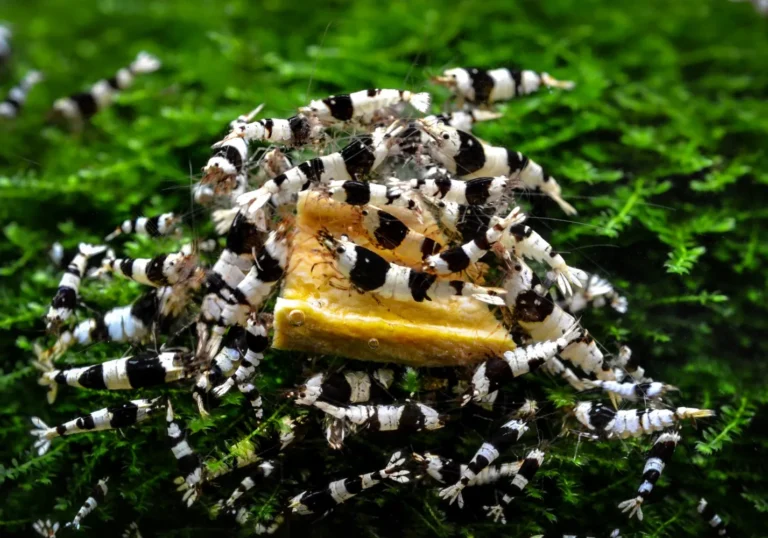
The Crystal Black Shrimp (CBS) is a striking Caridina dwarf shrimp known for bold black-and-white banding and high-contrast patterns. Caridina cantonensis is peaceful and fully plant-safe, grazing biofilm without harming live plants. They prefer stable, soft acidic water and benefit from aquascapes with plenty of moss and leaf litter. General care requires attention to water chemistry and gentle husbandry rather than heavy feeding.

Quick overview
Crystal Black Shrimp, CBS, Black Bee Shrimp
20 liters (5 gallons) for a colony
Ideal aquarium setup
A planted nano or larger aquascape with stable soft water, lots of moss, and sheltered microhabitats suits Crystal Black Shrimp. Include leaf litter, smooth driftwood, and fine plants to encourage biofilm and hiding places while avoiding predators and sudden changes.
Start with at least 20 liters (5 gallons) for a small colony but aim for 40+ liters for better stability and easier maintenance of water chemistry.
Low to moderate lighting encourages biofilm growth without stressing shrimp; very bright light can reduce activity as they hide more and may fuel nuisance algae.
Fully plant-safe; dense mosses, carpeting plants, and floating plants are ideal because they increase grazing surface and provide cover.
Low to moderate to keep detritus moving without strong currents that stress shrimp and dislodge biofilm.
Use a soft, slightly acidic buffering substrate or active soil designed for Caridina to help maintain low pH and GH/KH.
Provide mosses, caves, and crevices using driftwood and smooth stones; leaf litter and Indian almond leaves make excellent microhabitats and feeding spots.
Behavior and temperament
Crystal Black Shrimp are peaceful, shy grazers that spend most time foraging on surfaces and in moss. They do best in groups and show social foraging behavior but do not form aggressive hierarchies. Molting can make individuals temporarily reclusive and vulnerable, so they rely on cover. Activity peaks during low light or at night when they feel safest to roam.
Molting and health
Molting happens regularly as they grow and adults molt less frequently; healthy molts are complete and frequent enough to indicate growth. Problems appear as stuck molts, lethargy, or missing limbs and usually stem from mineral deficiencies or sudden water parameter swings.
- Maintain stable soft water and gradual changes
- Supplement minerals or use remineralizer for Caridina
- Provide cuttlebone or mineral blocks for calcium
Diet and feeding
They are omnivorous scavengers that graze biofilm, algae, and decaying plant matter while accepting supplemental foods. Offer a mix of high-quality shrimp pellets, blanched vegetables, and biofilm-promoting foods in moderation to avoid fouling the water.
What they eat in nature
biofilm, algae, detritus, plant matter, microorganisms
What to feed in the aquarium
- High-quality shrimp pellets
- Blanched zucchini or spinach
- Algae wafers
- Dried leaf litter (Indian almond leaves)
- Powdered microfoods for juveniles
Feeding schedule
Feed small portions 2–3 times per week, only what the colony can finish within a few hours to prevent water quality issues.
Special dietary needs
Require stable mineral levels and some calcium for healthy molts, but avoid high general hardness which Caridina dislike.
Daily:
Daily checks should focus on activity, molting signs, and removing uneaten food to protect water quality.
Weekly:
Weekly small water changes help keep parameters stable while replenishing trace minerals; monitor GH and KH closely.
Always:
Always avoid copper and harsh medications, and keep temperature and pH stable to reduce stress and mortality.
Tankmate compatibility
Crystal Black Shrimp are best kept with nonpredatory species; many fish will view juveniles as food so choose tankmates carefully. They thrive in shrimp-only or carefully chosen community tanks with peaceful microfish.
Yes with caution. They can coexist with other Caridina strains that share identical water needs but avoid mixing with Neocaridina because of differing parameter preferences and possible competition.
Yes, small peaceful snails like nerites or Malaysian trumpet snails coexist well and help with biofilm and detritus.
Safe examples include Otocinclus, small Boraras species, and pygmy rasboras which are unlikely to hunt adult shrimp but still may take shrimplets.
Larger or semi-aggressive fish such as barbs, larger rasboras, gouramis, and cichlids will prey on shrimp and are not recommended.
They are social and do best in colonies of multiple individuals; keep groups of 20+ for stable breeding and natural behaviors, providing adequate space and hiding spots.
Breeding
Breeding is possible in captivity but requires stable soft acidic water and good nutrition; females carry visible eggs under the abdomen. Juveniles hatch as miniature adults without a planktonic larval stage, which simplifies rearing if parameters are right.
Difficulty
Breeding is medium to advanced because Caridina require consistent soft, acidic water and stable mineral balance to successfully rear young.
How they breed
Females carry eggs under the abdomen until hatching.
Best setup for breeding
Provide dense moss, leaf litter, and a calm nursery area with stable parameters and no predators; a slightly larger colony helps trigger breeding. Maintain consistent temperature and soft water to improve hatch rates and juvenile survival.
Feeding the babies
Young shrimp feed on biofilm and microscopic particles; offer powdered foods and promote natural biofilm with aged wood and leaves to support early growth.
Pro tips
Acclimate slowly to tank parameters using drip methods to reduce shock.
Use Indian almond leaves to boost biofilm and tannins while providing shelter.
Avoid copper-containing products and monitor GH/KH after water changes.
Parameter swings
Sudden pH or temperature changes cause stress, molting failures, and mortality.
Poor molts
Stuck molts or incomplete molts are often due to low mineral availability or unstable water chemistry.
Predation losses
Shrimplets and occasionally adults are vulnerable to fish and larger invertebrates, so choose tankmates carefully.
Typical beginner mistakes
- Mixing with incompatible shrimp species
- Using hard tap water without remineralizing properly
- Overfeeding leading to poor water quality
Short summary
Crystal Black Shrimp are attractive, peaceful Caridina that reward careful keepers with striking patterning and interesting behavior. They need soft acidic water, stable conditions, and good nutrition, placing them at a medium to advanced care level.
Frequently asked questions (FAQs)
Are Crystal Black Shrimp hard to keep?
They are more demanding than Neocaridina and need stable soft acidic water, so they suit hobbyists comfortable with parameter control.
Can they live with Neocaridina shrimp?
No, mixing is not recommended due to different water chemistry needs and risk of competition or hybridization concerns.
Do they need special substrate?
A buffering active soil designed for Caridina helps maintain low pH and gentle hardness preferred by these shrimp.
How often do they breed in a tank?
With proper conditions and a healthy colony, females can carry eggs every few weeks, but success depends on stable water and food availability.
What temperature do they prefer?
They do well around 20–24°C (68–75°F); avoid rapid temperature swings which stress shrimp.
Can beginners keep Crystal Black Shrimp?
Beginners can keep them with research and stable setups, but those new to shrimp may prefer starting with hardier Neocaridina first.