At a glance
Colorful
Plant-safe
Peaceful
Sensitive
Description
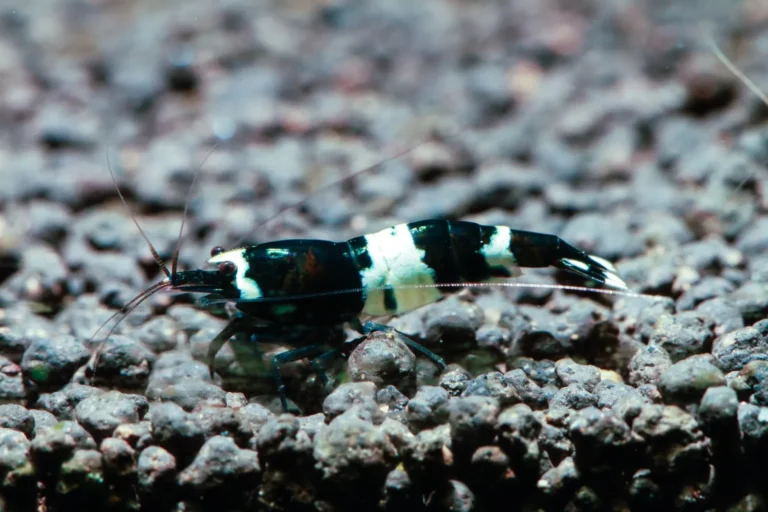
Panda Shrimp are a striking variant of Caridina cantonensis known for bold black-and-white banding and compact size. They are active, gentle grazers that do not harm plants and thrive in well-planted aquascapes with plenty of biofilm. Care requires stable, slightly acidic soft water and attention to minerals for successful molting. They make an attractive centerpiece in shrimp-only or shrimp-focused nano tanks.
Quick overview
20 liters (5 gallons) for a colony
Ideal aquarium setup
Provide a soft, acidic planted tank with stable parameters and plenty of hiding spots; dense carpeting plants, mosses and leaf litter encourage grazing. Use gentle filtration and avoid copper-based medications to keep shrimp safe. Maintain stable temperature and chemistry to reduce stress and support regular molting.
A small colony does well in 20–40 liters (5–10 gallons); larger colonies need more space to reduce competition and keep parameters stable. Aim for at least a handful of shrimp rather than a single pair to encourage natural behavior.
Moderate lighting helps plant growth and supports biofilm for grazing without stressing shrimp; very bright light can reduce visible grazing as they hide more. Keep photoperiod consistent to encourage stable algal and microbial growth.
Fully plant-safe; dense planting with mosses, Java fern and carpeting plants gives grazing surfaces and shelter. Plants help stabilize water chemistry and provide surfaces for biofilm and microorganisms.
Low to moderate, gentle flow to distribute food and avoid trapping waste in quiet zones.
Prefer acidic-buffering shrimp soil or active substrates that help maintain pH and soft water, though inert substrates can work if parameters are managed.
Include mosses on wood and rocks, crevices and small caves for hiding, and leaf litter such as Indian almond leaves to promote biofilm and provide safe retreats.
Behavior and temperament
Panda Shrimp are peaceful and spend most of their time grazing on surfaces and among plants. They are social and do best in small groups where they display natural foraging behavior. Molting makes them vulnerable, so they retreat to hides during and after a molt. They are most active during low-light periods and will shelter if stressed.
Molting and health
Molting occurs regularly as shrimp grow and is a normal process; juveniles molt more frequently than adults. Problems arise with poor water chemistry, low minerals or rapid parameter swings which can cause stuck molts or fatalities. Providing stable soft water with adequate calcium and trace minerals supports healthy molts.
- Maintain stable, slightly acidic water and avoid parameter swings
- Provide a mineral supplement or shrimp-specific salt for trace elements
- Add cuttlebone or crushed eggshell occasionally for calcium
Diet and feeding
Omnivorous scavengers that spend much of their time grazing on biofilm, algae and detritus; supplemental feeding prevents starvation in sparse tanks. Feed sparingly to avoid polluting soft-water systems and choose foods formulated for shrimp to supply minerals. Leaf litter and aged botanicals also supply natural food and help maintain water quality.
What they eat in nature
biofilm, algae, detritus, plant matter, microorganisms
What to feed in the aquarium
- High-quality shrimp pellets
- Blanched vegetables (zucchini, spinach)
- Algae wafers
- Leaf litter and Indian almond leaves
- Powdered biofilm supplements
Feeding schedule
Feed a small portion once daily or every other day, only what they consume within a few hours to prevent water fouling.
Special dietary needs
Require steady access to minerals and trace elements, with calcium supplementation helpful for successful molts.
Daily:
Provide a light feeding or allow grazing on established biofilm; observe activity and remove uneaten food after a few hours.
Weekly:
Offer a vegetable treat and consider a gentle mineral supplement once or twice weekly to support molts and health.
Always:
Always maintain stable water chemistry and provide surfaces for biofilm growth so shrimp have continuous natural food sources.
Tankmate compatibility
They are peaceful and vulnerable, so choose tankmates carefully; many small, non-predatory inhabitants are fine but avoid fish that nip or hunt. Keep shrimp-only or shrimp-focused communities for best survival and breeding.
Yes with caution, Mixing Caridina with other Caridina varieties is possible but avoid Neocaridina in the same tank long-term due to differing water preferences and risk of competition or hybrid confusion.
Small, peaceful snails like Nerite or Ramshorn coexist well and help with algae control without bothering shrimp.
Small nano fish such as Otocinclus, Celestial pearl danio and ember tetras can be compatible if the fish are truly small and non-predatory. Keep fish populations low to reduce stress and competition for food.
Avoid barbs, larger rasboras, cichlids and any carnivorous or fin-nipping species as they will prey on or stress shrimp. Even semi-aggressive mid-sized fish can decimate juveniles.
Panda Shrimp are social and form loose colonies with clear dominance and breeding hierarchies; more individuals increase survival and natural behavior. Provide ample hiding spots to reduce aggression during molts and to allow successful rearing of young.
Breeding
Breeding is possible in home aquaria but requires stable soft, acidic water and good food availability; females carry eggs after mating and brood them until hatching. Juveniles are miniature adults and do not go through a free-swimming larval stage, which makes captive breeding achievable with consistent conditions.
Difficulty
Breeding is moderately challenging because Caridina need very stable, soft acidic water and juveniles are sensitive to sudden changes. Maintaining proper mineral balance and low nitrates is key to raising healthy offspring.
How they breed
Females carry eggs under the abdomen until hatching.
Best setup for breeding
Use a well-planted nano or shrimp tank with abundant moss, leaf litter and stable parameters; avoid predators and large water changes once females are berried. A dedicated shrimp-only tank with gentle filtration and established biofilm yields the best survival rates.
Feeding the babies
Juveniles feed on biofilm and microalgae, so provide moss, leaf litter and powdered foods; finely powdered commercial shrimp foods or infusoria supplements help in early days. Keep water quality pristine as babies are sensitive to ammonia and nitrites.
Pro tips
Cycle and mature the tank thoroughly before introducing Panda Shrimp to ensure stable biofilm and low nitrates.
Use Indian almond leaves to encourage natural biofilm growth and provide tannins that benefit shrimp health.
Perform small, frequent water changes with conditioned, temperature-matched water to avoid parameter swings.
Parameter swings
Sudden pH, temperature or GH/KH changes cause stress and can lead to mass molts or deaths. Stabilize conditions and make gradual adjustments to avoid shocks.
Poor molting
Lack of minerals or unstable water leads to stuck molts and fatalities; provide mineral supplements and stable soft water. Monitor molts and offer calcium sources like cuttlebone if needed.
Predation losses
Keeping them with larger or opportunistic fish often results in disappearing shrimp, especially juveniles. Use species-only tanks or very small, peaceful fish to protect shrimp.
Typical beginner mistakes
- Using tap water without adjusting GH/KH for Caridina
- Adding incompatible fish that eat shrimp
- Performing large, frequent water changes that destabilize pH
Short summary
Panda Shrimp are a beautiful Caridina with bold black and white coloration that thrive in planted, soft-water aquascapes. They are peaceful grazers but require stable, slightly acidic conditions and attention to minerals, making them suited to aquarists comfortable managing water chemistry. With proper care they are rewarding to keep and can breed in planted shrimp tanks.
Frequently asked questions (FAQs)
How acidic should the water be?
Aim for pH around 6.0–6.8 and keep it stable to suit Panda Shrimp.
Can I keep them with Neocaridina shrimp?
Not recommended long-term because Neocaridina prefer harder, more neutral water and may outcompete or hybridize in some situations.
Do they need special food?
They eat biofilm and detritus but benefit from high-quality shrimp pellets and occasional blanched vegetables for nutrients.
How often should I perform water changes?
Small, regular water changes are best; avoid large changes that alter parameters rapidly.
Are they difficult to breed?
Breeding is achievable but requires consistent soft acidic water and plenty of biofilm for juveniles.
What is the best tankmate fish?
Tiny, non-predatory fish like Otocinclus or Celestial pearl danios are among the safest choices when kept in low numbers.