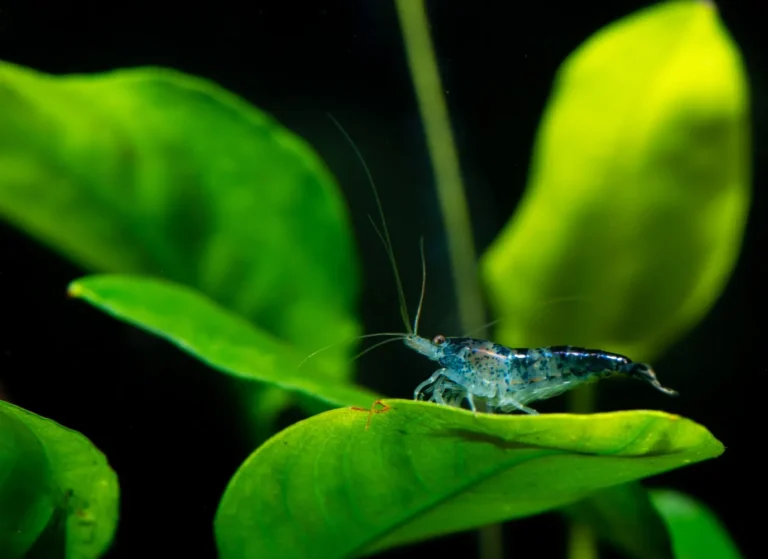
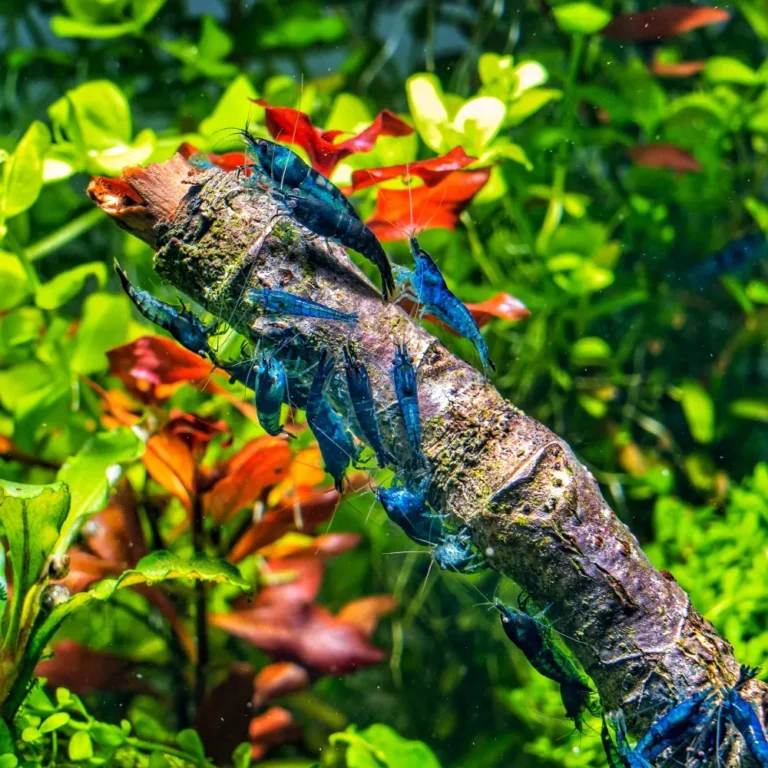
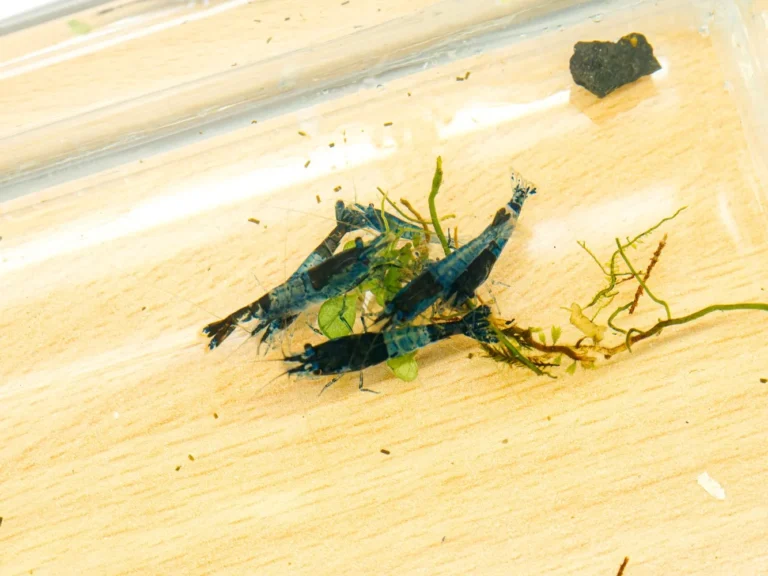
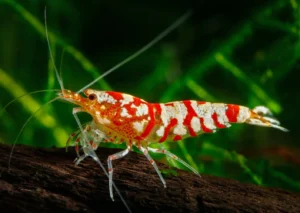
Blue Velvet is a solid deep-blue morph of Neocaridina davidi known for its uniform, velvety colour and strong contrast in planted aquariums. When well bred and kept on stable water the blue becomes richly saturated and opaque. Juveniles often appear paler and deepen in colour after several molts and with a balanced diet. This morph stands out best against darker substrates and lush green planting.
Blue Velvet stands out for its uniform, deep-blue tone and a matte, velvety look that differs from glossier or mottled morphs. The colour tends to be solid across the body, offering high visual contrast in planted aquascapes and making it a popular choice for foreground and midground stocking. Colour quality depends on selective breeding for opacity and saturation, and while well-bred adults show strong, stable blue, juveniles commonly start paler and deepen after successive molts and with improved diet. Environmental factors such as mineral levels, overall health and lighting influence saturation, so stability and targeted feeding help maintain the signature deep tone.
Quick overview
Common name(s)
Blue Velvet, Blue Jelly, Blue Dream
Color line
Blue Velvet
Latin name
Neocaridina davidi
Size
~2–3 cm
Temperament
Peaceful
Tank level
Bottom to mid
Minimum tank size
5 gallons (19 L)
Water type
Freshwater
Difficulty
Easy
Ideal aquarium setup
They look most striking in low- to medium-light aquascapes where the deep blue creates bold contrast with green plants. A dark substrate will deepen the colour while pale gravel can wash it out; avoid excessively bright lighting which can make colours look faded or push shrimp to hide. Include mosses, ferns, driftwood to provide grazing surfaces and secure hiding spots that complement the blue tone.
Behavior and temperament
These shrimp are peaceful, active grazers that spend most of their time on the substrate and plant surfaces. They are fairly visible in a well-planted tank but will retreat to cover when stressed or during moulting. They do well in groups and show natural social grazing behaviour.
Molting, health and color quality
A healthy moult cycle and stable water chemistry are essential for the best colour expression; poor moulting often accompanies dull or patchy colour. Ensure consistent minerals, gentle water changes and a varied diet to support both exoskeleton health and pigment development. Juveniles will increase in saturation over several molts, so colour depth can be a sign of age and good colony conditions. Regular observation of moulting frequency and prompt correction of any stressors will keep colours vibrant and the colony resilient.
Diet and feeding
They graze on biofilm and algae most of the day, and you should feed them 2–3 times per week with a varied diet. Exceptionally clean tanks may need slightly more feeding to maintain good body condition.
How to improve their color with food
Spirulina flakes
Chlorella tablets
Colour-enhancing foods
Biofilm support supplements
Tankmates
Safe tankmates include small, peaceful fish such as micro rasboras and otocinclus, as well as snails and other non-aggressive invertebrates. Be aware that many fish will eat juveniles, so if you plan to breed or keep high numbers you should consider a shrimp-only tank for best survival rates.
Breeding Blue Velvet Shrimp
Breeding Blue Velvet is straightforward for most hobbyists as Neocaridina davidi reproduce readily in good conditions, but maintaining a strong, deep-blue line requires selective pairing of the best-coloured individuals. Expect some throwbacks such as paler blues or mixed tones if mixed with other lines, so isolate top breeders and cull or separate offspring that do not meet your colour standard to keep line quality over generations.
How to keep the colony strong
Maintain stable water parameters and regular gentle changes
Feed a varied diet and add mineral supplements
Select the deepest-coloured breeders
Provide abundant cover and biofilm surfaces
Common problems
Colour fade
Fading colour is usually due to poor water stability, low minerals or inadequate diet; improving water parameters and feeding colour-supporting foods will often restore saturation. Selective breeding also helps increase opacity over generations.
Poor moult
Difficult or failed moults are often caused by mineral deficiency or unstable chemistry; maintain consistent parameters and supply mineral supplements or crushed cuttlebone. Regular, gentle water changes help too.
Low fertility
Low breeding output can come from immature stock or stress; keep stable conditions, provide hiding places and feed a nutritious diet to encourage berried females. Removing predators and supplying plenty of biofilm will improve juvenile survival.
Predation risk
Many community fish will prey on young shrimp even if adults are left alone; provide dense cover and slow-moving fish or run a dedicated shrimp tank to protect juveniles. Breeding in a shrimp-only tank is the safest option.
Similar color variants (and how they compare)
Blue Jelly
Blue Jelly is more translucent and lighter than Blue Velvet, offering a glassier look with less opacity and a softer visual impact. It often shows more internal detail and is less saturated, which can look delicate in bright setups.
Blue Dream
Blue Dream tends to be a brighter, more vivid blue with slightly higher sheen compared with the matte velvet finish, making it pop under moderate lighting. Coverage can be less uniform than Blue Velvet, with occasional shading or gradients.
Blue Rili
Blue Rili mixes deep blue patches with clear or pale sections, creating a patterned appearance rather than the solid coverage of Blue Velvet. The rili pattern gives a different visual rhythm and can highlight body shape and motion more than a uniform morph.
Short summary
Blue Velvet is a deep, velvety blue morph of Neocaridina davidi that suits beginner to intermediate aquarists. It thrives in stable freshwater with moderate lighting and benefits from dark substrate and plenty of plant cover. Care focuses on consistent water, balanced feeding and protection of juveniles for successful colonies.
Frequently asked questions (FAQs)
Are Blue Velvet shrimp easy to keep?
Yes, they are generally easy to keep as long as you maintain stable water and provide regular feeding and cover. They are suitable for beginners who follow basic shrimp care practices.
How large do they grow?
Adults typically reach about 2 to 3 cm in length depending on conditions and sex. Females are usually a bit larger and fuller-bodied than males.
Will they change colour with water?
Their basic hue is genetic but saturation and opacity respond to water stability, minerals and diet, so you may see subtle shifts. Dramatic, persistent fading usually points to suboptimal conditions rather than a true colour change.
Can they live with small fish?
They can cohabit with small, peaceful fish, but many fish will eat juveniles, so choose tankmates carefully. For reliable breeding and juvenile survival a shrimp-only tank is best.
How often do they moult?
Young shrimp moult frequently as they grow, while adults moult every few weeks depending on diet and water conditions. Provide secure hiding places during moulting to reduce stress and predation.
How can I tell males from females?
Females are typically larger with a rounder abdomen and may develop a visible saddle when carrying eggs; males are slimmer and more active. Observing group behaviour and size differences is the easiest way to sex them.
Mette Tulin
Mette Tulin is the creator of Aquascapedia, with more than 15 years of hands-on experience in aquascaping, planted aquariums, and freshwater fish, shrimp, crayfish, and snails. She shares practical insights, curated aquatic life profiles, and inspiration to help others build thriving underwater landscapes.
Aquascapedia uses cookies to ensure the website functions properly and to understand how visitors interact with the content. Analytics cookies are only used with your consent.
Necessary
Always active
Required for the website to function properly. These cookies cannot be disabled.
Preferences
The technical storage or access is necessary for the legitimate purpose of storing preferences that are not requested by the subscriber or user.
Analytics
The technical storage or access that is used exclusively for statistical purposes.Used to understand how visitors interact with the website. No personally identifiable information is used, and analytics cookies are only set with your consent.
Marketing
The technical storage or access is required to create user profiles to send advertising, or to track the user on a website or across several websites for similar marketing purposes.