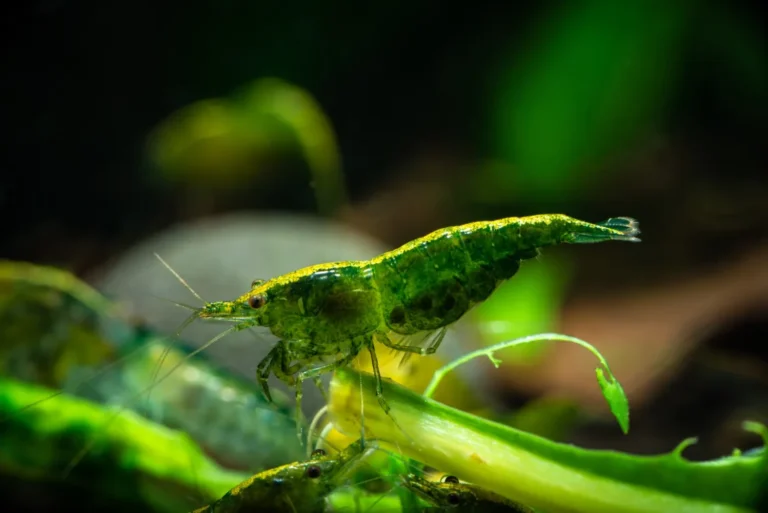
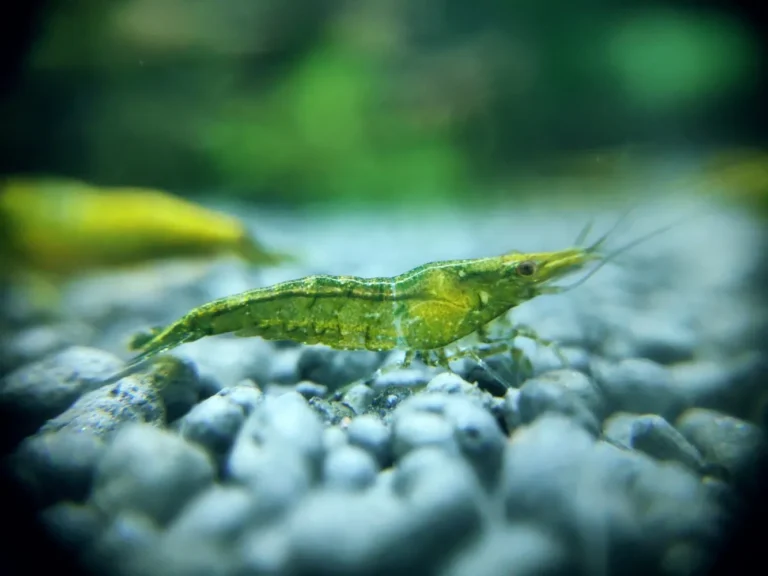
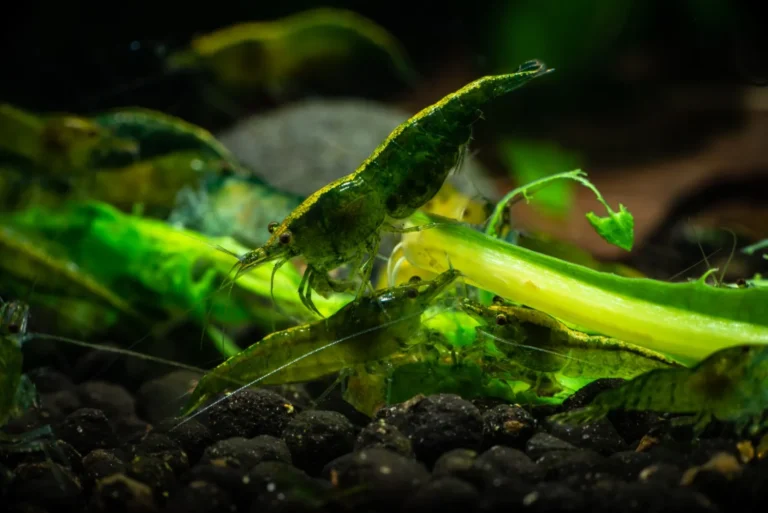
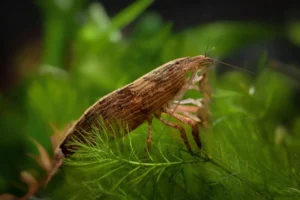
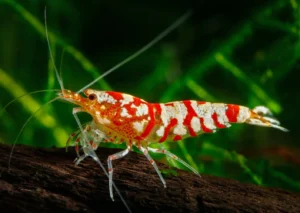
Green Jade shrimp are an eye-catching Neocaridina variety that stand out with their deep emerald coloration. They add a natural, earthy tone to aquascapes and look especially striking against mosses, dark substrates, and wood. Their beauty comes from both pigment and structural color, giving them a glossy, layered look.
Green Jade shrimp are selectively bred for their deep green color, which can range from bright jade to darker mossy tones. They often have a darker underlayer that gives the green more depth. Their color can shift with stress, diet, or substrate, so stable conditions help keep them looking their best. Higher-grade lines show fuller, more even coverage with less transparency.
Quick overview
Common name(s)
Green Jade Shrimp, Jade Green Neocaridina
Color line
Green Jade
Latin name
Neocaridina davidi
Size
2.5–3.5 cm
Temperament
Peaceful
Tank level
Bottom & mid-level
Minimum tank size
5 gallons (19 L)
Water type
Freshwater
Difficulty
Easy
Ideal aquarium setup
Green Jades look their best with darker, naturalistic aquascapes. Their green tones deepen when kept on dark substrates, especially black or deep brown soil. Bright white sand can wash out their color and make them appear more translucent.
Keep lighting moderate. Very bright lighting can make the green appear lighter or more yellowish, while balanced lighting brings out a deeper emerald tone. Dense planting, especially with mosses, ferns, and driftwood, enhances their color and provides plenty of grazing surfaces.
Behavior and temperament
Green Jades behave like other Neocaridina: active grazers, peaceful, and social. They feel most confident in groups and are excellent additions to planted tanks where they can forage throughout the day.
Molting, health and color quality
This variant’s color depends strongly on health. Pale or patchy green often indicates stress, sudden parameter shifts, or insufficient minerals. Stable GH helps them build strong shells, which supports better color coverage.
Foods rich in spirulina, chlorella, and high-quality shrimp pigments can deepen their green. As juveniles grow, their true color becomes more apparent over several weeks.
(For general molting support, see species guide.)
Diet and feeding
They graze all day, so light feeding 2–3 times per week is enough unless the tank is exceptionally clean.
How to improve their color with food
Use spirulina-based foods
Offer blanched greens (spinach, kale)
Provide shrimp-specific color enhancers
Maintain biofilm surfaces through good plant growth
Tankmates
They mix well with snails and peaceful nano fish, but Green Jades are highly visible, so avoid fish that may pick at them or hunt juveniles. If breeding is a priority, consider a shrimp-only tank.
Breeding Green Jade Shrimp
Green Jades breed as readily as other Neocaridina when conditions are stable. The challenge lies in maintaining color quality. Throwbacks (brown, blue, or mixed patterns) occasionally appear due to the underlying genetics of the line. Juveniles often start with brown or bluish tones and turn green as they grow.
How to keep the colony strong
Cull lightly colored or uneven individuals
Select opaque, rich emerald parents
Maintain stable parameters to reduce color fading
Common problems
Uneven coloration
Sometimes Green Jades show lighter or uneven patches. This usually happens when they’re stressed or come from a lower-grade line. Once things feel stable again, many regain better color after a molt.
Color fading
If your shrimp look washed out, it’s often the substrate or lighting. Light-colored sand and very bright lights can make Green Jades look pale. A darker substrate and softer lighting usually bring the deep green back.
Patchiness
Patchy or broken color often points to diet or water swings. A lack of good pigment foods (like spirulina) or unstable GH/KH can affect how the green develops. Once things settle, color often evens out.
Throwback colors
It’s normal for Green Jades to produce the occasional brown or blue shrimp. This comes from their mixed ancestry. If you want a pure line, remove throwbacks; if not, they’re perfectly fine to keep.
Similar color variants (and how they compare)
Blue Dream / Blue Velvet
These shrimp share a similar depth but lean toward deep cobalt or navy. They can appear slightly greenish under warm lighting but remain distinctly blue. Good alternative if someone wants a “cool-colored” shrimp without green.
Chocolate Shrimp
Some Chocolates show olive undertones similar to mid-grade Green Jades. Green Jades sometimes throw brownish juveniles because of this shared genetic base.
Yellow/Golden Shrimp
Much brighter and more translucent; good comparison for people deciding between a bright, warm color vs. a natural earth-tone shrimp.
Short summary
Green Jade shrimp are a stunning Neocaridina variant that bring deep, natural green tones into planted tanks. They’re hardy, beginner-friendly, and easy to breed, but maintaining rich coloration requires stable water conditions, a quality diet, and careful selection. With the right setup, they develop beautiful opaque jade tones that stand out in any aquascape.
Frequently asked questions (FAQs)
Why do my Green Jades look brown or blue?
Young shrimp often start with underlying colors before developing full green. Stress can also make the base layer show through.
Do Green Jade shrimp breed true?
Not perfectly. Expect some throwbacks unless your line is very high grade.
How do I deepen the green color?
Use dark substrate, stable minerals, spirulina foods, and moderate lighting.
Can I mix Green Jades with other Neocaridina colors?
Yes, but they will interbreed, and colors will revert to mixed or wild-type. Best to keep color lines separate.
Are Green Jade shrimp beginner-friendly?
Yes. Green Jades are as hardy as other Neocaridina varieties and suitable for beginners, provided the tank is fully cycled and water parameters are stable.
Why did my Green Jade shrimp lose color after shipping?
Shipping stress and parameter changes can temporarily dull color. With stable water and good food, color usually returns within 1–2 weeks.
Mette Tulin
Mette Tulin is the creator of Aquascapedia, with more than 15 years of hands-on experience in aquascaping, planted aquariums, and freshwater fish, shrimp, crayfish, and snails. She shares practical insights, curated aquatic life profiles, and inspiration to help others build thriving underwater landscapes.
Aquascapedia uses cookies to ensure the website functions properly and to understand how visitors interact with the content. Analytics cookies are only used with your consent.
Necessary
Always active
Required for the website to function properly. These cookies cannot be disabled.
Preferences
The technical storage or access is necessary for the legitimate purpose of storing preferences that are not requested by the subscriber or user.
Analytics
The technical storage or access that is used exclusively for statistical purposes.Used to understand how visitors interact with the website. No personally identifiable information is used, and analytics cookies are only set with your consent.
Marketing
The technical storage or access is required to create user profiles to send advertising, or to track the user on a website or across several websites for similar marketing purposes.