At a glance
Floating plant
Surface cover
Fast growth
Shade tolerant
Description
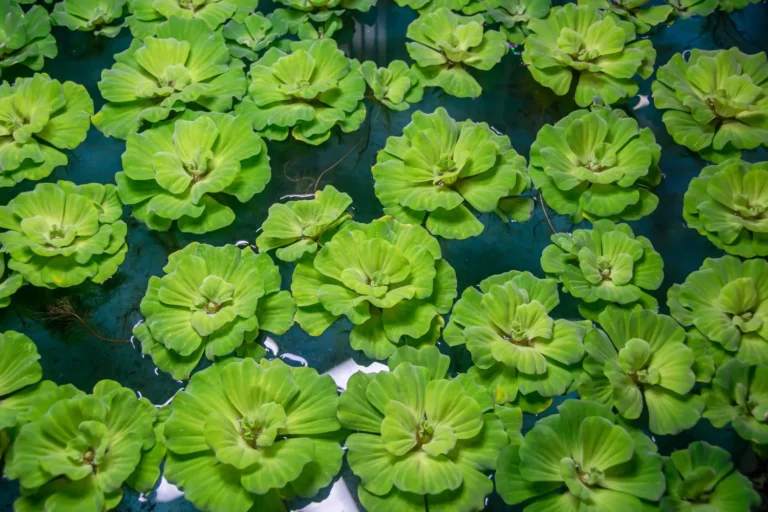
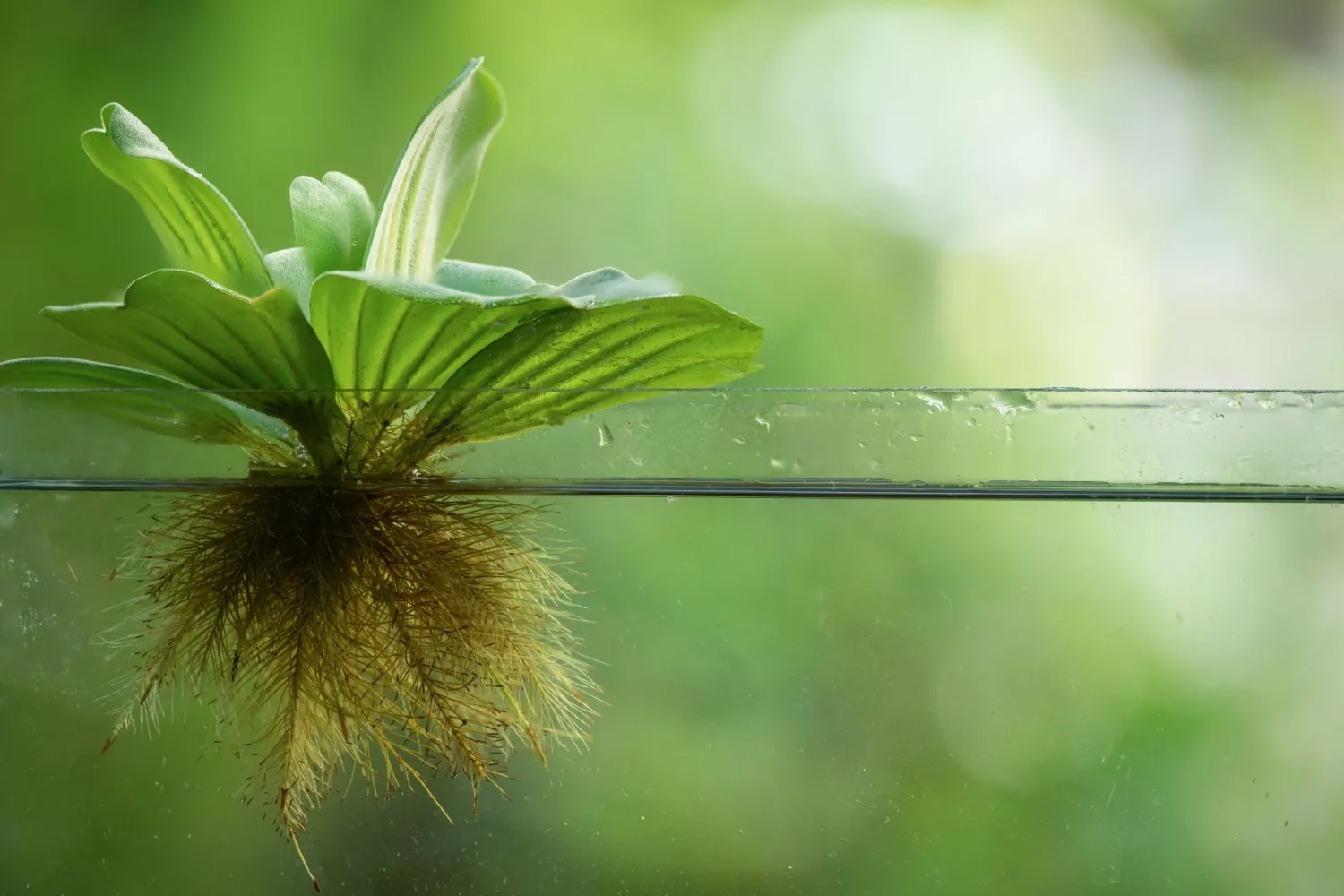
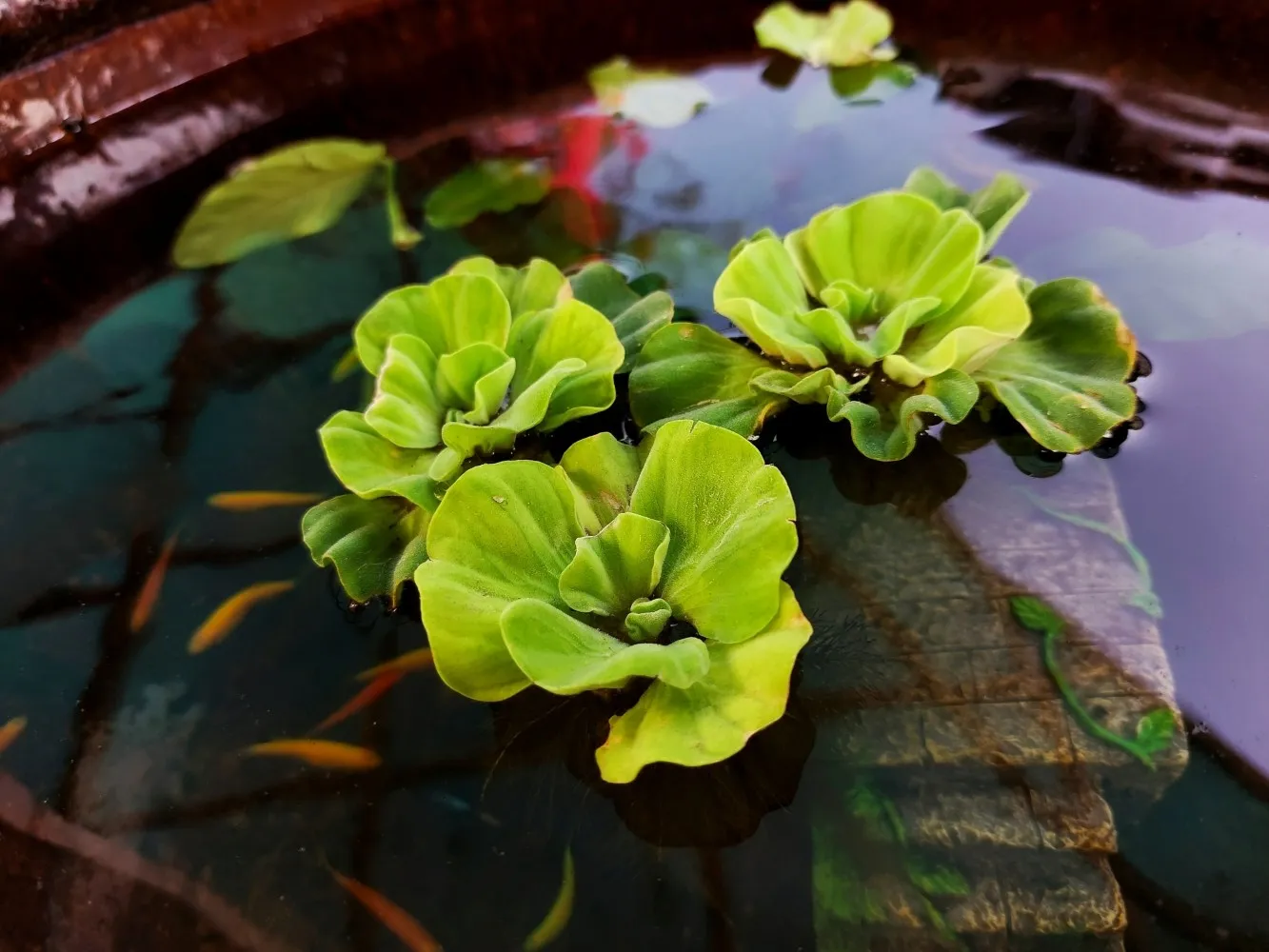
Water lettuce (Pistia stratiotes) is a free-floating rosette plant with soft fuzzy leaves and a dense curtain of feathery roots that hang into the water column. It forms floating mats that provide shade, nutrient uptake, and attractive surface texture. Care is straightforward in freshwater setups with stable circulation, moderate light, and regular thinning to prevent overcrowding. It reproduces quickly by producing daughter rosettes and benefits from attention to nutrient balance.
Quick overview
Water lettuce, Nile cabbage, Shell plant
Rosette ~5–20 cm wide, leaves ~3–10 cm long
Ideal use in aquascaping
Water lettuce is useful for creating natural-looking surface cover, reducing glare, and shading midground plants. It helps control excess nutrients and can hide equipment like filters and heaters while adding vertical interest with dangling roots.
Place water lettuce freely on the surface where it can form loose mats; it serves as a floating focal element and a nutrient sink. Use it to create shaded zones for shy fish and to diffuse strong lighting.
Good styles for this plant
Works well in natural, jungle, and Amazon-style aquascapes as well as low-tech community tanks. It is less suited to tightly controlled high-CO₂ carpets but pairs nicely with stem and background plants for contrast.
Leaves are soft pale to medium green with a velvety texture that contrasts well with glossy or finely divided foliage. Dangling roots add vertical texture and movement under the surface.
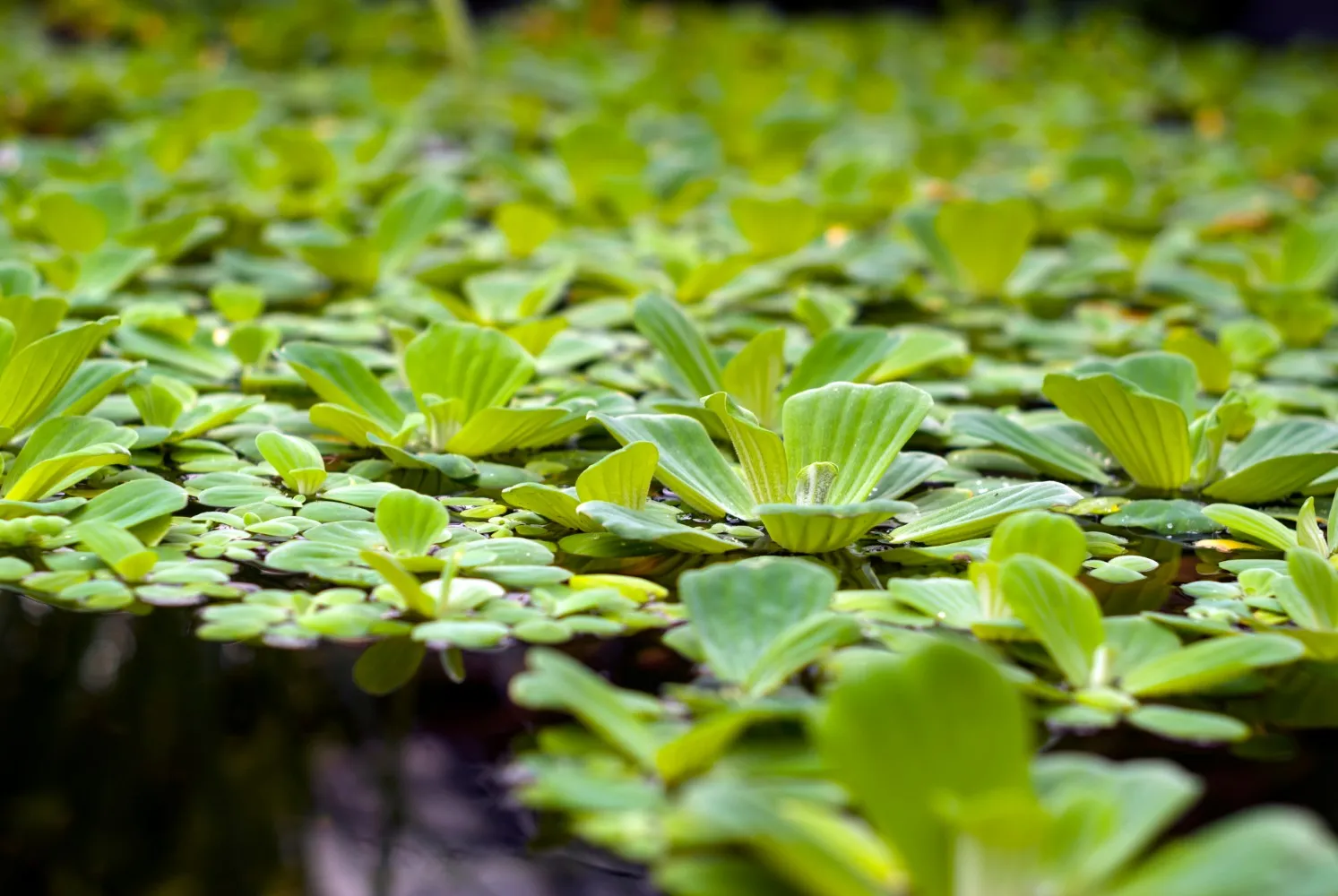
In small tanks a few rosettes can quickly cover the surface and require frequent thinning. In larger tanks it scales nicely into patches or drifting mats but still needs periodic removal to maintain light penetration.
Light and CO₂
Medium. Water lettuce prefers moderate light and will tolerate lower light but may stretch and become leggy under dim conditions.
CO₂ is optional because water lettuce absorbs nutrients from the water column and is limited more by light and nutrients than dissolved CO₂.
8–10 hours daily. A consistent schedule helps prevent algae and keeps growth steady without encouraging explosive blooms.
Substrate and nutrients
As a true free-floating plant it does not need substrate and takes minerals from the water column. Keep nitrate and phosphate levels moderate and provide trace elements if water is very soft or purified.
Substrate preference
No substrate is required; allow the rosettes to float freely on the surface with gentle circulation. If plants sink temporarily they will not establish roots in substrate like rooted species do.
Nutrient needs
Water lettuce draws nutrients from the water column and benefits from regular water changes and liquid fertilization in nutrient-poor systems. Avoid overfertilizing as that encourages algae and explosive surface growth.
- Use diluted liquid fertilizers only if plants show pale leaves or slow growth.
- Monitor nitrate and phosphate and perform water changes to balance nutrients.
- Add trace element supplements if leaves show micronutrient deficiency signs.
Planting and propagation
To introduce water lettuce, select healthy compact rosettes and place them gently on the surface where they can spread. It propagates rapidly by producing daughter rosettes at the margins that can be separated to control population.
How to plant
- Select healthy compact rosettes
- Place rosettes gently on the water surface
- Space groups to allow circulation and light
Propagation method
Propagation is vegetative by daughter rosettes and fragmentation; separate young rosettes from the parent to start new plants. Rapid growth makes it easy to propagate manually by removing and relocating clusters.
- Separate daughter rosettes once they are half the size of the parent
- Keep removed rosettes in a shallow container until roots develop
- Thin mats regularly to prevent shading and rot
Pruning and maintenance
Regular thinning is the main maintenance: remove excess rosettes and any yellow or damaged leaves to keep light reaching lower plants. Trim long or tangled roots if they trap debris or block filters.
Trimming style
Remove outer or weak rosettes and prune damaged leaves by pinching at the base while leaving healthy centers intact.
Maintenance frequency
Thin and trim every 1–2 weeks in fast-growing setups to prevent surface crowding. Check more often after fertilization or high light when growth accelerates.
Growth and health indicators
What healthy growth looks like
Healthy plants form tight compact rosettes with evenly colored pale to bright green fuzzy leaves and a full mass of hanging roots. New daughter rosettes appear at the margins and grow steadily.
Signs it needs attention
Yellowing or translucent leaves, limp rosettes, or slimy buildup on roots indicate nutrient imbalance, poor water quality, or overcrowding. Sudden dieback often follows shading or stagnant surface water.
Tankmates and compatibility
Water lettuce is compatible with many peaceful community aquariums but can be eaten or disturbed by larger herbivores and rough diggers. It is often used in shrimp tanks for shade and biofilm surface.
Works well with small peaceful community fish and clean-up invertebrates such as shrimp and snails.
Avoid keeping water lettuce with goldfish, large cichlids, grass carp, and other herbivores that will consume or shred floating plants.
Water lettuce is invasive in many regions so never release it into the wild and check local regulations before use. Rinse plants before adding them to remove hitchhikers and pests.
Pro tips for this plant
Thin mats early to prevent shading and maintain water circulation.
Use floating plants to naturally reduce nitrate and phosphate in planted tanks.
Keep a small quarantine container to grow extra rosettes for quick replacements.
Yellowing leaves
Yellow leaves usually indicate nutrient deficiency or aging; remove affected leaves and check water parameters and trace elements.
Overcrowding
Left unchecked water lettuce forms dense mats that block light and lower oxygen at the surface; thin regularly to keep healthy growth and circulation.
Root fouling
Roots can collect detritus and become slimy or begin to rot in stagnant water; increase flow, gently clean roots, and remove affected rosettes.
Typical beginner mistakes
- Allowing unchecked growth that smothers the tank
- Introducing plants without quarantine that bring pests or snails
- Neglecting regular thinning and water exchanges
Short summary
Water lettuce (Pistia stratiotes) is an easy fast-growing free-floating plant valued for surface cover, shade, and nutrient uptake. It thrives in moderate light and warm freshwater with regular thinning and basic nutrient attention, but can become invasive if not controlled.
Frequently asked questions (FAQs)
Is water lettuce suitable for small tanks?
Yes but you must thin frequently because it can quickly cover the surface and reduce light for other plants.
Does water lettuce need substrate?
No, it is a free-floating plant that absorbs nutrients from the water column and does not require substrate.
Can fish eat water lettuce?
Some herbivorous or large fish will eat or shred it, so choose tankmates that leave floating plants alone.
How often should I thin water lettuce?
Thin every one to two weeks in fast-growth conditions and more often if surface coverage becomes excessive.
Is water lettuce invasive outdoors?
Yes, it is invasive in many regions so never release it into natural waterways and check local rules before planting outdoors.
Will water lettuce control algae?
It helps by shading the water and absorbing nutrients, but it is not a cure-all and should be combined with good maintenance practices.