
Table of contents
At a glance
Rhizome plant
Slow growth
Small leaves
Shrimp safe
Description
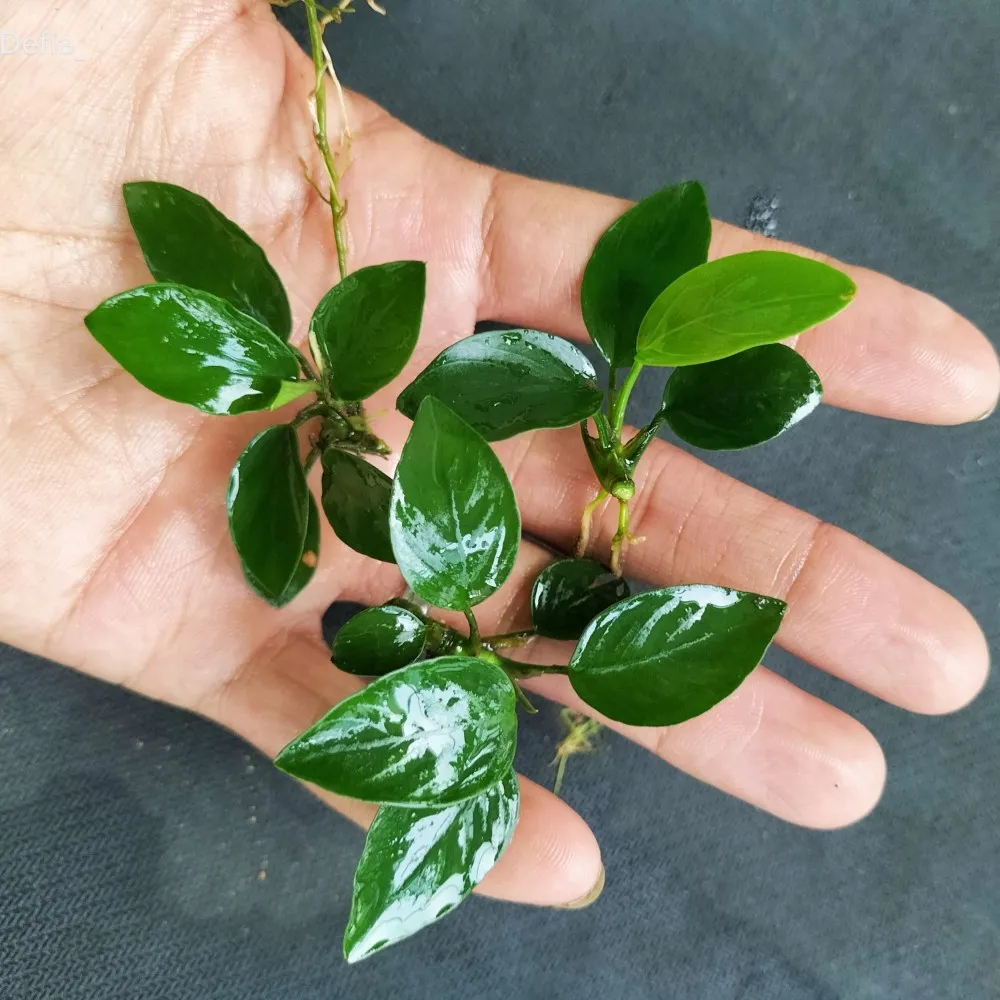
Dwarf Anubias (Anubias barteri 'Nana') is a compact, hardy rhizome plant prized for aquariums and paludariums. It has thick, dark green leaves and a slow, steady habit that makes it easy to place in detailed hardscape. Care is simple: low to medium light, moderate water flow, and attachment to rock or wood rather than burial keeps it healthy.
Quick overview
Dwarf Anubias, Nana Anubias, Anubias nana
Anubias barteri 'Nana'
Araceae
Rhizome plant
Slow
Foreground
Freshwater
22–28 °C
Leaves ~1–4 cm, height ~3–8 cm
Low–medium
Optional
Easy
Ideal use in aquascaping
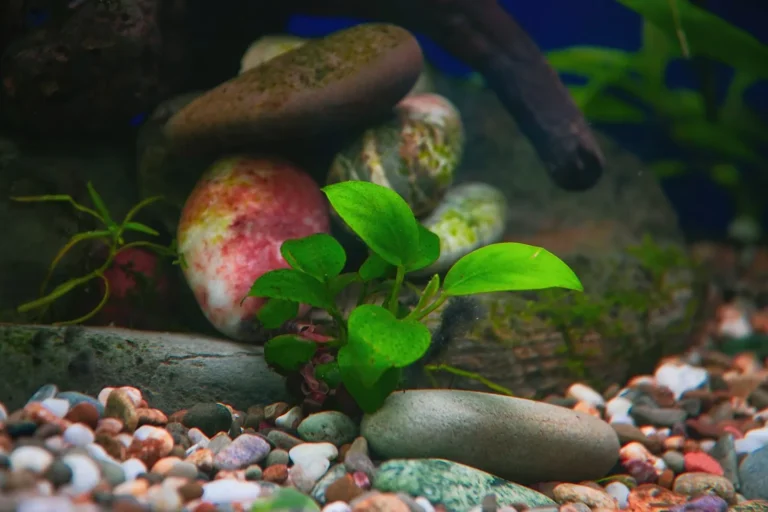
Anubias nana is ideal for creating focal points on rocks and driftwood where its dark green leaves contrast with lighter hardscape. Its slow growth and small size allow precise placement in foreground pockets without frequent trimming. It is excellent for nano tanks, paludariums, and low-tech layouts.
Place directly on rocks, driftwood, or crevices where the rhizome can be exposed and roots can anchor. Use it as a foreground accent or to soften edges of larger hardscape pieces.
Works very well in nature and iwagumi-style tanks as a low, stable accent and in biotope setups that require native-looking foliage. It also suits planted tanks with low light and shrimp-focused community tanks.
Leaves are deep green and slightly glossy, providing solid color contrast against lighter substrates and wood. The thick, leathery texture adds visual weight and a sense of permanence to layouts.
Scales well from nano tanks to larger aquascapes because it remains compact and slow-growing. In larger tanks plant multiple specimens or groupings to maintain visual impact.
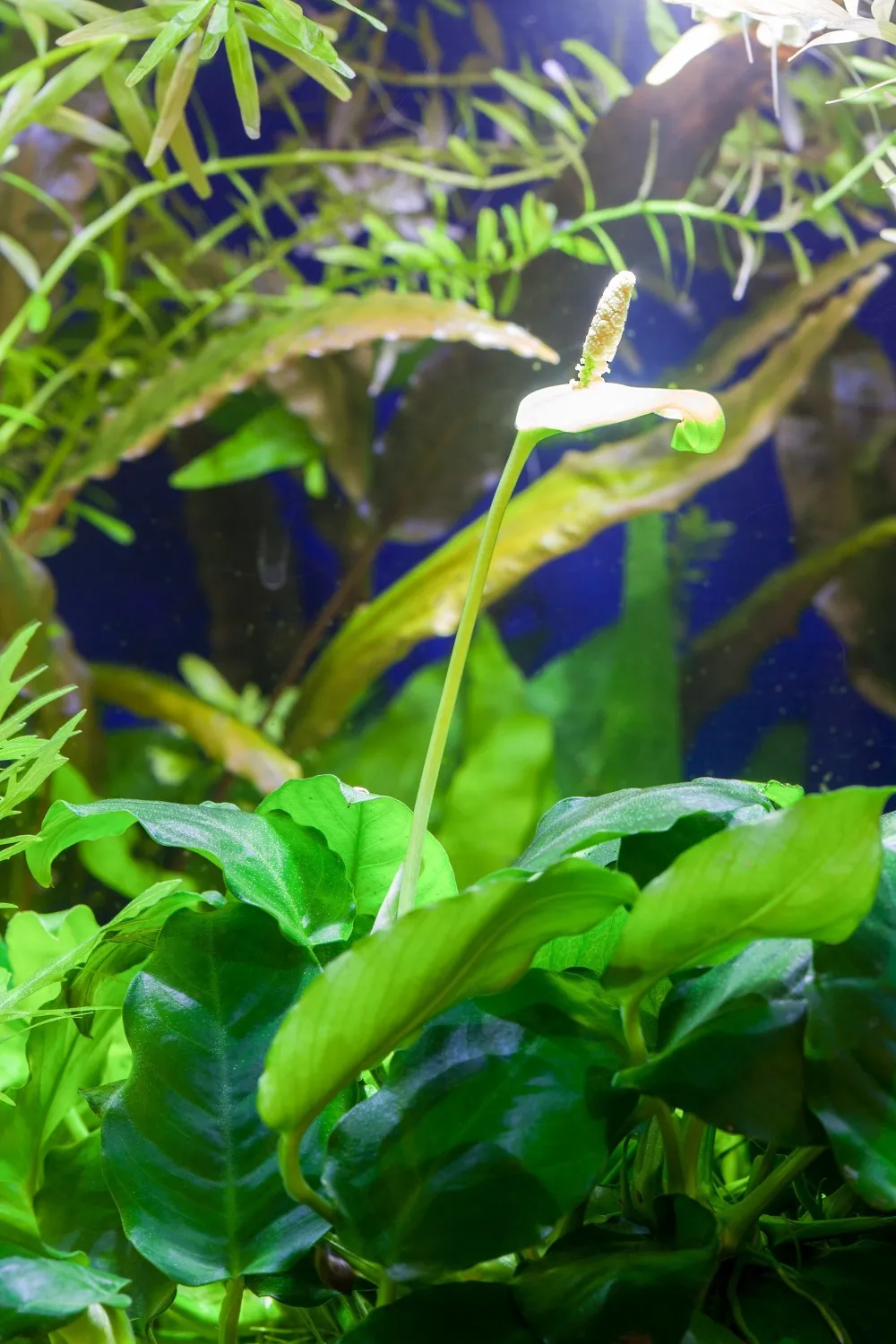
Light and CO₂
Light requirement
Low to medium. Anubias nana tolerates low light and will remain compact under subdued lighting but can handle moderate light if algae is controlled.
CO₂ requirement
CO₂ is optional for healthy growth and is not necessary in most low-tech setups, though a mild supply can speed up new leaf production.
Photoperiod
6–8 hours daily. A consistent schedule helps limit algae and keeps growth steady.
Substrate and nutrients
This plant does not rely on a rich substrate because it absorbs many nutrients through its leaves and thin roots. Root tabs are useful only if you plant the roots in substrate, but generally it performs well attached to hardscape with regular liquid fertilization.
Substrate preference
Prefers to be attached to rock or wood so the rhizome stays exposed; if planted, avoid burying the rhizome and use a fine substrate. A nutrient-rich substrate is unnecessary but harmless if roots have room.
Nutrient needs
Low overall nutrient demand but benefits from regular micronutrients and occasional iron dosing to prevent yellowing. Liquid fertilizers for the water column cover most needs for attached specimens.
- Use liquid trace fertilizers weekly to supply micronutrients.
- Place root tabs near roots only if roots are buried in substrate and the rhizome remains exposed.
- Monitor iron levels and dose if leaves show yellowing between veins.
Planting and propagation
Attach the rhizome to wood or rock and let the roots anchor naturally; avoid burying the rhizome. Propagate by cutting the rhizome into pieces with several leaves on each section and reattaching them to new surfaces.
How to plant
- Place the rhizome on rock or driftwood
- Secure gently with thread or a thin loop of fishing line
- Allow roots to grow and remove tie once anchored
Propagation method
Propagate by dividing the rhizome into sections that include roots and leaves or by separating side shoots and reattaching them to hardscape. Each piece will develop roots and new leaves over a few weeks.
- Use a sharp clean blade to split the rhizome and avoid crushing tissue
- Ensure each division has at least 2–3 leaves to sustain growth
- Keep new divisions shaded and stable until roots form
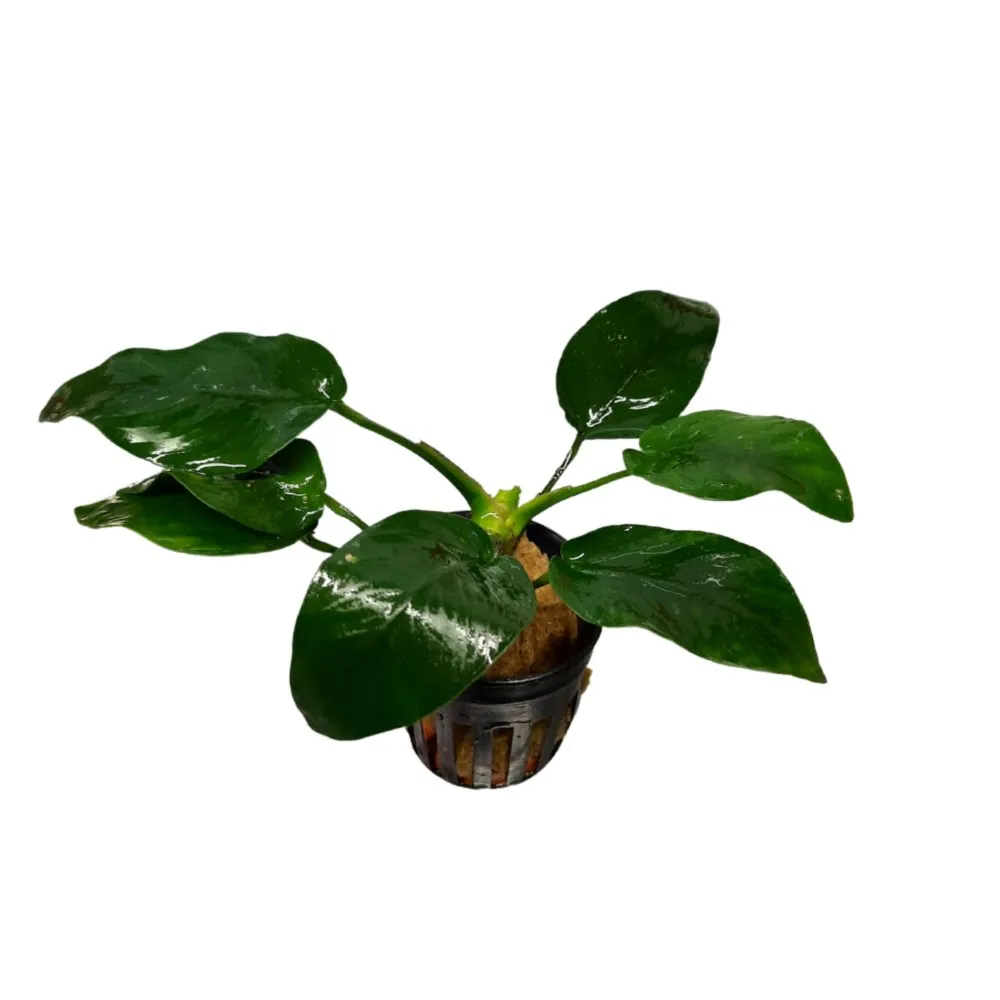
Pruning and maintenance
Remove older, damaged leaves at the base to encourage fresh growth and to reduce algae-prone surfaces. Gently clean leaves of algae by hand or with a soft brush when needed.
Trimming style
Trim by cutting individual old leaves at their base on the rhizome rather than trimming overall foliage to keep the natural clumping habit.
Maintenance frequency
Every 2–6 weeks remove dying leaves and check for algae, with more frequent attention in higher light tanks. Routine cleaning of leaf surfaces and occasional division keeps the plant tidy.
What healthy growth looks like
Healthy plants show compact clusters of dark green leaves emerging from a stout rhizome with visible white root growth. New leaves are smaller and lighter and gradually darken as they mature.
Signs it needs attention
Yellowing between veins suggests iron or micronutrient deficiency while holes or shredded leaves indicate physical damage from tankmates or snails. A soft, mushy rhizome can mean it was buried or suffered poor water quality and needs prompt treatment.
Tankmates and compatibility
Very compatible with most peaceful community fish and invertebrates and is commonly used in shrimp tanks and low-tech setups. It is not suited to tanks with large plant-eating or digging species.
Good with
Small peaceful community fish and invertebrates usually do well with this plant.
Use caution with
Avoid large digging or grazing species that may uproot or tear leaves such as goldfish and many cichlids.
Special notes
Never bury the rhizome when planting because this causes rot. Anubias nana also does well emersed in paludariums and will tolerate a range of water parameters.
Pro tips for this plant
Attach with cotton thread that will decay and avoid tight ties that damage the rhizome.
Place plants in shaded crevices to reduce algae growth on broad leaves.
Use tweezers to position small offsets precisely on hardscape.
Yellowing leaves
Yellow leaves often result from iron or micronutrient deficiency or from old foliage naturally dying; dose liquid trace elements and check iron levels while removing affected leaves.
Algae growth
Algae colonizes leaves under high light or excess nutrients; reduce light, improve circulation, perform water changes, and add compatible algae eaters if needed.
Rhizome rot
Rhizome rot happens when the rhizome is buried or water quality is poor; free the rhizome, cut away rotten tissue, and improve flow and water parameters.
Typical beginner mistakes
- Burying the rhizome in substrate causing rot
- Placing in very strong light without algae control
- Expecting fast growth and overfertilizing which promotes algae
Short summary
Anubias barteri 'Nana' is a small, hardy rhizome plant ideal for foreground accents and low-tech tanks. It requires low to medium light, attachment to hardscape, and minimal fertilization for long-term success.
Frequently asked questions (FAQs)
Can Anubias nana be buried?
Can Anubias nana be buried?
No, the rhizome must not be buried because it will rot; only the roots can be tucked into substrate.
How fast does it grow?
How fast does it grow?
It grows slowly and may produce only a few new leaves per month under modest conditions.
Is CO₂ necessary?
Is CO₂ necessary?
CO₂ is optional and not required, although small amounts can speed growth slightly.
Can shrimp graze on it?
Can shrimp graze on it?
Shrimp are excellent tankmates and will not harm healthy Anubias; they can help keep leaves clean.
How do I attach it to wood?
How do I attach it to wood?
Secure the rhizome with thread or fishing line until roots form and then remove the tie to avoid damage.
Why are leaves turning brown or black?
Why are leaves turning brown or black?
Brown or black patches often mean physical damage, nutrient imbalance, or algae; trim affected leaves and check water quality and lighting.

Mette Tulin
Mette Tulin is the creator of Aquascapedia, with more than 15 years of hands-on experience in aquascaping, planted aquariums, and freshwater fish, shrimp, crayfish, and snails. She shares practical insights, curated aquatic life profiles, and inspiration to help others build thriving underwater landscapes.