At a glance
Stem plant
Fine leaves
Fast growth
Background
Description
Ambulia is the common name for the delicate aquatic stem plant Limnophila sessiliflora, known for feathery, bright green foliage and a loose, bushy habit. It forms long, flexible stems with closely spaced fine leaves that sway in the current and provide excellent cover. This species is forgiving of a range of temperatures and water conditions but responds strongly to good light, nutrients, and regular trimming. With moderate care it establishes quickly and becomes a striking background or midground element in many aquascapes.
Quick overview
Ambulia, Asian ambulia, Marshweed
Stems ~20–50 cm tall, leaves ~3–8 mm
Ideal use in aquascaping
Limnophila sessiliflora is ideal for filling the background with soft texture and movement and can quickly create volume behind shorter foreground plants. Its feathery stems also work well as a screen or to frame hardscape elements while offering hiding places for small fish and shrimp.
Place it in the background or tall midground where stems can reach the surface; use grouped stems to form dense stands or single stems for a more open look. It functions as a fast-growing filler that adds vertical height and a natural flowing silhouette.
Good styles for this plant
Works well in jungle, nature, and Dutch-style layouts where lush background mass is desirable, and it can complement informal hardscape designs in planted community tanks. It is less suited to minimalist Iwagumi layouts.
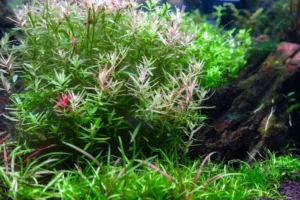
The fine, feathery leaves create a soft texture that contrasts nicely with broad-leaved or rosette plants, and under strong light the green may develop slight reddish tinges on tips. It adds motion and a delicate backdrop that softens rocks and wood.
It scales easily to large tanks where it can reach the surface and be trimmed into hedges, but in small tanks frequent trimming is needed to prevent crowding and overshadowing shorter plants. Small tanks benefit from limiting stems to a few bunches and regular maintenance.
Light and CO₂
Medium to high. Under medium light it will grow well but may become leggy; higher light yields denser, more compact growth and better coloration.
CO₂ is recommended for faster, bushier growth and to take full advantage of higher light, though plants will survive without it at lower growth rates.
8–10 hours daily. A consistent light period helps maintain healthy growth and reduces algae risks.
Substrate and nutrients
Although not an obligate root feeder, it benefits from a nutrient-rich substrate and regular liquid fertilization to support rapid stem growth. Micronutrients and iron help maintain deep green color while stable macronutrient levels prevent deficiencies during fast growth.
Substrate preference
A fertile fine-grained substrate or layer of root tabs beneath inert gravel is ideal to encourage healthy rootlets and steady nutrient uptake. It will also do fine planted in sand if supplemented with root tabs and liquid fertiliser.
Nutrient needs
Moderate to high macro nutrients and regular micronutrients support dense growth; pairing a nutrient substrate with weekly liquid dosing gives the best results. Iron supplementation will prevent yellowing of new leaves.
- Use a balanced liquid fertilizer weekly to cover fast stem growth
- Place root tabs near planted stems if substrate is inert
- Supplement iron if new leaves show pale color
Planting and propagation
Plant as individual stems pushed a few centimeters into the substrate and keep new cuttings trimmed to encourage branching. Propagation is trivial by cutting tops and replanting them; the cuttings root quickly and form new bushes.
How to plant
- Trim stems into 5–10 cm sections
- Insert each stem a few centimeters into the substrate
- Space stems 2–3 cm apart for a dense stand
Propagation method
Mainly by stem cuttings: cut healthy tops and replant them into the substrate or let them float until roots form. Side shoots also root easily when buried slightly.
- Replant trimmed tops immediately to encourage bushy regrowth
- Use clean scissors to make straight cuts and avoid crushing stems
- Keep water flow gentle to let young cuttings establish
Pruning and maintenance
Regular trimming of the tops keeps the plant bushy and prevents it from shading lower plants; remove older lower leaves as stems are pruned. Thin crowded areas to maintain circulation and replant trimmings to expand coverage.
Trimming style
Cut stems back to desired height and replant the trimmed tips to create denser, multi-branched clumps and a neater silhouette.
Maintenance frequency
Every 1–3 weeks depending on light and CO₂ levels; faster growth requires more frequent pruning to prevent overgrowth. Monitor for crowding and trim before stems reach the surface if you want to avoid surface mats.
Growth and health indicators
What healthy growth looks like
Healthy plants show bright green new growth at the tips, compact leaf spacing, and multiple side shoots producing a bushy appearance. Roots should form quickly on replanted cuttings and stems remain flexible rather than brittle.
Signs it needs attention
Leggy stems with wide spacing between leaves, yellowing or translucent foliage, and excessive algae on leaves indicate light, nutrient, or flow imbalances that need correction. Rapid melting of cuttings suggests poor water parameters or sudden changes.
Tankmates and compatibility
Generally compatible with small peaceful community fish, shrimp, and snails and it provides excellent cover and grazing surfaces for invertebrates. Avoid keeping it with large plant-eating or digging species that will consume or uproot stems.
Most small peaceful community fish, shrimp, and snails are compatible and benefit from the cover and grazing surfaces it provides.
Avoid herbivorous or digging species that eat or uproot plants such as goldfish and large cichlids.
It can grow very quickly and shade slower plants, so plan maintenance and placement accordingly. Unrooted stems may float and require anchoring or replanting to keep a tidy layout.
Pro tips for this plant
Replant trimmed tips immediately to create a thicker, bushier background.
Use root tabs in inert substrates to supply steady nutrients to planted stems.
Thin dense stands occasionally to improve water flow and reduce algae buildup.
Leggy growth
Insufficient light or lack of trimming causes elongated internodes; increase light or shorten the photoperiod while trimming tips to encourage branching.
Yellowing leaves
Yellow or translucent leaves usually signal nutrient or iron deficiency and can be corrected with balanced fertilization and iron supplements or root tabs.
Algae on leaves
Excess nutrients combined with unstable lighting can lead to algae; reduce light slightly, improve circulation, and maintain consistent dosing to control outbreaks.
Typical beginner mistakes
- Overplanting without leaving space for growth
- Infrequent trimming leading to shading of lower plants
- Neglecting fertilization in inert substrate
Short summary
Limnophila sessiliflora is a fast-growing, feathery stem plant ideal for background mass and soft texture in many aquascapes. It thrives with moderate to high light, consistent nutrients, and regular trimming to keep a dense, attractive habit.
Frequently asked questions (FAQs)
How quickly does Ambulia grow?
It grows fast under good light and nutrients and may need trimming every 1–3 weeks.
Yes, it will survive without CO₂ but grows fuller and faster with supplementation.
Propagate easily by cutting tops and replanting them into the substrate.
Will fish eat this plant?
Most small peaceful fish leave it alone but herbivores and large nibblers may damage it.
Does it need a special substrate?
No special substrate is required but a nutrient-rich substrate or root tabs help vigorous growth.
Is it suitable for beginners?
Yes, it is beginner friendly if you manage light, nutrients, and regular trimming.