
Table of contents
At a glance
Stem plant
Medium light
Fast growth
Easy care
Description
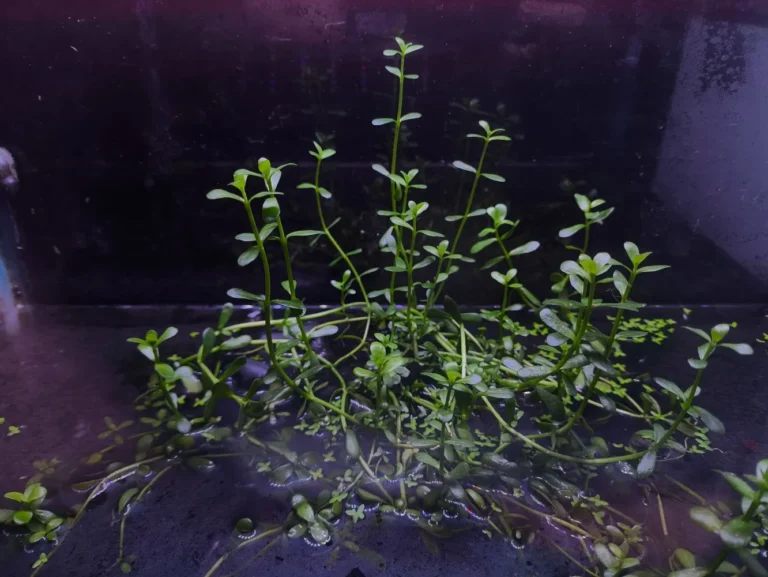
Bacopa monnieri is a hardy aquatic stem plant prized for its opposite rounded leaves and upright branching habit. Bacopa can display green to slightly purple tones under stronger lighting and forms neat stems that are easy to shape. It tolerates a wide range of water conditions and responds well to regular trimming. With moderate nutrients and light it grows quickly and fills midground and background positions.
Quick overview
Bacopa, Water hyssop, Brahmi
Bacopa monnieri
Plantaginaceae
Stem plant
Fast
Background
Freshwater
20–30 °C
Leaves ~5–12 mm, stems ~10–40 cm
Medium–high
Optional
Easy
Ideal use in aquascaping
Bacopa is useful for adding vertical structure and softening hardscape edges while creating a sense of depth. Its fast upright stems contrast well with carpeting foreground plants and bushier midground species. It also works as a filler to hide background equipment or to create height variations.
Place Bacopa in the midground to background where it can form vertical groups and act as a backdrop. Use it to frame focal points or to add layered height behind shorter plants.
Works well in nature aquariums, river layouts, and lush tropical scapes where vertical stems are needed. It can also suit more formal Dutch-style layouts as a repeating vertical element.
Leaves are small and rounded, offering a soft texture that contrasts with narrow-leaved plants. Under stronger light the stems can take on subtle purple hues adding color depth.
Scales well from small to large tanks because stems can be trimmed to height or left to grow tall. In smaller tanks frequent trimming keeps it in proportion and prevents overcrowding.
Light and CO₂
Light requirement
Medium. Bacopa tolerates low light but becomes fuller and more colorful with medium to high lighting, while very low light leads to spindly growth.
CO₂ requirement
CO₂ is optional for healthy growth but supplemental CO₂ increases growth rate, leaf size, and overall vigor.
Photoperiod
8–10 hours daily. A consistent schedule helps avoid algae and keeps growth steady.
Substrate and nutrients
Bacopa benefits from a nutrient-rich substrate but will grow in inert gravel with good water column fertilization. Root tabs help if using plain sand or gravel and regular liquid fertilization supports steady growth and color.
Substrate preference
Prefers a fine nutrient substrate or planted aquarium soil to support root uptake, but will adapt to gravel if supplemented. Root feeding is helpful in low-nutrient bottoms.
Nutrient needs
Moderate macro and micro nutrients are sufficient and iron boosts leaf color under stronger light. Combine root tabs with weekly liquid dosing in planted systems.
- Use root tabs every 6–10 weeks if substrate is inert
- Dose liquid macro and micro nutrients weekly for steady growth
- Supplement iron if leaves turn pale or lack color
Planting and propagation
Plant terminal stem cuttings into substrate and they will root from lower nodes; whole stems also root where buried. Regular trimming and replanting of cut tips is the easiest propagation method and keeps the plant bushy.
How to plant
- Trim healthy stem tips into 5–8 cm lengths
- Insert cuttings into substrate a few centimeters apart
- Press substrate around stems to secure them
Propagation method
Propagate by stem cuttings; lower nodes will form roots when buried or left in contact with substrate. You can also layer by pinning stems until they root and then cut.
- Use sharp scissors to make clean cuts
- Plant cuttings immediately to prevent desiccation
- Trim tops regularly to encourage lateral branching
Pruning and maintenance
Regular pinching or cutting back keeps Bacopa compact and encourages bushier branching. Remove older lower leaves to prevent shading and improve water flow. Heavily trim tall stems to maintain desired height and replant cuttings as needed.
Trimming style
Pinch or cut stems just above a leaf node to promote two new side shoots and a denser appearance.
Maintenance frequency
Every 1–3 weeks depending on growth rate and tank conditions, with faster trimming in high light or fertilized systems. Remove trimmings or replant tips to avoid debris buildup.
What healthy growth looks like
Healthy Bacopa shows upright stems with closely spaced opposite leaves and a compact habit when trimmed. Leaves are evenly colored and new shoots appear regularly from nodes.
Signs it needs attention
Leggy tall stems, yellowing leaves, or sparse lower foliage indicate low light, nutrient deficiency, or lack of trimming. Brown spots or melting after planting suggest poor acclimation or sudden water changes.
Tankmates and compatibility
Generally compatible with most peaceful community fish and invertebrates and tolerates a broad range of water conditions. Avoid highly destructive or digging species that uproot plants.
Good with
It pairs well with small peaceful community fish and invertebrates and complements carpeting plants and taller background stems.
Use caution with
Avoid keeping Bacopa with large digging or aggressive fish that uproot plants.
Special notes
Bacopa can be grown emersed in wet setups or paludariums where it will often flower. Flowers are small and attractive but may divert energy from vegetative growth if abundant.
Pro tips for this plant
Trim growing tips regularly to maintain a bushy compact shape.
Use root tabs if your substrate is inert to boost lower stem growth.
Replant cuttings after trimming to quickly fill gaps and replace lost biomass.
Leggy growth
Too little light or infrequent trimming causes long internodes and sparse leaves; increase light or trim stems to encourage branching.
Yellowing leaves
Yellowing often signals nutrient deficiency or iron lack; dose a balanced fertilizer and consider root tabs for substrate feeding.
Algae on leaves
Excess light or nutrients with poor circulation promotes algae; reduce photoperiod, improve flow, and maintain regular maintenance.
Typical beginner mistakes
- Planting too deep and burying nodes which can rot
- Leaving long untrimmed stems that shade lower leaves
- Neglecting fertilization in inert substrates
Short summary
Bacopa monnieri is a forgiving, fast-growing stem plant ideal for midground and background use in many aquascapes. It tolerates varied water conditions and rewards moderate light and consistent fertilization with dense, colorful growth.
Frequently asked questions (FAQs)
Is Bacopa hard to grow?
Is Bacopa hard to grow?
No, Bacopa is generally easy to grow and suits beginners when given moderate light and basic fertilization.
Does Bacopa need CO₂?
Does Bacopa need CO₂?
CO₂ is optional; Bacopa grows fine without it but will be fuller and faster with CO₂ supplementation.
How often should I trim Bacopa?
How often should I trim Bacopa?
Trim every 1–3 weeks depending on growth rate to maintain shape and encourage bushy growth.
Can Bacopa be planted in sand?
Can Bacopa be planted in sand?
Yes, but use root tabs or liquid fertilizers since pure sand lacks nutrients for long-term growth.
Will fish eat Bacopa leaves?
Will fish eat Bacopa leaves?
Most small peaceful fish leave Bacopa alone, though herbivores like goldfish may nibble or uproot it.
Can Bacopa grow emersed?
Can Bacopa grow emersed?
Yes, Bacopa readily grows emersed in wet soils or paludarium setups and may flower when emersed.

Mette Tulin
Mette Tulin is the creator of Aquascapedia, with more than 15 years of hands-on experience in aquascaping, planted aquariums, and freshwater fish, shrimp, crayfish, and snails. She shares practical insights, curated aquatic life profiles, and inspiration to help others build thriving underwater landscapes.