Freshwater aquarium shrimp: The complete guide to keeping & breeding shrimp
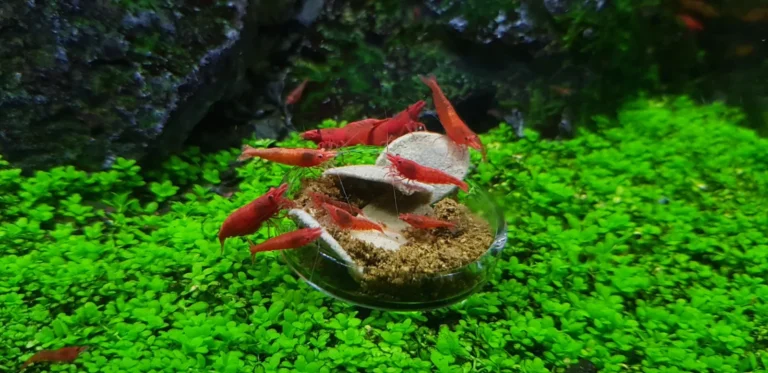
Freshwater aquarium shrimp are actually what got me into the aquarium hobby in the first place. At first, I was fascinated by their colors and tiny movements and i thought watching a small group of shrimp explore plants and graze across the tank was surprisingly relaxing. Before long, that curiosity turned into a full interest in aquariums and eventually keeping entire shrimp colonies.
For a long time shrimp were considered somewhat niche in the aquarium world, but today they’re incredibly popular. Their vibrant colors, fascinating behaviors, and usefulness in planted tanks make them one of the most rewarding creatures you can keep. From bright red Cherry Shrimp to elegant Crystal Red Shrimp, these tiny invertebrates can turn even a small aquarium into a thriving micro-ecosystem.
Shrimp are especially valuable in planted aquariums because they act as natural scavengers. They spend most of their day grazing on algae, biofilm, and leftover food, helping keep the tank clean and balanced. Many hobbyists even set up shrimp-only aquariums just to watch colonies grow and interact.
Another reason shrimp are so appealing is that many species are incredibly beginner-friendly. Hardy varieties like Cherry Shrimp are easy to care for, breed readily, and don’t require complicated equipment.
In this guide, I’ll walk you through everything I’ve learned about keeping freshwater aquarium shrimp from choosing species and setting up a shrimp tank to feeding, breeding, and solving common problems. If you’re just getting started or looking to build a thriving shrimp colony, this guide will help you get all the answers.
Freshwater aquarium shrimp are small crustaceans that live in freshwater environments such as rivers, lakes, and streams. In the aquarium hobby, they are kept as ornamental pets and as part of clean-up crews in planted tanks.
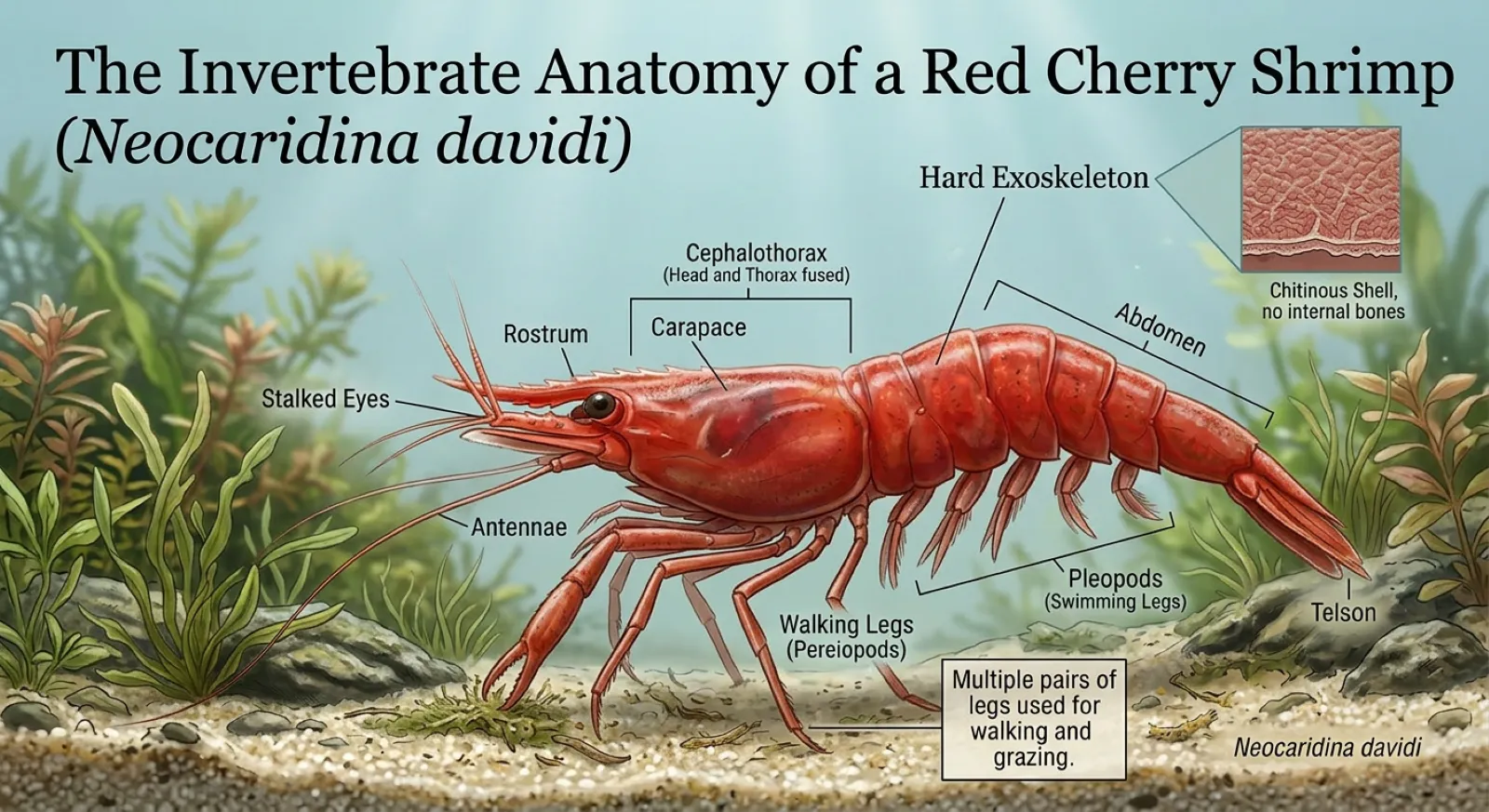
Unlike fish, shrimp are invertebrates. This means they have an external skeleton (exoskeleton) instead of internal bones. Their bodies consist of a head, thorax, and abdomen, along with multiple pairs of legs used for walking and grazing.
One of the most noticeable behaviors of shrimp is their constant scavenging. They spend much of their time grazing on algae, biofilm, and leftover food. This makes them incredibly helpful for maintaining a clean aquarium environment.
Shrimp also display fascinating behaviors. They communicate through chemical signals, compete for food, and often form colonies where multiple generations coexist. Watching shrimp forage through plants and decorations can be surprisingly entertaining.
Most freshwater aquarium shrimp live between 1 and 2 years, depending on species and tank conditions. Some larger species, such as Amano shrimp, can live longer.
Because shrimp have rigid exoskeletons, they must periodically shed them in a process called molting. During molting, the shrimp breaks out of its old shell so it can grow a new, larger one.
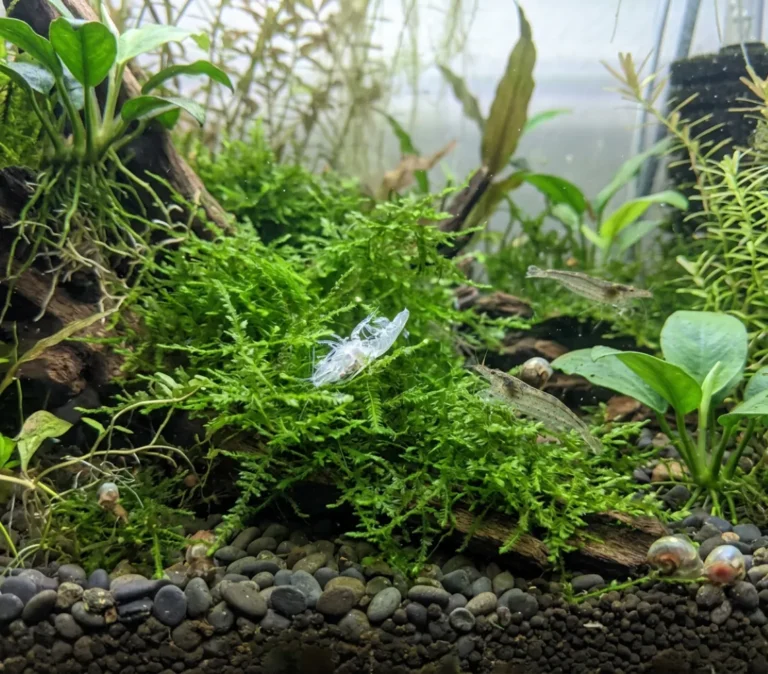
What’s left behind in the tank is the shrimp’s old exoskeleton, which often looks exactly like a dead shrimp. The empty shell usually includes the legs, antennae, and even the shape of the body, which can confuse new shrimp keepers. However, it is completely hollow and harmless.
Molting is a vulnerable time for shrimp. After shedding their old shell, their new exoskeleton is still soft, so they typically hide in plants, moss, or decorations until it hardens.
You may also notice other shrimp eating the old shell. This is completely normal and actually beneficial. The exoskeleton contains calcium and minerals that help shrimp strengthen their new shell after molting.
Healthy shrimp will molt regularly as they grow. Younger shrimp may molt every few weeks, while adult shrimp molt less frequently.
However, molting problems can occur if water parameters are unstable or if the shrimp lack enough minerals in the water. Maintaining proper GH, KH, and stable water conditions helps ensure successful molts.
There are dozens of freshwater shrimp species kept in aquariums, but most fall into three major groups.
Neocaridina shrimp are the most popular beginner shrimp in the aquarium hobby. They are hardy, adaptable, and available in many bright color varieties, which makes them perfect for both new and experienced shrimp keepers.
One of the biggest advantages of Neocaridina shrimp is their ability to tolerate a wide range of water parameters. Unlike more sensitive shrimp species, they can adapt well to typical community aquarium conditions, making them much easier to keep.
These shrimp are also well known for breeding readily in freshwater aquariums. Once a colony becomes established, you’ll often see berried females carrying eggs and eventually baby shrimp appearing throughout the tank.
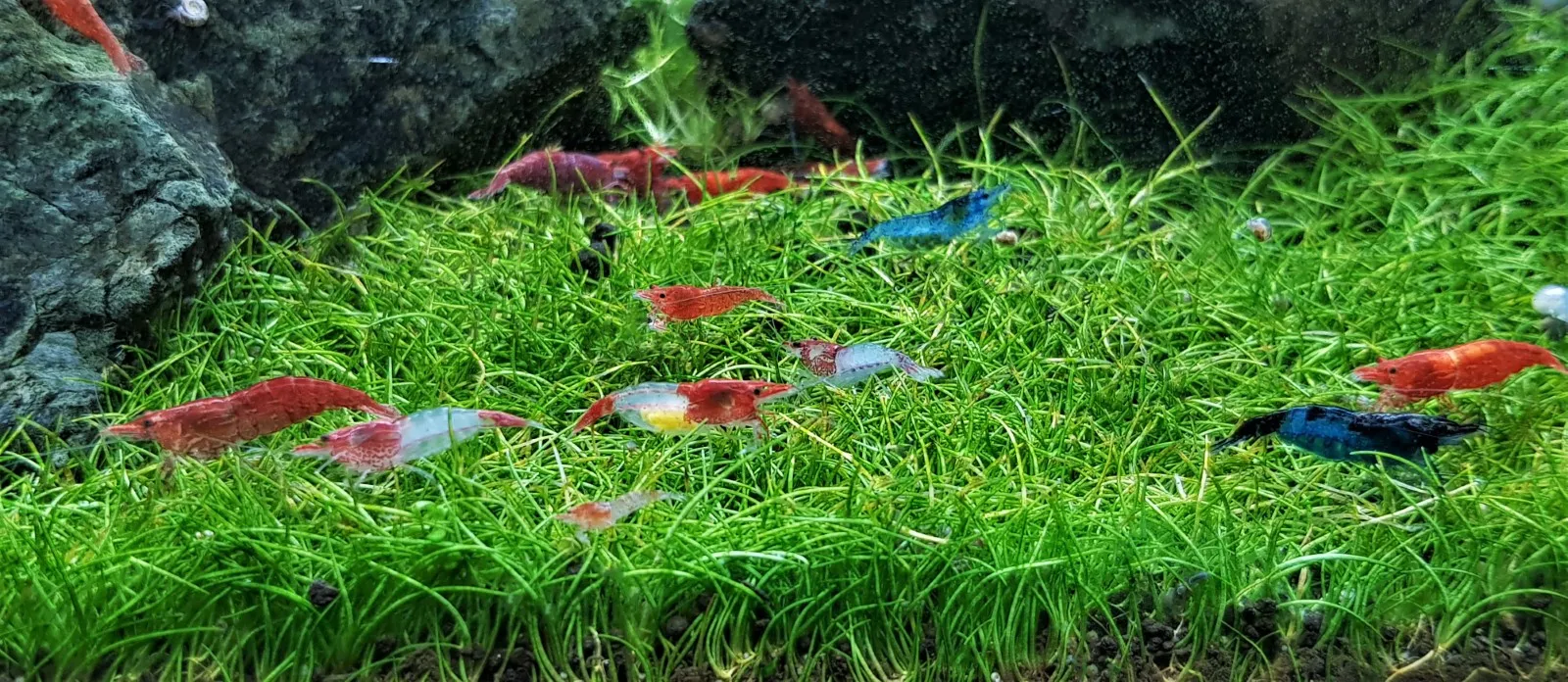
Neocaridina shrimp come in many selectively bred color morphs. Some of the most popular varieties include:
Most of these color varieties are the same species, simply bred for different colors. However, if different colors are kept together, they will often crossbreed and eventually revert to a more natural wild coloration.
Neocaridina shrimp thrive in planted aquariums, where mosses and dense plants provide hiding places for baby shrimp and surfaces for grazing on biofilm.
Because of their hardiness, beautiful colors, and easy breeding, Neocaridina shrimp are often recommended as the best shrimp for beginners and are a great starting point for anyone interested in keeping freshwater shrimp.
Caridina shrimp are generally considered more advanced shrimp species compared to Neocaridina shrimp. While they are extremely beautiful and highly sought after, they also require more stable and specific water conditions to thrive.
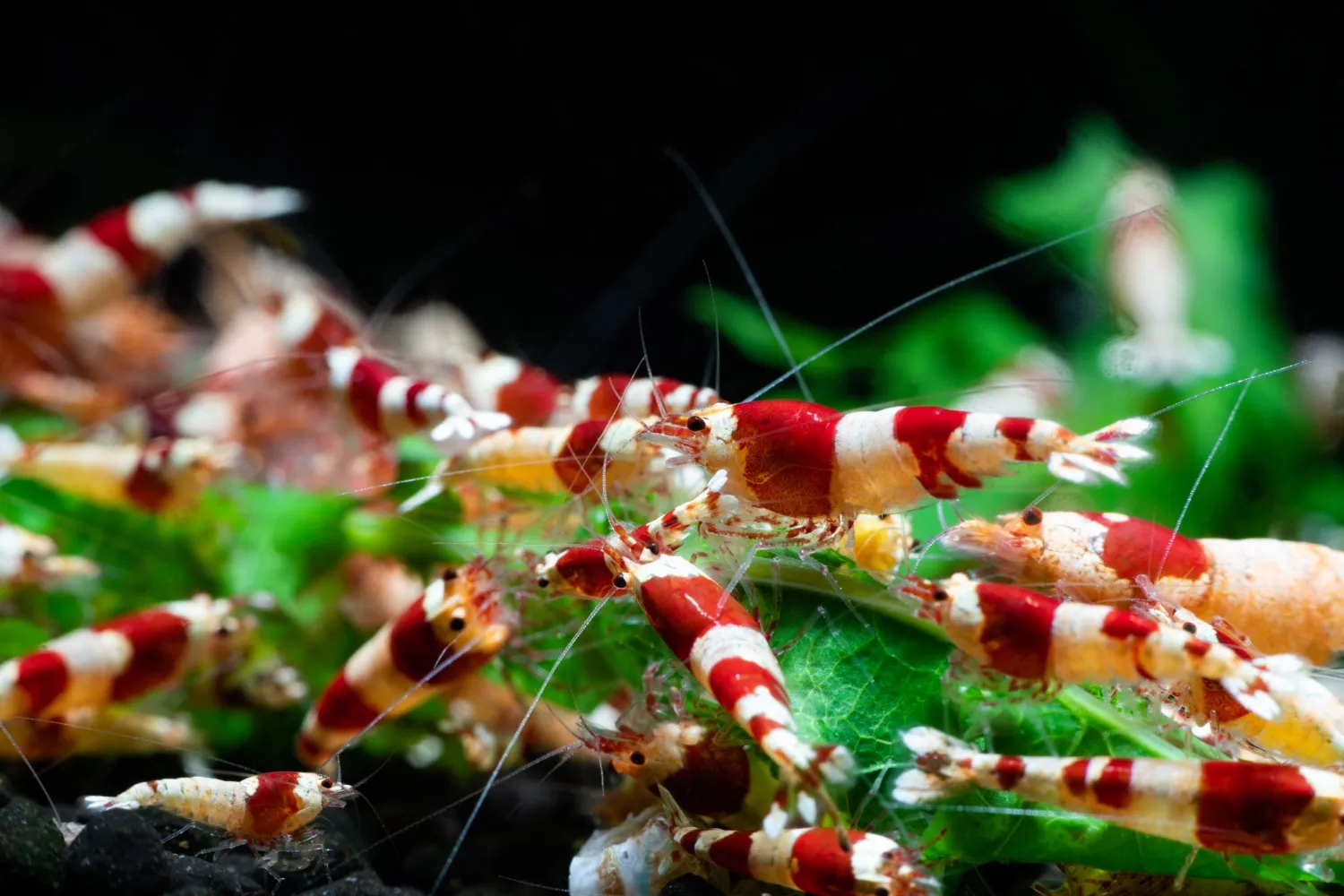
Unlike Neocaridina shrimp, many Caridina species prefer softer, more acidic water. Because of this, they are often kept in dedicated shrimp tanks that use active substrates to help maintain lower pH levels and stable water parameters.
Maintaining consistent conditions is especially important with Caridina shrimp. Sudden changes in pH, temperature, or mineral levels can stress them and lead to molting issues. For this reason, many hobbyists use RO (reverse osmosis) water with remineralizers to control water parameters more precisely.
Caridina shrimp are popular among experienced shrimp keepers because of their incredible patterns, contrast, and selective breeding lines. Over time, breeders have developed many stunning varieties.
Some of the most well-known Caridina shrimp include:
Many of these shrimp feature striking patterns such as bold stripes, spotted markings, or contrasting black-and-white coloration. Their unique appearance makes them highly prized in the shrimp-keeping community.
While they can be more challenging to keep than Neocaridina shrimp, successful Caridina colonies are extremely rewarding and often become the centerpiece of specialized shrimp aquariums.
Some freshwater shrimp species are especially valued for their algae-eating abilities. These shrimp are often used as part of an aquarium clean-up crew, helping control algae and remove leftover food in the tank.
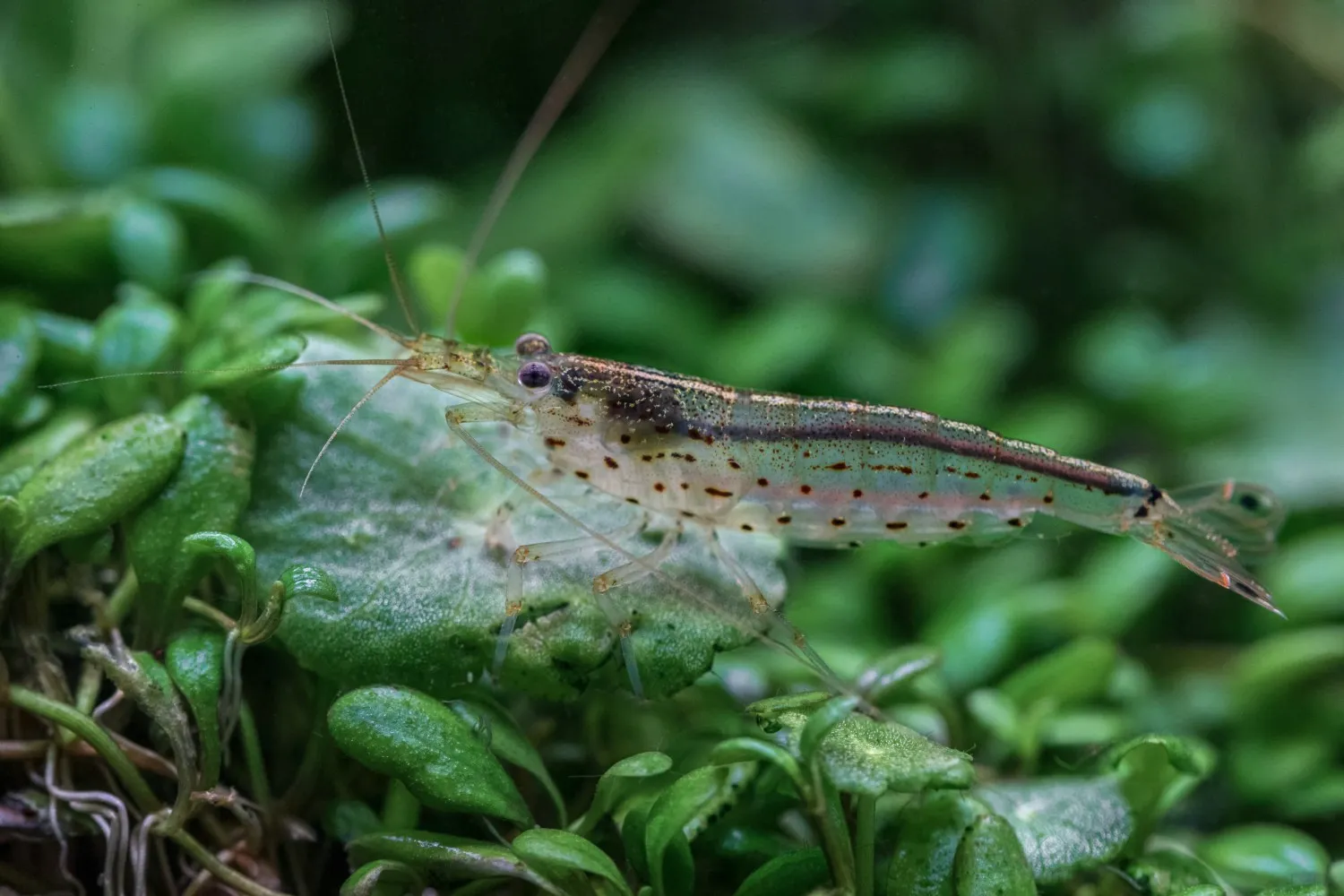
Many of these shrimp are larger than typical dwarf shrimp and have slightly different feeding behaviors. While some graze on algae directly, others filter tiny food particles from the water.
Examples include:
Amano shrimp are the most well-known algae-eating shrimp in the aquarium hobby. They are excellent at consuming many types of algae and are frequently used in planted aquariums to help keep surfaces clean.
Bamboo shrimp and Vampire shrimp are filter-feeding shrimp. Instead of grazing on surfaces, they use specialized fan-like appendages to catch tiny food particles from the water current. Because of this, they prefer aquariums with moderate water flow and plenty of suspended food.
While these shrimp can help manage algae and debris, they should not be relied on as the only solution for algae problems. Maintaining proper lighting, nutrient balance, and regular tank maintenance is still essential for a healthy aquarium.
If you’re new to shrimp keeping, starting with hardy species will greatly increase your chances of success.
Here are some of the best shrimp for beginners.
Cherry shrimp are the most popular freshwater shrimp species in the aquarium hobby. They are extremely hardy, breed easily, and come in bright red coloration that stands out beautifully in planted tanks.
Amano shrimp are larger than most dwarf shrimp and are famous algae eaters. They rarely breed in freshwater tanks, making them ideal for aquarists who want shrimp without population explosions.
Ghost shrimp are inexpensive and widely available. Their transparent bodies make them interesting to observe, and they are often used as starter shrimp for beginners.
Blue Dream shrimp are a stunning blue color variant of Neocaridina shrimp. They are just as hardy as Cherry shrimp but add a different color aesthetic to aquariums.
Yellow shrimp bring bright color to planted tanks and are easy to care for, making them another excellent beginner option.
If you’re completely new to shrimp keeping, I personally recommend starting with Cherry shrimp or another Neocaridina variety like Blue Dream or Yellow shrimp.
These shrimp are extremely hardy, adapt well to a wide range of water conditions, and breed easily once they settle into the tank. When I first started keeping shrimp, Cherry shrimp were the species that really helped me learn how shrimp behave, how colonies grow, and how rewarding shrimp tanks can be.
One important tip for beginners is not to mix different Neocaridina colors in the same tank! Even though varieties like Cherry, Blue Dream, and Yellow shrimp look very different, they are actually the same species. When different colors breed together, the offspring often revert to a wild-type brown or transparent coloration over time.
If you want to keep a vibrant colony with strong colors, it’s best to stick with a single color variety per tank.
Once you’re comfortable keeping Neocaridina shrimp, you can later explore more advanced species like Caridina shrimp.
Creating the right environment is essential for keeping shrimp healthy and encouraging breeding. While shrimp are small, they still benefit from a well-planned aquarium with stable water conditions, plenty of surfaces for grazing, and places to hide.
A good shrimp tank typically includes live plants, gentle filtration, and stable water parameters. When these conditions are met, shrimp will spend most of their time grazing on biofilm and exploring the aquarium. A jungle style or nature style aquarium are good styles to explore if you want to create a shrimp tank.
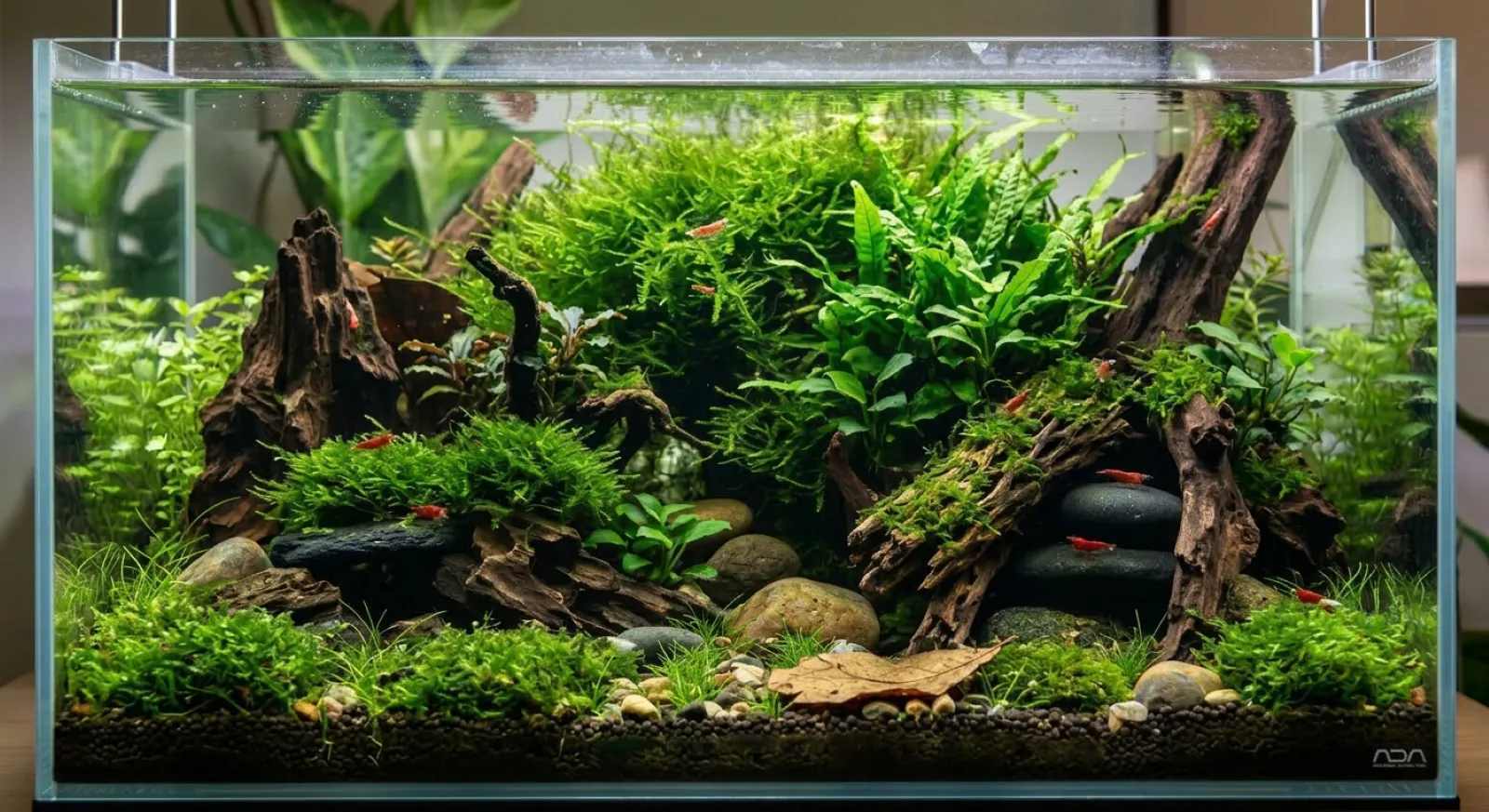
Shrimp can live in small aquariums, but larger tanks are generally more stable and easier to maintain. Water parameters fluctuate much less in larger volumes of water, which is important because shrimp are sensitive to sudden changes.
Many hobbyists also maintain shrimp-only tanks, which allow shrimp colonies to grow without the risk of fish eating baby shrimp. In these tanks, shrimp populations can expand naturally as they reproduce.
From my experience, starting with at least a 10-gallon aquarium makes shrimp keeping much easier. The extra water volume helps stabilize parameters and gives you more room to create a planted environment where shrimp can thrive.
The substrate is the material that covers the bottom of your aquarium. In shrimp tanks, substrate plays an important role because it can influence water chemistry, plant growth, and the overall health of the shrimp colony.
Shrimp tanks typically use either inert substrates or active substrates, depending on the type of shrimp being kept.
Inert substrates such as gravel or sand do not change water parameters. Because they are chemically neutral, they are ideal for Neocaridina shrimp, which can tolerate a wider range of water conditions. Inert substrates are also easy to maintain and work well in beginner shrimp tanks.
Active substrates, on the other hand, are designed to buffer water parameters. They usually lower pH and help maintain softer water, which is why they are commonly used when keeping Caridina shrimp species like Crystal Red or Taiwan Bee shrimp.
Many shrimp keepers also prefer planted tank substrates, especially in shrimp-only aquariums. These substrates contain nutrients that support plant growth and help create a healthy environment where biofilm can develop. Biofilm is a natural food source for shrimp and is especially important for baby shrimp.
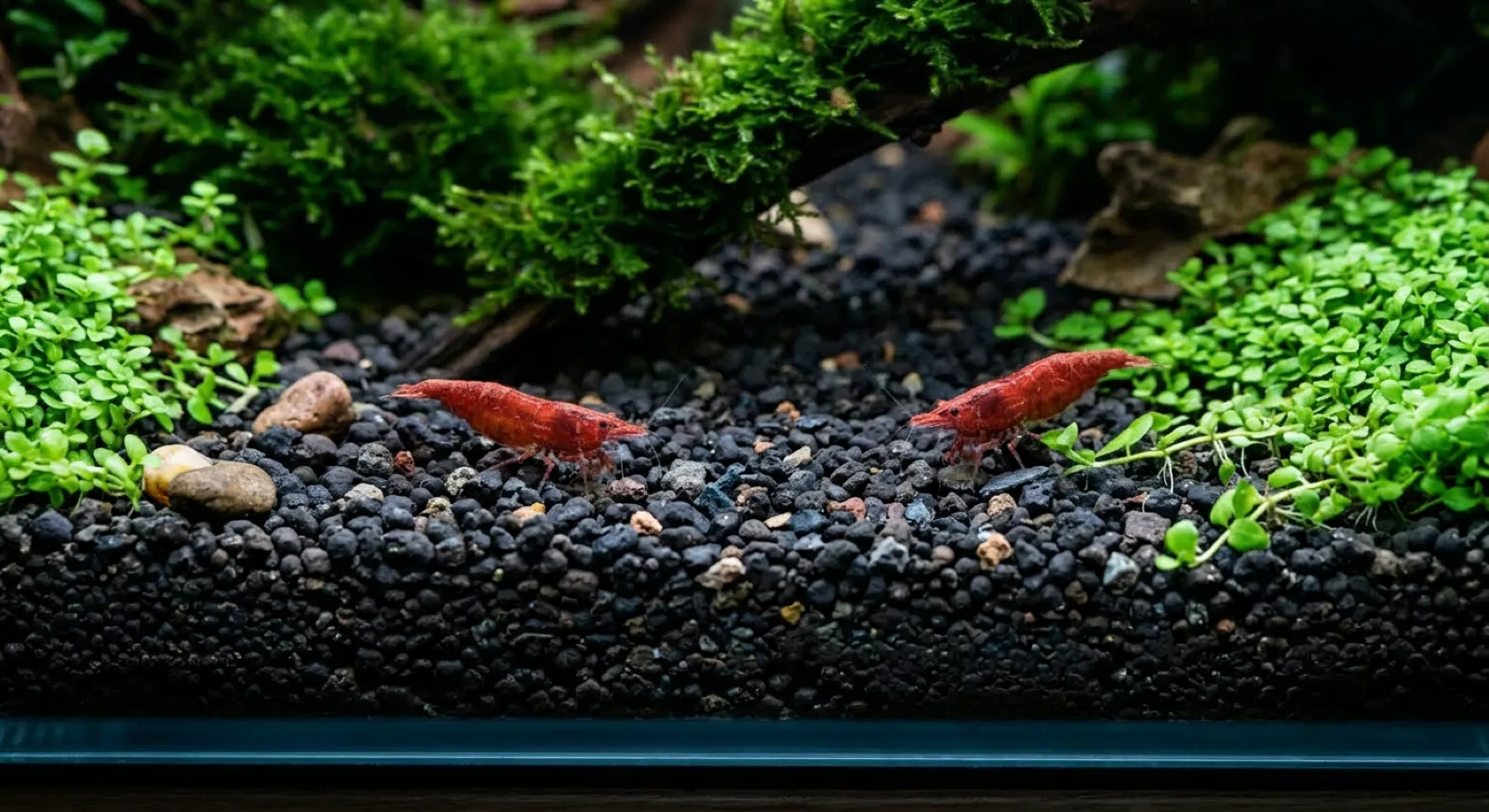
In planted shrimp tanks, substrates also help anchor plants and mosses, creating more surfaces for shrimp to graze and more hiding places for young shrimp.
For beginners keeping Neocaridina shrimp, a simple sand or fine gravel substrate combined with plenty of plants and moss is often the easiest and most reliable setup.
Plants are extremely important in shrimp aquariums. They provide shelter, grazing surfaces, and natural food sources for shrimp colonies. Surfaces like leaves and moss quickly develop biofilm and microorganisms, which shrimp constantly graze on throughout the day.
Plants are especially important for baby shrimp, as dense vegetation gives them safe hiding places and access to tiny food sources that grow on plant surfaces.
Popular plants for shrimp tanks include:
Moss is one of the best plants for shrimp tanks because it creates dense areas where shrimp can hide and graze. Shrimp colonies will often spend hours picking through moss for tiny bits of food.
Floating plants are also very beneficial. They help absorb excess nutrients, provide shade, and create additional surfaces for biofilm to grow.
My personal recommendation
Personally, Monte Carlo is one of my favorite plants for shrimp tanks. It forms a dense green carpet along the substrate and creates countless tiny spaces where shrimp love to explore and graze.
The more plants you have in a shrimp tank, the more natural food sources and hiding places your shrimp will have, which often leads to healthier shrimp and higher survival rates for baby shrimp.
Shrimp require gentle filtration that keeps the water clean without creating strong currents or sucking in baby shrimp. Good filtration is important because shrimp are sensitive to poor water quality, but it must also be shrimp-safe, especially once the colony begins breeding.
The best options include:
Sponge filters are the most popular filtration choice for shrimp tanks. They provide excellent biological filtration while remaining completely safe for shrimp of all sizes, including newborn shrimplets.
These filters are powered by an air pump and gently pull water through a sponge, where beneficial bacteria break down waste. Because the intake surface is large and soft, shrimp cannot get trapped in the filter.
Another advantage is that sponge filters often become covered in biofilm and microorganisms, which shrimp will graze on throughout the day.
Hang-on-back filters, internal filters, and canister filters can also be used in shrimp tanks, but they should always be made shrimp-safe.
The easiest way to do this is by adding a pre-filter sponge over the filter intake. This prevents baby shrimp from being sucked into the filter while also adding extra biological filtration.
When using stronger filters, it’s also a good idea to reduce the water flow, since shrimp generally prefer calm water conditions.
For most shrimp tanks, especially beginner setups, a simple sponge filter combined with plenty of plants provides more than enough filtration and creates a stable, shrimp-friendly environment.
Stable water conditions are critical for shrimp health. Unlike many fish, shrimp are very sensitive to sudden changes in water chemistry, which is why maintaining consistent parameters is one of the most important parts of shrimp care.
Shrimp can tolerate a range of conditions depending on the species, but stability is more important than chasing perfect numbers. Sudden shifts in temperature, pH, or mineral levels can stress shrimp and may lead to molting problems or deaths.
Regular water testing and small, consistent water changes help keep parameters stable and shrimp colonies healthy.
Most freshwater shrimp thrive at temperatures between 68–76°F (20–24°C).
This temperature range works well for most popular shrimp species, including Neocaridina and many Caridina varieties.
Higher temperatures can sometimes encourage faster breeding, but they also speed up metabolism and may shorten the lifespan of the shrimp. Lower temperatures typically slow reproduction but can help shrimp live longer.
Keeping the temperature stable is important, so many shrimp keepers use an aquarium heater to prevent fluctuations.
The ideal pH depends on the type of shrimp being kept.
Neocaridina shrimp are very adaptable and can thrive in a wide range of conditions, which is one reason they are recommended for beginners.
Caridina shrimp generally prefer softer, slightly acidic water, and many keepers use active substrates or reverse osmosis (RO) water to maintain these parameters.
GH (general hardness) and KH (carbonate hardness) are extremely important for shrimp because they affect shell development and molting success.
GH measures the amount of dissolved minerals such as calcium and magnesium, which shrimp need to build healthy exoskeletons.
KH helps stabilize pH and prevents sudden swings in water chemistry.
If GH levels are too low, shrimp may struggle to molt properly. Maintaining proper mineral levels helps prevent failed molts and shell deformities.
TDS (Total Dissolved Solids) measures the total amount of dissolved minerals in the water.
Many shrimp keepers monitor TDS because it provides a quick way to track changes in water chemistry. While TDS alone does not show exactly which minerals are present, it can help detect sudden shifts in water parameters that might stress shrimp.
For keepers using RO water, TDS meters are especially useful for ensuring that the correct amount of minerals has been added back to the water.
| Parameter | Neocaridina Shrimp | Caridina Shrimp | Notes |
| Temperature | 68–76°F (20–24°C) | 68–74°F (20–23°C) | Stable temperatures are more important than exact numbers |
| pH | 6.5–7.5 | 5.5–6.8 | Caridina shrimp prefer more acidic water |
| GH (General Hardness) | 6–8 dGH | 4–6 dGH | Important for healthy molting |
| KH (Carbonate Hardness) | 2–5 dKH | 0–2 dKH | Caridina often prefer very low KH |
| TDS | 150–250 ppm | 100–200 ppm | Often monitored with RO setups |
The table below shows the general parameter ranges commonly recommended for Neocaridina and Caridina shrimp.
Keep in mind that stable parameters are more important than exact numbers. Shrimp can adapt to slightly different conditions as long as changes happen slowly.
Freshwater shrimp are omnivores and natural scavengers. In the wild and in aquariums, they spend most of their time grazing on surfaces in search of tiny food particles.
In healthy aquariums, much of their diet comes from natural food sources that develop inside the tank, especially in planted setups where biofilm and microorganisms grow on plants, rocks, and substrate.
Shrimp constantly graze on naturally occurring food sources such as:
Biofilm is one of the most important food sources for shrimp, especially baby shrimp (shrimplets). This thin layer of microorganisms forms on almost every surface in a mature aquarium and provides essential nutrients for growing shrimp.
While shrimp will find some food naturally in the tank, they also benefit from supplemental feeding.
Common shrimp foods include:
These foods are designed to provide balanced nutrition and important minerals that support healthy growth and molting.
Many shrimp keepers also offer blanched vegetables as an occasional treat.
Popular choices include:
Vegetables should be lightly blanched before adding them to the tank so they soften and sink. Shrimp will often gather around the vegetables and graze for several hours.
Shrimp usually require very small amounts of food, especially in well-established planted tanks.
Helpful feeding tips include:
In many shrimp tanks, feeding once per day or every other day is more than enough, since shrimp will spend the rest of their time grazing on algae and biofilm throughout the aquarium.
Shrimp can live with certain fish, but tank mate selection is extremely important. Because shrimp are small and defenseless, many fish see them as food, especially baby shrimp.
In community aquariums, adult shrimp may survive with peaceful fish, but shrimplets are often eaten unless the tank has plenty of plants and hiding places.
For the best breeding success, many shrimp keepers maintain shrimp-only tanks. However, some peaceful species can coexist with shrimp without causing major problems.
Some peaceful species generally coexist well with shrimp and rarely bother adult shrimp.
Examples include:
Otocinclus are especially popular in shrimp tanks because they are gentle algae eaters and usually ignore shrimp completely.
Snails such as Nerite snails or mystery snails are also excellent tank mates because they help clean the tank and pose no threat to shrimp.
These species typically ignore adult shrimp, although very small baby shrimp may still occasionally be eaten.
Some fish may coexist with shrimp in certain tanks, but results can vary depending on the individual fish and the tank setup.
Examples include:
Some bettas ignore shrimp entirely, while others will hunt them immediately. Dense plants and moss can improve survival rates for shrimp, but there is always some risk.
Certain fish will almost always prey on shrimp and are not recommended for shrimp tanks.
These include:
These fish typically see shrimp as food and will quickly hunt them, especially smaller shrimp and babies.
As a general rule, if a fish can fit a shrimp in its mouth, it will likely try to eat it.
One of the most rewarding aspects of shrimp keeping is watching a colony grow and reproduce. In the right conditions, many freshwater shrimp species will breed naturally without much intervention.
Female shrimp carry fertilized eggs underneath their abdomen, attached to their swimmerets (small legs used for swimming). When a female is carrying eggs, she is referred to as being “berried.”
A berried shrimp will constantly fan the eggs with her swimmerets to keep them oxygenated and clean. Depending on the species and temperature, the eggs usually develop for 2–4 weeks before hatching.
When the eggs hatch, tiny baby shrimp called shrimplets emerge. Unlike many fish, shrimp do not have a larval stage in freshwater species. The babies hatch as fully formed miniature shrimp and immediately begin grazing on biofilm and microorganisms in the tank.
Providing plenty of plants, moss, and hiding places helps improve the survival rate of baby shrimp.
Neocaridina shrimp are extremely easy to breed, which is one reason they are recommended for beginners.
Once a healthy colony is established, breeding usually happens automatically without any special effort from the aquarist.
Requirements for breeding include:
Female shrimp typically become berried shortly after molting. Male shrimp will often swim actively around the tank searching for the female after she releases pheromones.
After the eggs hatch, baby shrimp remain in the tank and begin feeding on biofilm, algae, and microscopic food sources.
Caridina shrimp are generally more challenging to breed than Neocaridina shrimp because they require more precise water conditions.
Many species prefer soft, slightly acidic water, and even small parameter swings can affect breeding success.
Successful breeding often requires:
Because of their sensitivity, many experienced shrimp keepers use reverse osmosis (RO) water and remineralizers to carefully control water chemistry.
Once stable conditions are established, however, Caridina shrimp can form thriving breeding colonies just like Neocaridina.
Even well-maintained shrimp tanks can occasionally experience problems. Because shrimp are sensitive to changes in their environment, issues such as unstable water parameters, poor water quality, or mineral imbalances can quickly affect the health of a shrimp colony.
The good news is that most shrimp problems can be prevented or solved by maintaining stable water conditions and monitoring tank parameters regularly.
If shrimp start dying unexpectedly, the most common cause is poor or unstable water conditions.
Common causes include:
Shrimp are especially sensitive to sudden changes in temperature, pH, GH, and TDS, so even small shifts in water chemistry can stress them.
Testing water parameters is the first step to diagnosing shrimp deaths. Regular water testing and small, consistent water changes usually help prevent most issues.
Shrimp normally spend most of their time grazing on plants, substrate, and decorations. If you suddenly see shrimp swimming rapidly around the tank, it can be caused by several things.
Possible reasons include:
If the swimming behavior happens briefly and the shrimp settle down again, it is often normal. However, constant frantic swimming may indicate that something in the water has changed.
Molting problems are one of the most common issues in shrimp tanks. Because shrimp must shed their exoskeleton to grow, problems during molting can sometimes be fatal.
Failed molting is often caused by:
Ensuring proper GH (general hardness) and stable water conditions helps shrimp form healthy shells and molt successfully.
Adding mineral supplements or using shrimp-specific remineralizers can sometimes help prevent molting issues in mineral-deficient water.
Shrimp that suddenly turn opaque white or milky in color may be experiencing stress, illness, or molting complications.
Possible causes include:
In many cases, the best response is to check water parameters immediately and perform a small water change if necessary. Maintaining stable, clean water conditions is the best way to prevent most shrimp health problems.
When I first discovered freshwater shrimp, I honestly didn’t expect them to pull me so deeply into the aquarium hobby. What started as curiosity about these tiny creatures quickly turned into a fascination with planted tanks, water chemistry, breeding colonies, and building balanced ecosystems.
Shrimp have a unique way of making an aquarium feel alive. Watching them graze across plants, interact with each other, and slowly grow a colony is incredibly rewarding. Even after years in the hobby, I still find myself stopping to watch them explore the tank.
One of the things I love most about freshwater shrimp is that they’re accessible to almost anyone. You can start with a simple tank, a few hardy shrimp like Cherry shrimp or Blue Dream shrimp, and before long you may find yourself managing a thriving colony.
At the same time, shrimp keeping can grow with you. What begins as a beginner tank can turn into planted aquascapes, selective breeding projects, or even specialized Caridina setups.
If you’re thinking about starting a shrimp tank, my advice is simple: start small, keep your water stable, and focus on creating a planted environment where shrimp can thrive. Once a colony settles in and begins reproducing, the tank almost feels like its own tiny ecosystem.
For me, shrimp weren’t just another aquarium pet, they were the thing that truly pulled me into the hobby. And once you see a healthy shrimp colony growing in your own tank, there’s a good chance you’ll understand exactly why so many aquarists fall in love with them too.

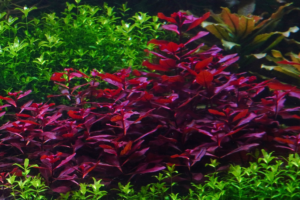
Red plants completely changed my aquascapes. I still remember my very first attempt at incorporating red plants into my aquascape.…


Starting your first aquascape is exciting, BUT it can also feel overwhelming. Between lighting, plants, CO₂, and all the little…
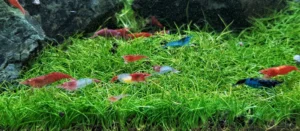
Keeping shrimp in a planted aquarium is one of the easiest ways to build a clean, stable, and visually engaging…


