Red plants in aquascaping: How to get that deep crimson color
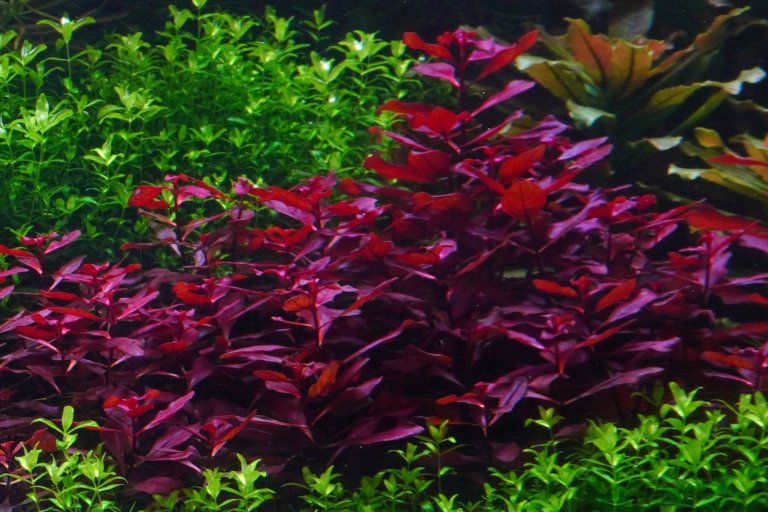
Red plants completely changed my aquascapes. I still remember my very first attempt at incorporating red plants into my aquascape. Honestly, it was underwhelming. The colors just didn’t pop like I hoped. But then, the moment came when I saw true deep crimson hues flourishing in a mature tank, and it changed the way I viewed aquascaping forever.
Red plants create a contrast in the layout that green plants alone just can’t achieve. That deep crimson becomes a focal point that draws your eye and adds depth and drama to the entire design.
Some beginner-friendly reds that are definetily worth checking out:
One thing I’ve learned is that some plants truly turn a rich red, while others stay more orange, and that’s all about how you care for them.
I made the mistake early on of blasting my tanks with light, thinking more was better. But in reality, intensity matters more than just how long the lights stay on. You can often tell when your reds need more or less light by observing their color shifts.
Before I had a stable CO₂ supply, my reds never truly deepened. It’s all about stability over chasing high numbers. Without CO₂, red plants can’t thrive to their full color potential.
I used to dump iron into my tanks, expecting an instant red boost, but that’s a myth. Nitrate limitation, carefully managed, plays a big role, as well as balancing macros and micros to support healthy growth.
Red coloration is actually a protective response in plants. I’ve learned to gently “push” my plants without causing them to melt or deteriorate. There’s a real difference between vibrant red and unhealthy damage.
Patience is everything when it comes to cultivating those deep crimson reds. Stability beats quick fixes every time. For hobbyists frustrated with “greenish reds,” keep going—the payoff is worth it.

Freshwater aquarium shrimp are actually what got me into the aquarium hobby in the first place. At first, I was…


Starting your first aquascape is exciting, BUT it can also feel overwhelming. Between lighting, plants, CO₂, and all the little…
Keeping shrimp in a planted aquarium is one of the easiest ways to build a clean, stable, and visually engaging…


