At a glance
Peaceful
Nocturnal
Bottom-dweller
Schooling
Description
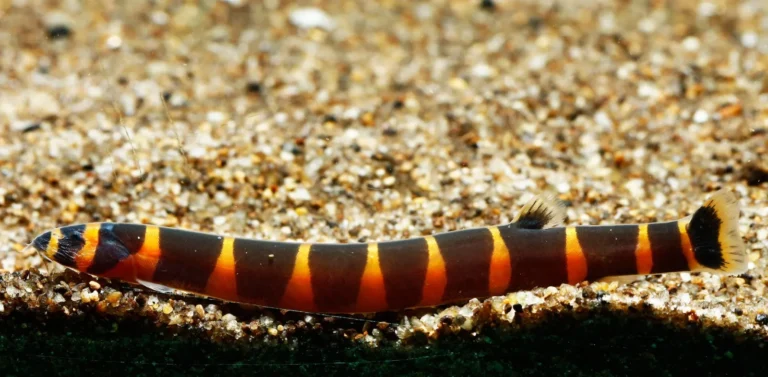
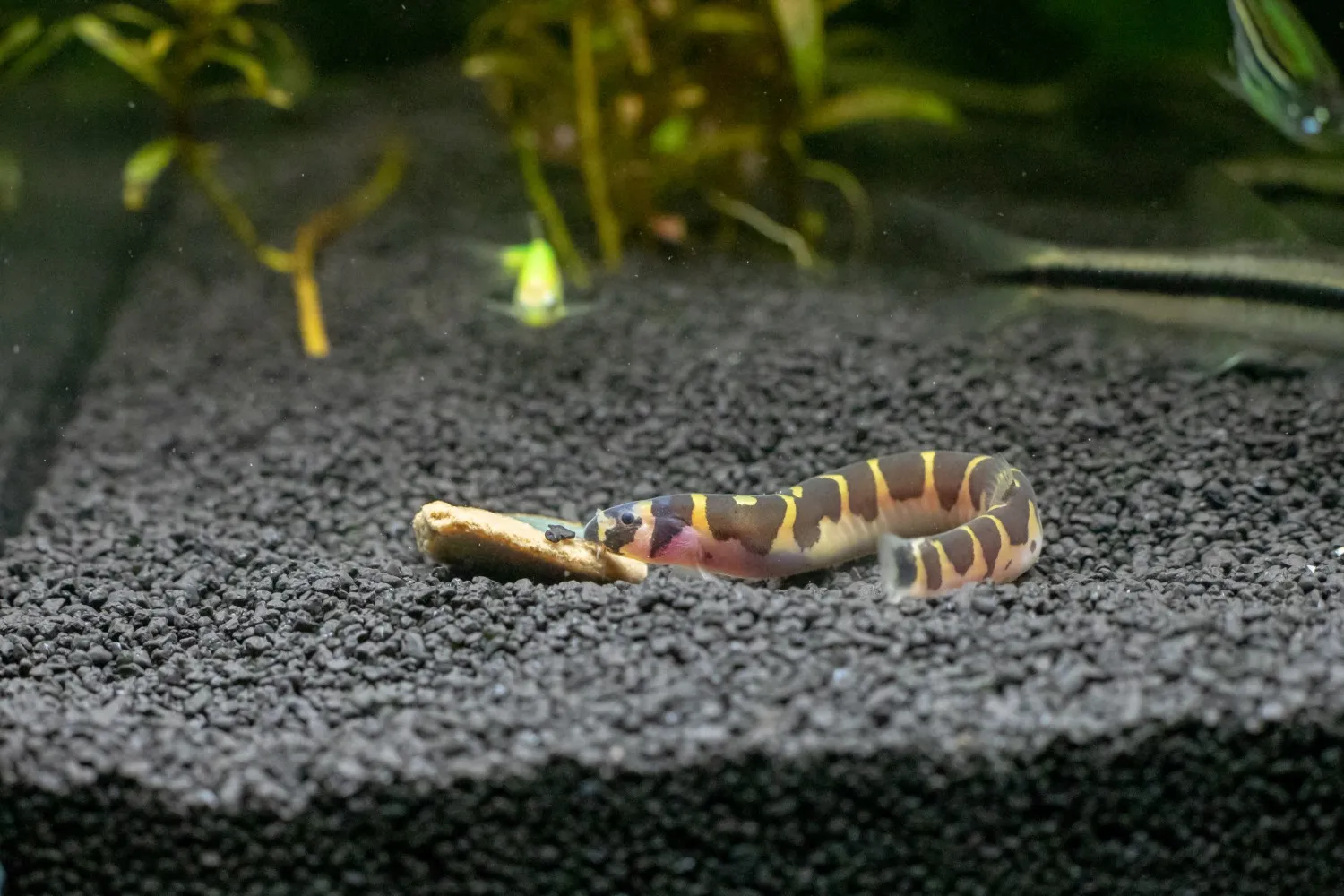
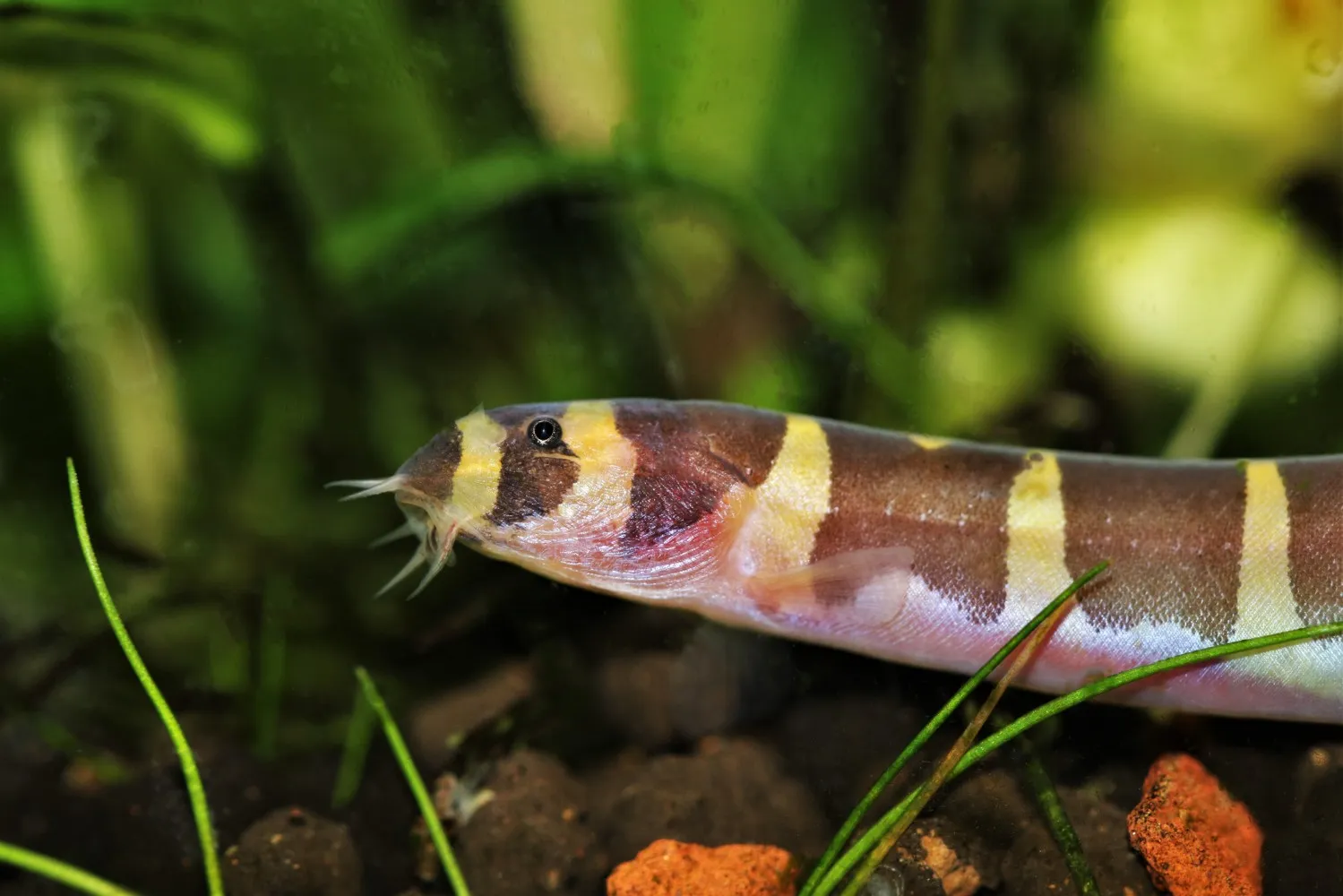
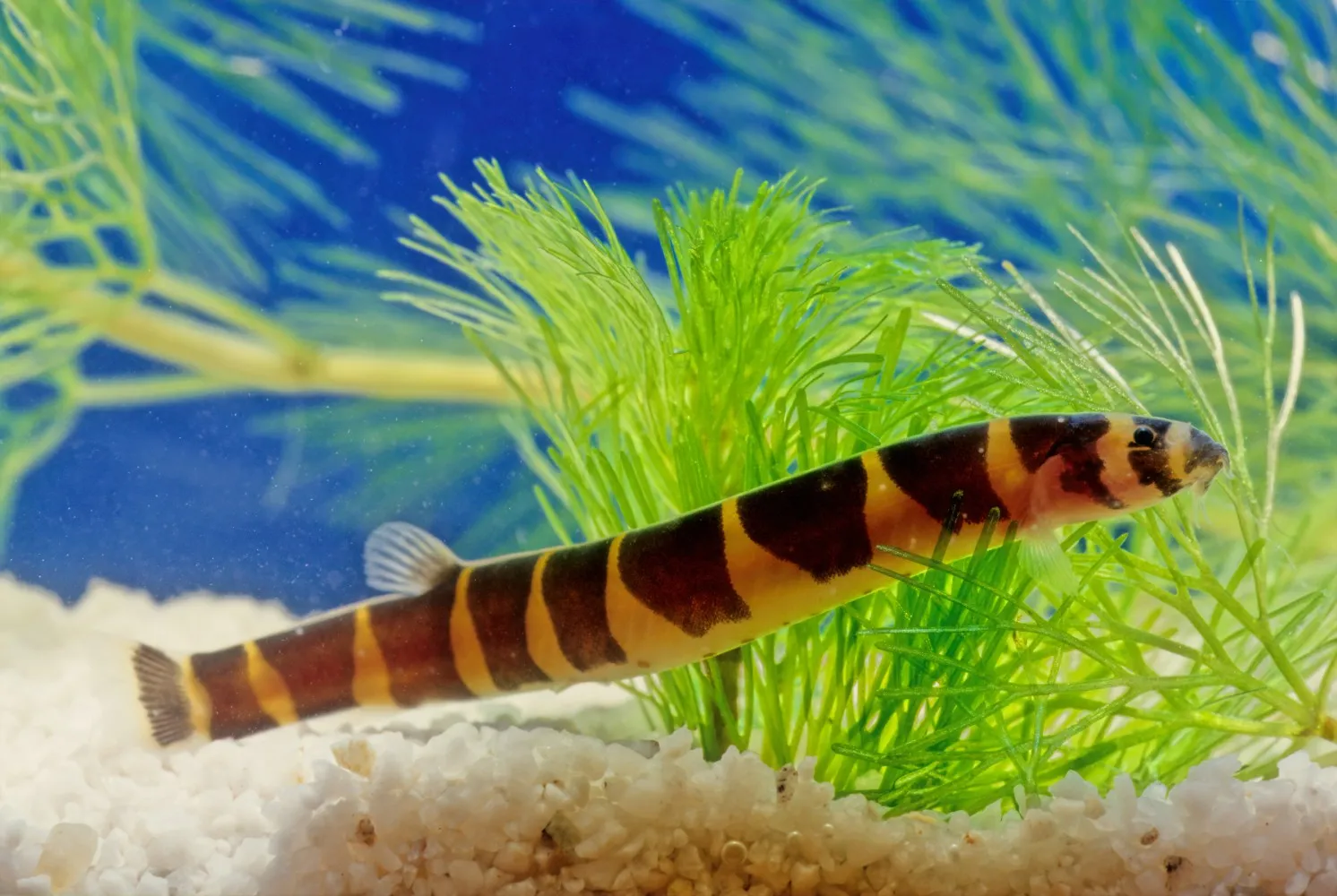
Kuhli loach (Pangio kuhlii) is a small, eel-like bottom dweller known for its banded body and shy, nocturnal habits. They are peaceful and thrive in groups where their secretive behavior is less pronounced. In aquascapes they add motion and scavenging help while preferring soft substrate, abundant hiding places and stable water. Care is straightforward if water quality, diet and hiding spots are provided.

Quick overview
Kuhli loach, Kuhl's loach, Pangio loach
75 liters (20 gallons) for a group
Ideal aquarium setup
Kuhli loaches do best in a planted aquarium that mimics shaded, slow-moving forest streams with lots of hiding spots and stable parameters. Provide soft substrate, driftwood, caves and leaf litter to recreate their natural habitat and reduce stress. Gentle filtration and steady water chemistry keep them active and healthy.
Provide at least 75 liters (20 gallons) for a small group of 6–8 individuals; larger tanks improve activity and social behavior.
Keep lighting low to moderate since kuhli loaches are primarily nocturnal and will hide under bright light; floating plants help create shaded areas. Dimmer light encourages daytime activity and reduces stress.
Dense foreground and midground plants like Java fern, crypts and mosses work well and create cover and biofilm for feeding. Floating plants and leaf litter increase hiding places and make the tank feel secure.
Low to moderate flow that mimics slow streams; avoid strong currents that can stress bottom dwellers.
Soft sand or fine rounded gravel allows safe burrowing and protects delicate barbels.
Use smooth driftwood, caves and rock crevices to create daytime hideouts and add leaf litter or almond leaves for a natural look while leaving open sand patches for foraging.

Behavior and temperament
Kuhli loaches are social and form loose shoals, becoming more confident and active in groups. They are mostly nocturnal and spend much of the day tucked into caves, under roots or in the substrate. They are timid around boisterous or nippy tankmates and can be sensitive to poor water quality. Providing regular hiding spots and gentle conditions reduces stress and encourages natural foraging.
Diet and feeding
Kuhli loaches are opportunistic bottom feeders with small mouths and do well on sinking foods, supplemented by protein-rich live or frozen treats. They feed slowly and appreciate a varied diet that reaches the substrate, with occasional vegetable matter for balance.
What they eat in nature
Worms, insect larvae, small crustaceans, detritus, microalgae
What to feed in the aquarium
- Sinking omnivore pellets or wafers that reach the bottom.
- Frozen or live bloodworms, blackworms and daphnia for protein.
- Blanched vegetables like zucchini and occasional algae wafers.
Feeding schedule
Feed small sinking portions once or twice daily, only what they can eat in a few minutes.
Special dietary needs
No strict needs, but regular small live or frozen protein foods improve health and coloration.
Daily:
Offer a small sinking portion once or twice a day and remove uneaten food to prevent water fouling.
Weekly:
Include two or more protein-rich feedings per week such as frozen bloodworms or blackworms.
Always:
Provide a varied diet of sinking pellets, occasional vegetables and live/frozen treats to keep them healthy.
Tankmate compatibility
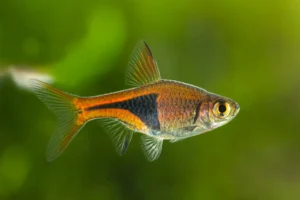
They do best with peaceful, similarly sized fish that occupy midwater or surface levels and will not harass them, such as small tetras and rasboras. Avoid large or aggressive species that could outcompete, chase or injure the loaches. Bottom-dwelling allies like Corydoras catfish are excellent companions because they share the bottom without aggression.
Yes with caution: they may eat baby shrimp or very small shrimp species, while adult shrimp are usually left alone, so keep shrimp size and breeding in mind.
Generally compatible with most snail species; kuhli loaches may investigate or disturb small snail eggs but usually do not harm healthy adult snails.
Good tankmates include small tetras, rasboras and peaceful catfish such as Corydoras that occupy different zones and won't nip or chase loaches.
Avoid semi-aggressive or nippy species like large barbs, many cichlids or aggressive loaches that can stress or injure kuhli loaches.
Keep at least six individuals to promote natural schooling behavior and reduce shyness; small groups are more active and confident than solitary fish.
Breeding
Breeding in home aquaria is uncommon but possible with conditioned adults, soft slightly acidic water, cooler water changes and plenty of hiding places or leaf litter. Spawning is secretive and eggs are scattered among substrate and plants, so success often requires a dedicated breeding tank and careful fry rearing.
Difficulty
Moderately difficult because adults are secretive spawners, eggs can be hidden or eaten and fry require tiny live foods and stable conditions to survive.
How they breed
Egg scatterer.
Best setup for breeding
Use a dimly lit breeding tank with fine-leaved plants or spawning mops, soft slightly acidic water and a gentle sponge filter; separate adults after spawning to protect eggs. A slight temperature drop and increased live foods can trigger spawning.
Feeding the babies
Start fry on infusoria or liquid fry food, then transition to microworms and newly hatched brine shrimp as they grow before introducing finely crushed dry foods.
Pro tips
Keep them in groups to reduce shyness and encourage natural behavior.
Use a soft sandy substrate to protect barbels and allow burrowing.
Add leaf litter or almond leaves for natural hiding spots and biofilm.
Stress from bright light
Kuhli loaches hide and stop feeding in bright tanks; provide floating plants, dimmer lighting or shaded areas to restore activity.
Barbel damage
Coarse substrate or sharp decor can nick sensitive barbels and lead to infection; switch to soft sand and smooth decorations and keep water clean to promote healing.
Poor water quality
They are sensitive to elevated nitrates and ammonia, so regular water changes and reliable filtration are essential to prevent illness and lethargy.
Typical beginner mistakes
- Keeping them singly instead of in a group.
- Using sharp gravel that injures barbels.
- Overfeeding leading to poor water quality.
Short summary
Kuhli loaches are peaceful, nocturnal bottom-dwellers that excel in planted aquascapes with soft substrate and plenty of hiding places. They are rewarding for beginner to intermediate aquascapers when kept in groups, offered a varied sinking diet and maintained with stable water conditions.
Frequently asked questions (FAQs)
Are kuhli loaches peaceful?
Yes, they are peaceful and shy, preferring to avoid confrontation and do best in calm community tanks.
How many kuhli loaches should I keep?
Keep at least six to encourage schooling behavior and reduce stress; larger groups are even better.
Will kuhli loaches eat shrimp?
They may eat baby shrimp or very small shrimp species, so house with larger or fast-breeding shrimp or keep shrimp with caution.
What temperature do they prefer?
They do well between 24–28°C (75–82°F), though slightly cooler water and a trigger like a water change can stimulate spawning.
Can they live with Corydoras?
Yes, Corydoras are excellent tankmates because they are peaceful bottom dwellers that won't compete aggressively for food.
Breeding is possible but moderately difficult because they spawn secretively and fry require tiny live foods and careful rearing.