At a glance
Peaceful
Schooling
Colorful
Hardy
Description
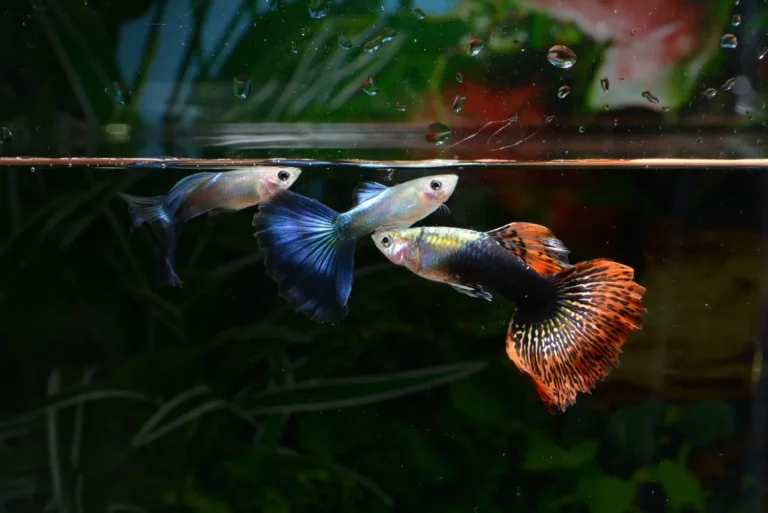
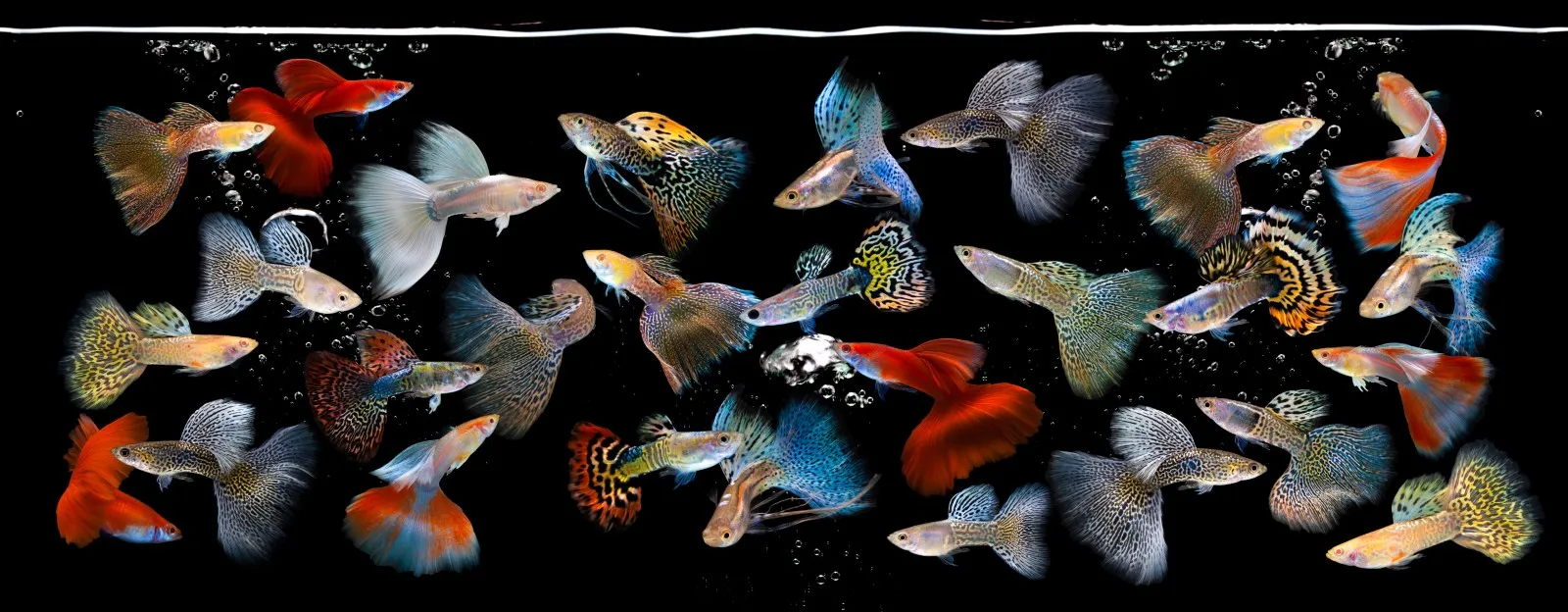
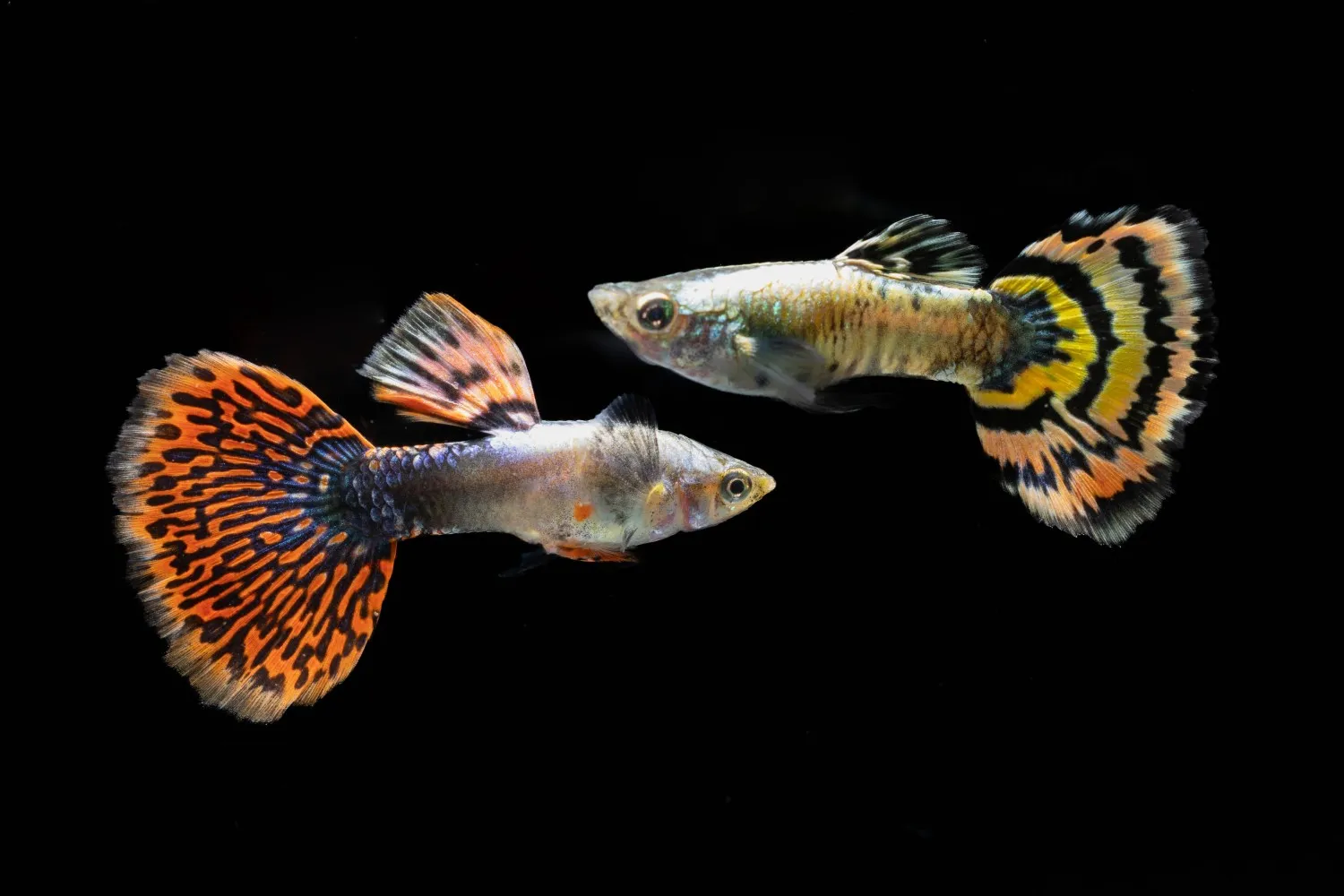
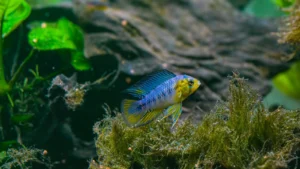
Guppy (Poecilia reticulata) is a small, brightly colored livebearer prized in aquascapes for its lively fins and variety of patterns. Males are slender and flamboyant while females are larger and more subdued, making a striking community display. They are tolerant of a range of conditions but do best in stable, planted tanks with good water quality. Guppies are easy to keep and breed readily, so population control and hiding places for fry are important.

Quick overview
Guppy, millionfish, rainbow guppy
40 liters (10 gallons) for a group
Ideal aquarium setup
Guppies do best in a well-planted community tank that mimics shallow streams and ponds with gentle surface movement and stable parameters. Include floating plants and dense stems to give fry cover and to diffuse bright light, while leaving open swimming areas for males to display. Stable temperature and regular maintenance are more important than fancy equipment.
A 40–60 liter tank (10–15 gallons) is a good starting point for a small group of 6–8 guppies; larger tanks are needed for bigger mixed communities or active breeding. Provide plenty of horizontal swimming space rather than cluttering the aquarium.
Moderate lighting suits guppies and supports plant growth without stressing them; very bright light can encourage algae and make shy fish hide. Floating plants provide shading and help reduce direct glare.
Fast-growing stem plants, floating plants and dense foreground species work well; Java fern, Vallisneria and hornwort are good choices. Plants offer shelter for fry, reduce stress, and give males display backdrops.
Low to moderate flow to mimic slow-moving waters and allow easy swimming without forcing fish to fight currents.
Fine gravel or sand in a neutral color supports planting and shows off guppy colors while remaining easy to clean.
Use smooth driftwood and rounded rocks to create visual interest while keeping open swimming lanes; root wood and leaf litter add natural shelter. Avoid sharp edges that can tear delicate fins and leave plenty of mid-to-top open space for displays.

Behavior and temperament
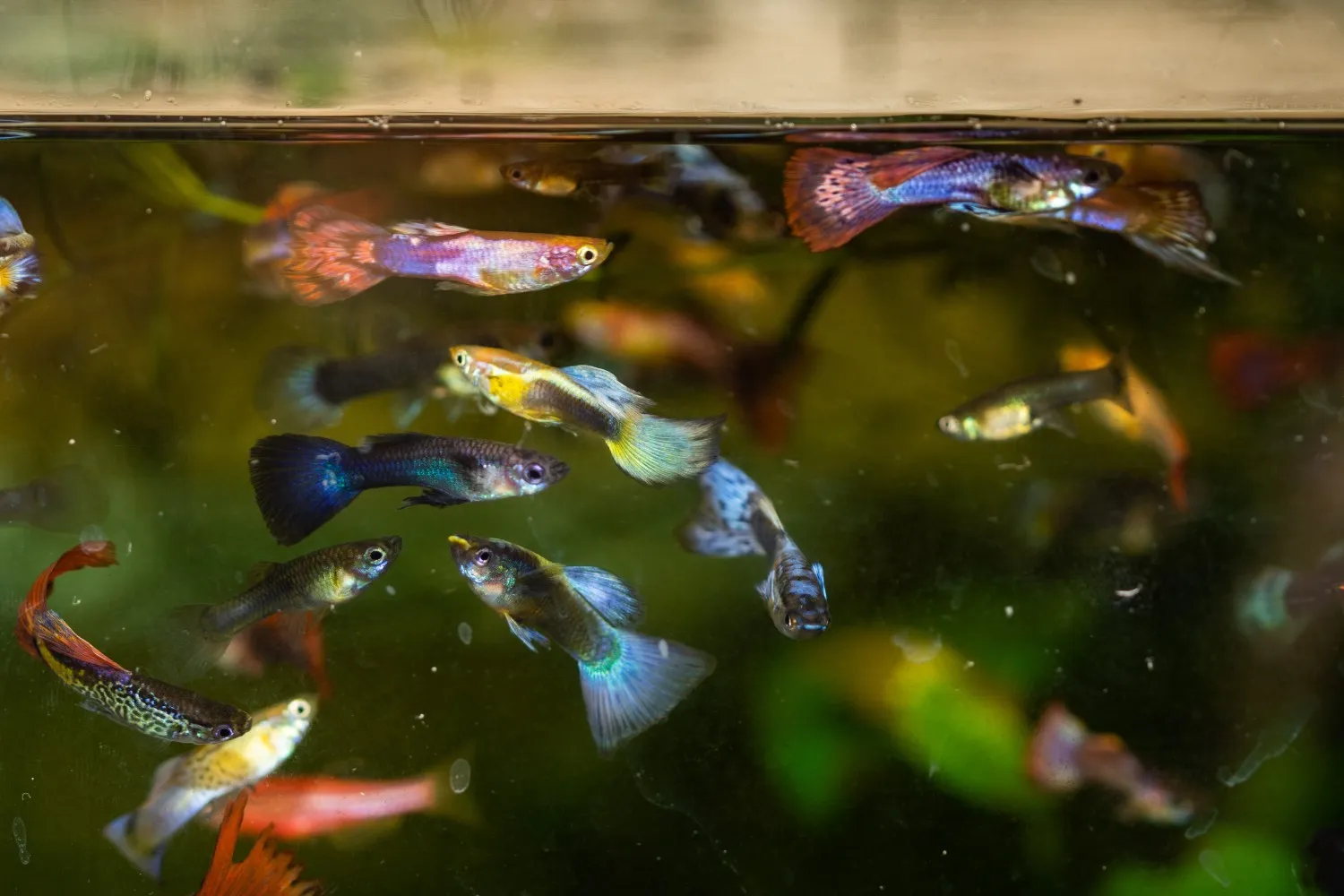
Guppies are active, social fish that do well in small groups and will frequently swim near the surface. Males are persistent displayers and may chase females during courting, which can stress females if they are outnumbered. They are generally peaceful with other small community species but are sensitive to poor water quality and sudden changes. Providing hiding places and a balanced male-to-female ratio reduces stress.
Diet and feeding
Guppies are omnivorous surface and midwater feeders with relatively small stomachs, so they do best on frequent small meals rather than large single feeds. Variety is important: combine a staple flake or micro-pellet with regular live or frozen treats and occasional vegetable matter to keep colors and health strong.
What they eat in nature
Algae, insect larvae, small crustaceans, plant matter, detritus
What to feed in the aquarium
- High-quality flake or micro-pellet food targeted at tropical omnivores.
- Frozen or live foods such as brine shrimp, daphnia and bloodworms.
- Vegetable matter like blanched spinach or spirulina flakes.
Feeding schedule
Feed small amounts twice daily, only what is eaten within two minutes.
Special dietary needs
No strict needs, but regular live or frozen foods improve coloration and condition while vegetable bits aid digestion.
Daily:
Offer a small portion of staple flakes or pellets once or twice per day so it is consumed quickly.
Weekly:
Include one or two richer feeds like frozen brine shrimp or daphnia each week and consider one light fasting day to reduce digestive issues.
Always:
Always provide a varied diet and avoid overfeeding to maintain water quality and health.
Tankmate compatibility
Guppies pair well with other small, peaceful community fish that occupy mid and top levels and pose no threat to fry. Avoid large or fin-nipping species that can harass males or outcompete them for food. Keep groups where individuals are similar in size to reduce stress and bullying.
Yes with caution; adult guppies may nibble on baby shrimp and sometimes nip small shrimp, so provide dense planting and hiding spots for shrimp to thrive.
Snails are generally safe tankmates and help control algae and detritus while not bothering guppies.
Small tetras, rasboras and Corydoras catfish make good companions as they share similar water needs and peaceful temperaments in a planted community tank.
Avoid barbs, larger cichlids and boisterous species as they can nip fins or bully guppies and cause chronic stress; fast territorial fish may outcompete guppies for food.
Keep guppies in groups with multiple females per male to spread courting attention and reduce harassment; groups of 6–12 work well in most community tanks.
Breeding
Guppies are prolific livebearers and will breed readily in most planted community tanks without special effort, often giving birth every 4–6 weeks. Males court and fertilize females internally, and females can store sperm to produce multiple broods. To raise fry reliably you will need dense planting, a breeder box, or a separate rearing tank to protect the young from adult predation.
Difficulty
Breeding is very easy because guppies are livebearers that spawn frequently and with little prompting, but raising large numbers of fry to adulthood requires space and protection. Managing population size and water quality are the main challenges when breeding at home.
How they breed
Livebearer with internal fertilization; females give birth to free-swimming fry rather than laying eggs.
Best setup for breeding
Use a dedicated breeder tank or heavily planted area with floating plants and gentle filtration, slightly warmer temperatures around 26–28°C (79–82°F) and stable water to encourage healthy broods. A breeder box or isolating pregnant females helps protect fry from adults.
Feeding the babies
Start fry on infusoria or commercially available liquid fry food for the first few days, then move to newly hatched Artemia (baby brine shrimp) and finely crushed flake as they grow. Gradually transition to regular micro-pellets and adult foods as the fry develop.
Pro tips
Keep a higher female-to-male ratio to reduce constant male harassment.
Provide floating plants to give fry cover and reduce predation risk.
Perform regular small water changes to maintain water quality and vivid coloration.
Fin rot
Fin rot often follows poor water quality or fin damage; improve water parameters, remove stressed fish and treat with appropriate antibacterial medication while improving tank hygiene.
Poor coloration
Dull color can come from inadequate diet, stress or low light; boost nutrition with live or frozen foods, reduce stressors and ensure moderate lighting and plant cover to restore vibrancy.
Overbreeding
Uncontrolled breeding leads to overcrowding and poor water quality; separate sexes or move excess fry to other tanks and maintain regular water changes to keep population in check.
Typical beginner mistakes
- Overfeeding that causes ammonia spikes and algae blooms.
- Keeping too many fish in too small a tank leading to stress and disease.
- Lack of hiding places for fry resulting in heavy predation by adults.
Short summary
Guppies are colorful, hardy livebearers ideal for beginner and intermediate aquascapers who want lively surface activity and easy care. They thrive in planted community tanks with stable water, varied diets and attention to population control.
Frequently asked questions (FAQs)
How many guppies per tank?
A 40-liter (10-gallon) tank can house a small group of 6–8 guppies, but larger tanks are better to prevent overcrowding and support breeding.
Guppies generally nibble very little on healthy plants but will eat soft algae and occasional plant matter; provide sturdy plants or fast growers to tolerate grazing.
Can guppies live with shrimp?
Yes with caution; adult shrimp can coexist but very small shrimp and juveniles may be eaten unless plenty of cover is provided.
How often do guppies breed?
Females can give birth every 4–6 weeks once mature, and can store sperm to produce multiple broods from a single mating.
What is the best temperature for guppies?
Keep guppies around 24–28°C (75–82°F) for general health and breeding activity.
How can I improve guppy color?
Feed a varied diet with quality flakes plus live or frozen treats and maintain good water quality and stable conditions to bring out brighter colors.