At a glance
Peaceful
Community tolerant
Moderately active
Male territorial
Description
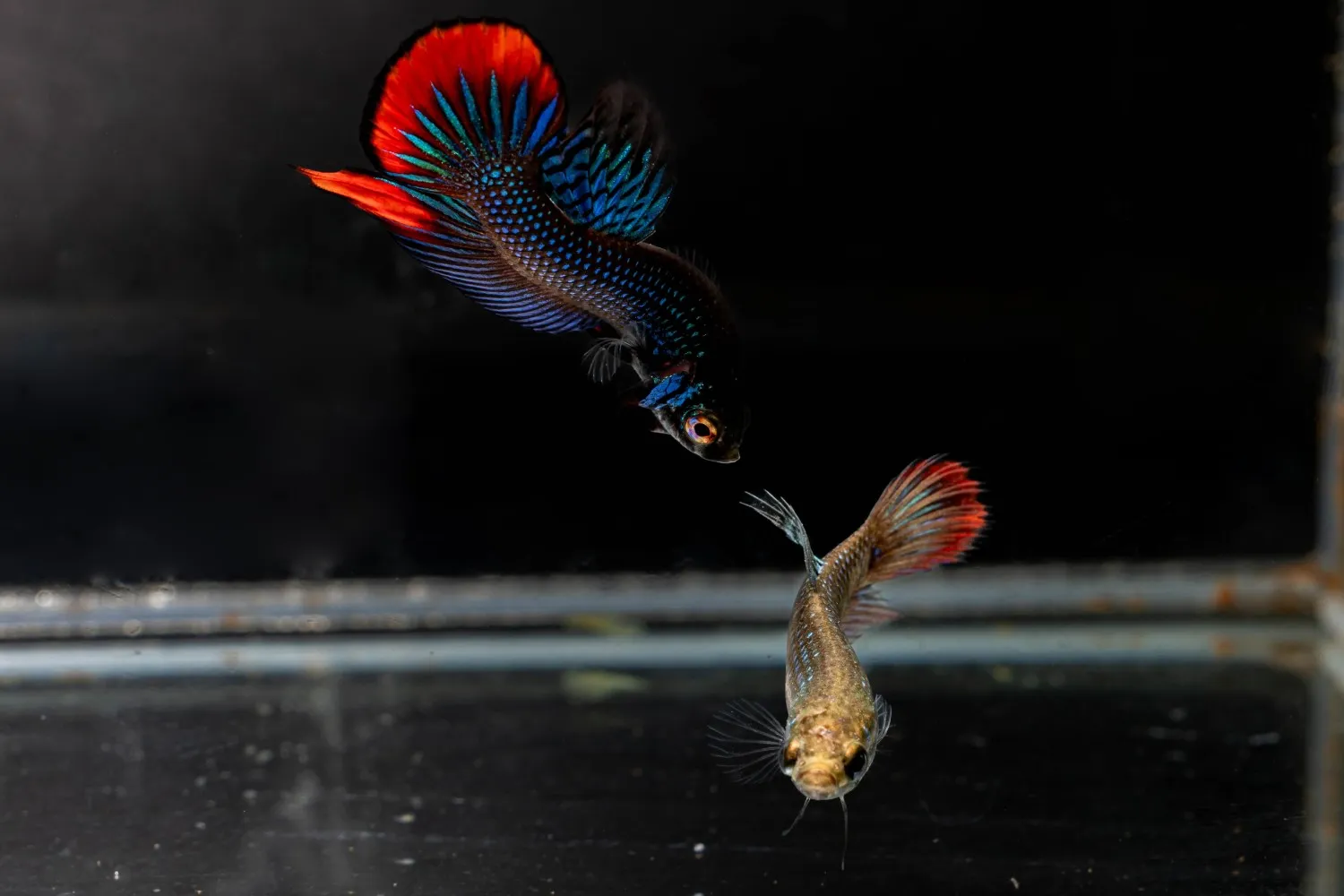
Betta imbellis is a wild Southeast Asian betta prized for its subtle blues and mottled patterns and the Latin name is Betta imbellis. It has shorter fins than ornamental bettas and a more subdued temperament, making it a good choice for planted community aquariums. Care is straightforward with stable, slightly acidic to neutral water, low flow and plenty of hiding spots. Regular feeding of small meaty foods keeps them healthy and encourages natural behavior.

Quick overview
Betta imbellis, Peaceful betta, Crescent betta
Peaceful, semi-territorial, community-friendly
60 liters (15 gallons) for a group
Ideal aquarium setup
A planted, soft-lit aquarium with stable water parameters and plenty of hiding places mimics the slow-moving streams and vegetated margins Betta imbellis prefers. Leaf litter, floating cover and gentle filtration help them feel secure and reduce stress, while a mature tank with established biological filtration keeps water stable.
A 60–80 liter tank is a good start for a small group of 4–6 adults; larger tanks are better if keeping multiple males. Provide horizontal swimming space plus dense planting and hideouts.
Low to moderate lighting suits them best because bright light can stress bettas; floating plants help diffuse light and create shaded zones. They will rest under leaves and appreciate a normal day/night cycle.
Broadleaf plants like Anubias and crypts, floating plants such as frogbit or duckweed, and mosses for resting and spawning support natural behavior and provide cover. Dense planting reduces aggression and creates secure territories.
Low flow is preferred because they inhabit slow-moving waters and strong currents cause stress and erratic swimming.
Dark sand or fine gravel with leaf litter replicates their natural bottom and helps display colors while providing foraging areas.
Use smooth driftwood, bogwood and tucked rock caves combined with leaf litter to create hiding spots and territorial boundaries. Leave some open midwater space for swimming and display.
Behavior and temperament
Betta imbellis is generally peaceful compared with Betta splendens but males remain territorial and will flare at rivals. They are moderately active and spend a lot of time near plants and cover, often resting on leaves. In groups they may form a loose hierarchy, so provide plenty of visual barriers to reduce tension. They are sensitive to poor water quality and strong currents.
Diet and feeding
They are micropredators that do best on a varied diet of small meaty foods; their stomachs are small so offer appropriately sized portions. Offer a mix of high-quality micro pellets, frozen bloodworms and live foods to maintain condition and color.
What they eat in nature
Insects, mosquito larvae, small crustaceans, zooplankton, and other tiny invertebrates.
What to feed in the aquarium
- Live foods like daphnia and mosquito larvae.
- Frozen foods such as bloodworms and baby brine shrimp.
- High-quality micro pellets and crushed flake food.
Feeding schedule
Feed small portions once or twice daily, only what they can finish in a couple of minutes.
Special dietary needs
No strict needs, but regular live or frozen foods improve condition and coloration and support breeding.
Daily:
Offer one small feeding in the morning and optionally a light second feeding in the evening; remove uneaten food promptly.
Weekly:
Include one or two richer feedings per week such as live or frozen bloodworms to vary nutrition and encourage spawning condition.
Always:
Always provide varied, appropriately sized meaty foods and avoid overfeeding to protect water quality.
Tankmate compatibility
They do well with other peaceful, similarly sized fish that occupy different niches and do not nip fins. Avoid fast fin-nippers and large aggressive species; choose calm midwater and bottom-dwellers to reduce conflict. Monitor any new additions until comfortable.
Yes with caution: Small shrimp like cherry shrimp may be eaten or harassed by larger or curious individuals, so keep in heavily planted tanks or choose larger, robust shrimp.
Snails are generally fine and useful; larger snails like nerites and mystery snails coexist well and help break down detritus.
Good companions include small schooling species like ember tetras and rasboras, and bottom-dwellers such as pygmy corydoras that mind their own business. These species keep activity balanced without stressing bettas.
Avoid boisterous or fin-nipping species such as tiger barbs and many danios, and steer clear of larger cichlids that may intimidate or injure bettas. Male Betta splendens are also a poor match due to display aggression.
Small groups can work but males may display to each other; a single male with several females or a female-only group of 4–6 is often easier to manage. If keeping multiple males allow plenty of space and visual breaks.
Breeding
Breeding Betta imbellis is approachable for hobbyists who can provide calm water and live foods to condition breeders. Males build bubble nests among floating plants or leaf litter and will guard eggs and fry until free-swimming. Careful selection of compatible pairs and stable water speeds the process.
Difficulty
Moderately easy when water is stable and parents are well conditioned on live foods; challenges include male territorial behavior and the need to protect fry from other tankmates. Maintaining soft slightly acidic water and a secluded breeding area simplifies success.
How they breed
Bubble nest builder with the male tending the nest and guarding eggs until fry are free-swimming.
Best setup for breeding
Use a small, quiet breeding tank with floating plants or a spawning mop, low water depth and soft slightly acidic water around 26–28°C. Provide gentle filtration or none at all and feed conditioning live foods to both parents.
Feeding the babies
Start fry on infusoria or commercially prepared liquid fry foods until mouths are large enough for baby brine shrimp. After several days transition to newly hatched brine shrimp then to finely crushed flake or micro pellets as they grow.
Pro tips
Use floating cover to reduce stress and give males nesting sites.
Keep water changes small but frequent to maintain stability.
Condition breeders with live foods for best spawning response.
Fin rot
Fin rot can appear from poor water quality or damage; improve water parameters, remove aggressive tankmates and treat with appropriate medication if needed.
Stress shading
Pale color and hiding often indicate stress from bright light or high flow; add floating plants and reduce current to help them relax and regain color.
Aggressive displays
Males may flare and fight in cramped conditions; separate aggressive individuals or increase territory complexity and tank size to reduce conflict.
Typical beginner mistakes
- Keeping too small a tank for multiple adults.
- Using strong filtration with high flow without calm spots.
- Overfeeding which degrades water quality quickly.
Short summary
Betta imbellis is a peaceful, attractive wild betta that thrives in planted, low-flow aquariums with stable water and varied meaty foods. It suits beginner to intermediate aquascapers who provide cover, a calm environment and sensible tankmates.
Frequently asked questions (FAQs)
Is Betta imbellis aggressive like Betta splendens?
No, it is generally less aggressive but males can still display territorial behavior so caution is needed with same-species tanks.
What temperature do they prefer?
They do well around 24–28°C (75–82°F), with slightly warmer water used for breeding.
Can they live with shrimp?
They can live with shrimp but small shrimp may be harassed or eaten, so provide dense planting or choose larger shrimp species.
How often should I change water?
Perform small weekly water changes of 20–30 percent to keep parameters stable and avoid sudden swings.
Breeding is moderately easy if conditions are stable and parents are well conditioned with live foods; males build bubble nests and tend the fry.
What tankmates are recommended?
Choose peaceful midwater and bottom-dwelling species like small rasboras and pygmy corydoras that will not nip fins or provoke displays.