At a glance
Peaceful
Schooling
Small size
Bottom dweller
Description
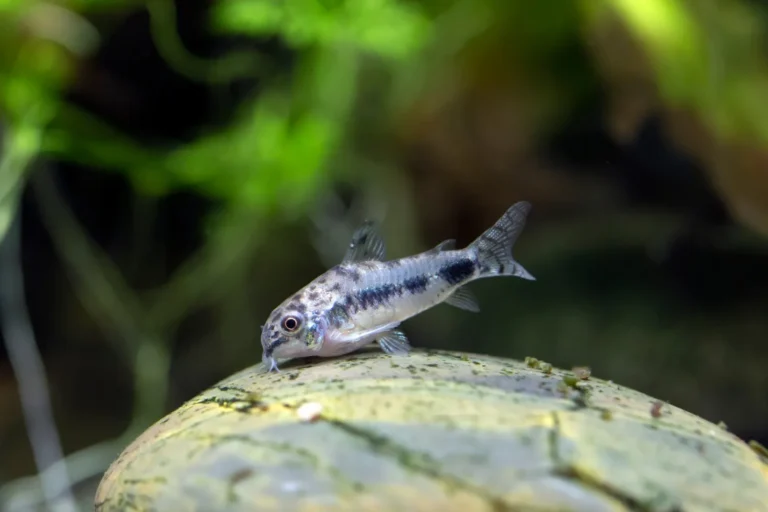
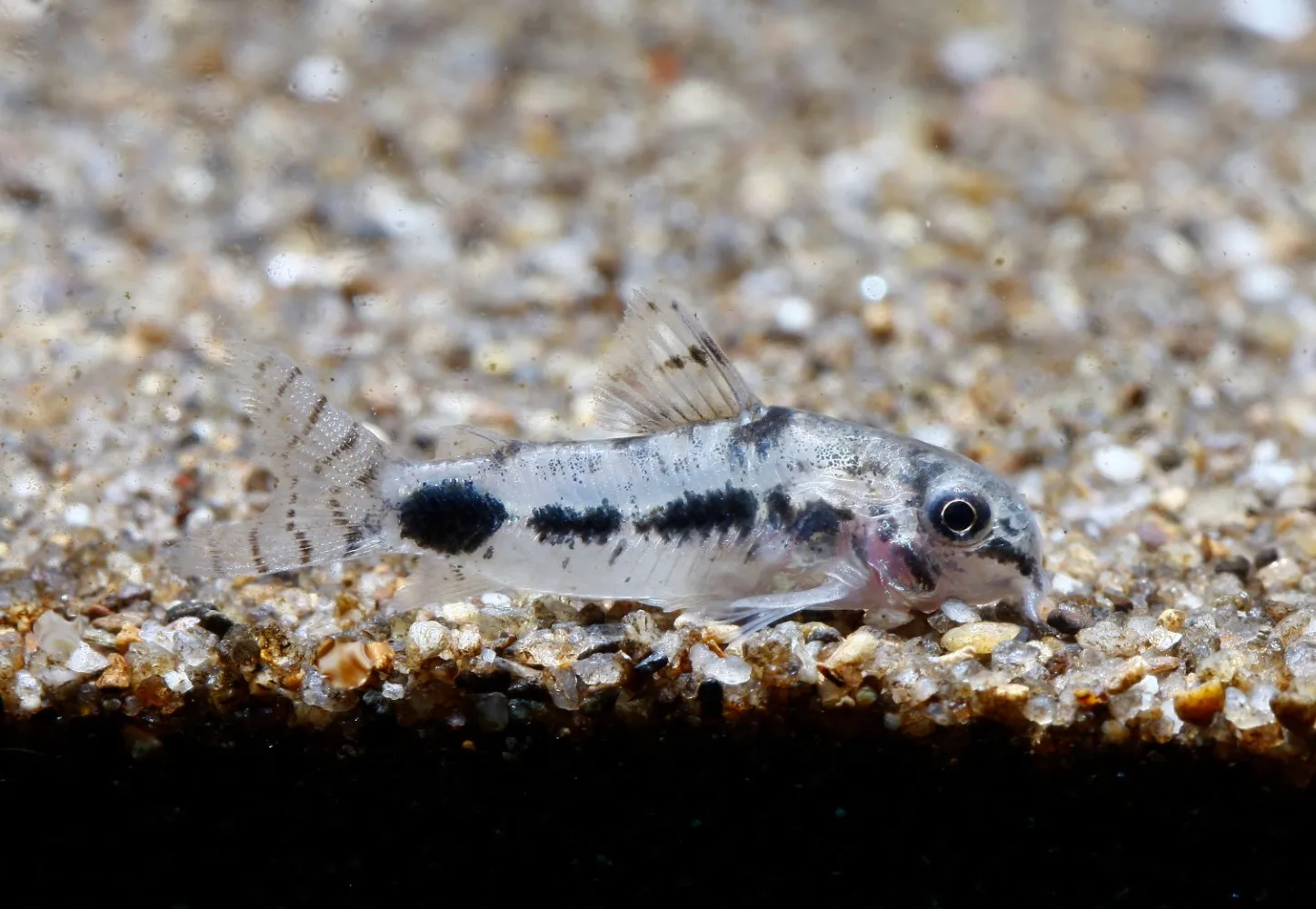
The Salt and Pepper Cory (Corydoras habrosus) is a tiny, peaceful catfish known for its peppered pattern and active bottom-foraging. It thrives in planted, gently filtered aquascapes with soft substrate and subdued lighting. These corydoras are highly social and show their best colors and behavior in groups. Overall care is straightforward but depends on stable, clean water and a soft substrate to protect their barbels.

Quick overview
Salt and Pepper Cory, Habrosus cory, Dwarf cory
40 liters (10 gallons) for a group
Ideal aquarium setup
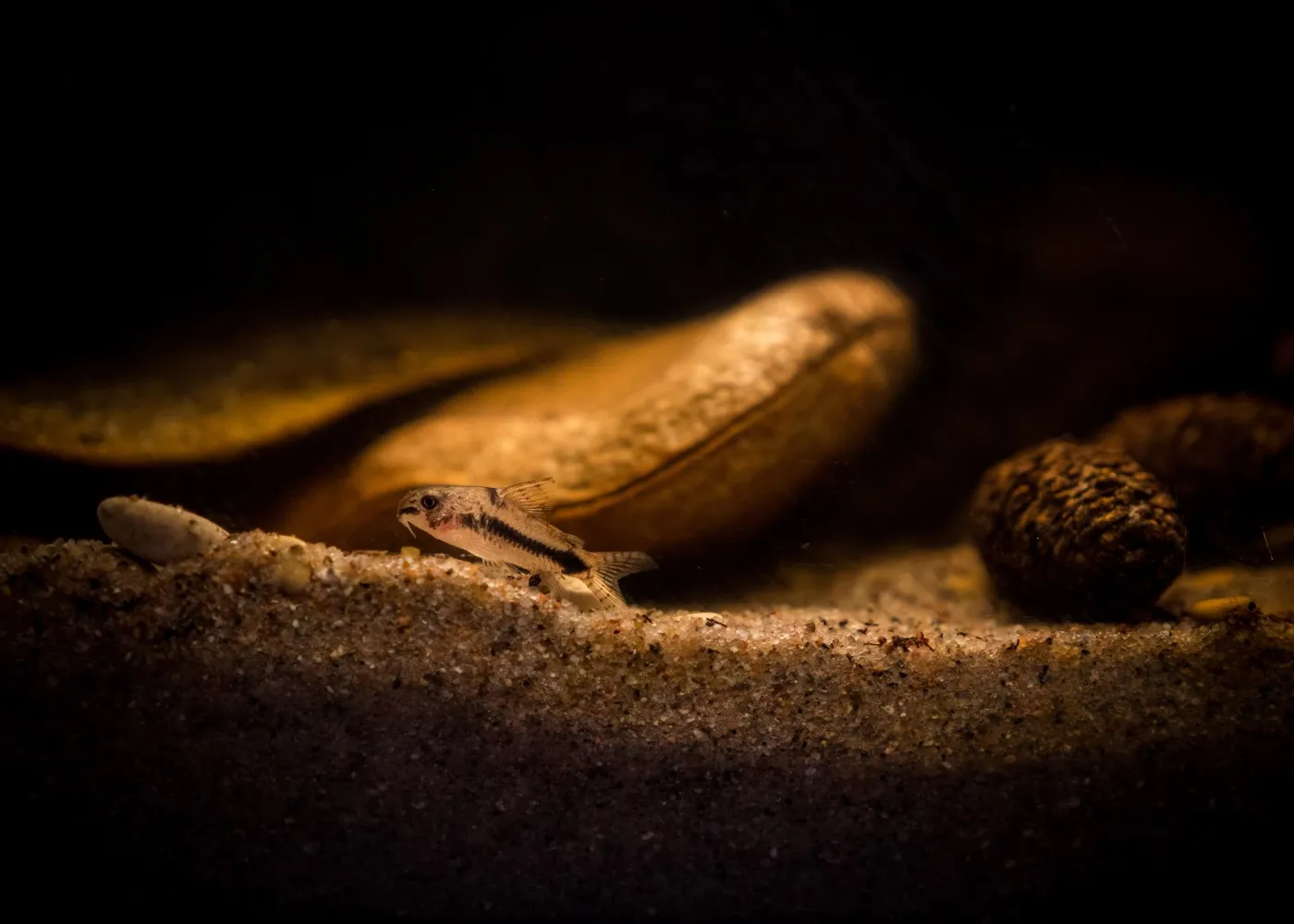
Salt and Pepper Corys do best in a planted, stable aquarium that resembles their slow-moving, leaf-littered native waters with soft substrate and shaded areas. Provide plenty of hiding spots with driftwood, rock caves, and low plants while keeping a clear open area for foraging. Stable water parameters and regular gentle filtration are key to keeping them comfortable.
A 40-liter (10-gallon) tank is the practical minimum for a small group of six; larger tanks are better to allow natural schooling and more stable water. Aim for groups of six to ten to encourage natural behavior.
Low to moderate lighting is ideal; these corys prefer subdued light and will be more active when floating plants or taller background plants diffuse bright bulbs. Very bright light can make them shy and reduce daytime activity.
Low and mid-height plants like Java fern, crypts, and mosses suit them well, along with floating plants to soften light. Plants provide cover, trapping of microfauna and surfaces for egg laying during spawning.
Low to moderate flow so the substrate is not constantly disturbed and food can settle for bottom feeding.
Fine sand or very smooth rounded gravel is preferred to protect delicate barbels and allow natural rooting and foraging.
Use pieces of driftwood, smooth rocks, and leaf litter to create caves and grazing surfaces while retaining open sandy patches for foraging; rounded hardscape avoids barbels getting damaged.

Behavior and temperament
Salt and Pepper Corys are social, peaceful fish that spend most of their time foraging along the bottom in small groups. They are active mid-to-late day but can be shy when first introduced or under bright light. Poor water quality, strong currents, or lack of hiding places stresses them quickly. Provide companions of similar size and gentle temperament to keep them confident and visible.
Diet and feeding
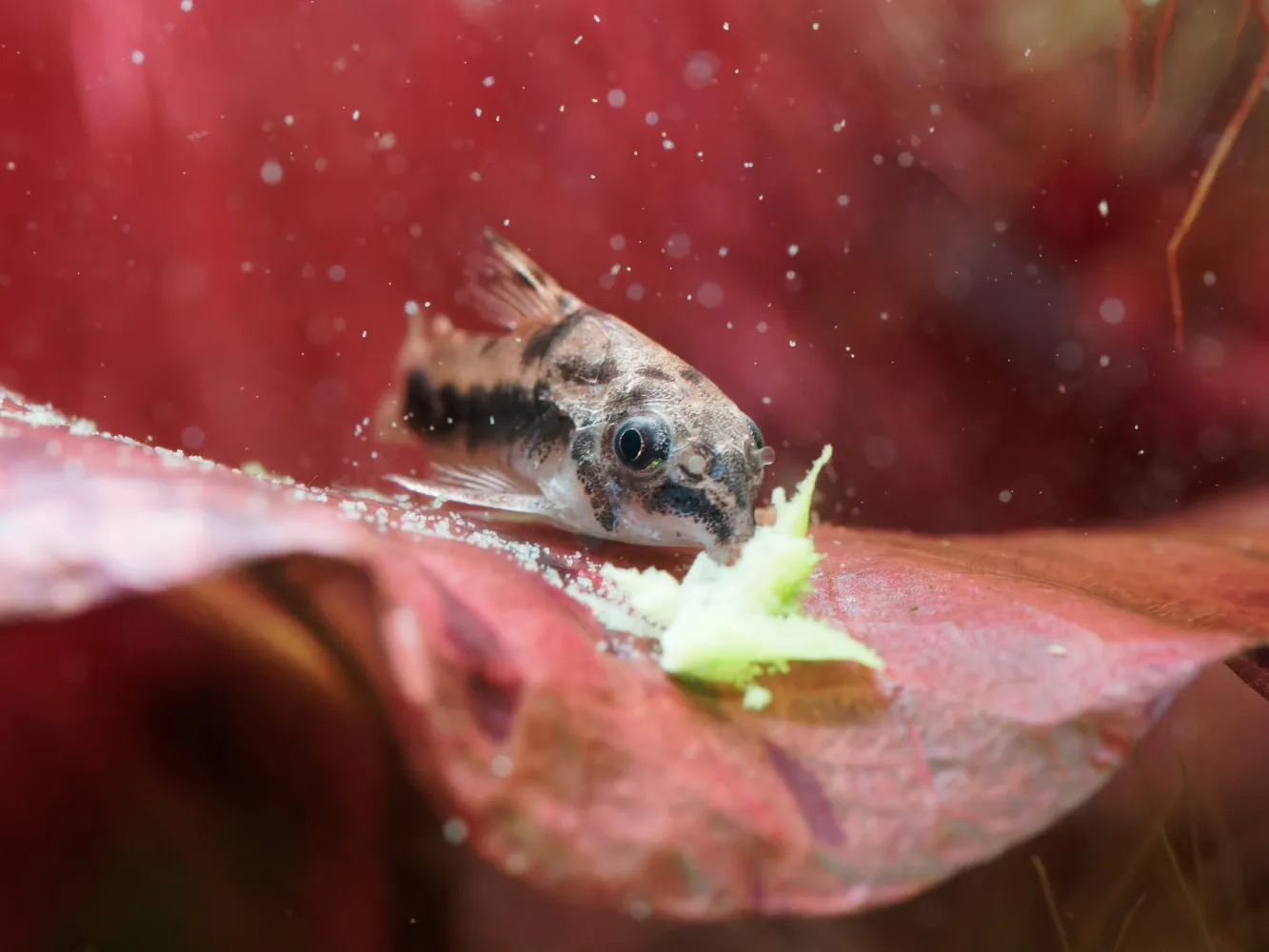
These corydoras are opportunistic bottom feeders with small stomachs and appreciate a varied diet of sinking pellets, frozen foods, and occasional live treats. Feedings should be small and frequent to match their small gullets and prevent uneaten food from fouling the tank. Variety helps maintain color and health.
What they eat in nature
Detritus, insect larvae, small crustaceans, biofilm.
What to feed in the aquarium
- Sinking micro pellets or wafers designed for small bottom feeders.
- Frozen foods like bloodworms, daphnia, and brine shrimp.
- Occasional blanched vegetables and biofilm supplements.
Feeding schedule
Feed small portions once or twice daily, only what they can consume within a few minutes.
Special dietary needs
No strict needs, but regular small live or frozen foods plus sinking pellets and occasional vegetable matter improve condition and coloration.
Daily:
Offer a small feeding of sinking food once or twice daily so stomachs are never overloaded.
Weekly:
Include one or two protein-rich meals each week such as frozen bloodworms or baby brine shrimp to condition breeding fish.
Always:
Always ensure sinking food reaches the substrate and remove uneaten food promptly to protect water quality.
Tankmate compatibility
They pair well with small peaceful community fish that occupy mid and top levels and will be outcompeted by larger or aggressive species. Avoid large boisterous tankmates that stir substrate or nip fins. Match by size and temperament for the calmest aquarium.
Yes with caution. Small shrimp can be at risk in bare tanks or if the corys are extremely hungry, so provide plenty of hiding spots and plant cover.
Good companions; most snails are ignored by corys and help with algae control while adding grazing surfaces.
Small tetras, rasboras and peaceful rasboras like ember tetras and harlequin rasboras make natural companions and occupy different water levels so competition is minimal.
Avoid larger barbs, cichlids, or any fin-nipping species since they will harass or outcompete small corys and stress the group severely.
Keep in groups of at least six; they are schooling and more active and confident in numbers, with larger groups displaying more natural behaviors.
Breeding
Breeding Salt and Pepper Corys is attainable for hobbyists with a conditioned pair or group and a separate spawning tank to protect eggs. Females will scatter adhesive eggs on plant leaves, glass, and smooth surfaces after a conditioning period with live foods and slight parameter changes. Remove adults after spawning or use a breeder tank to maximize fry survival.
Difficulty
Relatively easy for hobbyists who can provide stable water and small live/frozen foods to condition breeders; the main challenge is protecting eggs and fry from adults and maintaining water quality. A separate breeding tank simplifies raising fry.
How they breed
They are egg scatterers that deposit adhesive eggs on plants, wood, and aquarium glass.
Best setup for breeding
Use a small breeding tank with fine-leaf plants or spawning mops, a sponge filter, dim light and slightly softer slightly acidic water to encourage spawning. Keep temperatures steady and provide frequent small live or frozen foods to condition adults.
Feeding the babies
Start fry on infusoria or liquid fry food for the first few days, then transition to baby brine shrimp and micro powdered foods as they grow. Gradually introduce crushed sinking foods as they reach juvenile size.
Pro tips
Always use fine sand to avoid barbels abrasion and to encourage natural foraging.
Keep them in groups of six or more to reduce shyness and improve display behavior.
Provide floating plants to soften light and make them more active during the day.
Fin rot
Fin rot often follows poor water quality or injury; improve filtration, perform water changes, and treat with appropriate medications while addressing the underlying water issues.
Barbel damage
Abrasion or bacterial infection of barbels comes from rough substrate or dirty sand; switch to fine sand and keep substrate clean with regular siphoning and water changes.
Stress from crowding
Overcrowded tanks cause hiding and lethargy; reduce stocking, increase hiding spots and improve filtration to restore normal activity.
Typical beginner mistakes
- Using sharp gravel that damages barbels.
- Keeping them singly instead of in groups.
- Neglecting regular water changes leading to poor water quality.
Short summary
Salt and Pepper Corys are small, peaceful bottom dwellers ideal for planted aquascapes and community tanks. They are easy to care for with stable water, soft substrate, and a varied diet, and they show best behavior in groups.
Frequently asked questions (FAQs)
How many Salt and Pepper Corys should I keep?
Keep at least six individuals; larger groups are calmer and more active.
What substrate is best for them?
Fine sand or very smooth rounded gravel protects barbels and encourages natural foraging.
Can they live with shrimp?
Yes with caution; provide hiding places because small shrimp can be vulnerable to curious corys.
Do they need live food to thrive?
They do well on sinking pellets but benefit from regular live or frozen foods to boost condition and color.
Are they difficult to breed?
Breeding is approachable with conditioned adults and a separate spawning tank to protect eggs and fry.
What water parameters do they prefer?
They prefer soft to moderately hard water, pH around 6.5–7.5 and stable, clean conditions with gentle flow.