At a glance
Peaceful
Schooling
Beginner-friendly
Black wedge
Description
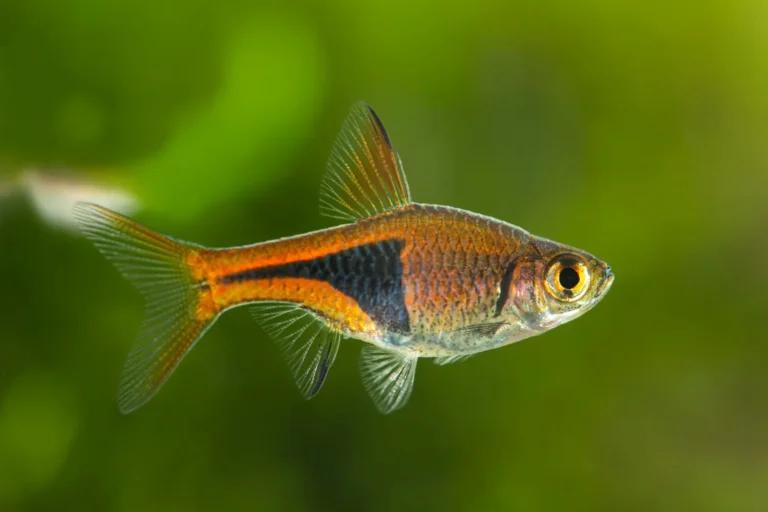
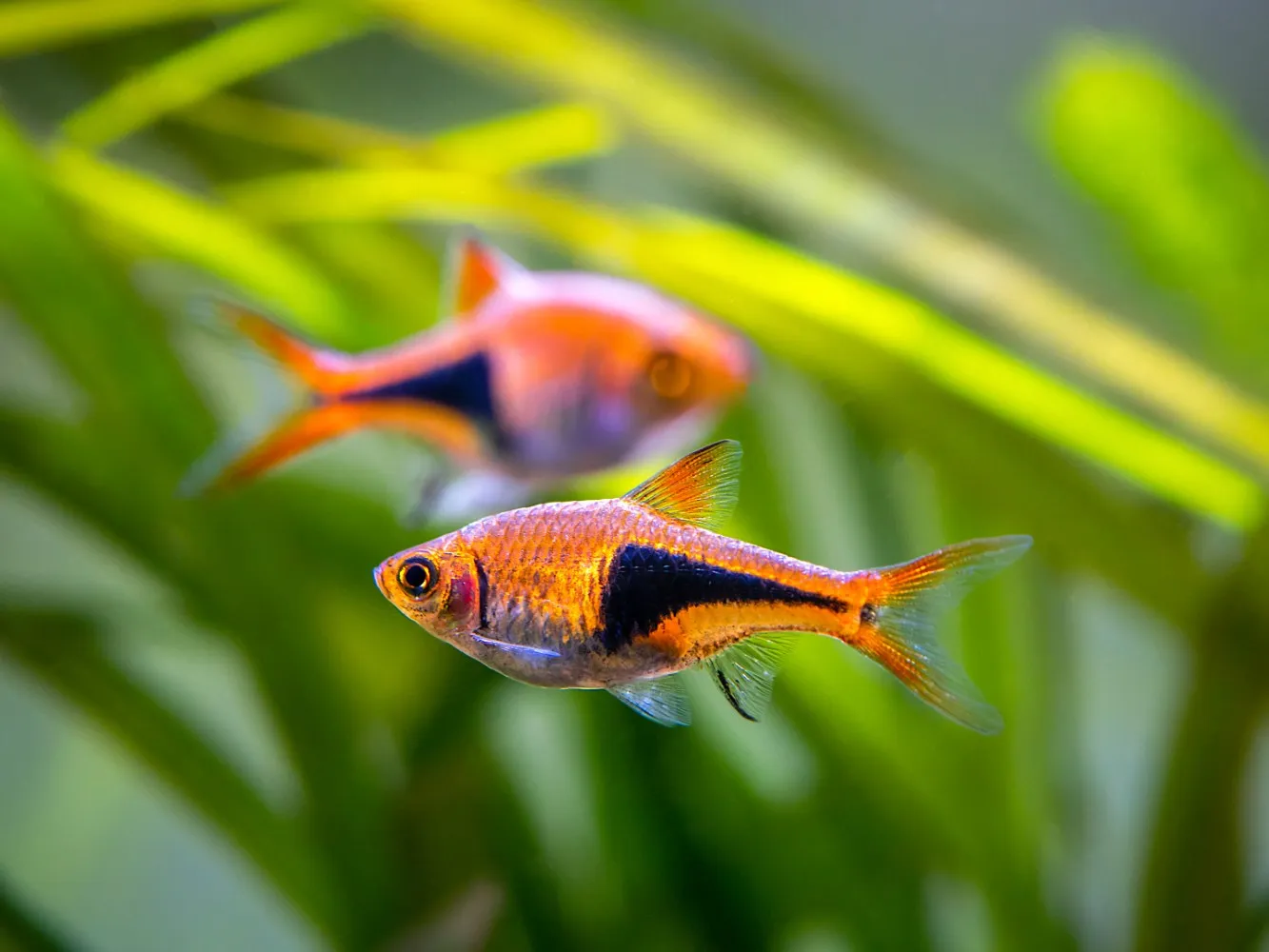
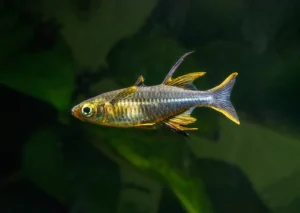
Harlequin Rasbora (Rasbora heteromorpha) is a small, colorful schooling cyprinid prized in planted aquariums for its distinctive black wedge and coppery body. It shows best in groups where its social behavior and flashing colors become apparent, and it is well suited to beginners who provide stable water and gentle conditions. Care is straightforward: a planted tank with soft to moderately hard water, subdued lighting and regular maintenance keeps them healthy and vibrant.

Quick overview
Harlequin rasbora, Harlequin
Peaceful, schooling, social
60 liters (15 gallons) for a group
Ideal aquarium setup
Harlequin rasboras do best in a planted aquarium that mimics slow-moving Southeast Asian streams with soft lighting and stable water parameters. Provide plenty of midwater swimming space, floating plants to soften light, and a peaceful community to reduce stress. Consistent maintenance and gentle filtration keep them comfortable and showing their best colors.
A 60–100 liter (15–25 gallon) tank is recommended for a school of 6–10 fish to allow natural schooling and comfortable swimming. Larger groups are even better if space allows.
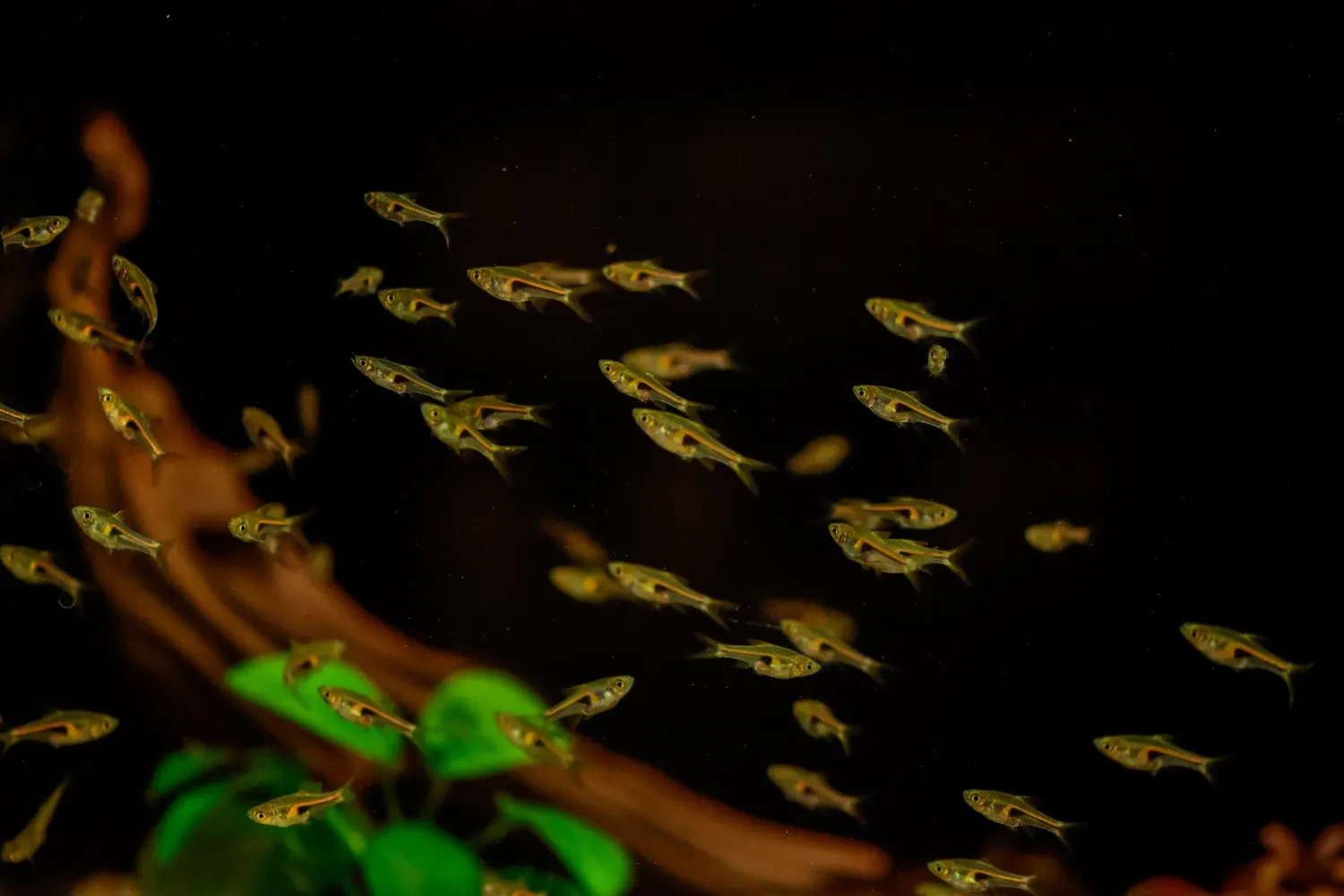
Low to moderate lighting is ideal; bright light can make them shy while subdued light with floating cover encourages natural behavior. They will often hover in midwater under dimmer conditions.
Fine-leaved plants and midground species like Java fern, Cryptocoryne and Java moss work well and provide spawning sites and hiding spots. Floating plants are helpful to diffuse light and create shaded areas which reduce stress.
Low to moderate flow that mimics gentle stream currents is best to keep oxygenation without stressing the school.
A dark sand or fine gravel substrate helps show off their colors and matches their natural leaf-litter habitats.
Use driftwood, smooth rocks and leaf litter to recreate soft streambeds while leaving open midwater space for schooling; dense planting at the edges with open center areas works well.

Behavior and temperament
Harlequin rasboras are peaceful, social fish that form tight schools and rely on numbers for confidence and display. They can be shy when kept singly or in very small groups and may hide if startled or overlit. Stable water and compatible tankmates reduce stress and help them remain active and colorful. Sudden water changes or aggressive companions will cause them to bolt and hide.
Diet and feeding
They are omnivores with small mouths and a preference for small live or frozen foods in addition to quality flake or micro-pellet diets. Offer a varied diet to maintain color and condition and feed modest amounts to avoid overfeeding.
What they eat in nature
Insect larvae, micro crustaceans, zooplankton, detritus.
What to feed in the aquarium
- High-quality micro flakes and crushed pellets.
- Frozen brine shrimp and daphnia.
- Live foods like microworms or baby brine shrimp.
Feeding schedule
Feed small portions once or twice daily, offering only what the school can consume in two to three minutes.
Special dietary needs
No strict needs, but regular live or frozen foods improve coloration and overall health.
Daily:
Provide a staple of small flakes or micro pellets once or twice a day in portions they finish quickly to avoid water fouling.
Weekly:
Include one or two protein-rich feedings per week such as frozen brine shrimp, daphnia or finely chopped bloodworms to boost condition and color.
Always:
Always offer a varied diet and avoid large dry pellets that are hard for their small mouths to eat.
Tankmate compatibility
They pair well with other peaceful small species that occupy different zones of the tank and won't nip fins. Avoid large or boisterous fish and known fin nippers that will stress or injure them. Size-matched, non-aggressive community fish are ideal.
Yes with caution Small shrimp, especially juveniles, may be eaten in a bare tank but adults are often safe in heavily planted tanks with hiding spots.
Most snails such as nerites and mystery snails are safe and can help with algae control while being ignored by the rasboras.
Small tetras, other rasboras and peaceful bottom-dwellers like Corydoras and Otocinclus make excellent companions in a planted community tank.
Avoid larger barbs, cichlids and fin-nipping species since they will harass or injure harlequins and disrupt schooling behavior.
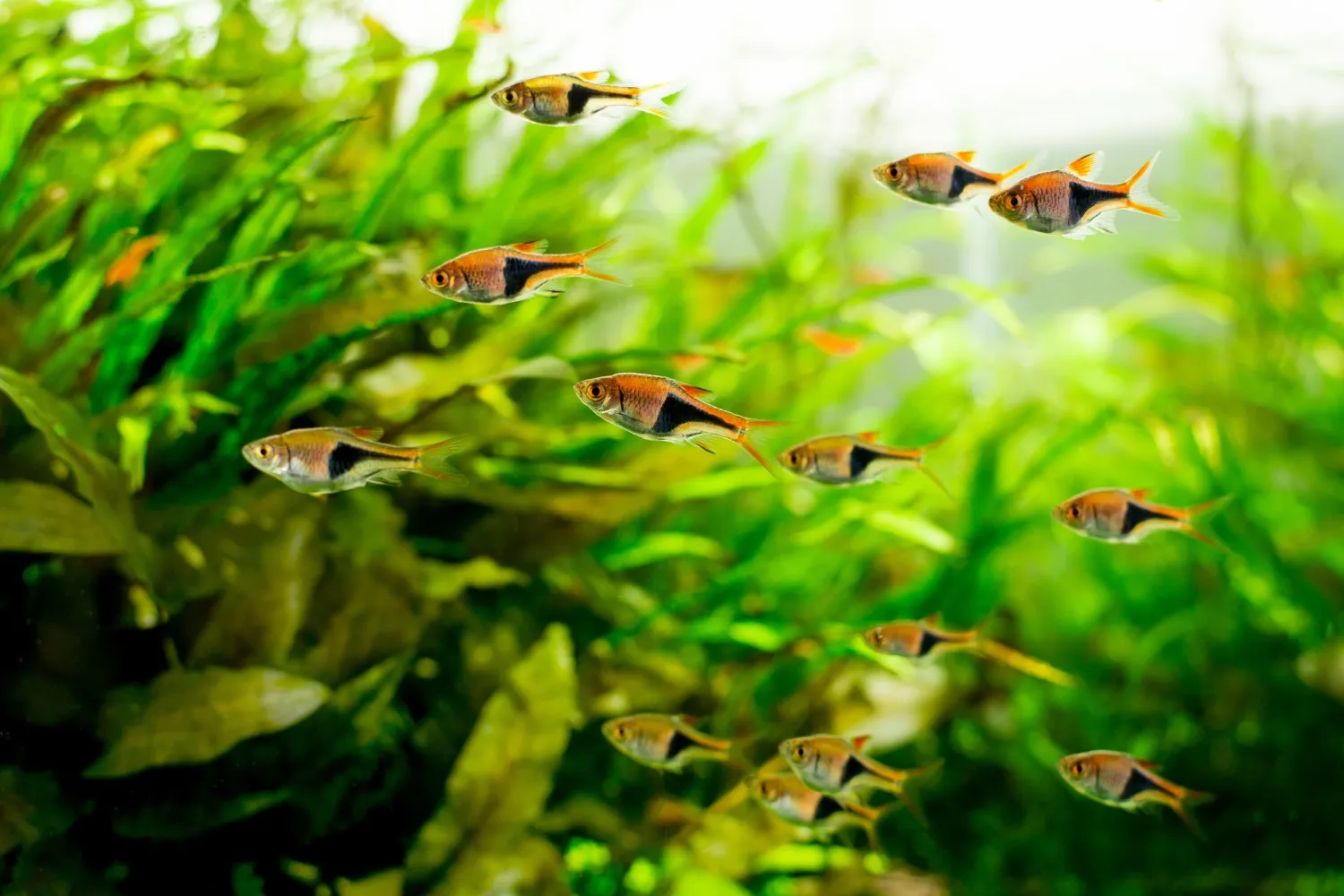
Keep them in groups of at least six to feel secure and display natural schooling; larger groups of 10 or more are ideal for a thriving display.
Breeding
Breeding harlequin rasboras is straightforward for hobbyists who provide soft slightly acidic water and plenty of fine-leaved plants or spawning mops. They often spawn after a water change or a slight temperature rise and will scatter eggs which adults may eat if left with the parents. A separate breeding tank increases survival of the eggs and fry.
Difficulty
Moderately easy to breed because they readily spawn in captivity when conditions are right, but parents will eat eggs so protective measures or removal of adults is usually necessary.
How they breed
They are egg scatterers that deposit adhesive eggs onto fine-leaved plants or spawning mops and do not guard the eggs.
Best setup for breeding
Use a small 20–30 liter tank with soft acidic water (pH 6.0–6.8), subdued light, lots of Java moss or a spawning mop and a gentle sponge filter to keep water clear. Slightly warmer water after conditioning with live foods often triggers spawning.
Feeding the babies
Start fry on infusoria or green water for the first few days, then transition to newly hatched baby brine shrimp and finely crushed microfoods as they grow. Gradually introduce powdered fry foods and finely crushed flakes as they get larger.
Pro tips
Keep them in larger schools to reduce stress and improve display.
Use floating plants to dim light and encourage natural midwater schooling.
Keep water changes consistent and gentle to maintain stable parameters.
Stress and hiding
Overbright lighting, aggressive tankmates or sudden water changes cause them to hide and lose color; reduce light, remove aggressors and stabilize water to help them recover.
Poor coloration
Dull color is usually from inadequate diet or stress; improve water quality and feed varied live or frozen foods to restore vibrancy.
Egg predation
Adults often eat their own eggs and fry, so remove eggs to a dedicated rearing tank or separate adults after spawning to improve survival rates.
Typical beginner mistakes
- Keeping too few fish which causes shyness and stress.
- Overfeeding leading to poor water quality.
- Pairing with aggressive or large tankmates that nip fins.
Short summary
Harlequin rasboras are peaceful, schooling fish ideal for planted community tanks and beginners looking for color with low maintenance. Keep them in groups, provide stable soft to moderately hard water, varied foods and subdued lighting for best results.
Frequently asked questions (FAQs)
How many harlequins should I keep together?
Keep at least six to form a comfortable school, but groups of 10 or more are preferable for confident behavior and display.
What water parameters do they prefer?
They prefer slightly acidic to neutral pH 6.0–7.5, soft to moderately hard water and temperatures around 24–27°C (75–81°F).
Can they live with shrimp?
They can live with shrimp but small shrimp and babies may be eaten in sparse tanks; dense planting and hiding places improve shrimp survival.
Do harlequins eat plants?
No, they are not plant eaters and will not generally damage healthy aquarium plants.
How often should I feed them?
Feed small portions once or twice daily, offering only what they can finish in a few minutes to prevent water quality issues.
Are they good for beginners?
Yes, harlequin rasboras are hardy and beginner-friendly when kept in proper groups with stable water and a varied diet.