At a glance
Peaceful
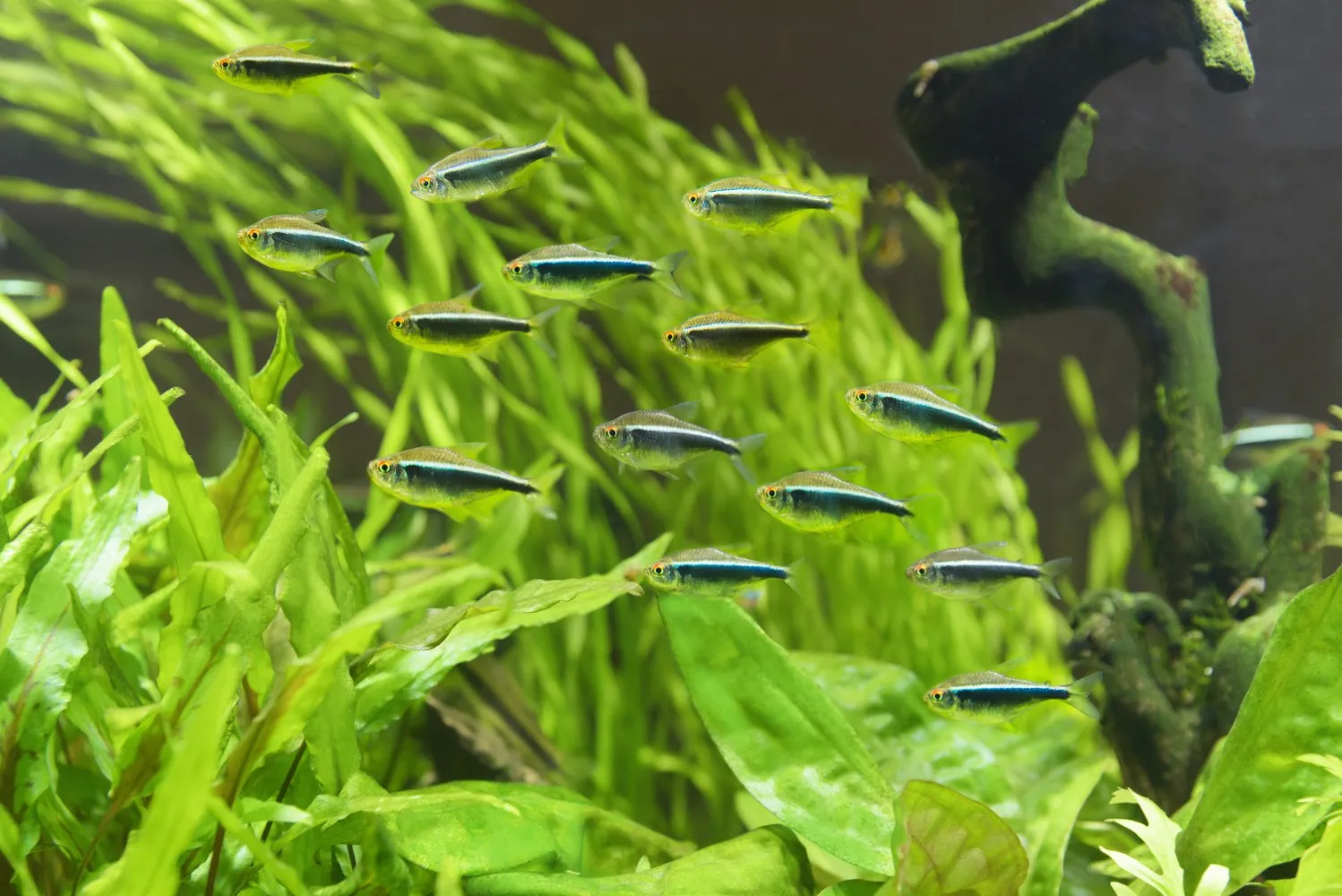
Schooling
Shy
Streamlined
Description
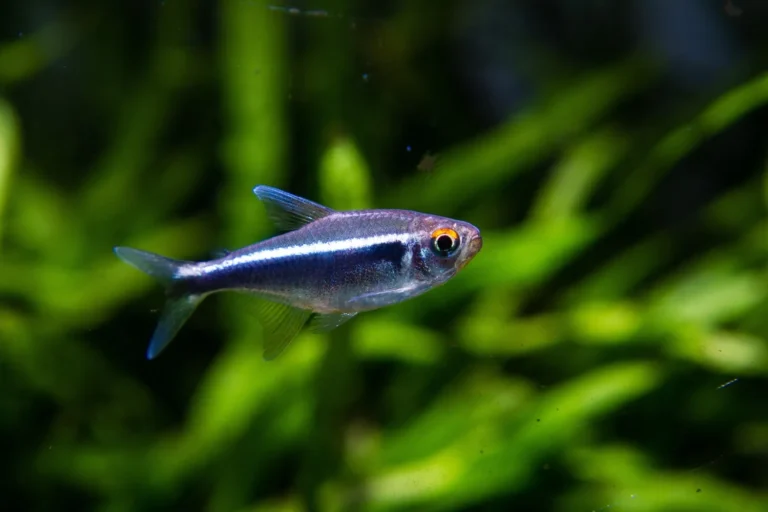
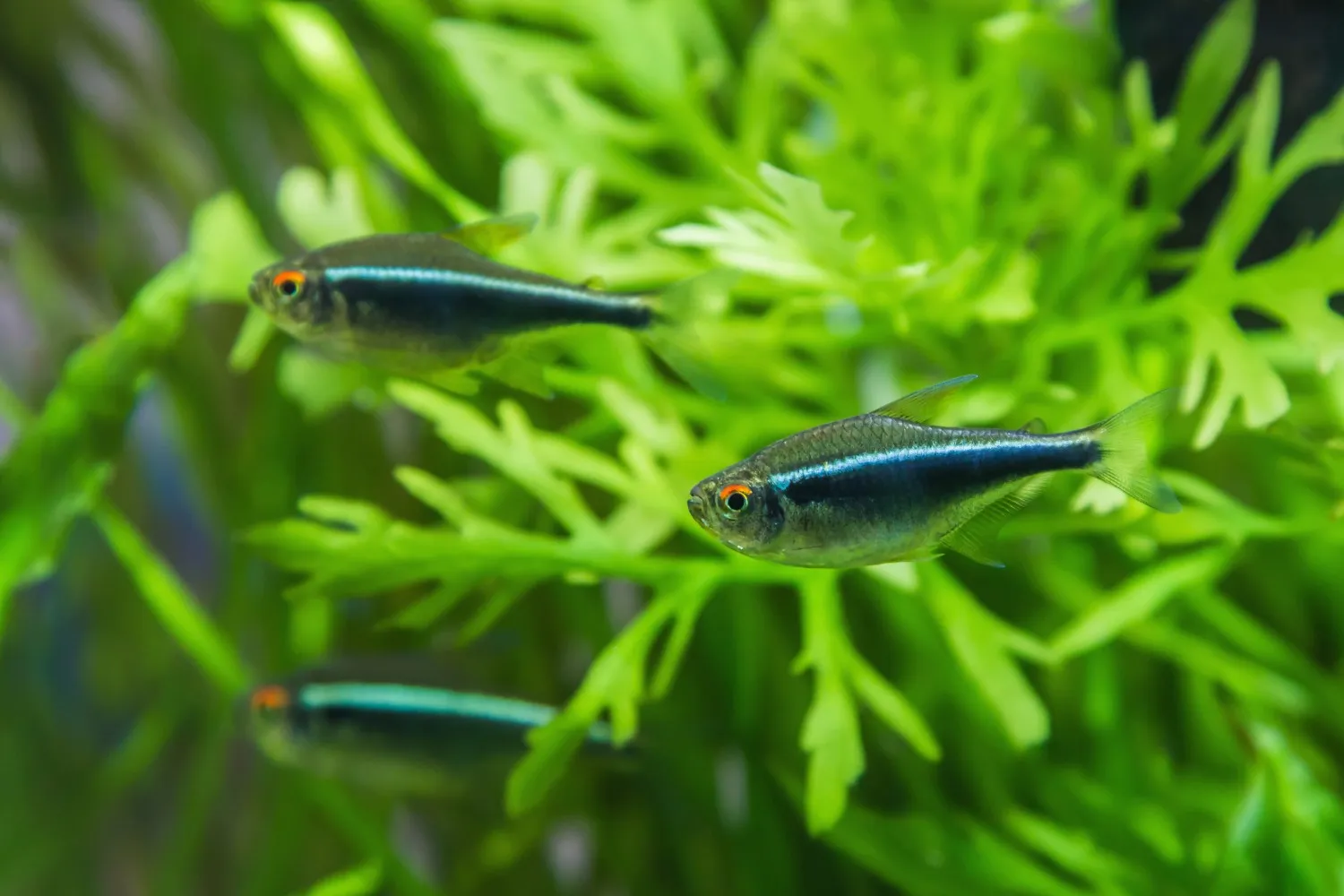
Black Neon Tetra (Hyphessobrycon herbertaxelrodi) is a small, sleek tetra known for its striking black and iridescent white-blue stripe and peaceful nature. It shows best in groups where its subtle colors and synchronized swimming stand out against planted, dimly lit aquascapes. These tetras prefer soft, slightly acidic water and stable conditions, and they are well suited to beginner to intermediate aquascapers who keep them in schools. Basic care focuses on a varied diet, regular water maintenance, and plenty of plants and hiding spots to reduce stress.

Quick overview
Black neon tetra, Black neon, BNT
Hyphessobrycon herbertaxelrodi
Peaceful, social, schooling
40 liters (10 gallons) for a group
Freshwater, pH: 5.5–7.5, temp: 22–26°C
Ideal aquarium setup
Black Neon Tetras do best in a planted, stable aquarium that feels similar to their slow-moving South American streams with subdued light and soft water. A long tank with open midwater swimming space, dense planting along the sides and back, and stable chemistry will make them thrive. Provide regular small water changes and gentle filtration to keep parameters steady.
A 40–80 liter (10–20 gallon) tank is suitable for a small school of 6–10 fish, but larger tanks are better for more natural schooling and behavior.
Low to moderate lighting is ideal; they prefer subdued light and may hide or become skittish under very bright conditions. Floating plants help diffuse intense light and create comfortable shaded areas.
Fine-leaved stem plants, Java fern, crypts, and floating plants work well and offer shelter; plants reduce stress and mimic their natural tannin-stained habitat. Carpet plants can be used but provide open midwater swimming areas too.
Low to moderate flow so the water feels natural without forcing them to fight currents.
Dark fine gravel or sand helps recreate natural contrast and makes their colors stand out.
Use driftwood, smooth rocks, and leaf litter to create hiding spots and tannin-rich water; leave open areas for schooling and place taller plants and wood at the rear and sides.

Behavior and temperament
Black Neons are peaceful, social fish that feel safest in groups and exhibit synchronized schooling. They are somewhat shy and will retreat to plants or driftwood when startled or under bright light. These fish are sensitive to rapid changes in water quality and benefit from a calm, stable environment. In proper groups they are active yet unobtrusive midwater swimmers.
Diet and feeding
Black Neons are omnivores with small mouths and accept flakes, micro pellets, and frozen or live foods; variety improves health and coloration. Feed small portions suited to their mouth size and offer occasional live or frozen treats to stimulate natural feeding behaviors.
What they eat in nature
Small insects, crustaceans, zooplankton, and bits of plant material.
What to feed in the aquarium
- High-quality micro flakes.
- Small pellets designed for tetras.
- Frozen bloodworms or daphnia.
- Live brine shrimp or microworms.
- Vegetable or spirulina flakes.
Feeding schedule
Feed small portions once or twice daily, only what the school can consume in about two minutes.
Special dietary needs
No strict needs, but regular small live or frozen foods improve coloration and vitality and help during breeding.
Daily:
Offer a staple portion of flakes or micro pellets once or twice daily and remove uneaten food after a couple of minutes.
Weekly:
Include one or two days a week with a protein-rich treat such as frozen bloodworms, daphnia, or live microworms to vary nutrition.
Always:
Always provide a varied diet and avoid overfeeding; maintain small frequent meals rather than one large feeding.
Tankmate compatibility
They do best with other small, peaceful fish that occupy similar water conditions and won’t nip fins or outcompete them for food. Avoid large or aggressive species and fast eaters that stress or bully the tetras. Good community dynamics and similar size make for a calm aquascape.
Yes with caution - adult Black Neons usually coexist with adult shrimp but may eat small or baby shrimp, so provide heavy planting and hiding spots if keeping shrimp.
Generally tolerant of most peaceful snails such as nerite or mystery snails; snails help control algae and won’t bother tetras.
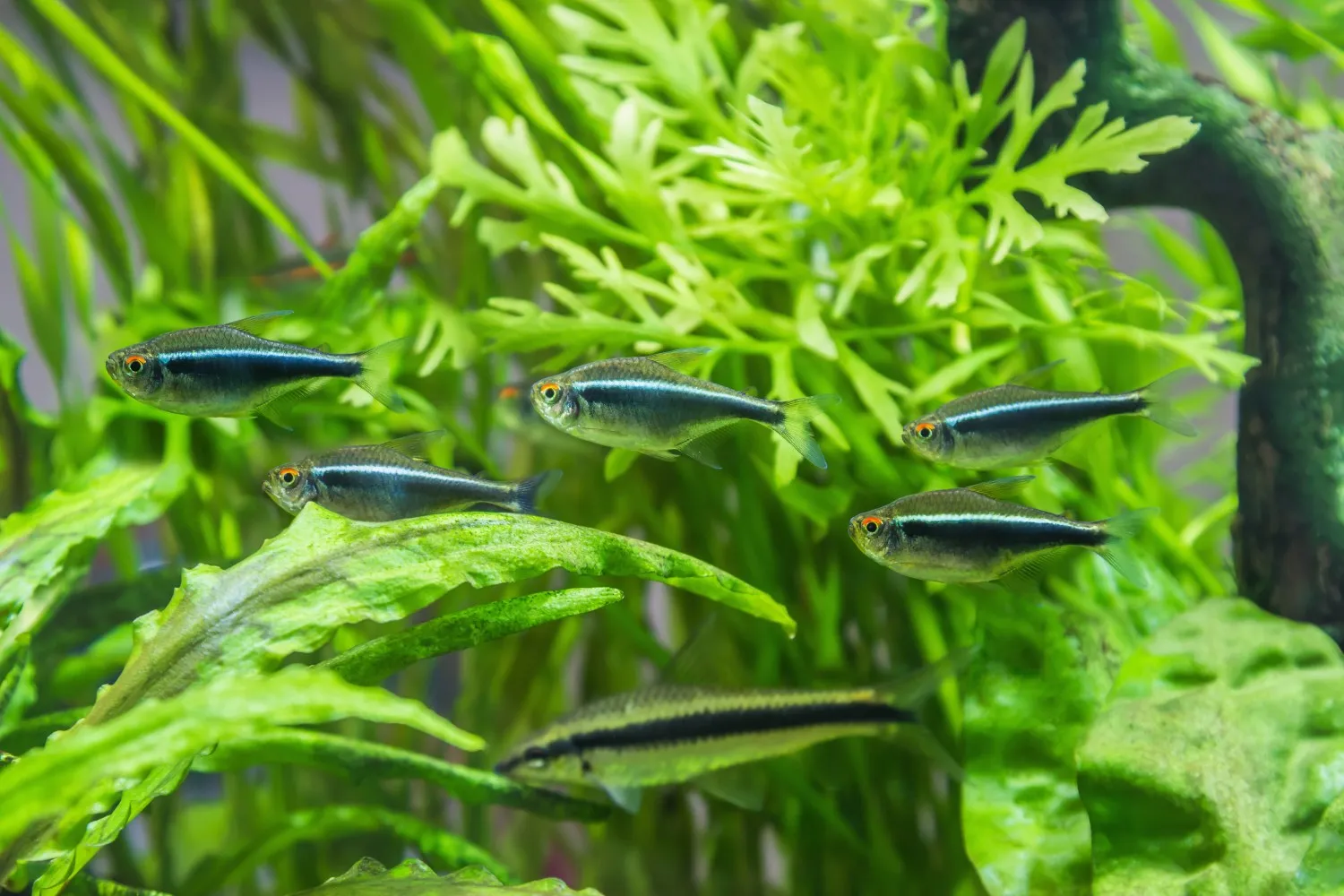
Good tankmates include small rasboras, ember tetras, pygmy corydoras, and otocinclus which share similar temperament and water needs, creating a harmonious community.
Avoid barbs, large danios, larger cichlids, and other fin-nippers as they can chase or stress Black Neons and damage their delicate fins and schooling behavior.
Keep Black Neons in groups of at least 6–8 to reduce stress and encourage natural schooling, with larger schools producing the most confident and attractive displays.
Breeding
Breeding Black Neons is similar to other tetras but can be challenging because they prefer very soft, acidic water and dim conditions and adults will eat eggs. Spawning requires a separate breeding tank with low light, fine-leaved plants or spawning mops, and soft slightly acidic water to encourage egg laying. Remove parents after spawning and keep conditions stable until fry hatch.
Difficulty
Moderate - successful breeding requires soft acidic water, low light, and careful protection of eggs and fry from adults, so attention to details is necessary.
How they breed
Egg scatterer that releases eggs among plants or spawning mops and provides no parental care.
Best setup for breeding
Use a small breeding tank with very soft, slightly acidic water, subdued lighting, fine-leaved plants or spawning mops, and a gentle sponge filter; keep water clean and slightly cooler to trigger spawning. Remove adults after eggs are laid to prevent predation.
Feeding the babies
Start fry on infusoria or a liquid fry food for the first few days, then transition to freshly hatched baby brine shrimp and finely crushed micro foods as they grow. Gradually introduce powdered or micro-pellet foods as the fry become large enough to accept them.
Pro tips
Keep them in larger schools for the best color and natural behavior.
Use floating plants to diffuse light and create shaded resting areas.
Perform regular small water changes to maintain stable, soft water conditions.
Fin rot
Often caused by poor water quality or torn fins; improve water parameters, perform cleanups and treat with appropriate antibacterial medication if needed.
Stress from bright light
Excessive lighting or lack of hiding spots causes skittish behavior and faded color; add floating plants and reduce light intensity to calm them.
Ich and parasites
Sudden temperature changes or new tankmates can introduce parasites; quarantine new arrivals, maintain stable temperature, and treat promptly with recommended medications.
Typical beginner mistakes
- Keeping them alone or in too small groups.
- Rapid water parameter changes during maintenance.
- Overfeeding and poor filtration.
Short summary
Black Neon Tetras are peaceful, schooling fish that shine in planted, dimly lit aquascapes and prefer soft slightly acidic water. They are suitable for beginner to intermediate aquarists who keep them in proper groups, provide varied food, and maintain stable conditions.
Frequently asked questions (FAQs)
How many Black Neons should I keep together?
Keep at least 6–8 as a minimum school, but larger groups of 10–20 show the best behavior and appearance.
What water parameters do they prefer?
They prefer soft to moderately hard water, pH around 5.5–7.5 and temperatures of 22–26°C.
Can they live with shrimp?
They can coexist with adult peaceful shrimp, but small or juvenile shrimp may be at risk so provide dense planting and hiding places.
Do Black Neons eat flake food?
Yes, they readily accept high-quality micro flakes or pellets but benefit from occasional frozen or live foods for best color.
Are they good for planted tanks?
Yes, they are excellent for planted aquascapes because they stay midwater and use plants for cover while adding movement.
Is breeding Black Neons difficult?
Breeding requires specific soft acidic water and protection of eggs, so it is moderate in difficulty but achievable with a dedicated breeding setup.