At a glance
Nocturnal
Territorial
Small
Secretive
Description
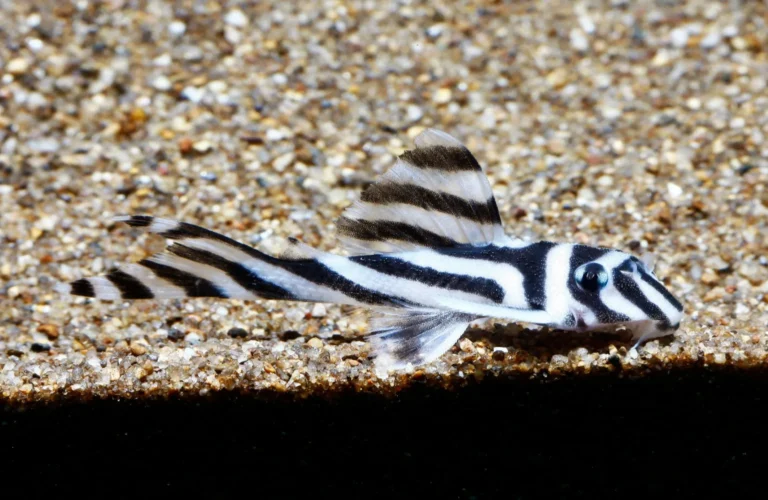
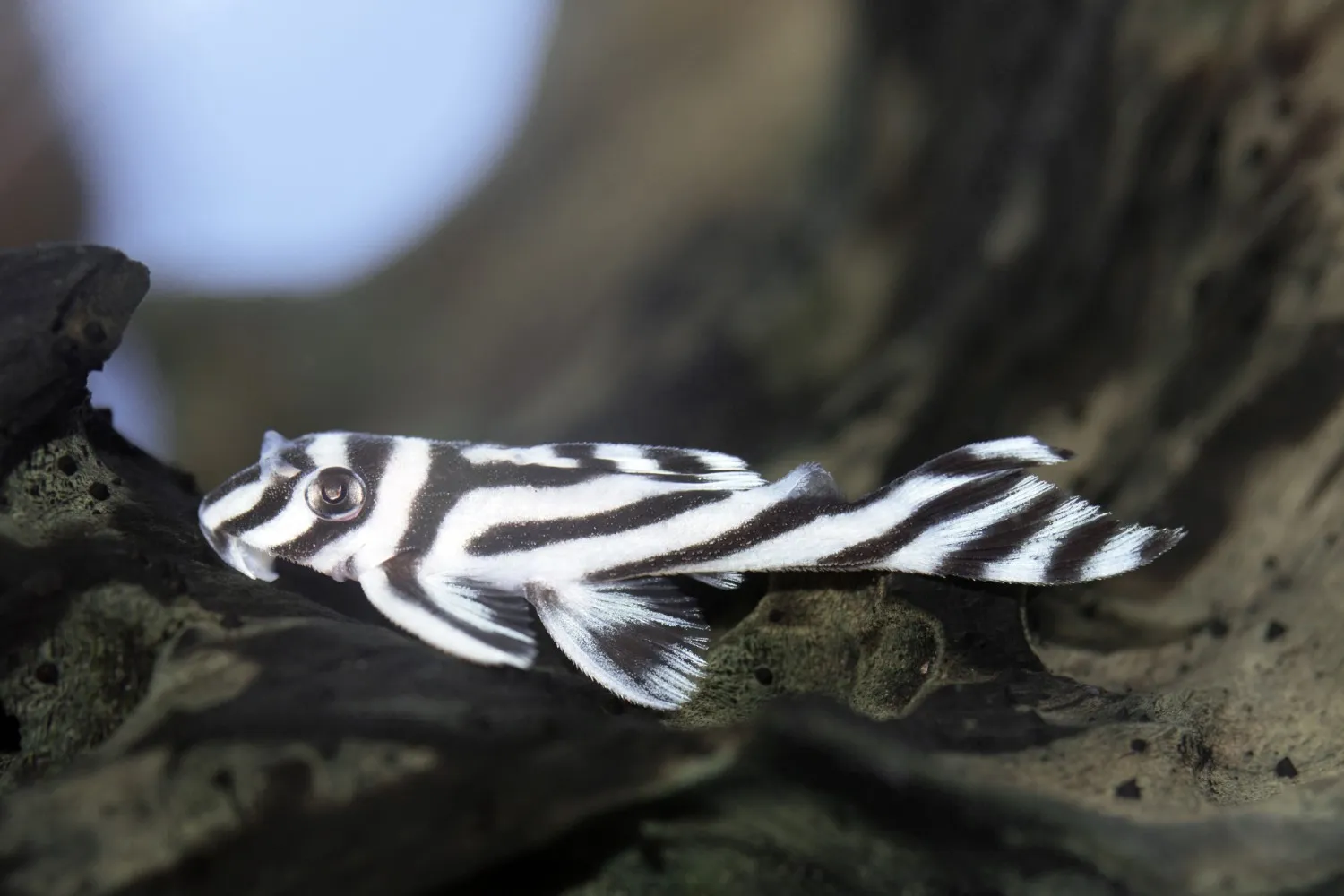
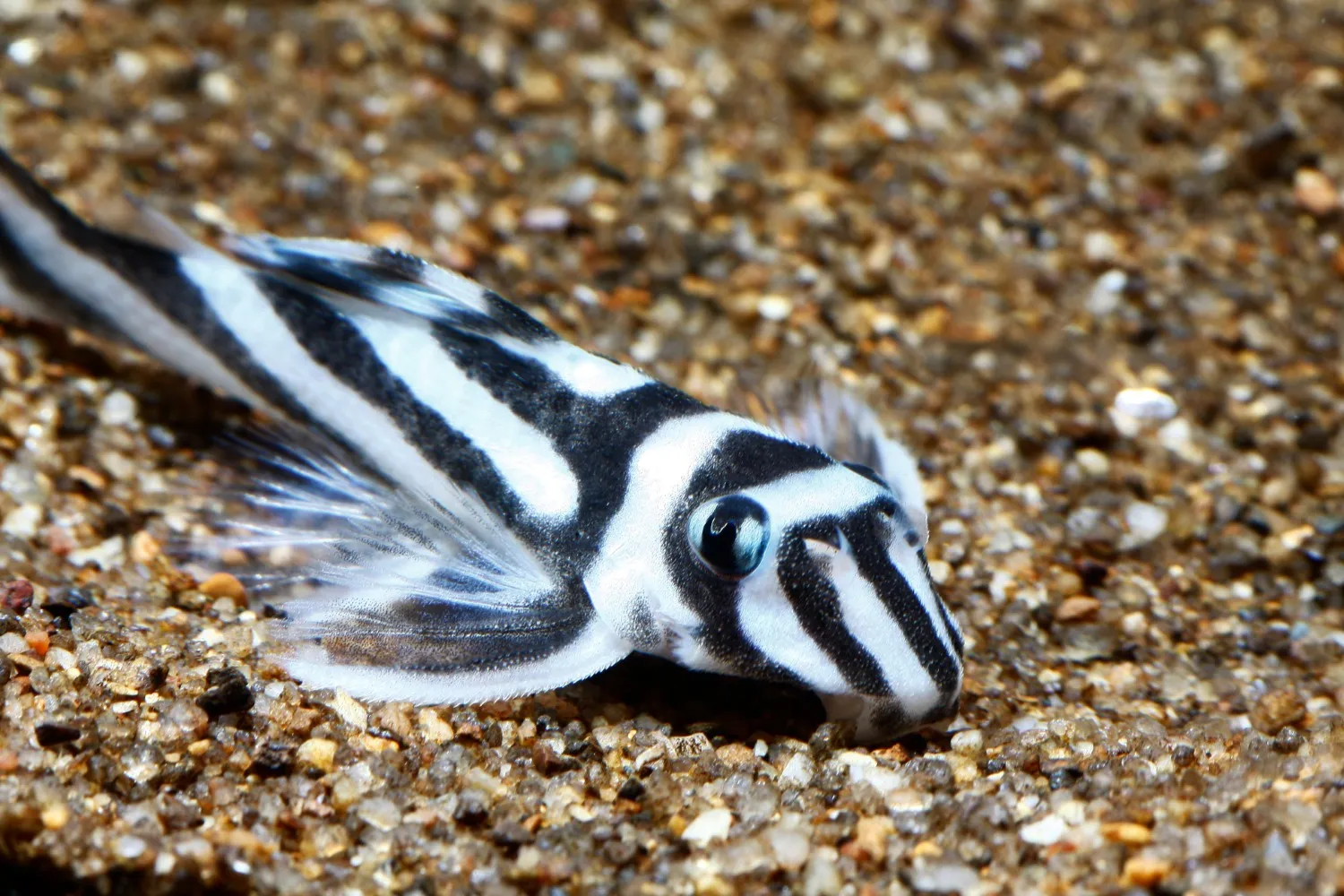
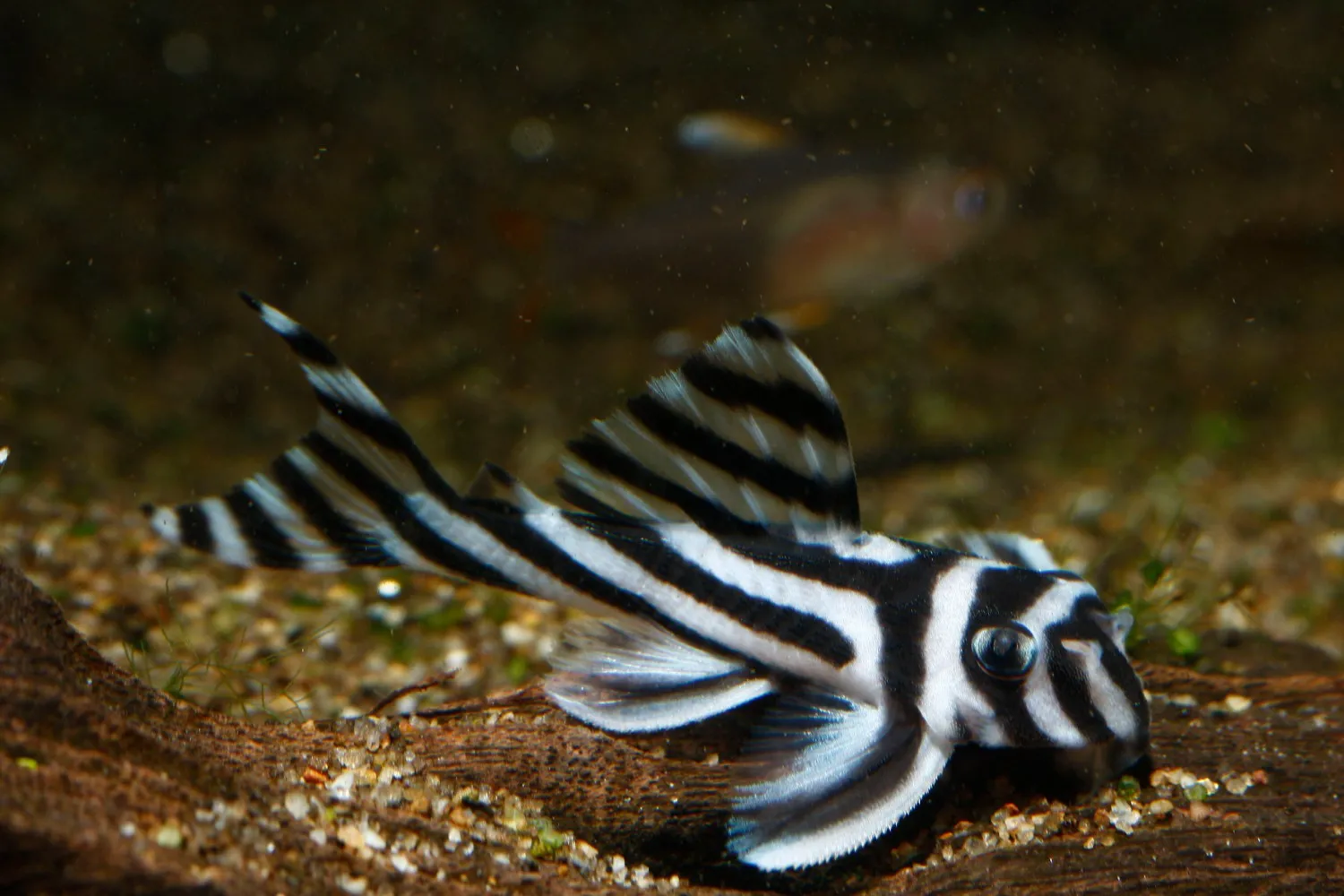
Zebra Pleco (Hypancistrus zebra, also known as L046) is a striking, banded loricariid prized for aquascapes and planted tanks. It stays relatively small with bold black-and-white stripes and prefers shady caves and crevices. These fish need very stable, well-oxygenated water and plenty of hiding places. They are best kept by aquarists prepared to maintain clean conditions and offer protein-rich foods.

Quick overview
Peaceful, territorial, nocturnal
80 liters (20 gallons) for a group
Ideal aquarium setup
Zebra plecos do best in a planted, rocky aquarium with lots of caves and strong filtration that mimics their fast-flowing river habitat. Stable temperature and pristine water are essential, plus shaded areas or floating plants to reduce light and encourage natural behavior. Regular small water changes and good oxygenation make them comfortable and active.
A single pair can be comfortable in 60–80 liters, but an 80–120 liter tank is better for a small group to reduce territorial conflicts. Provide multiple caves so individuals can claim their own shelters.
Low to moderate light is preferred since they are nocturnal and shy; bright lighting will push them into hiding. Floating plants or shaded areas help reduce stress and simulate natural dim conditions.
Hardy, shaded plants like Anubias, Java fern and floating species work well and create hiding shade without requiring intense light. Plants also help water quality and give the tank a more natural, sheltered feel for these fish.
Moderate to high flow to provide oxygenation and simulate riverine conditions, but include calm pockets near caves so fish can rest.
Fine sand or smooth gravel works best and mimics the riverbed while protecting delicate barbels.
Use smooth rocks, stacked stone and driftwood to create multiple caves and tight crevices; leaf litter can add biofilm grazing surfaces. Leave open swimming lanes in front of caves so plecos can forage and display natural behavior.
Behavior and temperament
Zebra plecos are largely nocturnal and secretive, spending much of their day in caves and under rocks. Males can be territorial around chosen caves, especially during breeding, while non-breeding individuals are relatively peaceful. They are sensitive to poor water quality and sudden changes, so stability is important. In a well-structured tank they are curious but not boisterous.
Diet and feeding
Zebra plecos are more carnivorous than many other plecos and prefer meaty foods; they have relatively small stomachs so feed small portions. Offer a varied diet of frozen and live foods plus quality sinking carnivore pellets to maintain health and coloration.
What they eat in nature
Insect larvae, small crustaceans, biofilm, and other small riverine invertebrates.
What to feed in the aquarium
- Frozen bloodworms.
- Frozen brine shrimp.
- Sinking carnivore pellets and tablets.
Feeding schedule
Feed small portions once or twice daily, only what they consume within a few minutes.
Special dietary needs
No strict needs, but regular small live or frozen meaty foods improve condition and coloration.
Daily:
Offer a small protein-rich portion once daily and remove uneaten food to protect water quality.
Weekly:
Provide richer frozen or live meals two to three times weekly to condition fish, especially before breeding.
Always:
Always keep feedings modest and maintain excellent water quality to prevent stress and disease.
Tankmate compatibility
Choose peaceful, small midwater and top-swimming fish that will not invade caves or outcompete for food. Avoid large, boisterous or highly territorial species that stress or bully them. Good filtration and plenty of hiding spots helps reduce conflicts.
Yes with caution — small shrimp may be eaten by hungry zebra plecos, so only keep large or robust shrimp in mature, well-planted tanks.
Snails are usually safe but very small or slow-moving species can be preyed upon; larger or fast-reproducing snails are a better match.
Suitable tankmates include small tetras, rasboras, and peaceful dwarf cichlids that occupy other levels of the tank and do not harass bottom caves.
Avoid semi-aggressive or large cichlids and boisterous barbs which will stress zebra plecos and can damage planted aquascapes.
Keep as a pair or a small group with plenty of caves; males can be territorial so provide multiple hiding spots to reduce fights.
Breeding
Breeding zebra plecos is achievable in captivity but requires careful conditioning, strong water flow, and dedicated caves. Males guard the eggs in caves and will be territorial while brooding, so separate breeding setups or many caves help. Many hobbyists rely on captive-bred stock for better success.
Difficulty
Breeding is moderately difficult because they need pristine, well-oxygenated water, stable parameters, and specific cave sites; conditioning with high-protein foods is also required.
How they breed
Cave spawners with the male guarding eggs and fry inside a cave or tight crevice.
Best setup for breeding
Use a small breeding tank with strong filtration or powerhead for oxygenation, multiple PVC or rock caves, dim lighting and slightly elevated temperatures around 27–29°C to stimulate spawning. Frequent small water changes and high-quality frozen/live foods improve success.
Feeding the babies
Start fry on newly hatched baby brine shrimp or finely powdered high-protein fry foods, then gradually offer crushed sinking pellets and finely chopped frozen foods as they grow.
Pro tips
Buy captive-bred individuals to avoid contributing to wild population pressure and for better acclimation.
Provide many caves so males can establish territories and reduce aggression.
Keep filtration and oxygenation high and do frequent small water changes to mimic river conditions.
Poor water quality
Zebra plecos are sensitive to ammonia and nitrite spikes; keep filtration strong and perform regular water changes to prevent stress and disease.
Refusing food
They may hide and refuse food if water parameters or temperature are off; check water quality and offer appealing live or frozen meaty foods to entice them.
Male aggression
Males can fight over caves during breeding or in cramped tanks; provide multiple caves and sufficient space to reduce territorial disputes.
Typical beginner mistakes
- Keeping them in tanks that are too small or lacking caves.
- Neglecting water quality or overfeeding, causing stress and illness.
- Buying wild-caught specimens instead of captive-bred stock.
Short summary
Zebra plecos are small, striking cave-dwelling loricariids that need stable, well-oxygenated water, plenty of caves, and a protein-rich diet. They are best for aquarists willing to maintain pristine conditions and offer specialized care for breeding and territorial behavior.
Frequently asked questions (FAQs)
How big do zebra plecos get?
Adults typically reach about 7–10 cm (2.8–4.0 inches) depending on care and genetics.
Can zebra plecos live with shrimp?
They can be kept with shrimp, but small shrimp may be eaten so choose large or fast-breeding species and provide lots of hiding places.
What temperature do they need?
Maintain a stable 26–30°C while ensuring good oxygenation and regular water changes.
Are zebra plecos easy to breed?
Breeding is possible in captivity but requires specific cave setups, pristine water, and conditioning with high-protein foods.
Do they eat algae wafers?
They prefer meaty foods but will accept sinking carnivore pellets; algae wafers are not ideal as a staple.
How many caves should I provide?
Provide multiple caves—one per fish at minimum—to reduce competition and allow natural territorial behavior.