At a glance
Colorful
Semi-territorial
Active
Surface-dweller
Description
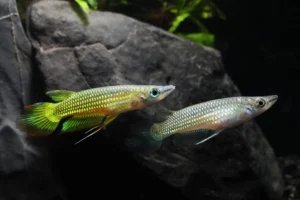
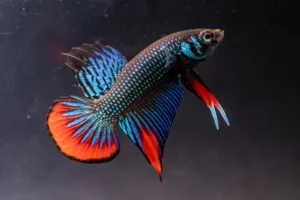
The Gardneri Killifish (Fundulopanchax gardneri) is a compact African killifish known for vivid male coloration and lively display behavior. Males show bright blues, reds and orange fins while females are more subdued. They thrive in planted, calm tanks with slightly soft, acidic water and floating cover. With routine care they are approachable for beginner to intermediate aquarists who enjoy small, active groups.

Quick overview
Gardneri killifish, Gardner's killi, Fundulopanchax gardneri
Peaceful, semi-territorial, active
40 liters (10 gallons) for a group
Ideal aquarium setup
A planted, dimly lit aquarium with floating plants and leaf litter best replicates their natural pools and makes them comfortable. Slightly soft, neutral to mildly acidic water and a secure lid are important because they prefer calm water and can jump. Provide a mix of dense cover and open midwater for displays.
A 40–60 liter tank is a good starting point for a small group; one male with three to five females is ideal to reduce male aggression.
Low to moderate lighting suits them; they appreciate shaded areas from floating plants and will retreat under very bright light.
Floating plants, fine-leaved stems and dense background plants work well and provide spawning sites and cover; leaf litter helps mimic their natural environment.
Low flow to keep water calm and allow males to display without stress.
Dark fine sand or small-grain gravel with occasional leaf litter or peat to tint the water and offer spawning sites.
Smooth driftwood, Indian almond leaves and flat stones create sheltered areas and natural tannin-rich water. Leave open midwater space for swimming and male displays.

Behavior and temperament
Gardneri killifish are generally peaceful but males are semi-territorial and will display or spar with rivals. They are active swimmers in midwater and often use surface and floating cover. They are sensitive to sudden water changes and do best in stable, well-planted tanks. In a proper male-to-female ratio they are lively and enjoyable to watch.
Diet and feeding
These killifish are micropredators that prefer live and frozen protein-rich foods but will accept high-quality pellets and flakes. Offer a varied diet to support color and breeding condition, and avoid overfeeding due to their small stomachs.
What they eat in nature
Insects, mosquito larvae, small crustaceans, zooplankton.
What to feed in the aquarium
- Live microfauna such as daphnia and micro worms.
- Frozen bloodworms, brine shrimp and mosquito larvae.
- High-quality small pellets and flake foods for carnivores.
Feeding schedule
Feed small portions once or twice daily, only what they consume in two to three minutes.
Special dietary needs
No strict needs, but regular live or frozen protein-rich foods improve coloration and breeding condition.
Daily:
Offer small live or frozen meaty foods daily and top up with a pinch of micro pellets.
Weekly:
Include a richer live-food treat like newly hatched brine shrimp or larger bloodworms once or twice weekly.
Always:
Always keep portions small, rotate food types, and remove uneaten food to maintain water quality.
Tankmate compatibility
They do best with small, peaceful species that occupy different niches and will not nip fins or outcompete them. Avoid large or aggressive fish that stress or bully killifish, and select tankmates that tolerate slightly acidic, tannin-stained water.
Yes with caution — larger adult shrimp like Amano or big cherry shrimp are often safe, but small baby shrimp may be eaten.
Hard-shelled snails such as Nerites or Mystery snails are usually tolerated and help with algae and detritus control.
Suitable tankmates include small peaceful tetras, rasboras and Corydoras catfish that will not outcompete them for food or harass them.
Avoid boisterous barbs, large danios, or aggressive cichlids since they can bully or nip fins and stress killifish.
Keep one male with multiple females or a single paired male and female; housing multiple males in a small tank usually leads to persistent fighting.
Breeding
Gardneri killifish are relatively straightforward to breed when conditioned with live foods and kept in stable water. They lay eggs among plants and leaf litter and adults show no parental care, so fry should be raised separately or adults removed.
Difficulty
Moderate — breeding adults are not especially secretive, but eggs and fry need stable, clean water and appropriate first foods for good survival rates.
How they breed
They are substrate spawners that deposit eggs among plant roots, leaf litter, or spawning mops.
Best setup for breeding
Use a small breeding tank with peat or spawning mops, gentle sponge filtration, dim light and slightly softer water around pH 6.5, and cover the tank to prevent jumping.
Feeding the babies
Start fry on infusoria or commercial liquid fry foods for the first few days, then move to newly hatched brine shrimp and micro-worms as they grow. Gradually introduce finely crushed pellets as they reach juvenile size.
Pro tips
Use floating plants and leaf litter to reduce stress and encourage natural behavior.
Keep a higher female-to-male ratio to limit male harassment and improve wellbeing.
Condition breeders with frequent live foods for brighter colors and better spawning.
Water parameter swings
Sudden changes in pH or temperature quickly stress killifish and can lead to illness; maintain stability with smaller, more frequent water changes and matched replacement water.
Male aggression
Males will spar and sometimes injure each other in cramped tanks; reduce aggression by increasing females, adding hiding spots, or separating aggressive individuals.
Poor coloration
Dull color is often due to inadequate diet, stress, or poor water quality; improve color with varied live/frozen foods, stable water conditions and good hiding places.
Typical beginner mistakes
- Overstocking the tank without hiding places.
- Ignoring water chemistry and making large sudden water changes.
- Using a brightly lit bare tank with no floating cover or leaf litter.
Short summary
Gardneri killifish are colorful, active African killifish that do well in planted, dimly lit tanks with calm water. They are suitable for beginner to intermediate aquarists who provide stable water, live or frozen foods, and an appropriate male-to-female ratio.
Frequently asked questions (FAQs)
How big do Gardneri killifish get?
They typically reach about 4–6 cm (1.6–2.4 inches) with males often larger than females.
Are Gardneri killifish good for beginners?
Yes, they are suitable for beginners willing to maintain stable water and a varied diet, though males need enough space to reduce fights.
Do they need hard or soft water?
They prefer soft to moderately hard water and do best in slightly acidic to neutral pH around 6.0–7.5.
Can they live with shrimp and snails?
Adult large shrimp and most snails are usually safe, but small shrimp juveniles may be eaten, so caution is advised.
How often should I feed them?
Feed small portions once or twice daily, and supplement with richer live or frozen foods a couple of times per week.
Are they difficult to breed in captivity?
Breeding is moderately easy with conditioned adults; provide spawning material, stable water and appropriate first foods for fry.