At a glance
Peaceful
Schooling
Shy
Iridescent
Description
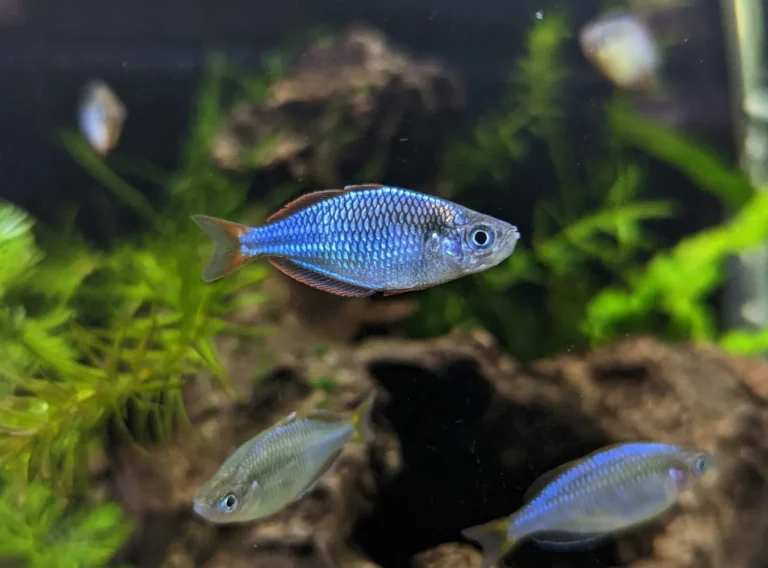
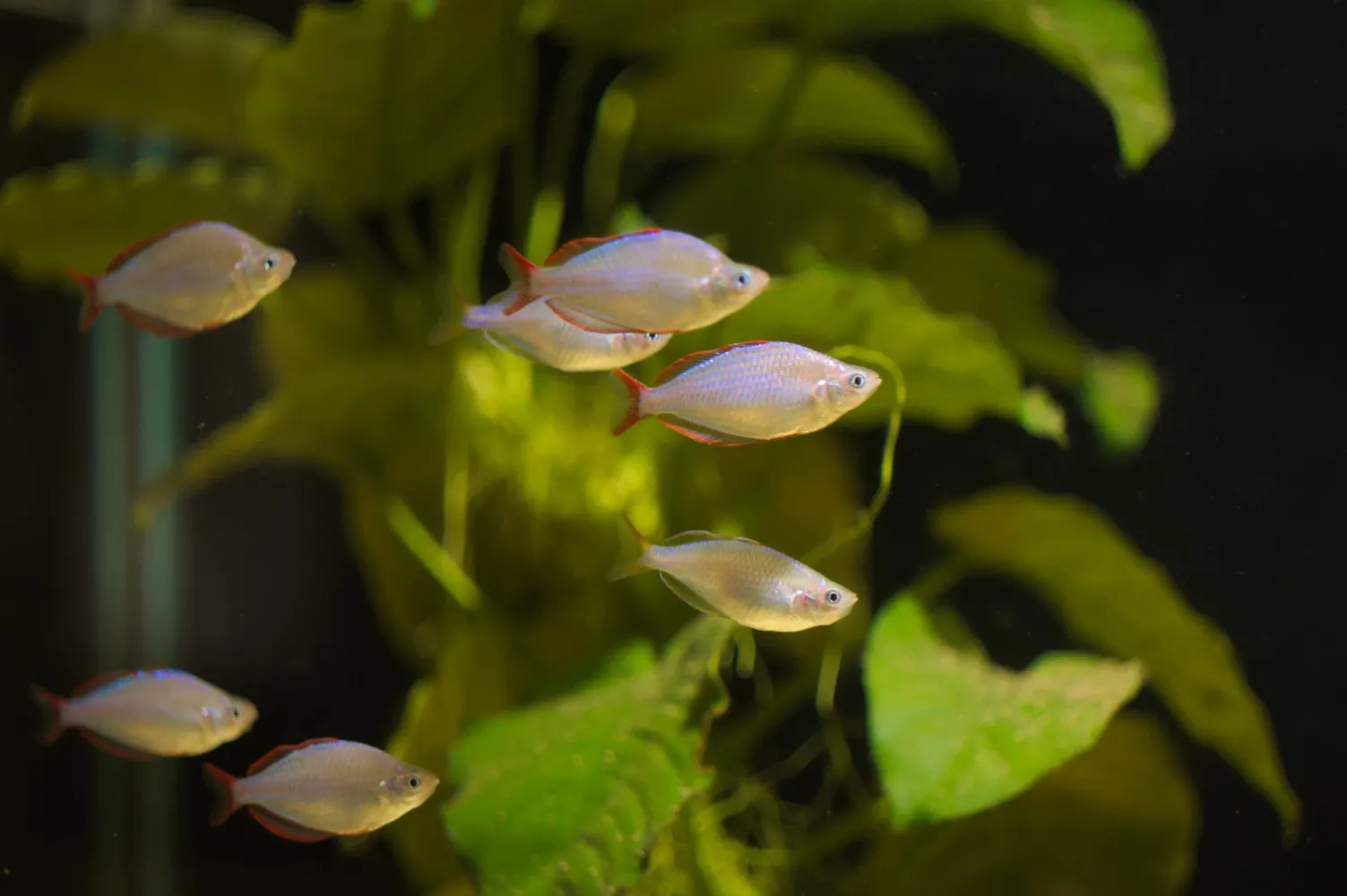
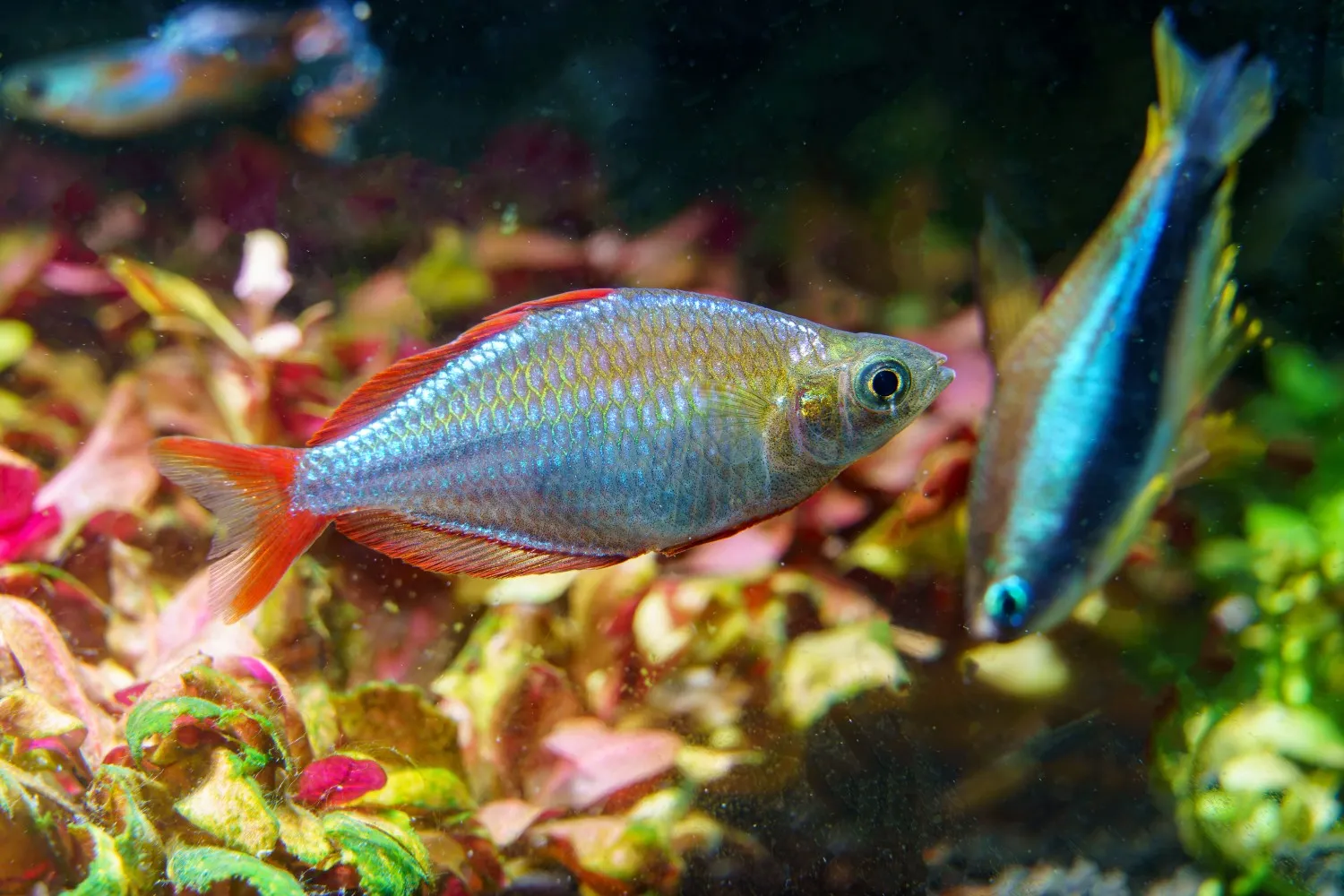
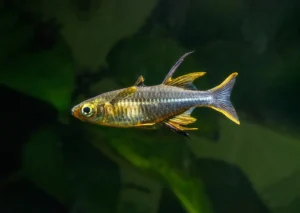
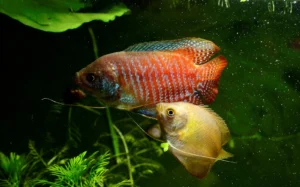
The Dwarf Neon Rainbowfish (Melanotaenia praecox) is a small, brightly colored shoaling fish prized in planted aquariums for its shimmering blue and red lateral hues. Males show stronger coloration and slightly deeper bodies while females stay more subdued. They prefer stable water and a planted layout with open swimming space and will display best in groups. Overall they are peaceful and beginner-friendly with basic care.

Quick overview
Dwarf neon rainbowfish, Neon dwarf rainbowfish, Neon rainbowfish
Peaceful, social, schooling
60 liters (15 gallons) for a group
Ideal aquarium setup
Dwarf Neon Rainbowfish do best in a planted, stable aquarium that mimics their stream-edge origins with soft to moderately hard water and a neutral pH. Provide open midwater swimming lanes, dense plant patches and some floating plants to diffuse light. A lightly planted aquascape with stable parameters keeps them relaxed and colorful.
Keep them in a group of at least six; a 60-liter (15 gallon) tank is the minimum for a small shoal, but 100+ liters is preferable for stronger displays and more stable water.
Moderate lighting brings out their iridescence; bright light can stress shy individuals so use floating plants or shaded areas to give them retreat.
Fine-leaved stems, Java fern, Cryptocoryne and floating species work well; plants offer cover for shy fish and spawning sites while creating a natural look.
Moderate flow to mimic gentle stream conditions and provide oxygen without exhausting the fish.
Fine gravel or sand with some leaf litter creates a natural riverbed look and suits planted areas.
Use smooth driftwood, rounded rocks and scattered leaf litter to create sheltered zones and visual contrast while preserving open midwater space for swimming.

Behavior and temperament
Dwarf Neon Rainbowfish are peaceful, active midwater swimmers that feel safest in groups and will school tightly when relaxed. They can be shy at first but become outgoing once comfortable and kept in a proper shoal. Males display to each other but rarely escalate to serious aggression; poor water or overcrowding quickly stresses them. Regular water quality and a planted environment reduce skittishness and bring out natural behaviors.
Diet and feeding
They are omnivores with small mouths and prefer varied, high-quality foods. Provide a mix of micro flakes or pellets and frequent live or frozen items to enhance color and vitality. Small portions several times a day suit their fast metabolism.
What they eat in nature
Small insects, zooplankton, larvae, algae and detritus
What to feed in the aquarium
- High-quality micro flakes and granules formulated for small omnivores.
- Frozen or live foods such as daphnia, micro brine shrimp and finely chopped bloodworm.
- Occasional vegetable matter like spirulina flakes or blanched spinach.
Feeding schedule
Feed small portions 1–2 times daily, only what they can finish in about two minutes.
Special dietary needs
No strict needs, but regular live or frozen foods and some vegetable matter improve coloration and health.
Daily:
Offer small portions of flakes or micro pellets once or twice daily so food is consumed quickly.
Weekly:
Include several feedings of frozen or live foods throughout the week and a vegetable-based feed once to twice weekly.
Always:
Always provide varied small-sized foods and avoid large pellets that are hard for them to eat.
Tankmate compatibility
They do best with other small, peaceful species that occupy different niches and will not nip fins. Avoid larger or aggressive fish that can bully or outcompete them for food, and be mindful of water parameter compatibility when choosing companions. A calm community tank with similar-sized schooling fish is ideal.
Yes with caution - Small shrimp like Neocaridina can work in well-planted tanks but some individuals may pick on baby shrimp, so provide hiding places.
Generally compatible with most freshwater snails; snails help clean up algae and are left alone by adult rainbowfish but may be eaten when very small.
Good companions include small tetras, rasboras, pencilfish and peaceful Corydoras catfish which share similar water needs and won’t harass them.
Avoid larger barbs, most cichlids and boisterous centerpiece fish that may chase or nip fins and stress a small shoal.
Keep them in groups of six or more; they form loose hierarchies with males displaying but true aggression is uncommon when well kept.
Breeding
Dwarf Neon Rainbowfish are egg scatterers and will spawn among fine-leaved plants or spawning mops when water is clean and slightly softer. Males court females with quick displays and eggs are scattered and adhesive, sticking to plants. Fry are free-swimming in about a week depending on temperature.
Difficulty
Breeding is relatively straightforward with stable, slightly soft water and ample plant cover, but raising fry is more demanding due to need for tiny live foods and careful water quality control.
How they breed
Egg scatterer that deposits adhesive eggs onto plants and fine-leaved surfaces.
Best setup for breeding
Use a small breeding tank with dense fine-leaved plants or a spawning mop, dim lighting, slightly softer and slightly acidic water, gentle filtration such as a sponge filter, and frequent small water changes. Remove adults after spawning if parents show egg-eating behavior.
Feeding the babies
Start fry on infusoria or commercial liquid fry foods for the first days, then move to newly hatched baby brine shrimp and microworms as they grow. Gradually introduce finely crushed flakes or micro pellets as the fry get larger.
Pro tips
Keep groups of six or more to reduce stress and bring out natural schooling.
Provide floating plants to diffuse light and make shy fish feel secure.
Use a sponge filter in small tanks to protect fry and keep flow gentle.
Fin nipping
Occasional fin nipping can occur in mixed tanks with fin-nippers or very boisterous species; remove aggressive tankmates or increase shoal size to reduce focus on individual fish.
Loss of color
Pale or dull coloration usually indicates stress, poor diet or suboptimal water quality; improve diet with live/frozen foods and stabilise water parameters with regular changes.
Disease outbreaks
Crowding, poor filtration or sudden parameter swings make them vulnerable to common freshwater diseases; quarantine new fish, keep water clean and treat promptly when symptoms appear.
Typical beginner mistakes
- Overstocking small tanks and underestimating shoal needs.
- Irregular water changes leading to nitrate buildup.
- Feeding large pellets or only one food type causing poor nutrition.
Short summary
Dwarf Neon Rainbowfish are peaceful, colorful schooling fish that suit planted community aquariums and reward keepers with active shoaling behavior. They need stable water, varied small foods and groups of six or more to thrive and display best color.
Frequently asked questions (FAQs)
How many should I keep together?
Keep at least six individuals; larger groups of 8–12 produce the best schooling display and reduce stress.
What water parameters do they prefer?
They prefer slightly acidic to neutral pH around 6.5–7.5, moderate hardness and stable temperatures between 22–26°C (72–79°F).
Are they suitable for planted aquariums?
Yes, they thrive in planted tanks with open swimming areas, dense plant patches and some floating cover to diffuse light.
Will they eat shrimp and snails?
Adults usually leave larger snails and adult shrimp alone, but they may prey on very small shrimp or baby snails unless hiding places are provided.
How do I encourage breeding?
Provide dense fine-leaved plants, slightly softer water, stable conditions and high-quality live or frozen foods to trigger spawning.
What should I feed the fry first?
Start fry on infusoria or commercial liquid fry foods, then progress to baby brine shrimp and microworms as they grow.