At a glance
Carpet plant
Low height
Dense runners
Hardy
Description
Dwarf Sagittaria is a compact aquatic plant often sold as a foreground carpet in aquaria and commonly identified as Sagittaria subulata. It has narrow grass-like leaves that form low rosettes and spread by short runners to create a grassy carpet. Care is straightforward: moderate light and a nutrient-rich substrate give the best results while CO₂ is optional but speeds covering. Its simple shape makes it versatile for nano tanks and larger layouts alike.
Quick overview
Dwarf Sagittaria, Micro Sagittaria, Narrow-leaf Sagittaria, Little Sagittaria
Leaves ~2–6 mm, height ~2–8 cm
Ideal use in aquascaping
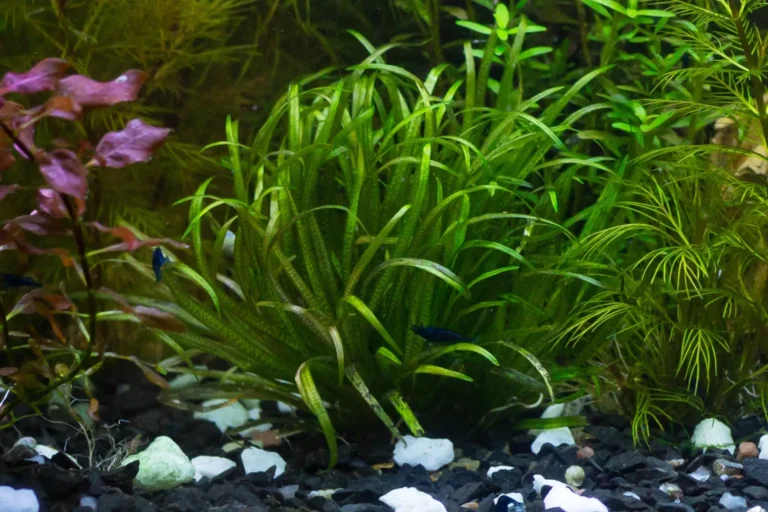
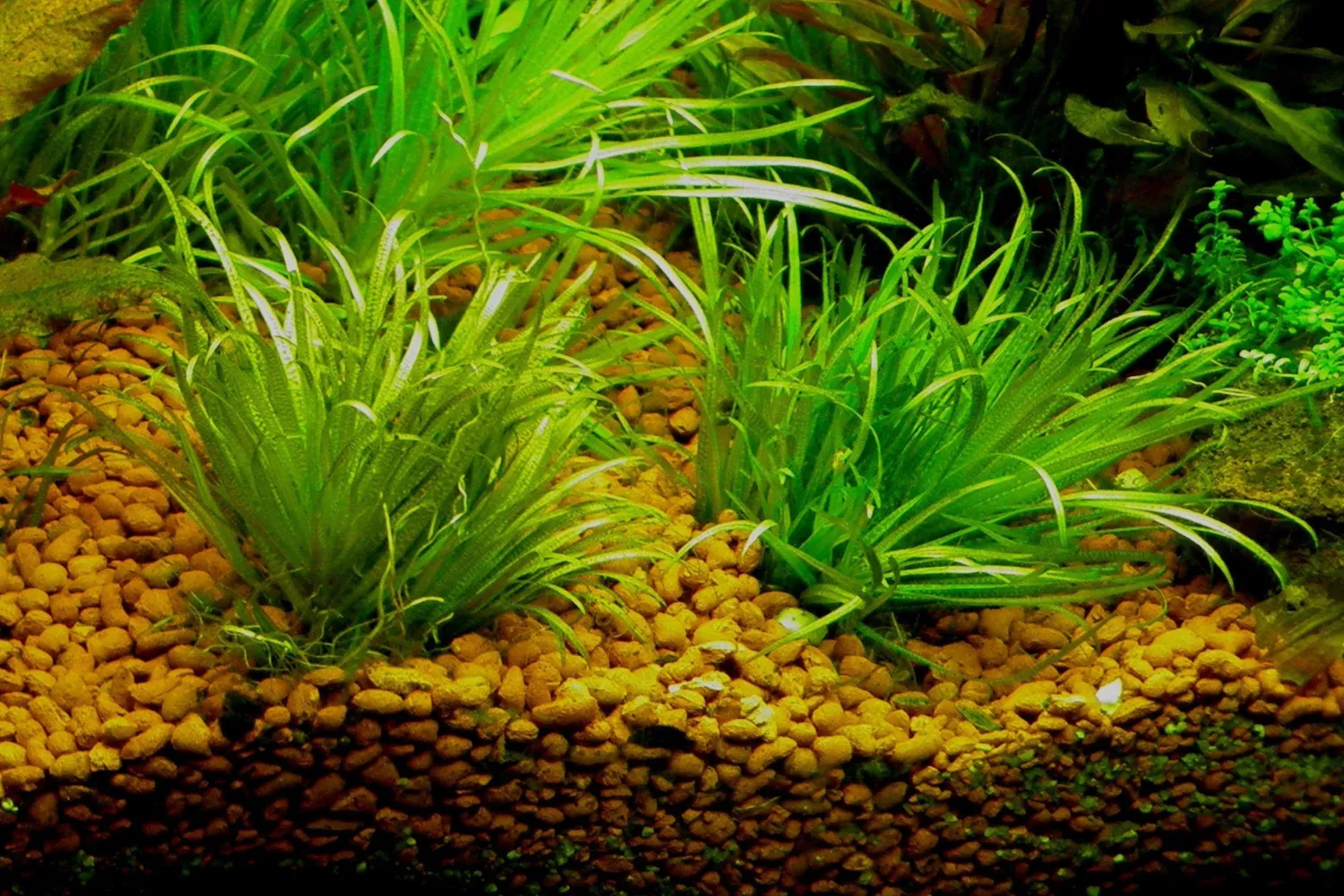
Dwarf Sagittaria works well as a low foreground carpet or scattered clumps for a natural grassy look. It fills gaps between hardscape elements and creates a gentle transition to midground plants. Because it is low and neat it helps emphasize rocks and wood without stealing focus.
Plant it in the foreground or low-mid areas where you want a tidy grassy texture; it can also be used to soften hardscape edges. Its role is as a subtle carpet or filler rather than a focal specimen.
Good styles for this plant
It suits nature aquarium layouts, Iwagumi and low-tech community tanks and is useful in nano scapes where a low foreground is needed. It also performs well in mixed plantings to provide grassy contrast.
Leaves are bright to medium green with a fine grass-like texture that reads as a soft carpet at a distance. The uniform low profile gives a calm, natural look that contrasts with broadleaf midground plants.
Works in tanks from nano to large aquariums because it stays low and spreads slowly. In large tanks plan multiple patches or larger initial portions if you want quick coverage.
Light and CO₂
Low–medium. Dwarf Sagittaria tolerates lower light but becomes more compact and spreads more slowly; brighter light encourages denser growth and faster coverage.
CO₂ is optional and not required for basic health but added CO₂ promotes faster spread and thicker carpeting.
6–8 hours daily. A stable schedule helps growth and limits algae outbreaks.
Substrate and nutrients
This is a root-feeding species that benefits from a nutrient-rich substrate and regular macro and micro dosing. Root tabs are especially helpful when using inert sand or gravel and liquid fertilizers complement root nutrition.
Substrate preference
Prefers a fine fertile substrate but will tolerate sand or gravel if supplemented with root tabs. A layer of nutrient-rich substrate under a thin sand cap gives the best long-term results.
Nutrient needs
Requires steady macro nutrients and accessible iron and potassium for healthy green coloration, with additional root feeding for vigorous spread. Keep water column dosing regular if substrate is inert.
- Place root tabs near crowns every 6–12 weeks.
- Use weekly liquid macros and micros for steady nutrition.
- Top up iron and potassium if leaves pale or yellow.
Planting and propagation
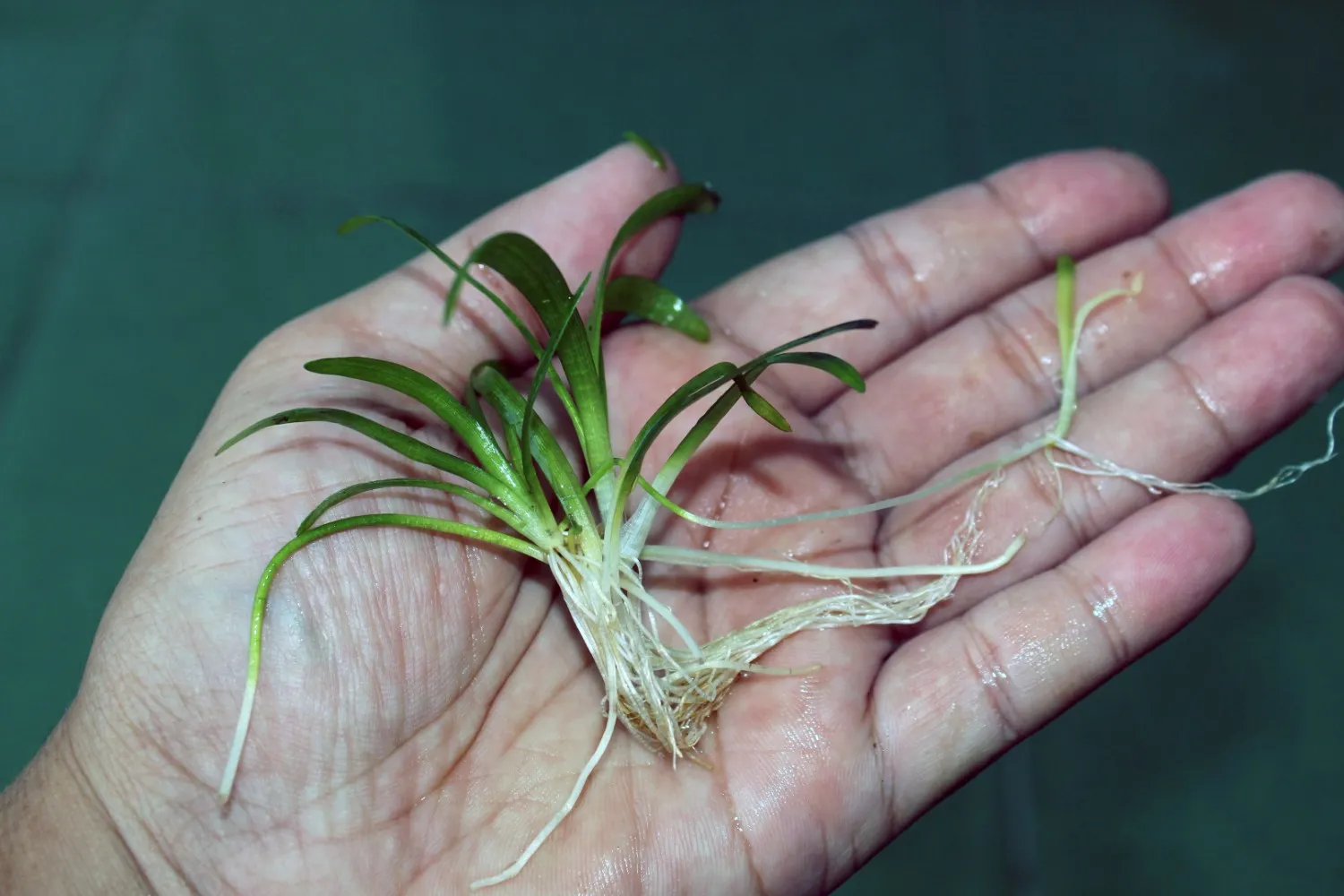
Plant in small groups or plugs to form patches that spread by runners; larger initial clumps speed visual cover. Propagation is primarily by short stolons that form daughter rosettes which can be left to colonize or separated and replanted.
How to plant
- Separate the mat into small plugs or rosettes
- Plant plugs a few centimeters apart in the foreground
- Press gently into substrate and straighten leaves
Propagation method
Propagates vegetatively by runners that produce daughter rosettes; you can divide and replant these to expand coverage. It rarely flowers underwater in aquaria so runners are the primary method.
- Replant daughter rosettes once roots are visible
- Leave runners in place to allow natural spread in stable tanks
- Trim older outer leaves to encourage new rosette formation
Pruning and maintenance
Remove older or damaged leaves at the base to keep the carpet tidy and to encourage new growth. Rake or trim stray runners if you want to restrict spread or reshape the carpet.
Trimming style
Trim by snipping outer leaves close to the crown or remove entire small rosettes to thin dense patches and maintain shape.
Maintenance frequency
Every 2–6 weeks perform light trimming or thinning depending on growth rate and desired coverage. More frequent maintenance may be needed under high light and CO₂ to keep the carpet even.
Growth and health indicators
What healthy growth looks like
Healthy plants form compact rosettes with upright narrow leaves and send short runners that establish new crowns. A dense even carpet with bright green leaves and small fresh rosettes indicates good conditions.
Signs it needs attention
Yellowing or transparent leaves, sparse growth, or stretched legginess suggest nutrient deficiencies or low light. Loose crowns or uprooted rosettes indicate substrate instability or digging tankmates.
Tankmates and compatibility
Generally compatible with peaceful community fish and invertebrates that do not dig or uproot plants. Avoid species that search the substrate for food as they will disturb the carpet.
It pairs well with small peaceful community fish and freshwater shrimp that do not disturb the substrate.
Avoid keeping it with digging species such as goldfish and large cichlids that uproot plants and disturb the carpet.
If you want a faster carpet start with larger plugs and good substrate nutrition. Runners can be guided with tweezers to fill gaps faster.
Pro tips for this plant
Start with several plugs spaced evenly to achieve a uniform carpet faster.
Use root tabs under each plug if the substrate is sand or inert gravel.
Pin or bury runners temporarily to encourage quick establishment of new rosettes.
Algae on leaves
Excess light or imbalanced nutrients often cause algae growth on thin leaves; reduce light or correct dosing and remove affected leaves by hand.
Slow spread
Slow coverage is usually due to low light or poor root nutrition; improve substrate fertility, add root tabs, or raise light slightly to encourage runners.
Uprooting
Plants become loose when substrate is coarse or disturbed by fish; repot crowns deeper, use finer substrate or protect the area from digging tankmates.
Typical beginner mistakes
- Planting plugs too far apart delaying coverage
- Neglecting root fertilizers in inert substrates
- Keeping digging fish that uproot the carpet
Short summary
Dwarf Sagittaria is an easy low-growing carpet plant that forms grassy rosettes and spreads by short runners. With moderate light, a nutrient-rich substrate and optional CO₂ it makes a tidy foreground carpet suitable for many aquascapes.
Frequently asked questions (FAQs)
Is dwarf sagittaria good for nano tanks?
Yes, its low height and slow spread make it ideal for nano tanks and small foregrounds.
Do I need CO₂ for dwarf sagittaria?
No, CO₂ is optional; added CO₂ speeds growth and creates a denser carpet but is not required for basic health.
How do I plant plugs correctly?
Plant small plugs a few centimeters apart, press gently into the substrate, and use root tabs if the substrate is inert.
Will shrimp eat dwarf sagittaria?
Shrimp generally do not eat healthy plants and are good companions because they clean debris without harming the carpet.
Spread is moderate and depends on light, substrate fertility and CO₂; expect visible runners within weeks under good conditions.
What causes yellow leaves?
Yellowing usually indicates nutrient deficiency or poor root access to minerals; add root tabs and check for adequate iron and potassium.