At a glance
Peaceful
Schooling
Timid
Tiny
Description
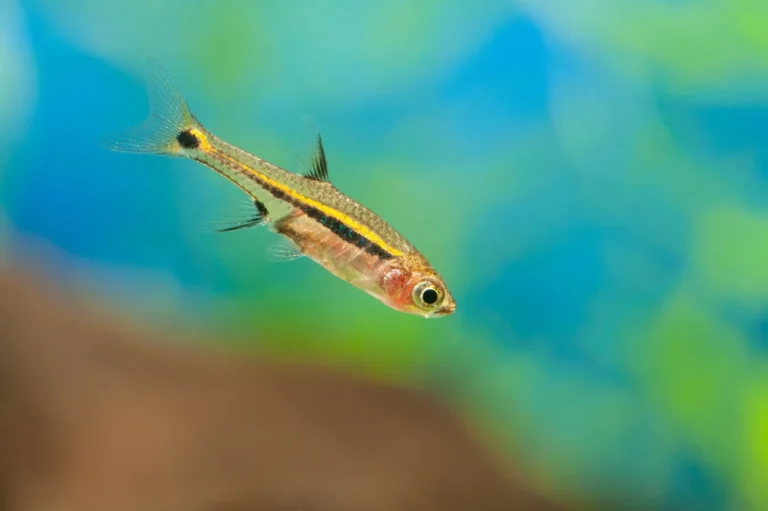
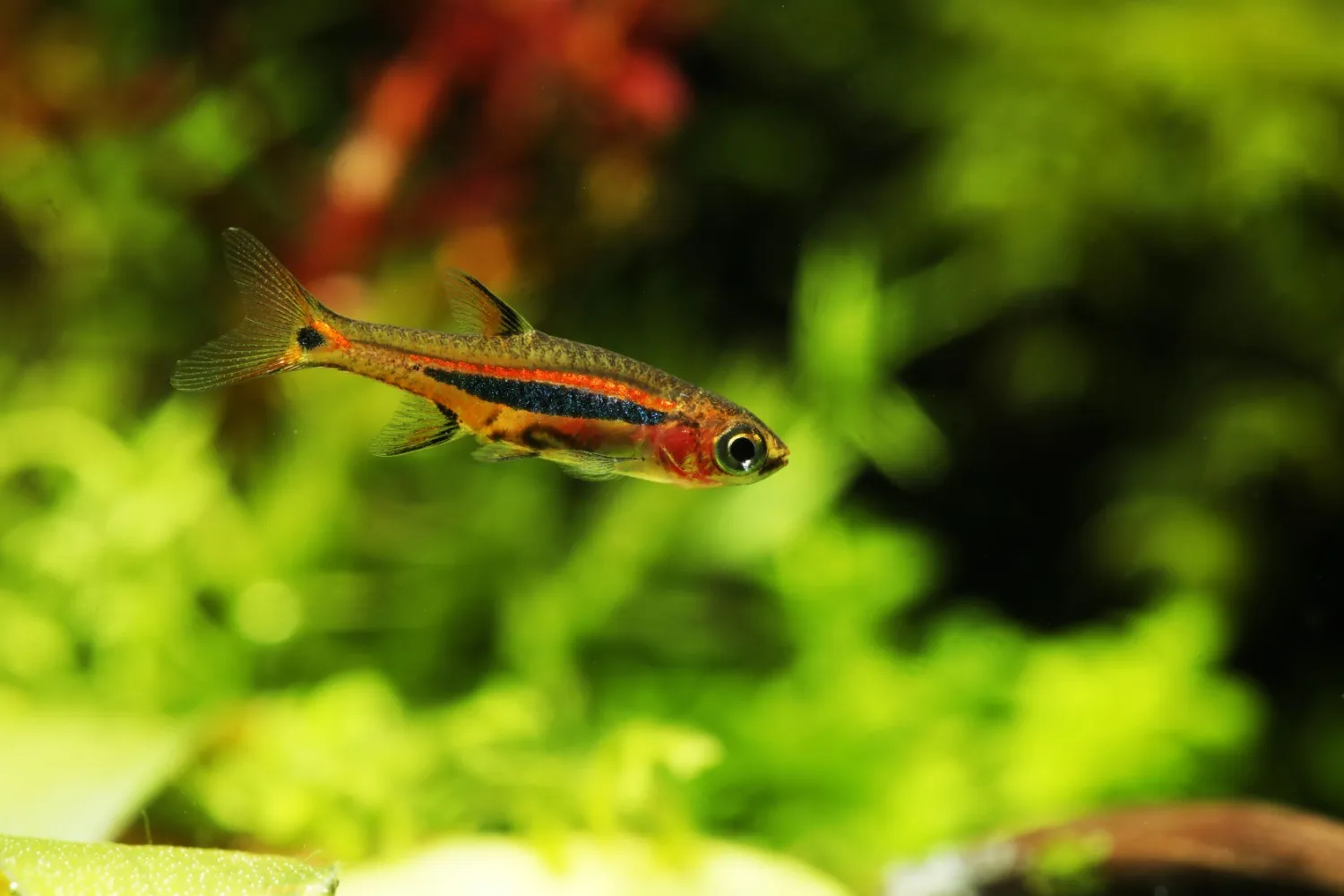
The Mosquito Rasbora is the tiny, colorful charmer Boraras brigittae prized for nano and planted aquariums. Males show bright red-orange bodies with darker markings while females are slightly plainer and rounder. They thrive in soft, slightly acidic water and need stable, well-planted tanks with subdued light. Care is straightforward for aquascapers who provide a calm school and varied microfoods.

Quick overview
Mosquito rasbora, Chili rasbora, Pygmy rasbora
1.5–2.0 cm (0.6–0.8 inches)
Peaceful, social, schooling
40 liters (10 gallons) for a group
Ideal aquarium setup
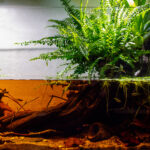
Mosquito rasboras do best in a densely planted, dimly lit aquarium that mimics peat-stained blackwater streams with stable soft water and neutral to slightly acidic pH. Provide floating plants or shade to soften light, lots of fine-leaved plants or moss for security, and regular gentle filtration to keep water clear. A mature tank with established biofilm supports their microfeeding habits and reduces stress.
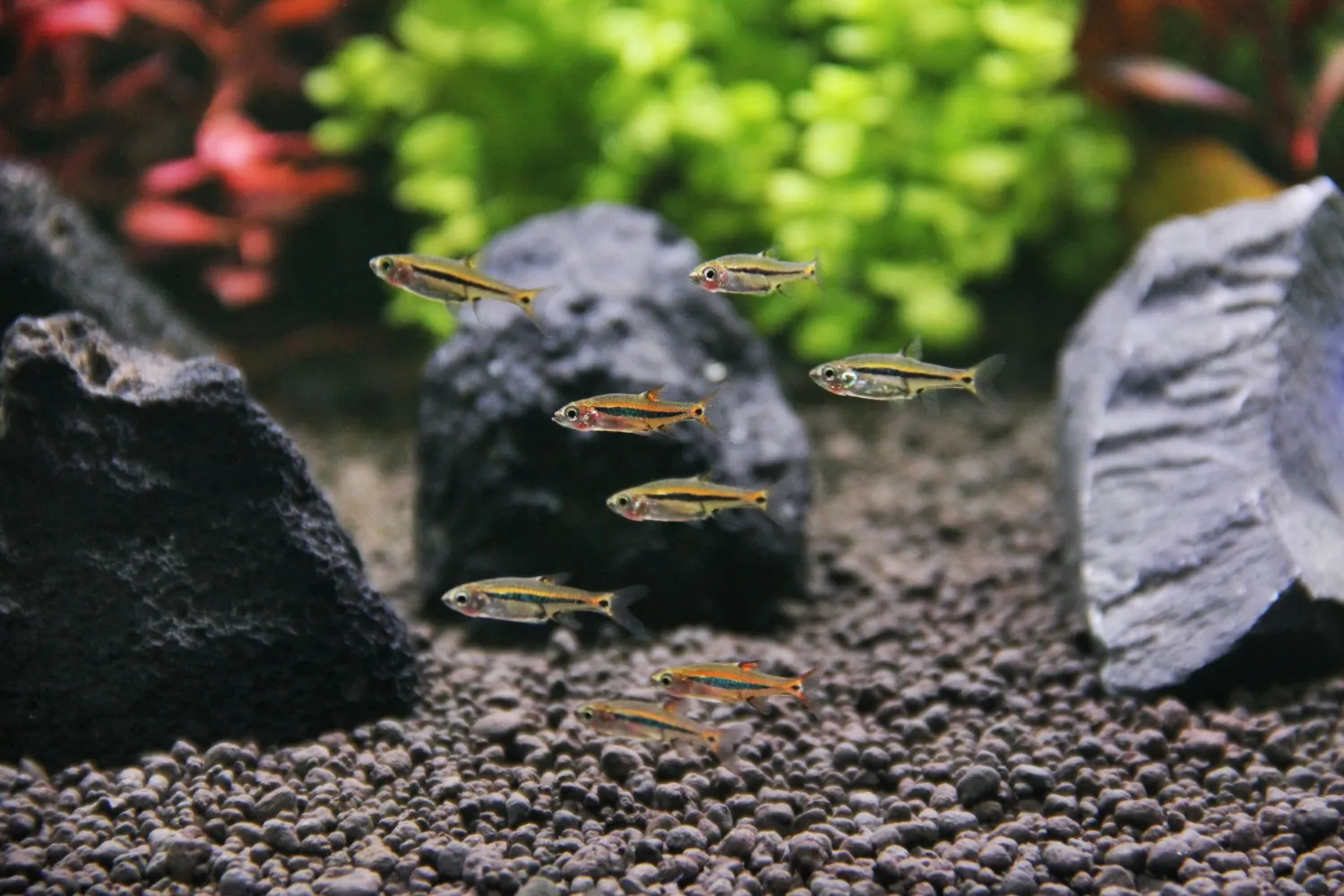
A small group starts comfortably in a 40–60 liter (10–15 gallon) tank; aim for at least 8–12 individuals to encourage natural schooling behavior. Larger tanks are better for mixed communities and to maintain stable water conditions.
Low to moderate lighting is ideal; bright light will stress them unless balanced with plenty of floating cover. Subdued light helps show their colors and encourages natural behavior.
Fine-leaved foreground plants, dense stem plants, and floating species suit them well because they offer shelter and spawning sites while softening light. Mosses and carpeting plants also provide surfaces for biofilm and microfauna.
Low flow to mimic their slow-moving natural habitat and to keep food particles accessible in midwater.
Dark fine sand or smooth gravel reproduces their native streams and helps their color stand out.
Use driftwood, leaf litter, and flat stones to create shaded hiding spots and tannin-stained water; leave open midwater lanes for schooling.
Behavior and temperament
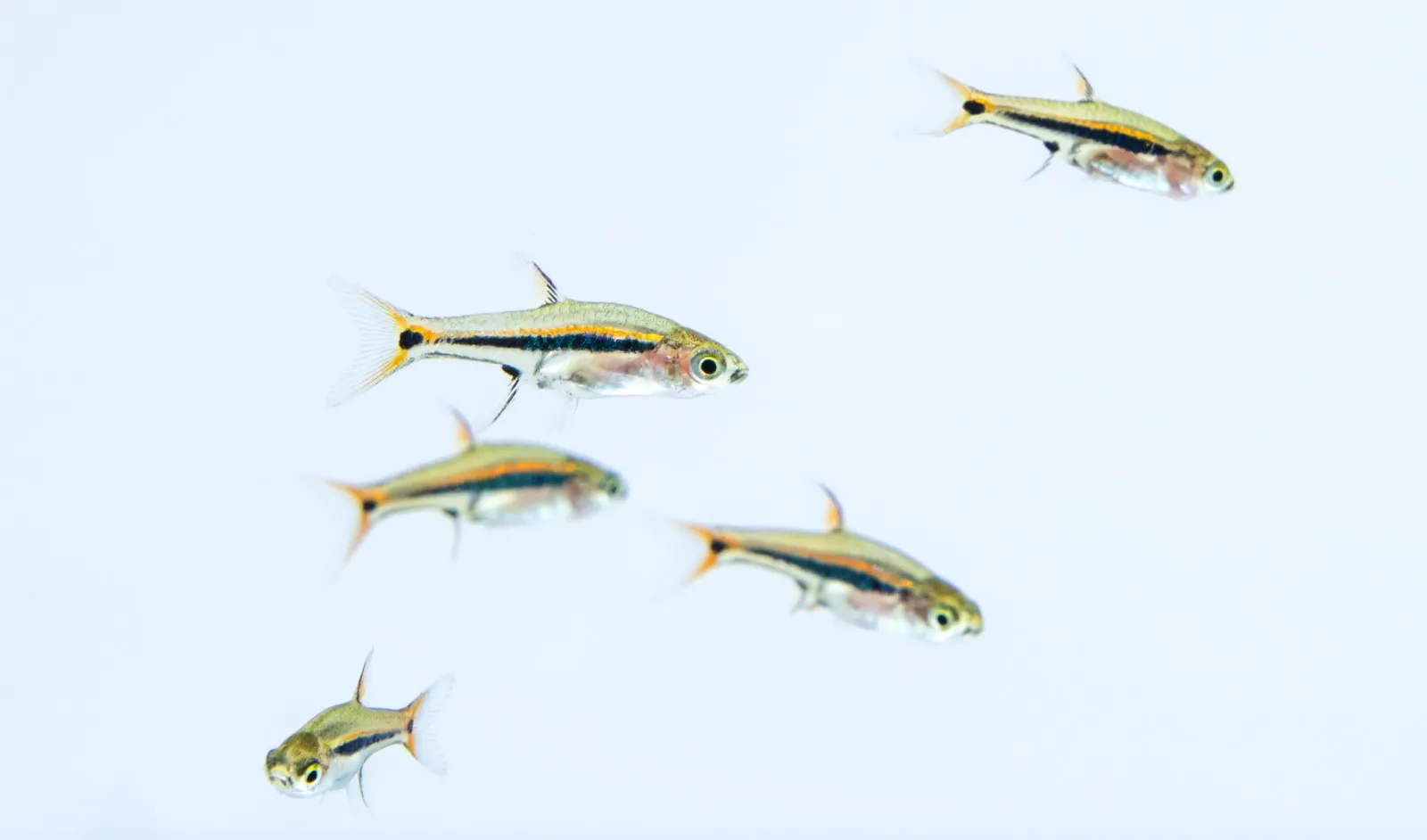
Mosquito rasboras are shy, peaceful schooling fish that feel safest in larger groups and will swim in tight formations when comfortable. They are active in midwater but spend time near plants and leaf litter for shelter. Sudden changes, bright light, or aggressive tankmates cause them to hide or bolt. With a calm environment they display bright colors and interesting social interactions.
Diet and feeding
They are micro-predators with small mouths and do best on a varied diet of micro flakes, crushed pellets, and frequent live or frozen microfoods. Small frequent feedings match their tiny stomachs and maintain condition and color better than one large daily feeding.
What they eat in nature
Microscopic crustaceans, insect larvae, zooplankton, and biofilm
What to feed in the aquarium
- High-quality micro flakes and micropellets suitable for nano fish.
- Frozen and live foods such as daphnia, microworms, and baby brine shrimp.
- Occasional finely chopped frozen bloodworms or cyclops to boost color.
Feeding schedule
Feed small portions once or twice daily, only what they can eat in a minute or two.
Special dietary needs
No strict needs, but frequent small live or frozen foods and varied microfoods improve coloration and overall health.
Daily:
Offer one or two tiny feeds of flake or micropellet sized for their mouths, plus a pinch of micro frozen food if available.
Weekly:
Include several feeds of live or frozen foods like daphnia or baby brine shrimp across the week to support color and condition.
Always:
Always keep portions tiny and avoid overfeeding; variety and frequent small meals are key for health.
Tankmate compatibility
Choose small, peaceful species that share soft, acidic water preferences and avoid fast nippy fish. They mix well with other micro rasboras, ember tetras, and dwarf bottom-dwellers that won't outcompete them for food. Avoid large or aggressive species that will stress or eat them.
Yes with caution — adult shrimp like Neocaridina and Nerites usually coexist, but mosquito rasboras may eat shrimp fry so plan breeding spaces accordingly.
Small peaceful snails such as nerite and ramshorn do well and help clean algae and detritus without bothering the fish.
Suitable companions include other tiny peaceful species such as ember tetras, small rasboras, and dwarf Corydoras that share water parameter needs and will not harass them.
Avoid boisterous midwater or semi-aggressive species like tiger barbs or larger barbs that nip fins, and steer clear of large cichlids that can see them as food.
Keep them in groups of at least eight, preferably 10–20, as they are true schooling fish and will be shy or stressed in very small numbers. Males display more color when comfortable in a larger school.
Breeding
Breeding mosquito rasboras is achievable for hobbyists who provide soft, acidic water, subdued light, and plenty of fine-leaved plants or spawning mops. They are egg scatterers and will deposit tiny eggs on plants and in leaf litter, but parents may eat some eggs if left together. Many breeders remove adults after spawning to improve fry survival.
Difficulty
Moderate; spawning is straightforward with stable soft acidic water and dim conditions, but raising fry requires very small live foods and careful water quality management.
How they breed
Egg scatterer that deposits eggs among plants and fine leaf litter, with no parental care.
Best setup for breeding
Use a small separate breeding tank with peat-filtered or lightly tinted water, gentle filtration or none, soft pH around 5.5–6.5, and abundant fine-leaved plants or spawning mops. Dim lighting and slightly cooler temperatures within their normal range encourage spawning.
Feeding the babies
Start fry on infusoria or liquid fry food immediately, then move to microworms and newly hatched baby brine shrimp as they grow. Gradually increase particle size and frequency while maintaining excellent water quality.
Pro tips
Keep them in larger groups to reduce stress and encourage natural shoaling displays.
Use leaf litter or Indian almond leaves to gently tint the water and boost breeding readiness.
Feed many tiny meals and include live microfoods to bring out the best color.
Poor coloration
Dull color usually comes from stress, poor diet, or hard alkaline water; correct parameters, add live foods, and reduce bright lighting to restore color.
Stress and hiding
They hide when water chemistry, tankmates, or lighting are unsuitable; provide more plants, reduce flow and bright light, and remove aggressive tankmates to help them settle.
Fry survival low
Parents often eat eggs and tiny fry need microscopic food and pristine water; use a separate breeding tank, remove adults after spawning, and feed infusoria or microworms to improve survival.
Typical beginner mistakes
- Keeping them in too small numbers or alone.
- Using hard alkaline water instead of soft acidic water.
- Overfeeding large portions that foul the tank.
Short summary
Mosquito rasboras are tiny, peaceful schooling fish ideal for well-planted nano aquascapes and soft acidic water. They require a calm, stable tank with varied microfoods and a good-sized school to show color and natural behavior.
Frequently asked questions (FAQs)
How many mosquito rasboras should I keep?
Keep at least 8–12 individuals to ensure natural schooling behavior and reduce stress, more if the tank size allows.
Can they live in a 10 gallon tank?
Yes, a 10 gallon (40 liters) can house a small school of mosquito rasboras if densely planted and water parameters are stable.
Do they eat shrimp or shrimp fry?
They usually leave adult shrimp alone but may eat very small shrimp fry, so protect newborn shrimp if you want successful shrimp breeding.
What water parameters are best?
Soft, slightly acidic water around pH 5.0–7.0 and 0–6 dGH with stable temperature around 23–27°C (73–81°F) is ideal.
Are they difficult to breed?
Breeding is moderate in difficulty; spawning is easy with proper water chemistry but raising fry needs microscopic foods and careful water quality control.
What do they eat in the aquarium?
They accept micro flakes and micropellets but thrive when regularly offered live or frozen microfoods like daphnia, microworms, and baby brine shrimp.