At a glance
Peaceful
Schooling
Timid
Iridescent eyes
Description
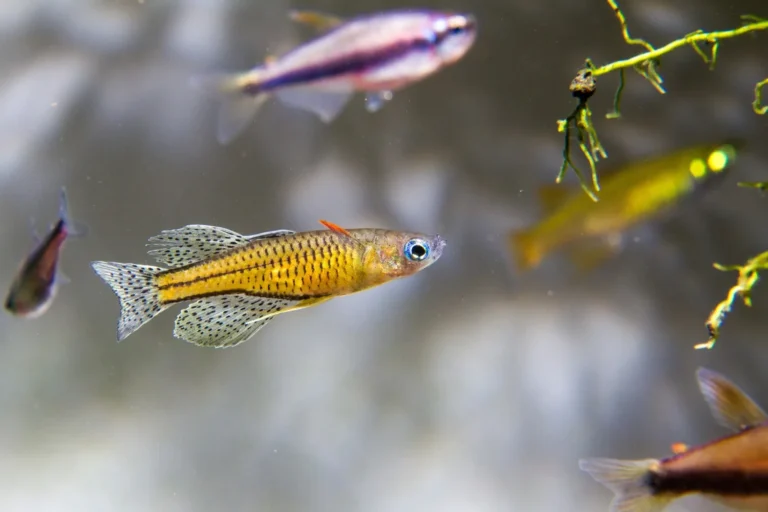
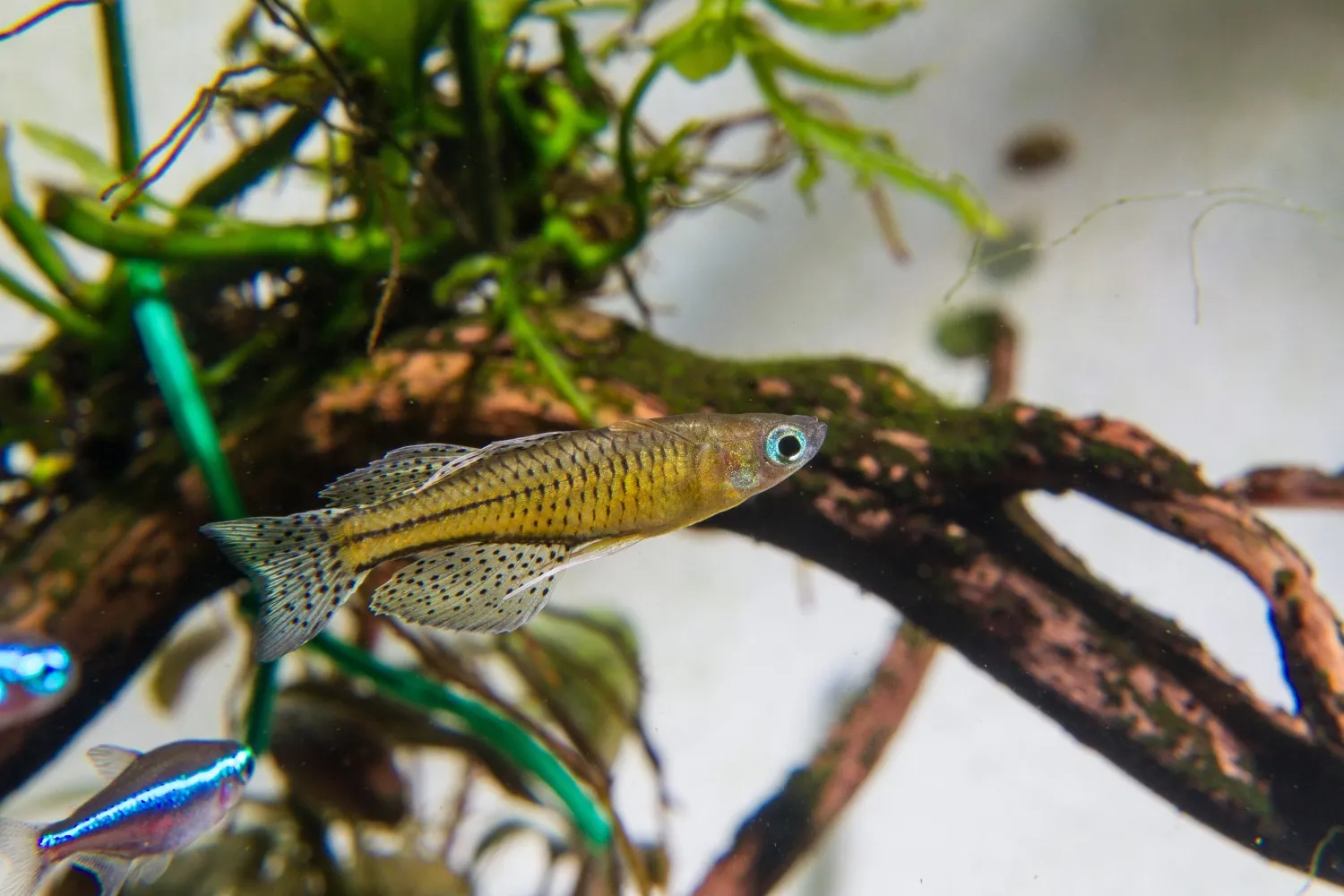
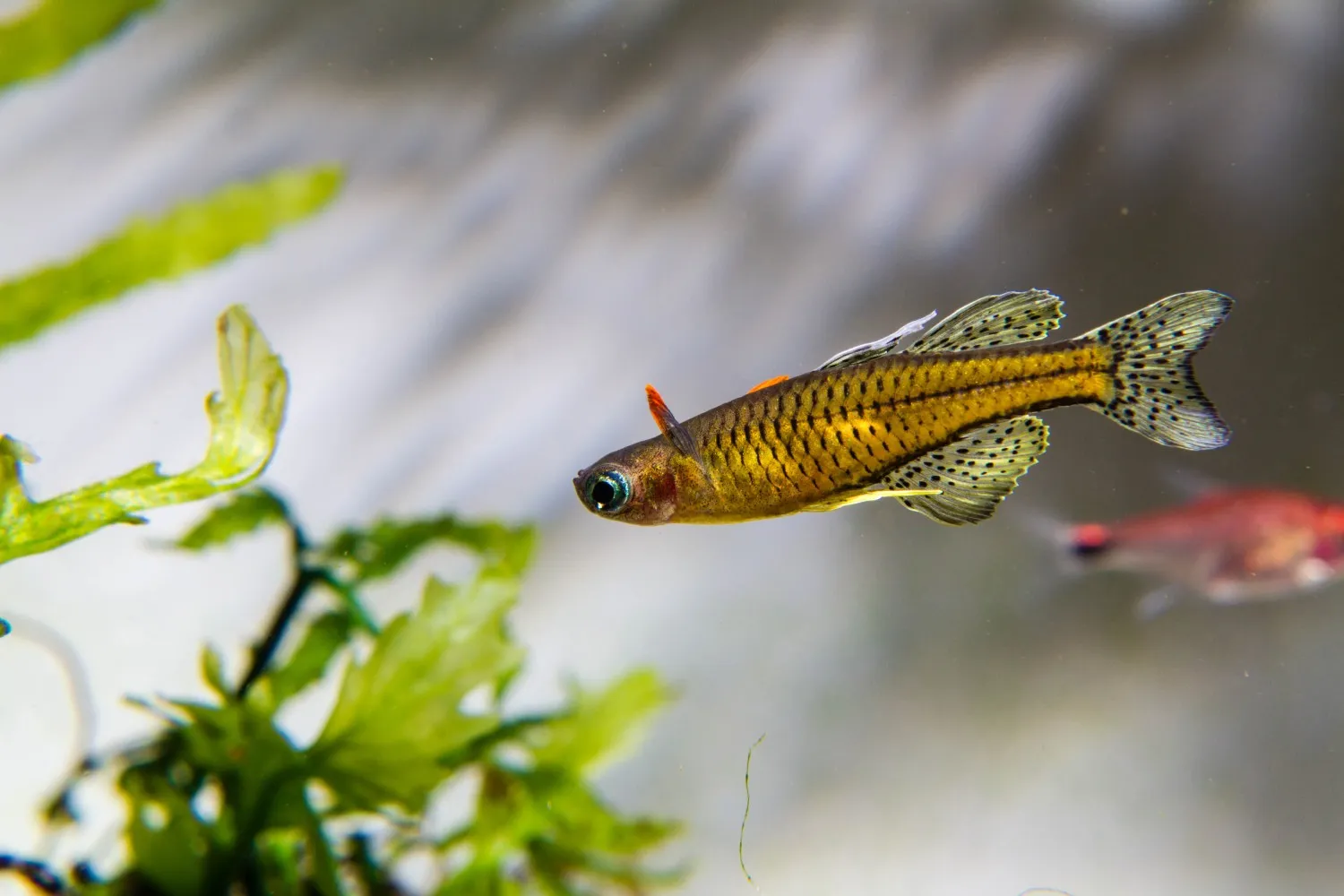
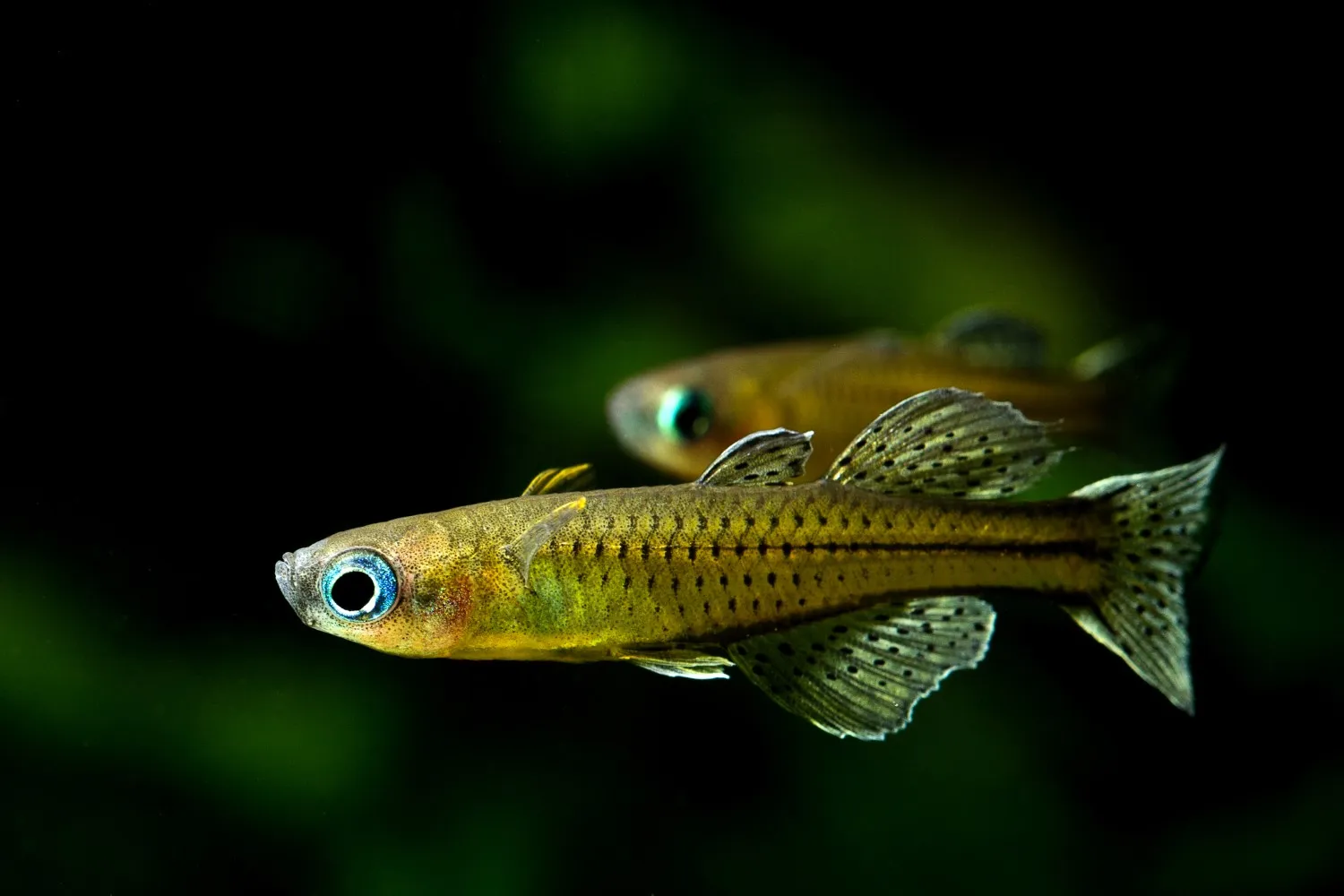
Gertrude’S Blue-Eye (Pseudomugil gertrudae) is a small, colorful blue-eye known for its bright eye coloration and subtle iridescent body. It is a peaceful, social species that prefers to be kept in groups and shows lively schooling behavior. Care is approachable for hobbyists who maintain stable water and provide a planted, calm environment. Males tend to flare colors during displays, making a small school attractive in a planted midwater setup.

Quick overview
Gertrude's blue-eye, Gertrude blue-eye, Gertrude's rainbow-eye
Peaceful, social, schooling
40 liters (10 gallons) for a group
Ideal aquarium setup
Gertrude’S Blue-Eye does best in a planted aquarium that mimics slow-moving tributaries with subdued light and stable water. Provide plenty of midwater swimming space and grouped planting to give them cover while keeping an open area for schooling. A slight acidity and soft to moderate hardness with steady water parameters will keep them comfortable.
A 40–60 liter tank (10–15 gallons) suits a group of 6–10 adults, larger for more fish.
Low to moderate lighting is ideal; they prefer shaded areas created by floating plants and will show best color under moderate light with shaded retreats.
Fine-leaved plants and stem plants, plus floating cover, suit them well and reduce stress while offering spawning sites and microfauna to graze.
Low to moderate flow to mimic gentle streams and avoid tiring these small swimmers.
Fine sand or dark fine gravel suits their natural look and helps plants establish.
Use driftwood and leaf litter for natural shelter and soft tannins, with open midwater areas for schooling and a few fine-leaved plants or spawning mops.
Behavior and temperament
These fish are peaceful schooling swimmers that feel safest in groups of six or more and can be shy around boisterous tankmates. They are active during the day but prefer subdued light and plenty of cover. Sudden water changes or strong currents easily stress them, so keep conditions stable. Males display to females but are not aggressively territorial.
Diet and feeding
Gertrude'S Blue-Eye is an omnivorous micro-predator with a small mouth and benefits from a varied diet of small dry, frozen, and live foods. They do well on high-quality micro pellets or flakes supplemented with regular live or frozen treats to boost color and condition.
What they eat in nature
Insect larvae, microcrustaceans, zooplankton, and biofilm.
What to feed in the aquarium
- High-quality micro pellets and crushed flakes
- Frozen brine shrimp, daphnia, and bloodworms
- Live microworms, baby brine or infusoria for small fry
Feeding schedule
Feed small amounts two times daily so the fish can finish the food within a couple of minutes.
Special dietary needs
No strict needs, but regular live or frozen microfoods improve coloration and condition significantly.
Daily:
Offer small portions of staple micro pellets or flakes twice daily, ensuring they eat it quickly.
Weekly:
Include one or two feedings per week of live or frozen foods like daphnia or brine shrimp for variety.
Always:
Always remove uneaten food after a few minutes and maintain good filtration and water quality.
Tankmate compatibility
They pair well with other small, peaceful community fish that occupy similar water zones and avoid large or boisterous species. Choose tankmates of similar size to avoid predation and species that tolerate their preferred water parameters. Avoid large fin nippers and fast, aggressive feeders that outcompete them for food.
Yes with caution. Dwarf shrimp can coexist but may be eaten by larger individuals or during spawning events, and very small shrimp young are vulnerable.
Most peaceful freshwater snails are fine and can help with algae control while not disturbing these fish.
Small tetras, rasboras, and other peaceful microfish are suitable companions and will form a calm community with similar water needs.
Avoid larger or semi-aggressive species like many cichlids and gouramis that may harass or outcompete them for food, as aggression stresses and can injure these small fish.
Keep them in groups of at least six to encourage natural schooling and reduce stress; a small harem with one male and several females works for breeding displays.
Breeding
Breeding is achievable in home aquaria given a calm, planted tank with fine-leaved plants or spawning mops for eggs. They spawn as a group with males courting females and scattering eggs onto plant surfaces. Remove adults or use a breeder tank to protect eggs and fry.
Difficulty
Moderate. They are not overly difficult to breed but require stable water, slightly softer and acidic conditions, and protection for eggs and fry to raise young successfully.
How they breed
Egg scatterer that deposits adhesive eggs on fine plants or spawning mops.
Best setup for breeding
A small breeding tank with dim lighting, fine-leaved plants or a spawning mop, soft slightly acidic water and gentle filtration is ideal; keep adults well fed and separate eggs from adults after spawning.
Feeding the babies
Start fry on infusoria or commercial liquid fry foods followed by newly hatched baby brine shrimp, then transition to finely crushed flakes or micro pellets as they grow.
Pro tips
Keep groups of six or more to reduce timidity and promote natural schooling.
Use floating plants to soften lighting and create shaded swim lanes.
Feed small frequent meals to match their small stomachs and fast metabolisms.
Light stress
Too-bright lighting can make them skittish and reduce color; add floating plants or dim the lights to provide shaded areas.
Poor water quality
They are sensitive to ammonia and nitrite spikes, so maintain regular water changes and good filtration to prevent stress and illness.
Inadequate diet
A monotonous dry diet can dull coloration and weaken condition; add live or frozen microfoods regularly to keep them healthy.
Typical beginner mistakes
- Overstocking and small tanks stressing the fish
- Keeping aggressive or large tankmates that bully them
- Irregular water changes leading to poor water quality
Short summary
Gertrude'S Blue-Eye is a small, peaceful schooling fish that shines in planted midwater setups with stable water and varied microfoods. They are approachable for hobbyists willing to keep groups, provide shaded plants, and maintain good water quality.
Frequently asked questions (FAQs)
How many should I keep together?
Keep at least six individuals to encourage natural schooling and reduce stress.
What temperature do they prefer?
They do well between 22–26°C (72–79°F) with stable conditions.
Can they live with shrimp?
They can coexist with larger adult shrimp but very small shrimp or juveniles may be eaten, so use caution.
Live or frozen microfoods are not required but greatly improve color and breeding condition.
Are they good for planted tanks?
Yes, they thrive in planted tanks with fine-leaved plants and floating cover.
Breeding is moderate in difficulty and works well with a dim, planted breeder tank and protected eggs and fry.