At a glance
Peaceful
Schooling
Sensitive
Slow moving
Description
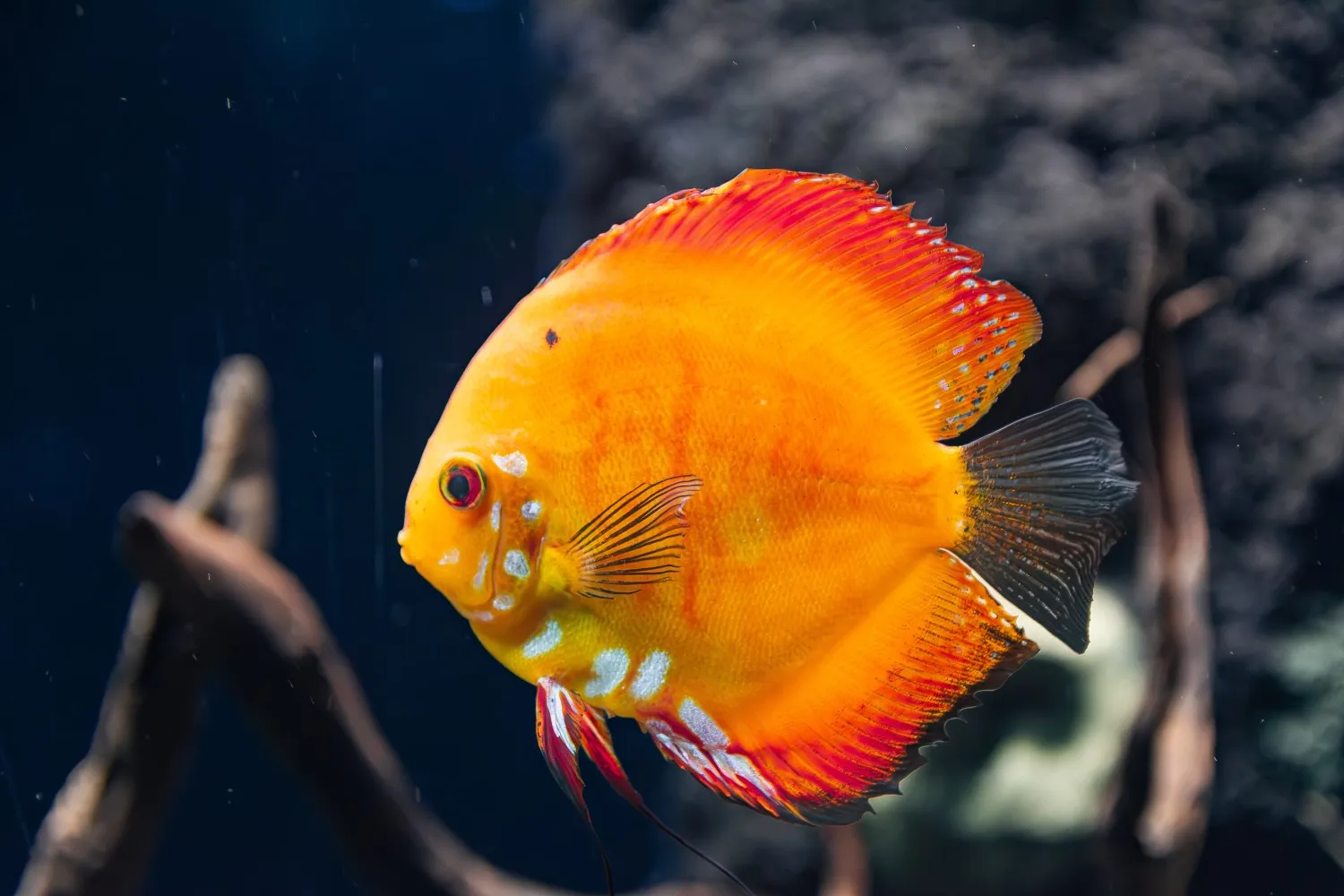
Discus are striking round-bodied cichlids prized for their colors and graceful midwater presence. Native to the Amazon, Symphysodon spp. show a flattened disc shape with bold patterns that mature into vivid reds, blues, and greens. They need very stable, clean water and calm aquariums to show their best colors and behavior. With attentive care they can be rewarding, social centerpiece fish for an experienced hobbyist.

Quick overview
Discus, Symphysodon, Red discus, Blue discus
Peaceful, social, sensitive
200 liters (55 gallons) for a group
Ideal aquarium setup
Discus do best in a planted, stable aquarium that mimics slow Amazon backwaters with warm, soft water and plenty of hiding places. Keep the environment quiet, filtered and well-maintained because they respond poorly to sudden changes. Subdued lighting and stable routines make them feel secure and display vibrant colors.
Provide at least 200 liters (55 gallons) for a small group of 5–6 adults, with larger volumes preferred for bigger groups or mixed community tanks.
Low to moderate lighting is ideal; bright light makes them shy and encourages hiding, while dimmer conditions help color development and reduce stress.
Use broadleaf and stem plants plus floating species like Amazon swords, Java fern and floating water lettuce to create shaded areas and soften flow while offering visual cover.
Low to gentle flow to mimic slow-moving waters and avoid stressing the fish.
Fine sand or smooth dark gravel suits their natural habitat and complements their colors.
Include driftwood, smooth roots and leaf litter to recreate an Amazon feel and provide grazing surfaces; leave open midwater swimming areas for their natural schooling.

Behavior and temperament
Discus are social and do best in small groups where they form loose hierarchies; shy individuals may hide until they feel safe. They are relatively slow-moving and calm but can become stressed by boisterous tankmates or sudden water changes. Dominance shows mildly in groups, especially around feeding or when breeding pairs form.
Diet and feeding
Discus are omnivores with a preference for protein-rich foods and benefit from a varied diet to maintain color and health. They have relatively small stomachs so feed small portions multiple times per day and rotate frozen, live and prepared foods for best results.
What they eat in nature
Insect larvae, small crustaceans, worms, plant detritus.
What to feed in the aquarium
- High-quality discus pellets or granules.
- Frozen bloodworms and brine shrimp.
- Beef heart mixes or prepared frozen mixes.
- Occasional live blackworms or glassworms.
Feeding schedule
Feed small portions 2–3 times daily, offering only what they consume in 2–3 minutes.
Special dietary needs
No strict needs, but regular small portions of high-protein frozen or live foods improve growth and coloration.
Daily:
Offer two small protein-rich meals daily, supplemented by a small vegetable or spirulina portion if they accept it.
Weekly:
Include one day with richer treats like thawed beef heart mixes or live foods to condition color and breeding readiness.
Always:
Always provide a varied diet and remove uneaten food quickly to protect water quality.
Tankmate compatibility
Choose calm, similarly sized or smaller fish that prefer warm, soft water; avoid fast, nippy or territorial species. Good tankmates share water parameter needs and stay out of the discus' direct space during feeding to reduce stress.
Yes with caution — small shrimp may be eaten by adults and water parameter differences can stress both species, so choose larger, hardy shrimp only if monitored.
Snails can be compatible and help with algae control, though some species may reproduce rapidly in stable warm tanks.
Suitable tankmates include small tetras like cardinal tetras and rummy nose tetras or peaceful bottom dwellers such as Corydoras catfish which share similar water preferences.
Avoid boisterous or territorial cichlids and many barbs or large rainbowfish because they can outcompete or stress discus and may nip fins.
Keep discus in groups of at least five to six to allow natural schooling and reduce aggression; pairs will form within the group when breeding but need community support to thrive.
Breeding
Breeding discus requires excellent water quality and a stable pair bond; they form monogamous pairs that lay eggs on vertical surfaces and fiercely guard them. Successful breeding is common among hobbyists who maintain pristine parameters and condition pairs with high-quality foods.
Difficulty
Breeding is medium to hard because discus need very stable water parameters, selective conditioning, and diligent care of fry while parents establish feeding behaviors.
How they breed
They are substrate spawners that lay eggs on flat or vertical surfaces and provide strong parental care, including feeding fry with skin mucus.
Best setup for breeding
Use a small dedicated breeding tank with soft acidic water, a flat breeding slate or broad leaf, low light, and a gentle sponge filter; keep conditions rock-steady and feed parents rich live/frozen foods before spawning.
Feeding the babies
Fry initially feed on parental mucus; once free-swimming offer rotifers or freshly hatched baby brine shrimp for the first food. Transition gradually to crushed high-protein microfoods and finely powdered prepared diets as they grow.
Pro tips
Perform frequent small water changes to keep parameters ultra-stable and water pristine.
Condition breeders with a mix of frozen live foods to improve spawning readiness and color.
Keep lighting subdued and provide floating plants to reduce stress and mimic their natural habitat.
Poor water quality
Discus are highly sensitive to ammonia, nitrite and nitrate spikes so regular water changes and efficient filtration are essential to prevent illness and stress.
Stress coloring
Faded or darkened coloration often signals stress from poor water conditions, aggressive tankmates or bright light; restore stability and reduce stressors to recover vibrant color.
Parasites and infections
Skin and gill parasites or secondary bacterial infections occur if water quality slips or fish are weakened; quarantine new arrivals, maintain cleanliness and treat promptly under diagnosis.
Typical beginner mistakes
- Overstocking small tanks with too many discus.
- Infrequent water changes leading to poor water quality.
- Mixing with incompatible, boisterous tankmates.
Short summary
Discus are beautiful, social centerpiece fish that need warm, soft, very stable water and calm planted tanks to thrive. They reward attentive keepers with striking color and interesting social behavior but are best for hobbyists comfortable with precise water maintenance.
Frequently asked questions (FAQs)
What water temperature do discus need?
Discus prefer warm water around 28–30°C (82–86°F) and do best with consistent temperatures.
How many discus should I keep together?
Keep at least five to six discus together so they can form a stable social group and reduce bullying.
Can discus live with tetras?
Yes, peaceful tetras like cardinals or rummy noses that prefer similar soft acidic water make good tankmates.
How often should I change water for discus?
Frequent partial water changes, often 20–30% two to three times weekly, help maintain the high water quality discus require.
Are discus difficult to breed?
Breeding takes effort because they need pristine water and conditioning, but pairs provide strong parental care and can raise fry successfully under good conditions.
What should I feed juvenile discus?
Start juveniles on baby brine shrimp or rotifers, then transition to finely crushed pellets and frozen microfoods as they grow.