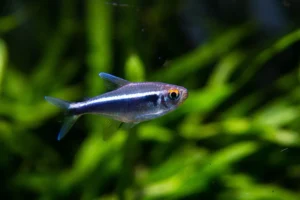
At a glance
Peaceful
Pair oriented
Colorful
Substrate lover
Description
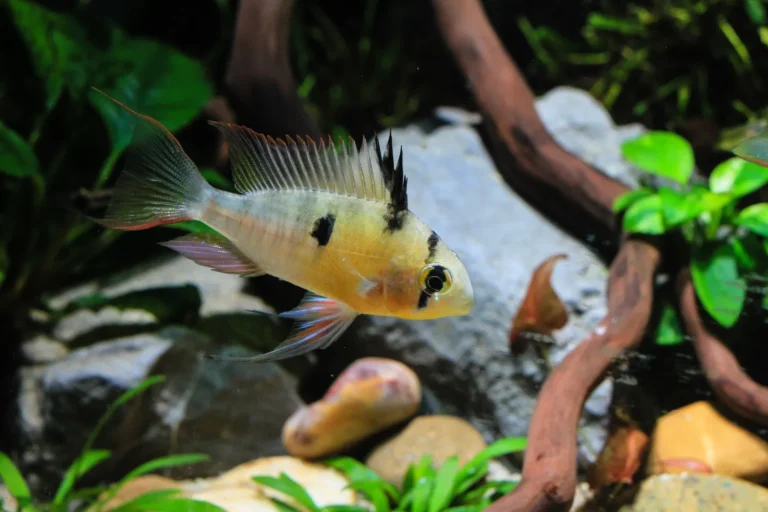
The Bolivian Ram (Mikrogeophagus altispinosus) is a small, attractive cichlid prized for its warm golds, blues and red highlights and a distinctive dark lateral spot. It thrives in planted aquariums that mimic slow South American streams and displays calm but territorial behavior when breeding. Care requires stable water conditions, moderate temperatures and a varied diet to keep colors vivid. With the right setup they are peaceful, engaging, and rewarding for beginner to intermediate aquascapers.

Quick overview
Bolivian ram, Butterfly ram, Altispinosa ram
Mikrogeophagus altispinosus
60 liters (15 gallons) for a pair
Freshwater, pH: 6.0–7.5, Temp: 24–28°C
Ideal aquarium setup
Bolivian rams do best in a planted tank with subdued light, stable water chemistry and gentle filtration that resembles slow-moving South American streams. Provide plenty of hiding spots, leaf litter and open midwater swimming areas so they can establish small territories. Stable temperatures and clean water are essential to keep stress low and colors bright.
A minimum of 60 liters (15 gallons) is suitable for a pair, while a 100 liters (26 gallons) or larger tank is recommended for a small group of 4–6 to allow natural social behavior.
Low to moderate lighting is ideal since bright light often makes them shy; floating plants can diffuse light and help them feel secure. Strong light is fine if balanced by ample cover and shaded zones.
Broadleaf plants like Amazon swords, Cryptocoryne and Java fern provide cover and territories, while stem plants and floating species create shaded zones. Plants also stabilize water chemistry and support microfauna for grazing.
Low to moderate flow, reflecting their origin in slow-moving waters and preventing stress from strong currents.
Fine sand or smooth small-grain gravel suits their substrate-sifting behavior and looks natural with leaf litter.
Driftwood, smooth rocks and leaf litter create caves and sheltered territories while leaving open midwater space for swimming. Flat stones work well as focal points and breeding sites.
Behavior and temperament
Bolivian rams are peaceful, social cichlids that form monogamous pairs and show gentle territoriality around a nesting site. They are active midlevel swimmers but spend much time near the substrate sifting for food. They are sensitive to abrupt changes and bright light, so a stable, planted environment helps them thrive. Males are often slightly larger and more assertive during breeding.
Diet and feeding
They are omnivores with small mouths and a preference for protein-rich foods, so feed a mix of high-quality flakes or pellets plus frozen or live foods. Variety supports coloration and breeding condition, and smaller meals several times per day match their feeding style. Avoid overfeeding to prevent water quality problems.
What they eat in nature
Insect larvae, small crustaceans, worms and detritus.
What to feed in the aquarium
- High-quality sinking micro pellets or small cichlid pellets.
- Frozen or live bloodworms, daphnia and brine shrimp.
- Vegetable matter such as blanched spinach or spirulina flakes.
Feeding schedule
Feed small portions two to three times daily, offering only what they consume within a few minutes.
Special dietary needs
No strict needs, but regular live or frozen protein and some vegetable matter improve health and coloration.
Daily:
Feed small portions of high-quality flakes or sinking pellets twice a day and include a small live or frozen treat as a snack.
Weekly:
Offer protein-rich meals like frozen bloodworms or brine shrimp 2–3 times per week and include a vegetable-based feeding once weekly.
Always:
Always avoid overfeeding and perform regular water changes to remove uneaten food and maintain stable water quality.
Tankmate compatibility
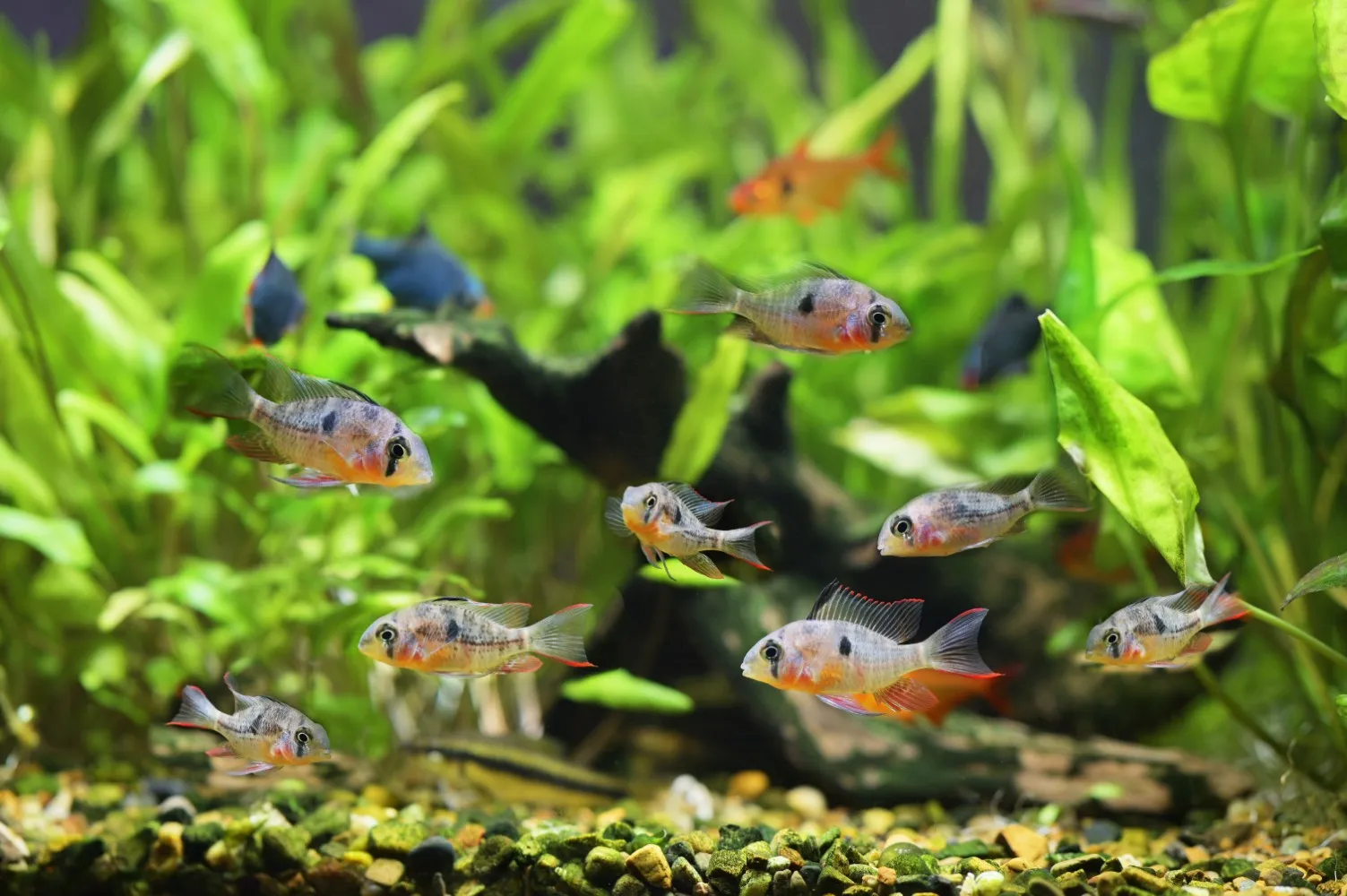
They pair well with peaceful, similarly sized fish that occupy different niches, such as small tetras, rasboras and Corydoras, which reduces competition. Avoid large or aggressive cichlids and fin-nippers that harass rams and disrupt territories. Match tankmates by size and temperament to keep stress low.
Yes with caution — adults usually ignore larger shrimp but will eat baby shrimp and very small species, and some individuals may nip occasionally.
Generally compatible with most snails; snails help clean algae and are usually left alone by Bolivian rams unless the snail is extremely tiny.
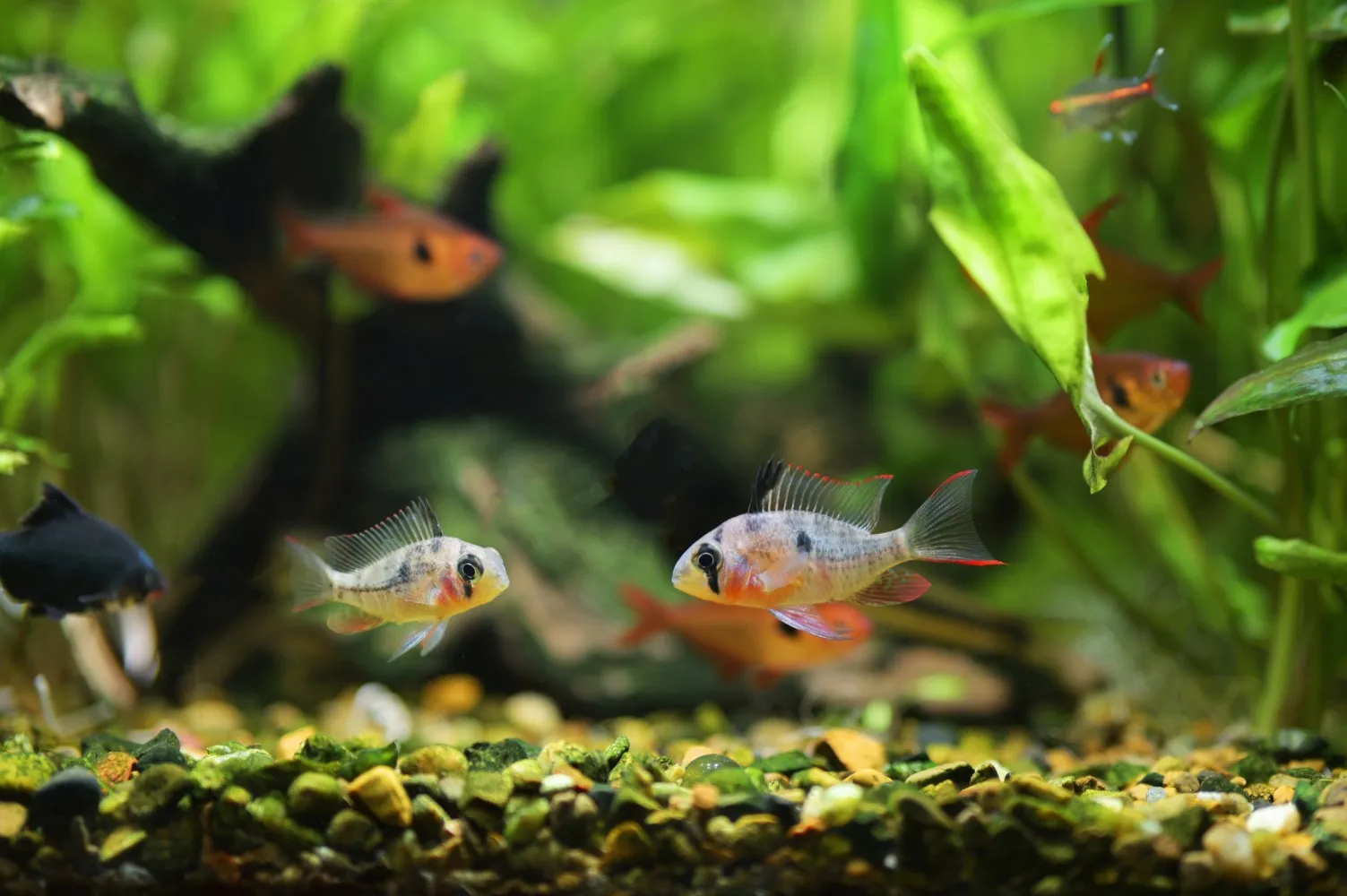
Good companions include small tetras such as neon or cardinal tetras, peaceful rasboras and bottom-dwellers like Corydoras catfish which occupy different zones in the tank.
Avoid boisterous or larger tankmates such as tiger barbs, large gouramis or bigger cichlids because they can harass rams and outcompete them for food.
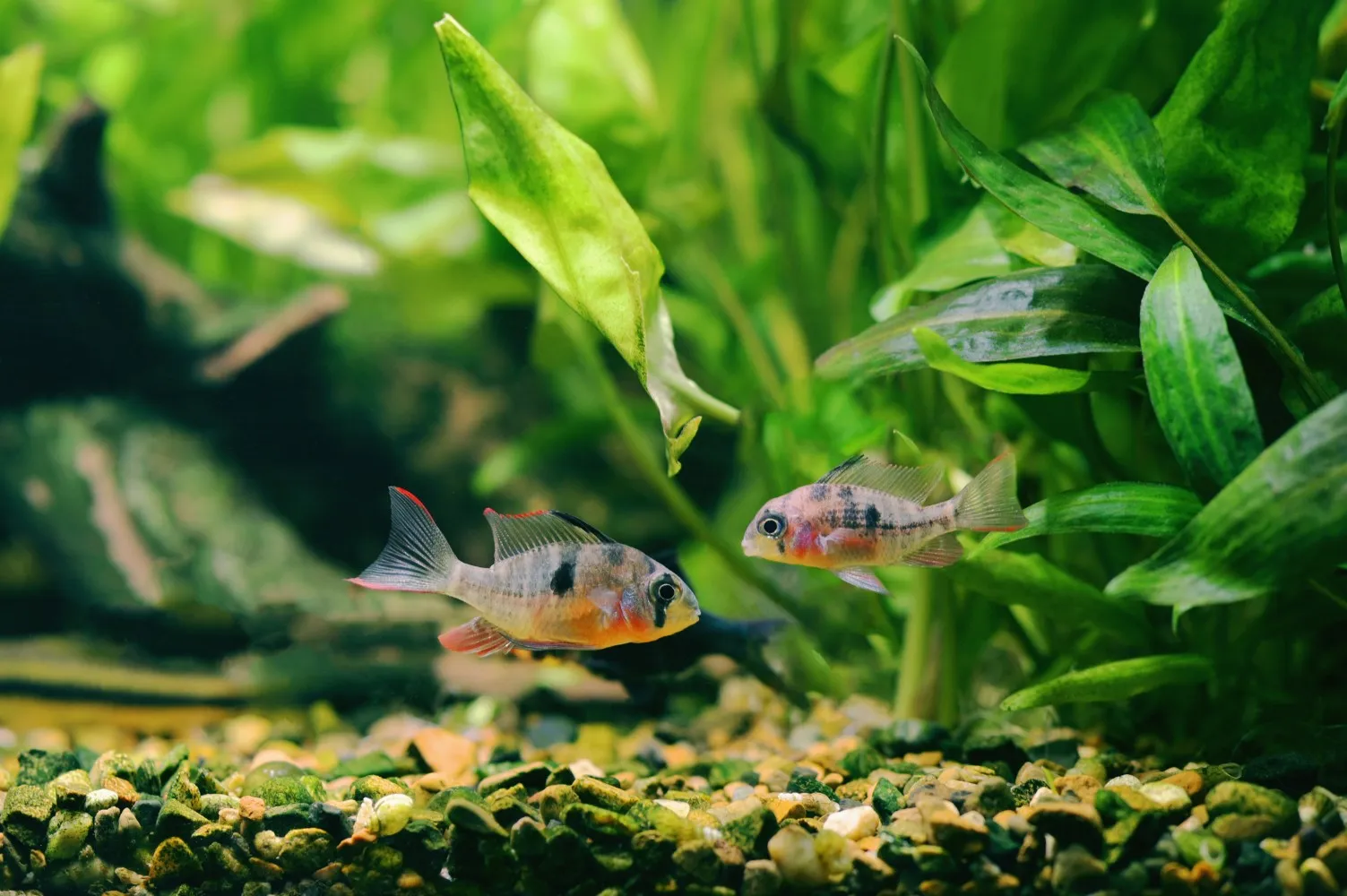
Rams form stable pairs, so keeping a single male with a female or a small group of 4–6 allows natural pairing; expect males to display dominance in groups. When housing multiple males, provide plenty of space and hiding spots to reduce chases.
Breeding
Breeding is accessible for hobbyists who provide stable water and good nutrition; pairs are attentive parents and will guard eggs and fry. They typically clean a flat surface or clear a patch of sand to lay eggs and both parents care for the brood. Slightly softer, warmer water and high-protein foods encourage spawning.
Difficulty
Moderate difficulty since pairs form naturally but require stable water, quality food and subdued conditions to trigger spawning and to keep parents from abandoning eggs. Raising fry requires careful feeding and excellent water quality.
How they breed
Substrate spawners with biparental care, laying eggs on flat stones or cleared patches of sand.
Best setup for breeding
Use a small breeding tank with fine sand, flat stones, leaf litter, subdued light and gentle filtration such as a sponge filter, at about 26–28°C and slightly acidic to neutral pH. Condition the pair with frequent high-quality live or frozen foods before breeding.
Feeding the babies
When fry are free-swimming start with infusoria or liquid fry foods, then transition to newly hatched brine shrimp and microworms as they grow. Gradually introduce finely crushed flakes or micro pellets as the fry develop.
Pro tips
Keep water very stable during conditioning and after spawning to prevent parent stress.
Use floating plants to break bright light and create sheltered microhabitats.
Perform regular small water changes to maintain water quality without shocking the fish.
Ich outbreaks
Ich and similar parasites often appear after temperature swings or when new fish are introduced; treat promptly with appropriate medication, quarantine new arrivals and stabilize tank conditions.
Stress and hiding
Bright light, sudden parameter changes or aggressive tankmates will make rams hide and lose color; add cover, reduce light and improve water stability to reduce stress.
Poor coloration
Dull color is usually a sign of poor diet, stress or suboptimal water quality; improve diet with varied protein and vegetable foods and correct water parameters to restore vibrancy.
Typical beginner mistakes
- Overstocking and weak filtration leading to poor water quality.
- Rapid water parameter changes that shock sensitive rams.
- Overfeeding which causes waste build-up and health issues.
Short summary
The Bolivian Ram is a small, colorful and peaceful cichlid suited to planted aquascapes with stable water and gentle flow. With a varied diet, subdued lighting and appropriate tankmates they are rewarding and relatively easy to keep for beginner to intermediate aquarists.
Frequently asked questions (FAQs)
How large do Bolivian rams get?
Adults typically reach about 6–7 cm (2.5–2.8 inches) in length, with males often slightly larger than females.
Are Bolivian rams good for community tanks?
Yes, they do well with peaceful, similarly sized fish like small tetras, rasboras and Corydoras as long as tankmates are not aggressive or fin-nipping.
What water parameters do they prefer?
They prefer pH around 6.0–7.5, moderate softness to hardness (3–12 dGH) and temperatures of 24–28°C, with very stable conditions.
Can they be bred in home aquariums?
Yes, they are substrate spawners and pairs will care for eggs and fry if given stable water, subdued light and high-quality foods to condition them.
Will they eat shrimp in my tank?
Adults may ignore larger shrimp but will often eat baby shrimp or very small species, so keep that in mind when mixing with shrimp.
What is the best tank setup for them?
A planted tank with fine sand, leaf litter, driftwood, shaded zones and gentle filtration provides an ideal environment that mimics their natural habitat.