At a glance
Stem plant
Fast growth
Medium–high light
Color change
Description
Rotala rotundifolia is a popular aquarium stem plant known for its delicate leaves and ability to develop pink to red hues under good light and nutrients. The most common common name is Roundleaf rotala and it forms thin upright stems with small rounded leaves in alternating pairs. It is versatile in planted tanks and responds quickly to trimming and propagation by cuttings. Care is straightforward but stronger light, regular fertilization, and optional CO₂ produce the best color and compact growth.
Quick overview
Roundleaf rotala, Dwarf rotala, Rotala
Leaves ~2–6 mm, stem height ~10–40 cm
Ideal use in aquascaping
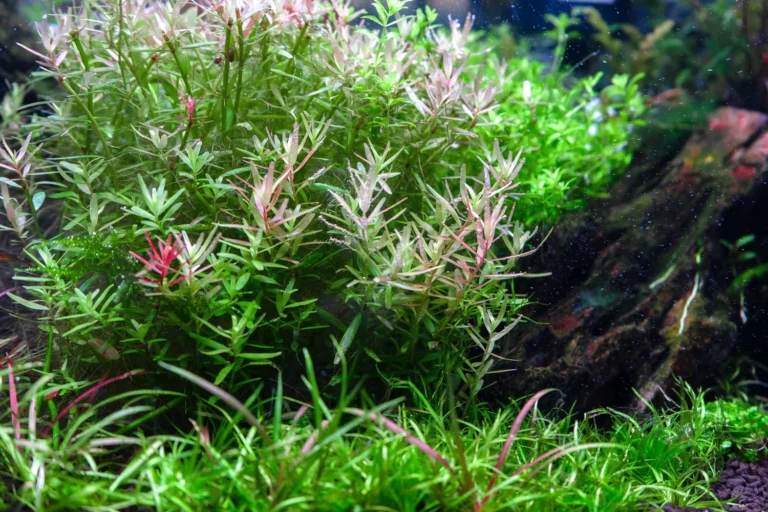
Rotala rotundifolia makes excellent background masses and color accents when planted in groups. Its fine texture contrasts well with broadleaf foreground plants and hardscape elements and it is useful for creating depth and color gradients.
Use in the rear or mid-rear of the layout as a tall background mass to provide height and a colorful backdrop. Plant in clumps to form hedges or mixed with other stem plants to create texture layers.
Good styles for this plant
Works well in Dutch and high-contrast nature aquascapes and is commonly used in planted community tanks where vertical color is needed. It suits layouts that benefit from repetitive stem patterns and grooming.
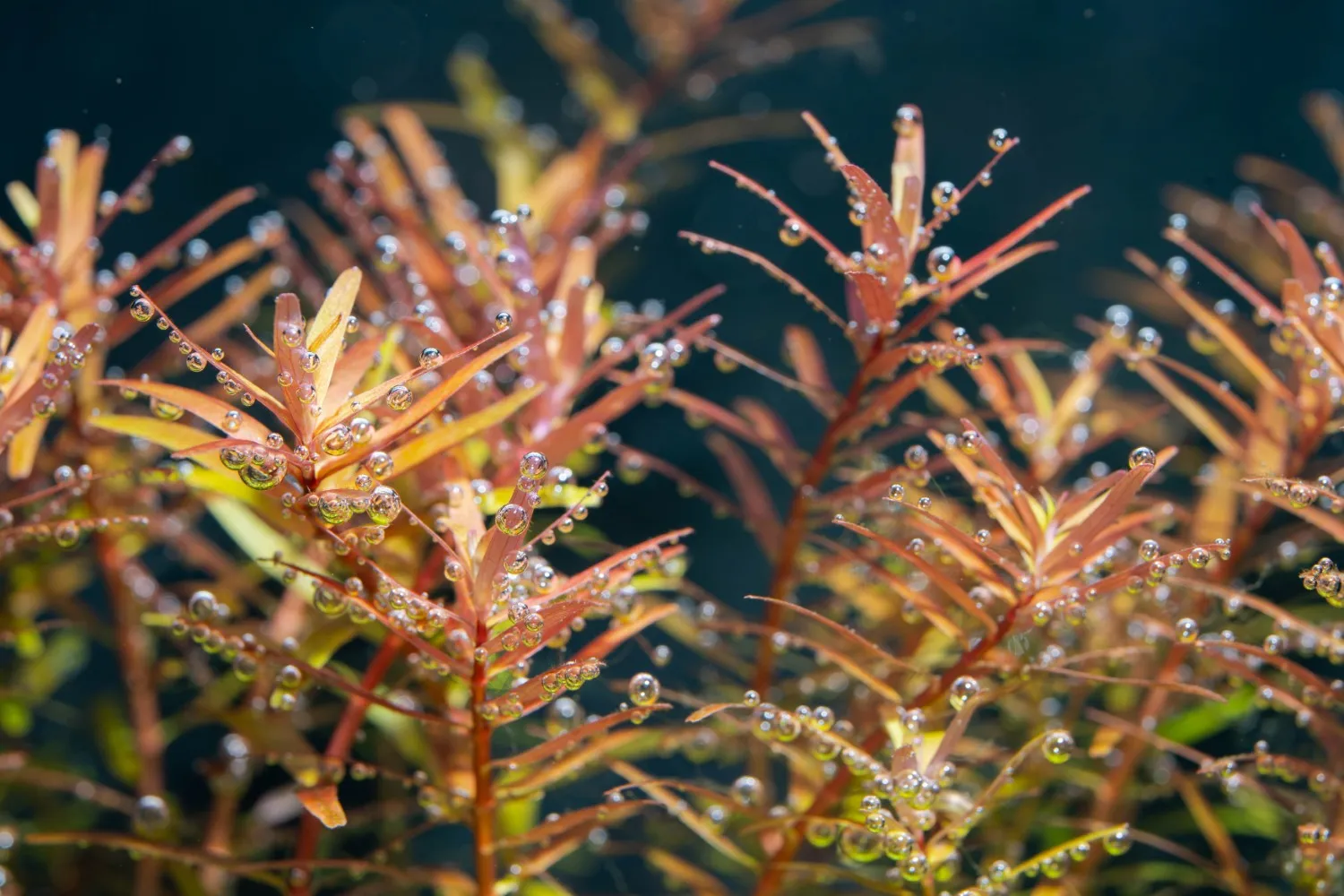
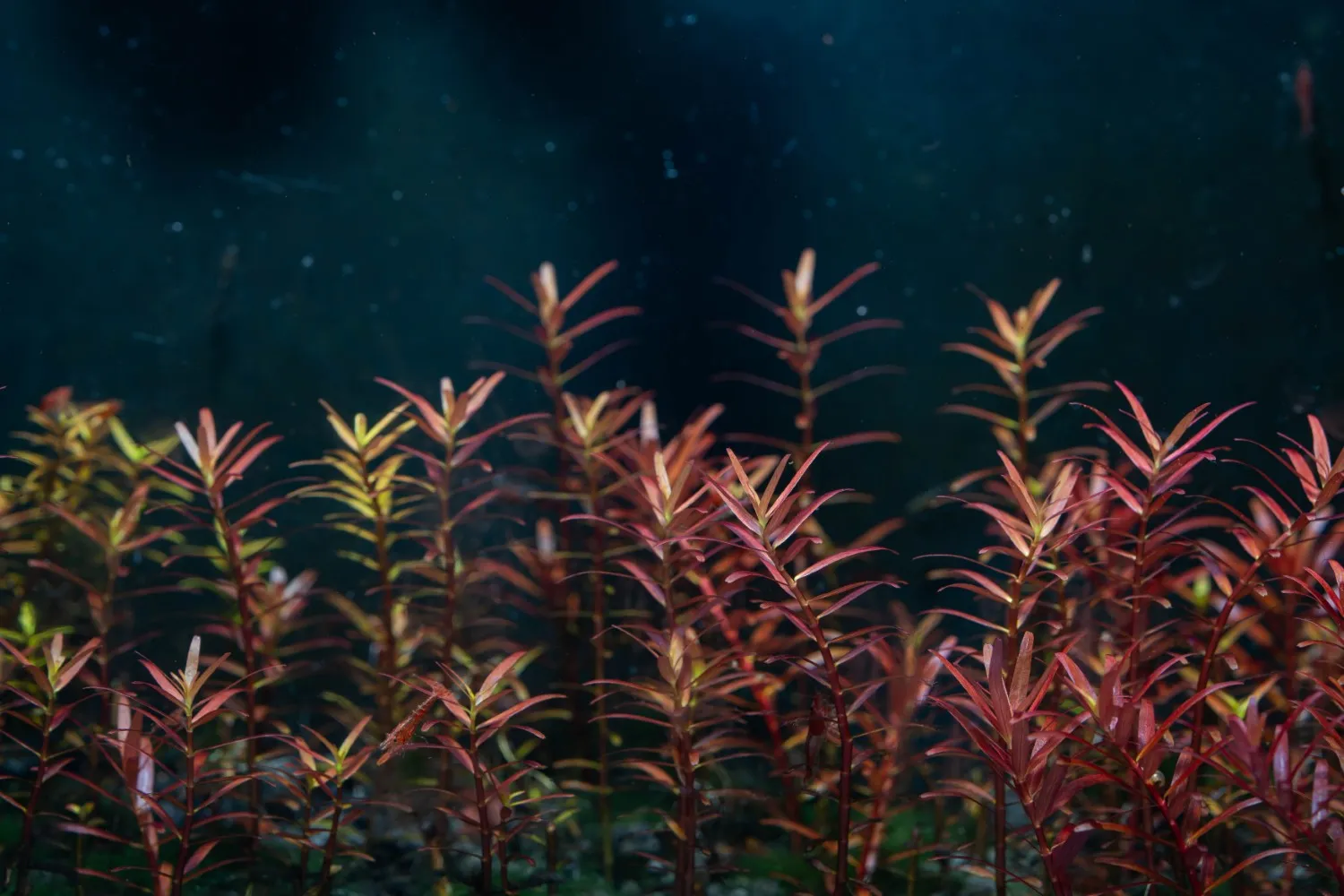
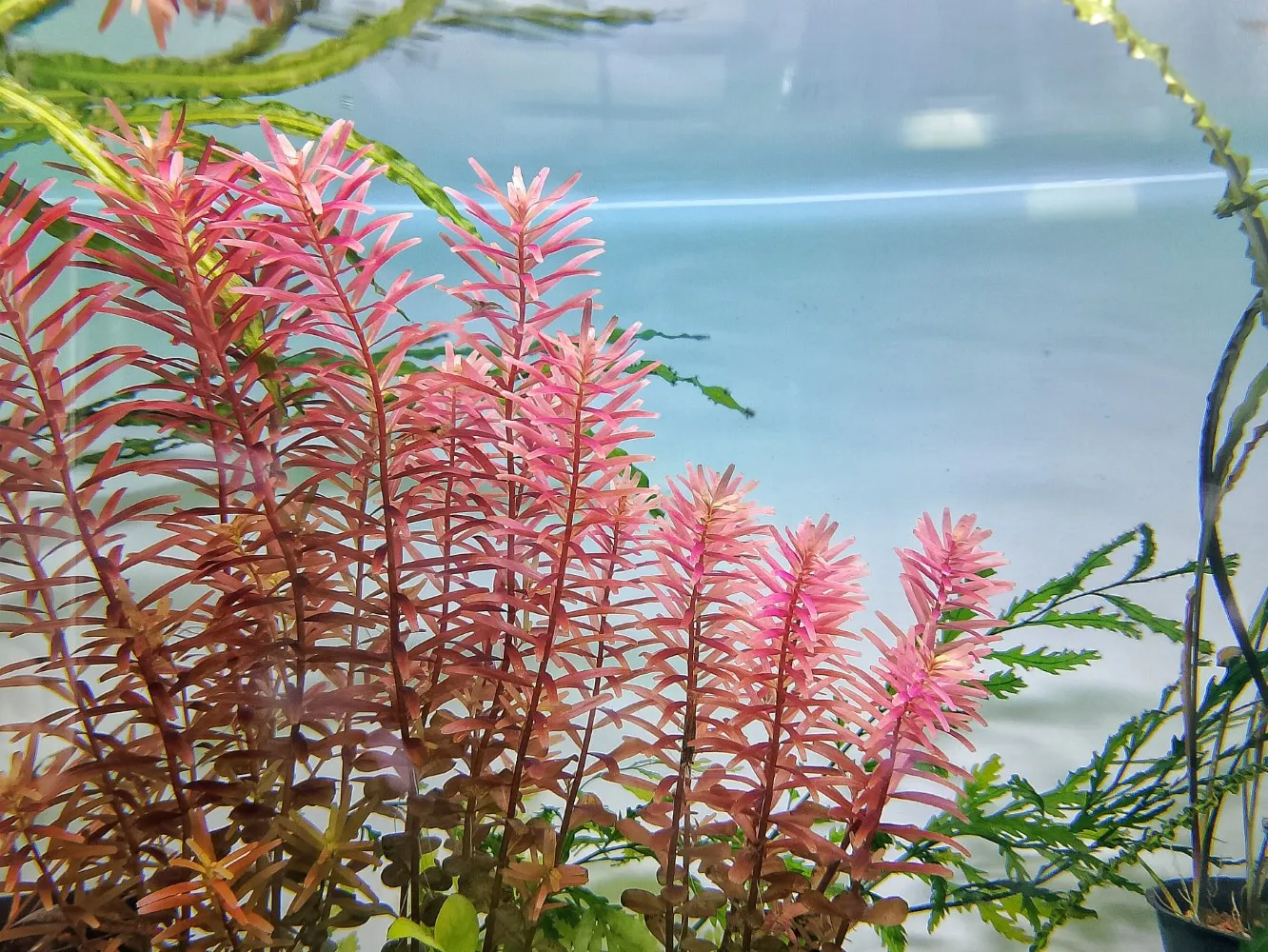
Small rounded leaves create a fine textured appearance and under strong light with nutrients the tips and upper leaves take on pink to red tones. The color contrast brightens the mid-to-background and adds visual interest.
Scales easily from medium to large tanks where full tall stems can develop, and can be kept shorter for smaller tanks by frequent trimming. Dense plantings need space to avoid shading each other.
Light and CO₂
Medium–high. Stronger light promotes compact growth and red coloration while low light causes stretching and green leaves.
CO₂ is recommended for faster growth and better color but the plant will survive without injection at the cost of stretchier, less colorful stems.
8–10 hours daily. A consistent photoperiod helps steady growth and reduces algae risk.
Substrate and nutrients
Moderate root nutrients help early growth but Rotala takes most nutrients from the water column so regular dosing of macros and micros is important. Iron and potassium boost coloration while balanced nitrates prevent deficiency symptoms.
Substrate preference
A nutrient-rich aquarium soil encourages stronger root development and healthier stems but fine gravel or sand with root tabs also works well. Good water circulation around stems helps deliver dissolved nutrients.
Nutrient needs
Regular liquid fertilization plus occasional root tabs provides both macro and microelements compatible with most substrates and supports compact colorful growth.
- Dose a complete macro fertilizer weekly and add iron if red tones are weak
- Use root tabs for long-term substrate nutrition in deeper plantings
- Monitor nitrates and adjust dosing to avoid deficiencies
Planting and propagation
Plant as individual stem bunches by inserting the trimmed ends into the substrate and allow tops to regrow; propagation is easy by cutting and replanting tips. Frequent trimming encourages bushier growth and denser carpets when planted closely.
How to plant
- Trim stems to desired length and separate into small bundles
- Insert each bundle a few millimetres into the substrate
- Space bundles a few centimetres apart and press gently
Propagation method
Propagate by cutting healthy apex stems and replanting trimmed tips or by layering lower nodes; cuttings root quickly in substrate. You can also let cut tops float until roots form then plant.
- Take cuttings from the upper healthy growth for best rooting
- Remove lower leaves before planting to avoid rot
- Replant trimmed tops immediately to fill gaps
Pruning and maintenance
Regular trimming keeps Rotala compact and prevents legginess; remove lower leaves from older stems to encourage new side shoots. Replace older stems with new cuttings to maintain a fresh dense appearance.
Trimming style
Cut stems just above a pair of leaves or node to encourage branching and create bushier masses.
Maintenance frequency
Every 1–3 weeks depending on growth rate and light levels with faster schedules under higher light and CO₂. Trim more often if it begins to block sightlines or shade lower plants.
Growth and health indicators
What healthy growth looks like
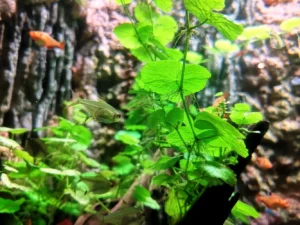
Healthy plants are compact with dense leaf pairs along upright stems and show bright green to pink or red upper leaves under good conditions. New growth should be vigorous and form tight clusters at the tips.
Signs it needs attention
Leggy stretched stems, pale or yellowing leaves, and loss of lower leaves indicate insufficient light or nutrients. Persistent algae on leaves or slow growth can signal imbalanced fertilization or poor circulation.
Tankmates and compatibility
Generally compatible with most peaceful community species but avoid tankmates that uproot or aggressively browse plants. Soft-bodied shrimp and small snails often coexist well and help keep leaves clean.
Most small peaceful fish, shrimp, snails, and planted community species thrive alongside Rotala rotundifolia.
Avoid pairing it with large digging or plant-eating species like cichlids or goldfish that will uproot or eat the stems.
If you want strong red coloring focus on light, iron dosing, and stable nutrients. Pinching tops and replanting cuttings keeps the mass dense and prevents shading of lower leaves.
Pro tips for this plant
Trim the tops frequently to maintain a bushy, compact look and prevent legginess.
Boost iron and potassium if you want pink to red tints in the upper leaves.
Plant in small dense bunches for quicker carpeting effect and fuller appearance.
Leggy stems
Stretching and long internodes usually mean light is too low or nutrients are imbalanced; increase light and prune back to encourage compact regrowth.
Poor coloration
Leaves stay green when iron, light, or CO₂ is insufficient; improve dosing and light or add CO₂ to bring out red tones.
Algae on leaves
Algae often appears with excess light or unstable nutrients; reduce photoperiod, improve circulation, and balance fertilization to clear it up.
Typical beginner mistakes
- Planting too sparsely so stems shade each other
- Expecting red color without sufficient light and nutrients
- Failing to trim regularly leading to leggy growth
Short summary
Rotala rotundifolia is a versatile stem plant valued for its fine texture and potential red coloration under good light and nutrients. It is easy to propagate and maintain with regular trimming, balanced fertilization, and optional CO₂ for best results.
Frequently asked questions (FAQs)
How fast does Rotala grow?
Growth is generally fast under medium to high light and with sufficient nutrients; expect visible trimming needs every 1–3 weeks.
Does it need CO₂ injection?
CO₂ is not strictly required but is recommended for compact growth and stronger red coloration.
Increase light, add iron and potassium, and maintain stable overall nutrient levels to encourage red pigments in the upper leaves.
Can shrimp eat or damage it?
Most shrimp do not harm the plant and actually help keep leaves clean, but heavy grazing by some species can slow new growth.
How do I propagate Rotala?
Take healthy stem cuttings, remove lower leaves, and plant the trimmed tips into the substrate where they will root quickly.
Is it suitable for beginners?
Yes, it is suitable for beginners who provide moderate light and regular nutrient dosing, though achieving red coloration is easier with more experience.