At a glance
Peaceful
Algae grazer
Hardy
Plant-safe
Description
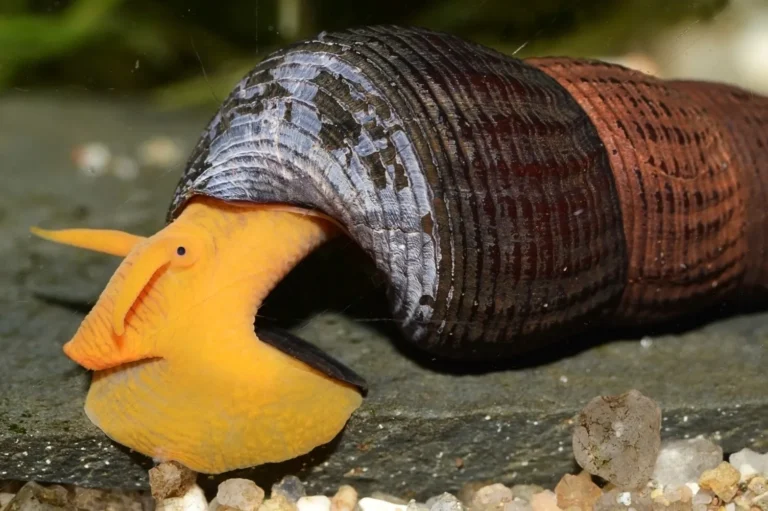
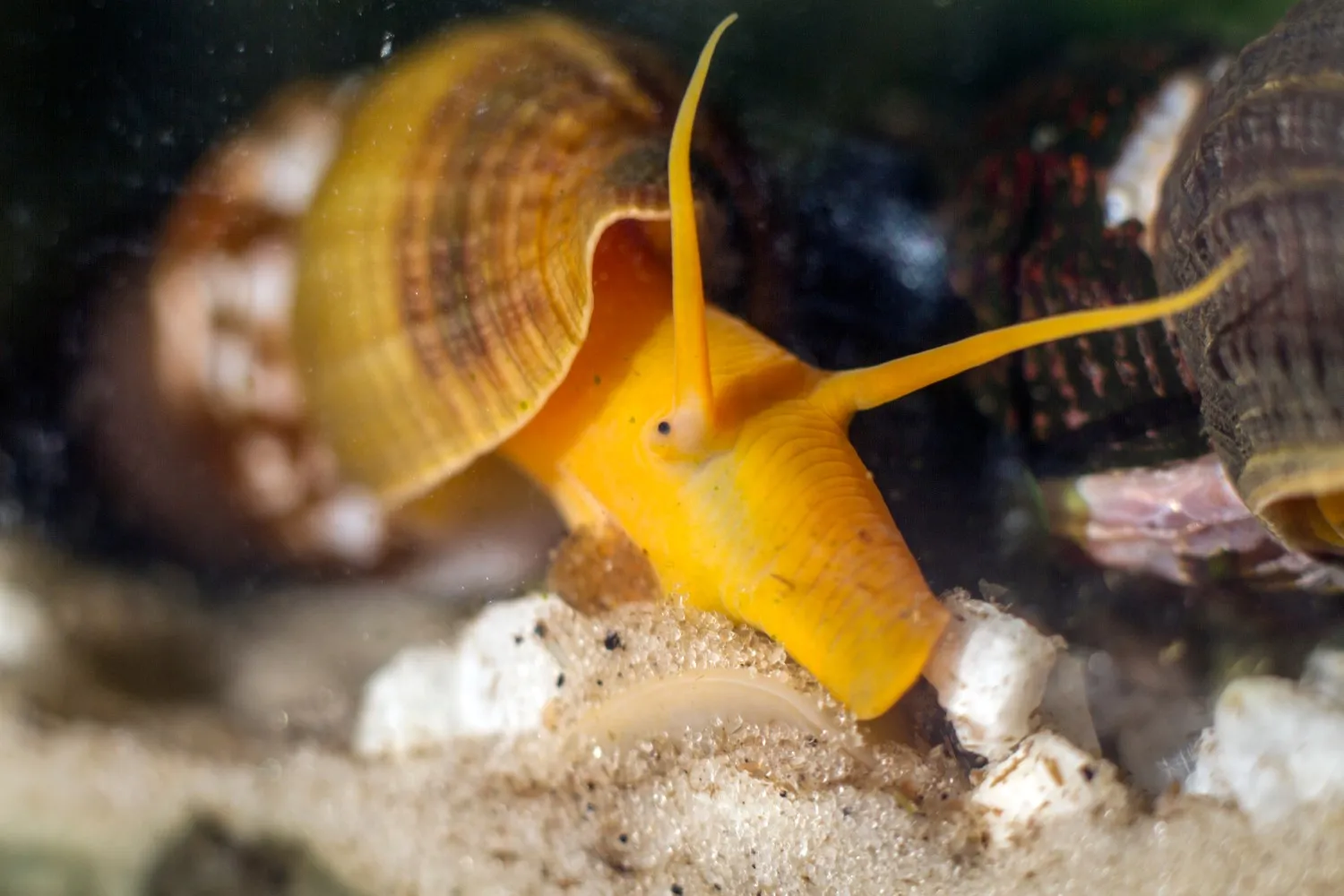
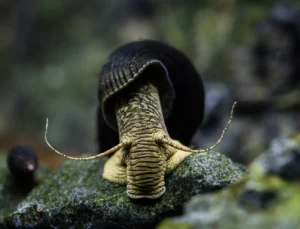
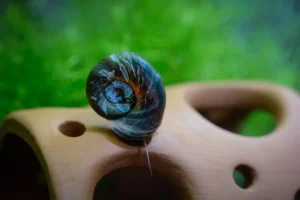
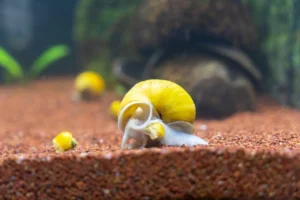
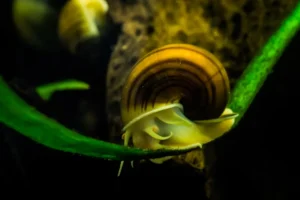
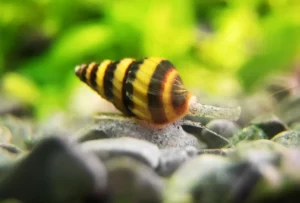
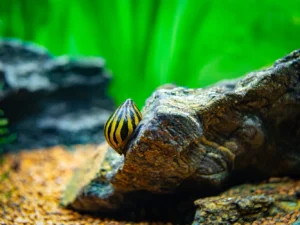
Orange Poso Snail (Tylomelania sp. 'Orange Poso') has a striking elongated shell with warm orange tones and subtle banding that stands out in planted aquascapes. The shell is sturdy and slightly turreted, and individuals move steadily across hardscape and leaves while grazing. These snails are moderately active, spending most time on the substrate and rocks hunting biofilm and algae. They are well suited to planted tanks when water chemistry is stable and calcium is available for shell health.

Quick overview
Orange Poso Snail, Poso orange tylomelania
Tylomelania sp. 'Orange Poso'
20 liters (5 gallons) minimum
Ideal aquarium setup
Provide a stable, well-established planted tank with smooth rocks and driftwood, moderate alkalinity, and consistent calcium levels to support shell growth. These snails prefer stable parameters and benefit from a mature biofilm-rich environment; they are generally plant-safe but avoid very soft delicate leaves. Keep water chemistry slightly alkaline and supply mineral sources like cuttlebone or crushed coral if your source water is soft.
A small group does fine in a 20–40 liter tank, but larger tanks are better for stable parameters and population growth. Aim for steady parameters rather than frequent changes, as these snails are sensitive to sudden swings in pH and hardness.
Fine gravel or sand is ideal; they will crawl rather than burrow and appreciate smooth substrate to protect the foot. Avoid sharp substrates that can damage the shell or body.
Generally plant-safe and unlikely to eat healthy leaves, though extremely young tender plants may be nipped occasionally. Provide plenty of hardscape and leaf surfaces for grazing to keep plants intact.
Use smooth rocks and driftwood to create grazing surfaces and hiding spots, and avoid sharp edges that can chip shells. Caves and overhangs offer shelter and surfaces for biofilm growth.
Low to moderate flow to avoid displacing snails and to allow biofilm to form on surfaces.
Moderate lighting encourages algae and biofilm growth, which is a primary food source for these snails. Strong, long-duration lighting can create excess algae that helps feed them but may require more maintenance.
Behavior and temperament
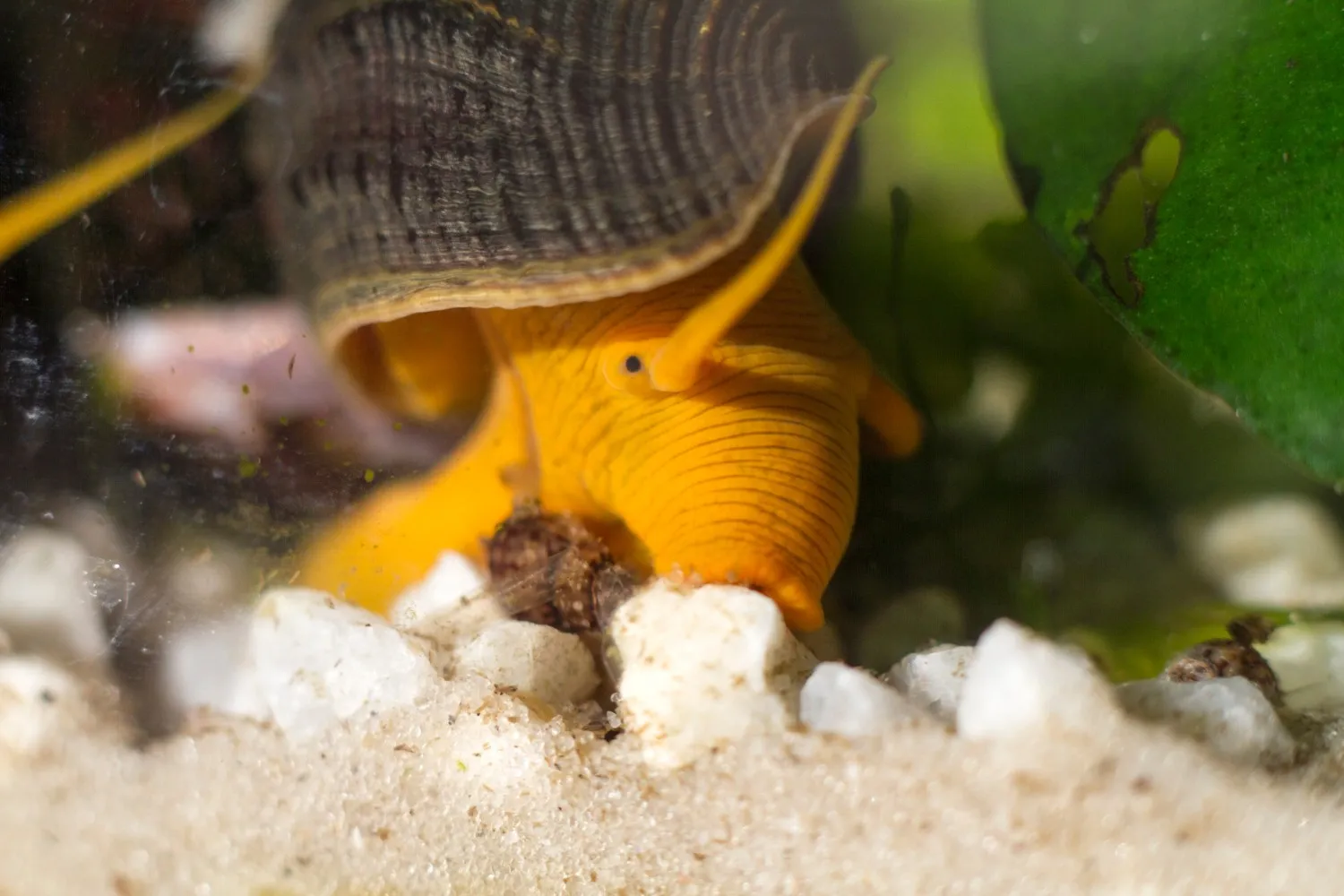
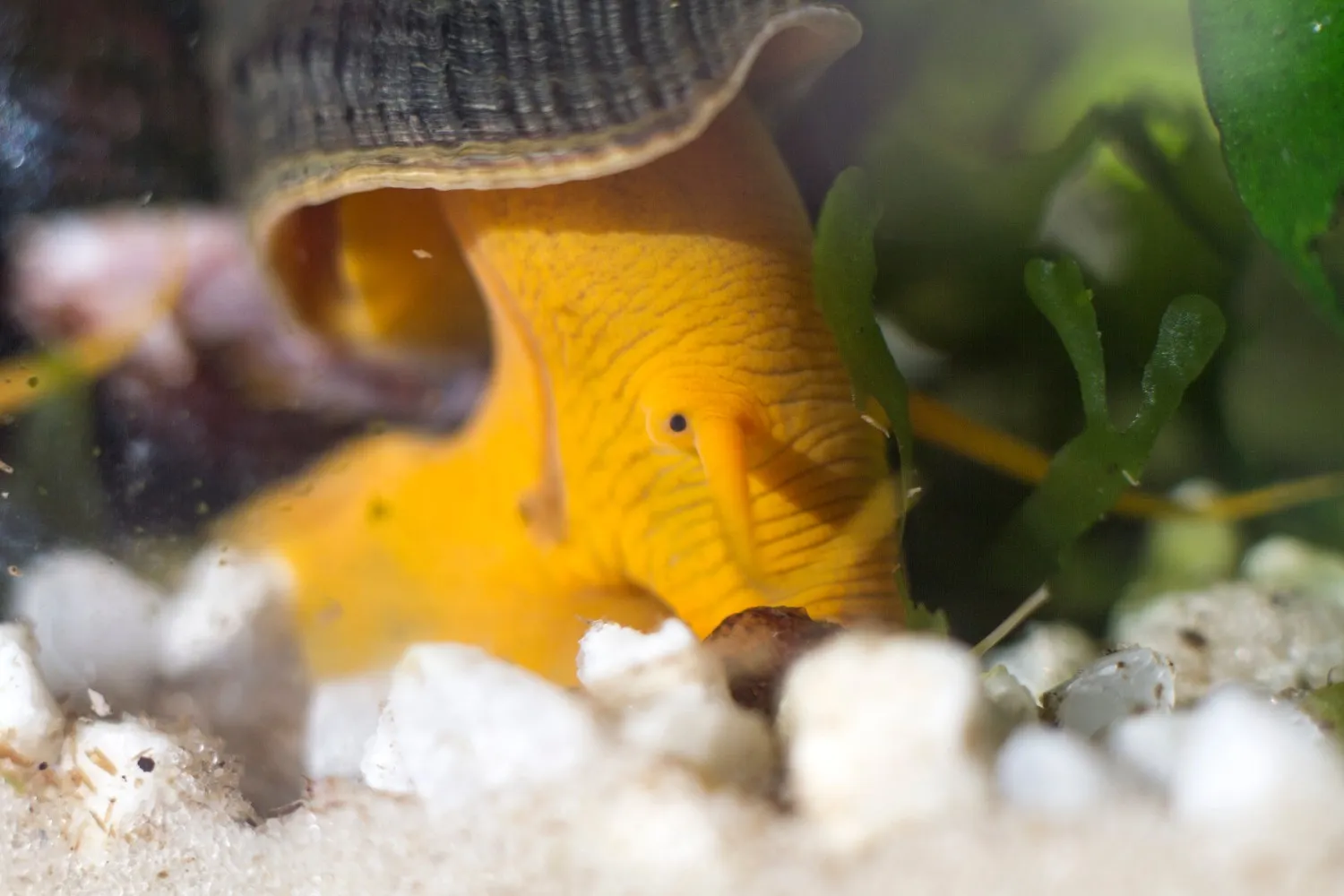
The Orange Poso Snail is a calm, deliberate grazer that spends most of its time on hardscape and substrate searching for biofilm and algae. It is peaceful with tankmates and rarely disturbs plants, though it will explore leaves for food. When stressed by poor water quality or low calcium, it withdraws and becomes inactive until conditions improve. Overall it is well suited to community planted tanks that maintain stable chemistry.
Diet and feeding
These snails primarily graze on algae, biofilm, and detritus but will accept supplemental vegetables and sinking wafers in the aquarium. Offer blanched vegetables and calcium-rich supplements to keep their shells healthy and provide varied nutrition.
What they eat in nature
Algae, biofilm, detritus, decaying plant matter, microorganisms
What to feed in the aquarium
- Algae wafers and sinking pellets
- Blanched zucchini or cucumber
- Blanched spinach or lettuce
- Cuttlebone or crushed coral for calcium
- Fresh biofilm on wood and rocks
Feeding schedule
Feed supplemental vegetables or wafers 2–3 times per week, reducing frequency if there is abundant natural biofilm and algae.
Special dietary needs
Requires a steady source of calcium and minerals to prevent shell erosion; offer cuttlebone or calcium-enriched foods if water is soft.
Daily:
Check activity and grazing signs daily; remove uneaten fresh vegetables after 24 hours to prevent water quality issues.
Weekly:
Offer supplemental vegetables or wafers 2–3 times per week and monitor shell condition weekly.
Always:
Always ensure a steady mineral source like cuttlebone or crushed coral if GH is low and maintain stable water parameters.
Tankmate compatibility
This snail is peaceful and compatible with other calm community species but is vulnerable to predatory fish. It plays a useful role as an algae grazer and cleanup crew member but needs tankmates that will not nip or eat it.
Yes with caution; compatible with most peaceful shrimp but ensure shrimp are not outcompeted for food and provide plenty of surfaces for both to graze.
Generally compatible with other non-aggressive snail species, though they may compete for biofilm and calcium resources.
Small tetras, rasboras, and peaceful gouramis are suitable as they will not harass the snails. Choose fish that do not pick at or crush shells.
Avoid loaches, puffers, large cichlids, and other shell-crushing species, as they will prey on or injure these snails.
They can be kept in groups and will coexist peacefully, but note that populations may grow slowly and require space and minerals to maintain healthy shells.
Breeding
These snails can reproduce in freshwater and are known to have a slow, brood-based reproductive strategy; adults may give birth to live young rather than laying free eggs. Females often brood a small number of juveniles and release fully formed baby snails into the tank, so population increases are gradual. Because they do not breed explosively like some pond snails, growth is easier to manage in a community aquarium.
Pro tips
Offer a cuttlebone piece in the tank to keep calcium levels up and prevent shell erosion.
Introduce them to a mature tank with established biofilm to reduce stress and provide natural food.
Keep water chemistry steady—rapid pH or hardness swings cause inactivity and shell problems.
Shell erosion
Caused by low calcium or acidic water; increase GH and provide calcium supplements and stable pH to repair and prevent further erosion.
Calcium deficiency
Leads to thin or pitted shells and slow growth; add cuttlebone, mineral supplements, or crushed coral and test hardness regularly.
Poor growth
Often due to lack of biofilm or insufficient nutrition; improve tank maturity, offer supplemental vegetables, and check water quality for stability.
Typical beginner mistakes
- Adding them to very soft acidic water
- Not providing mineral/calcium sources
- Keeping with shell-crushing fish
Short summary
The Orange Poso Snail is a peaceful, attractive algae grazer suited to planted aquascapes with stable alkaline water and mineral support. It helps keep surfaces clean without harming healthy plants and requires consistent calcium to maintain a strong shell. Overall care is straightforward for aquarists who maintain stable parameters and provide supplemental calcium.
Frequently asked questions (FAQs)
How large do Orange Poso Snails get?
They typically reach about 2–4 cm (0.8–1.6 inches) in adult shell length, depending on diet and water chemistry.
Do they eat live plants in my aquascape?
They are generally plant-safe and prefer algae and biofilm, though very delicate new leaves might be explored or nipped occasionally.
How do I provide enough calcium?
Add cuttlebone, crushed coral, or calcium-enriched foods and maintain moderate to high GH to ensure steady mineral availability.
Can they live with shrimp and small fish?
Yes, they are compatible with peaceful shrimp and small community fish but should not be kept with shell-crushing or aggressive species.
Will they overrun my tank quickly?
No, they breed slowly and often give birth to a few juveniles at a time, so populations grow gradually rather than explosively.
What water conditions do they prefer?
They prefer slightly alkaline, stable water with pH around 7.5–8.5 and moderate hardness (8–16 dGH) to support shell health.