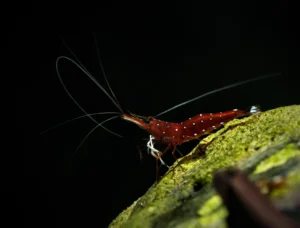
Blue Dream is a mid-blue colour morph of Neocaridina davidi known for its clear, evenly distributed blue tone and good overall opacity. It stands out in planted aquascapes where its colour contrasts with green foliage and dark substrates. Colour depth varies with genetics, diet and water stability, so consistent care brings the best results. This morph suits beginner to intermediate hobbyists who keep stable water and a balanced diet.
Blue Dream stands out for a clear, even mid-blue that sits between pale blue strains and the deeper velvet varieties; it is prized for consistent tone rather than bold patterning. Opacity can range from translucent blue to solid coverage depending on genetics and grading, so selection matters when buying stock. Colour stability improves with mineral-rich water and a diet that supports pigmentation, and some individuals will intensify under darker substrates and balanced lighting. Environmental shifts such as poor diet or unstable water tend to reduce vibrancy, so steady care preserves the best appearance.
Quick overview
Common name(s)
Blue Dream, Blue Velvet, Dream Blue
Color line
Blue
Latin name
Neocaridina davidi
Size
~2–3 cm
Temperament
Peaceful
Tank level
Bottom and mid
Minimum tank size
5 gallons (19 L)
Water type
Freshwater
Difficulty
Easy
Ideal aquarium setup
Blue Dream shows best in lush, planted tanks where its mid-blue colour provides contrast against greens and darker backgrounds. On dark substrate the blue appears deeper, while pale gravel softens the effect, and balanced lighting enhances tone without bleaching; avoid overly bright light which can wash colour. Combine with mosses, ferns, driftwood and fine-leaved plants to provide grazing surfaces and shelter, and keep water stable with gentle filtration.
Behavior and temperament
Calm, constant grazers that spend most time picking at biofilm on plants and hardscape. They are fairly visible on leaves and stones but like dense cover to feel secure. Social and do best in groups where natural behaviour and breeding occur.
Molting, health and color quality
Successful moulting is a good indicator of overall health and therefore of colour quality, since healthy individuals replace damaged exoskeletons and maintain stronger pigment. Keep water stable, offer a calcium source and reduce stress to promote clean, complete moults and lively colour. Colour intensity is tied to diet and minerals as well as genetic potential, so juveniles may take several moults before reaching adult tone. Consistent feeding, biofilm availability and steady parameters support both health and colour development.
Diet and feeding
They graze all day on biofilm and microflora and benefit from scheduled feeding 2–3 times per week with complementary foods. Exceptionally clean tanks or fast-growing colonies may need slightly more feeding to keep growth and colour strong.
How to improve their color with food
Spirulina-rich flakes or powder
Chlorella supplements
Commercial colour foods with carotenoids
Biofilm support like leaf litter and alder cones
Tankmates
Small, peaceful fish like ember tetras, otocinclus and small rasboras are generally safe with adults, along with snails and small catfish. There is a risk of juveniles being eaten by larger or semi-aggressive fish, so if breeding is important consider a shrimp-only tank or heavy planting to protect young. A dedicated shrimp tank gives the best survival for fry and control over selection.
Breeding Blue Dream Shrimp
Breeding Blue Dream is straightforward in stable tanks and they reproduce readily without special triggers; maintain steady water, regular feedings and plentiful hiding spots to encourage berried females. To retain the blue phenotype select the most vivid parents and cull or separate weaker-coloured offspring, as throwbacks to brown or paler wild types can occur when recessive genes are present.
How to keep the colony strong
Keep parameters stable with gentle, regular water changes
Provide varied diet including colour foods and biofilm sources
Select and breed the strongest, most vivid individuals
Maintain dense planting and plenty of hiding places
Common problems
Colour fading
Colour fading often follows unstable water, low mineral content or poor diet; restore stability with regular water changes, gently adjust minerals and offer colour-enhancing foods.
Low opacity
Low opacity or patchy coverage can be down to weak genetics or insufficient nutrition; improve with selective breeding and a varied diet including spirulina or colour foods.
Stress moulting
Frequent failed moults are usually a sign of stress from parameter swings or insufficient minerals; keep conditions steady, maintain calcium and trace elements and reduce disturbances.
Predation losses
Losses of juveniles commonly happen when housed with fish that eat small shrimp; increase hiding places with plants or move to a shrimp-only setup if you want reliable breeding success.
Similar color variants (and how they compare)
Blue Velvet
Blue Velvet tends to be a deeper, more saturated blue with higher opacity and a glossier look, often graded higher for show quality.
Blue Jelly
Blue Jelly is usually paler and more translucent than Blue Dream, offering a softer, glass-like blue that suits aquascapes favouring subtle tones.
Sky Blue
Sky Blue presents a lighter, brighter blue that can read almost pastel under strong lighting, giving a very different visual impact compared with the mid-tone Blue Dream.
Short summary
Blue Dream is a mid-blue Neocaridina davidi morph that offers good colour contrast in planted tanks and is suitable for beginners who maintain stable water. Care focuses on steady parameters, varied feeding and plenty of cover. With selection and proper diet you can build a healthy, colourful colony.
Frequently asked questions (FAQs)
How big do they get?
Adults typically reach around 2–3 cm, with females often being a bit larger than males.
Are they suitable for beginners?
Yes, they are a good choice for beginners as long as you keep water parameters stable and provide hiding places and regular feedings.
Do they need special water chemistry?
No extreme chemistry is needed; aim for stable temperature and pH and moderate hardness, for example 18–26°C and pH 6.5–7.5 with some dissolved minerals.
Can they live with fish?
They do well with small, peaceful species but larger or aggressive fish will eat juveniles, so avoid keeping them with predatory tankmates.
How often do they moult?
Moulting frequency varies with growth and diet but adults moult every few weeks; healthy tanks will see regular successful moults.
Will their colour change over time?
Colour can shift with genetics, diet and water conditions, and juveniles may look paler or different until they mature.
Mette Tulin
Mette Tulin is the creator of Aquascapedia, with more than 15 years of hands-on experience in aquascaping, planted aquariums, and freshwater fish, shrimp, crayfish, and snails. She shares practical insights, curated aquatic life profiles, and inspiration to help others build thriving underwater landscapes.
Aquascapedia uses cookies to ensure the website functions properly and to understand how visitors interact with the content. Analytics cookies are only used with your consent.
Necessary
Always active
Required for the website to function properly. These cookies cannot be disabled.
Preferences
The technical storage or access is necessary for the legitimate purpose of storing preferences that are not requested by the subscriber or user.
Analytics
The technical storage or access that is used exclusively for statistical purposes.Used to understand how visitors interact with the website. No personally identifiable information is used, and analytics cookies are only set with your consent.
Marketing
The technical storage or access is required to create user profiles to send advertising, or to track the user on a website or across several websites for similar marketing purposes.