At a glance
Hardy
Active grazer
Plant-safe
Peaceful
Description
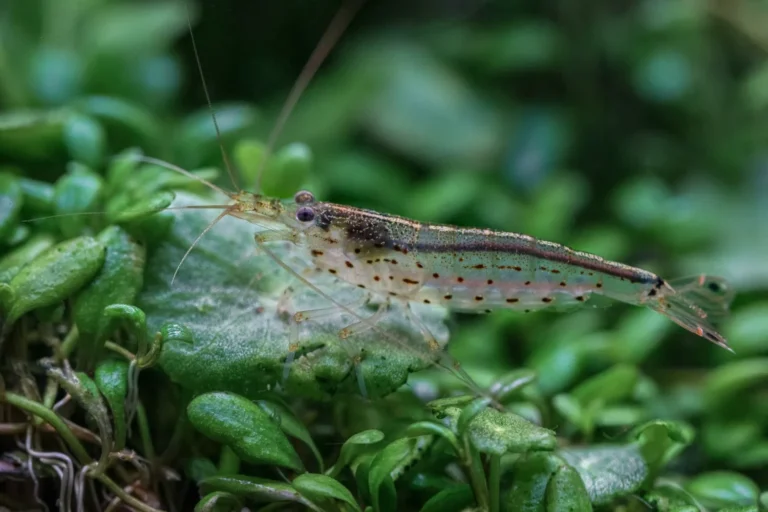
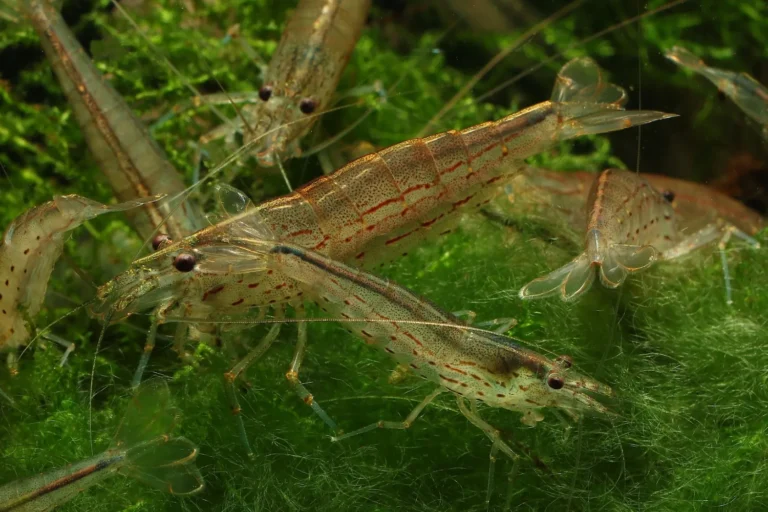
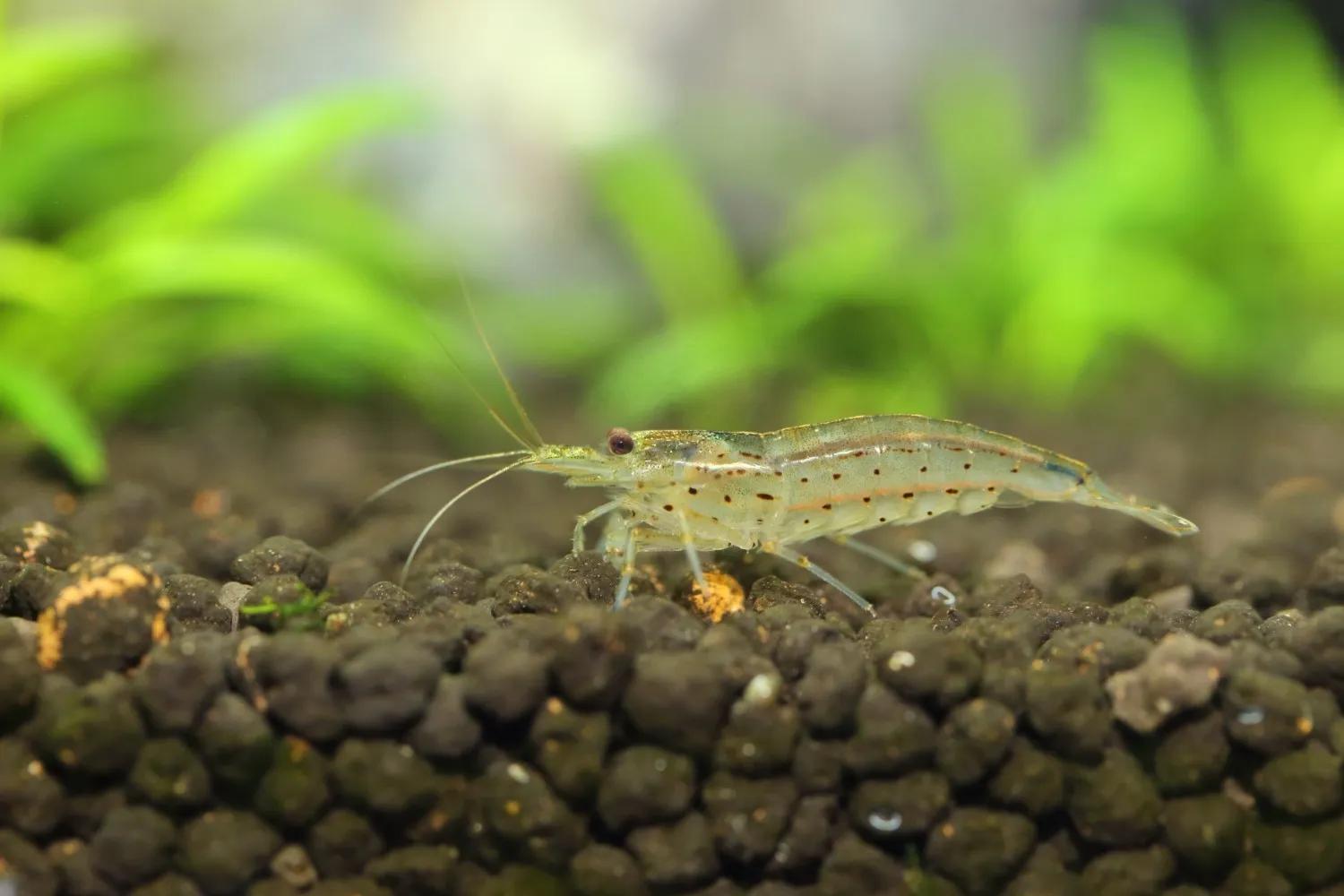
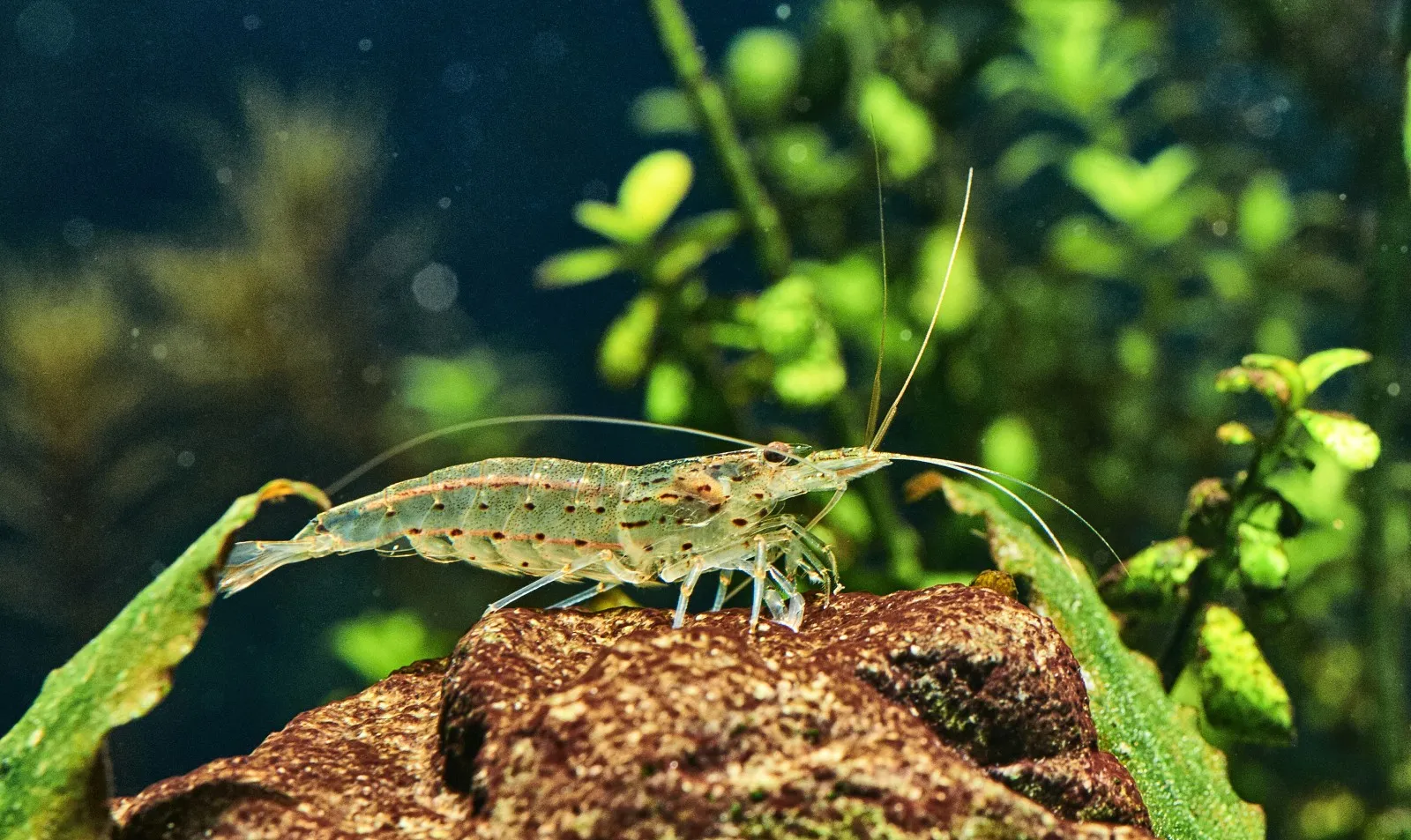
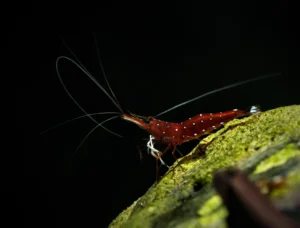
The Amano Shrimp (Caridina multidentata) is a translucent to brownish shrimp with fine speckling prized for its algae-eating ability. It is completely plant-safe and spends much of its time grazing on biofilm and algae without harming healthy plants. These shrimp are peaceful and do best in stable, well-cycled aquariums with gentle flow and plenty of hiding places. General care is straightforward but benefits from steady water parameters and adequate minerals for molting.

Quick overview
Amano shrimp, Yamato shrimp, Japanese marsh shrimp
20 liters (5 gallons) for a colony
Ideal aquarium setup
Amano shrimp suit planted aquascapes with plenty of mosses, leaf litter, and smooth hardscape for grazing. Provide stable, well-filtered water with gentle circulation, shaded areas, and lots of surface area for biofilm so they can forage safely. Avoid aggressive tankmates and rapid parameter swings to keep colonies thriving.
A small colony starts well in 20–40 liters (5–10 gallons), but larger groups need more space to avoid stress. Maintain aquarium temperature around 18–24°C (64–75°F) and allow room for grazing surfaces and hiding spots.
Moderate lighting encourages healthy plant growth and helps produce the algae and biofilm Amano shrimp feed on, while very strong light can boost nuisance algae. Dimmer periods or floating plants give shrimp shaded grazing zones and reduce stress.
Fully plant-safe; Amano shrimp will not eat healthy plants and are excellent in heavily planted tanks, especially with mosses and Java fern that collect biofilm. They benefit from leaf litter and fine-leaved plants where food accumulates.
Moderate, to supply oxygen and distribute biofilm while avoiding strong current that stresses shrimp.
Amano shrimp do well on inert gravels or fine buffered aquarium soils; a neutral to slightly acidic fine substrate helps biofilm growth and grazing. Avoid substrates that release large swings in parameters.
Include mosses, driftwood, and rock crevices to increase biofilm surface and provide molts hiding places. Hollow wood and dense moss mats make excellent daytime retreats and nursery areas for juveniles.
Behavior and temperament
Amano shrimp are peaceful, active grazers that do best in groups and rarely bother tankmates. They are most active at dawn and dusk and spend much time picking at surfaces for biofilm. Molting makes them vulnerable, so they hide after shedding until their new exoskeleton hardens. As social animals they show calmer behavior in colonies.
Molting and health
Amano go through regular molts as they grow, with frequency higher in juveniles and slowing in adults; healthy molts require stable water and sufficient minerals. Problems like failed molts are usually due to low calcium, sudden parameter changes, or poor water quality, so steady conditions and mineral availability are important.
- Provide a mineral supplement or shrimp-specific salts
- Keep water parameters steady and avoid sudden changes
- Offer cuttlebone or crushed coral for calcium
Diet and feeding
Amano shrimp are omnivorous scavengers that graze biofilm, algae, and detritus as their main diet and will accept supplemental foods. In a healthy tank they often find most of their food naturally but benefit from occasional vegetable and sinking pellet supplements. Overfeeding should be avoided to prevent water quality issues.
What they eat in nature
biofilm, algae, detritus, plant matter, microorganisms
What to feed in the aquarium
- Biofilm and algae
- Sinking shrimp pellets
- Blanched vegetables (zucchini, spinach)
- Leaf litter like Indian almond leaf
Feeding schedule
Offer small supplemental portions 2–3 times per week or a tiny daily amount that is consumed within a few hours.
Special dietary needs
Require adequate mineral content and calcium for healthy molts and exoskeleton formation.
Daily:
Daily grazing on biofilm and algae meets much of their needs and keeps them active.
Weekly:
Provide a larger supplemental feeding once or twice weekly, such as blanched vegetables or a sinking pellet.
Always:
Always ensure some natural grazing surfaces like moss and leaf litter are present to support continuous feeding.
Tankmate compatibility
Amano shrimp are peaceful and compatible with many small, nonaggressive species but are vulnerable to fish that eat invertebrates. Large or aggressive fish, and many cichlids or large barbs, will prey on them, so choose tankmates carefully. Keep shrimp in groups and provide plenty of cover to reduce predation.
Yes with caution: Amano can cohabit with other peaceful shrimp but water parameter differences between Caridina and Neocaridina may require compromise.
Coexist well with most freshwater snails and often share grazing areas without conflict.
Safe choices include Otocinclus, small rasboras, dwarf pencilfish, and Corydoras pygmaeus; these small species rarely harm adult Amano shrimp. Avoid species known to nip or scavenge invertebrates.
Semi-aggressive or larger fish such as angelfish, larger barbs, and many cichlids pose a real predation risk to shrimp and will eat juveniles and sometimes adults. Keep shrimp only with such fish if the aquarium is heavily planted and shrimp have ample hiding places.
Amano shrimp are social and do best in colonies where they establish a peaceful hierarchy and shared grazing areas. Aim for groups of several individuals so they feel secure and display natural behaviors.

Breeding
Breeding Amano shrimp in a home freshwater tank is challenging because their larvae require brackish conditions and plankton to develop. While females will carry eggs under the abdomen in freshwater, successful rearing typically needs a controlled hatchery with salinity changes and live microfoods.
Difficulty
Difficult: breeding is hard for most hobbyists because larvae need brackish water stages and specialized live foods. Maintaining stable parameters through salinity changes and providing rotifers or microalgae is labor intensive.
How they breed
Females carry eggs under the abdomen until hatching.
Best setup for breeding
Provide dense moss and leaf litter as egg-bearing females often hide in vegetation, but be prepared to move larvae to a brackish rearing tank. Maintain rock-solid water stability and plan for a brackish nursery with microplankton food for the larvae.
Feeding the babies
Larvae require microplankton and rotifers in brackish water; if attempting to rear them, feed powdered microfoods and rotifers until they metamorphose. Juveniles then transition to biofilm and crushed foods as they grow.
Pro tips
Cycle the tank thoroughly before adding Amano shrimp to avoid ammonia and nitrite exposure.
Introduce leaf litter and Java moss to increase natural biofilm and shelter for juveniles.
Use a gentle sponge filter to protect baby shrimp and provide extra grazing surface.
Molting problems
Failed molts often result from low calcium or sudden parameter swings and present as trapped or discolored molts.
Parameter swings
Amano shrimp tolerate a range but are sensitive to rapid pH, temperature, or hardness changes; stability is key.
Predation loss
Unexpected losses are frequently due to tankmates that nibble shrimp or eat juveniles, so provide hiding areas and choose calm fish.
Typical beginner mistakes
- Adding shrimp to uncycled tanks
- Overfeeding causing ammonia spikes
- Mixing incompatible tankmates
Short summary
Amano shrimp (Caridina multidentata) are peaceful, efficient algae grazers ideal for planted aquascapes and colony keeping. They are relatively easy to care for but need stable water, adequate minerals for molting, and protection from predatory fish. Breeding is difficult for hobbyists due to the larvae's brackish requirements.
Frequently asked questions (FAQs)
Are Amano shrimp plant safe?
Yes, Amano shrimp are plant-safe and will not eat healthy plants.
What water temperature do they prefer?
They prefer 18–24°C (64–75°F) and do best with stable temperatures.
Can Amano shrimp live with Neocaridina?
Yes with caution; they can cohabit but water parameter needs may differ between species.
How many Amano shrimp should I keep?
Keep them in groups of at least several individuals; a 20–40 L tank suits a small colony.
Do Amano shrimp need calcium supplements?
Supplemental minerals and calcium help successful molts and reduce molting issues.
Is breeding Amano shrimp easy in home tanks?
No, breeding is difficult because larvae require brackish water and live microfoods to develop.