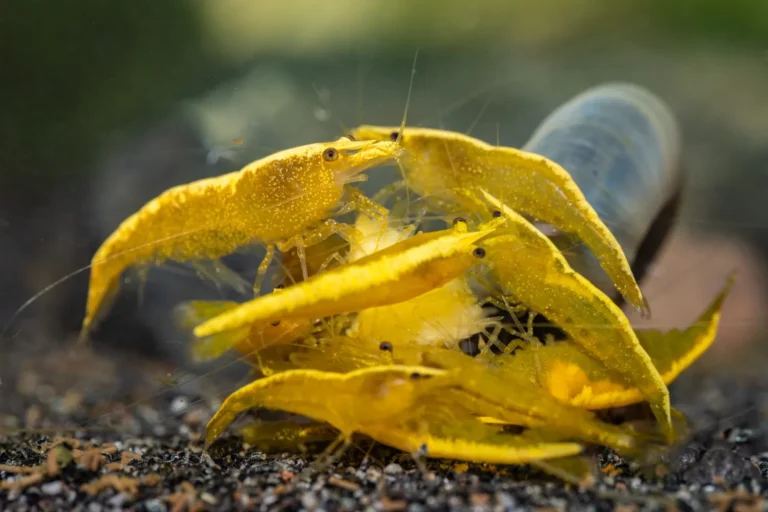
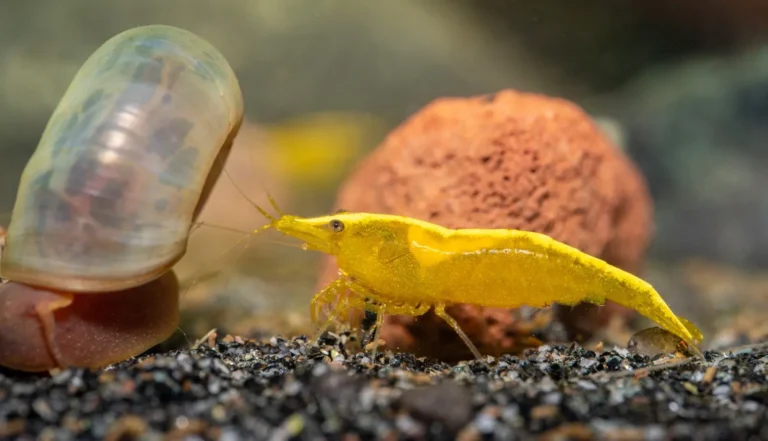
The Goldenback Yellow is a delicate colour morph of Neocaridina davidi characterised by a warm gold stripe along the dorsal and paler translucent flanks. It usually displays moderate opacity rather than solid coverage, which gives a subtle, natural look in planted tanks. This morph is well suited to beginner and intermediate aquarists when kept in stable water and a mineral-rich diet. Colour intensity improves with appropriate food, minerals and calm tankmates.
This morph is defined by a warm golden dorsal stripe set against paler, translucent sides rather than full-body opacity, creating a subtle, natural look. Tone and opacity are variable across individuals and grades, so the banding may be more or less intense depending on genetics and selection. Colour grading focuses on the width and saturation of the dorsal band rather than solid coverage, and some fade can occur with stress or poor diet. Environmental factors such as minerals, lighting and biofilm availability will shift how vivid the gold appears.
Quick overview
Common name(s)
Goldenback Yellow, Yellowback, Golden back
Color line
Yellow
Latin name
Neocaridina davidi
Size
Adult ~2–3 cm
Temperament
Peaceful
Tank level
Substrate
Minimum tank size
5 gallons (19 L)
Water type
Freshwater
Difficulty
Easy
Ideal aquarium setup
The warm dorsal band shows best in lush green aquascapes where it contrasts against plants and wood; a dark substrate will make the yellow pop while pale gravel will mute it. Balanced lighting brings out the gold without stressing the shrimp, whereas too bright light can wash the colour and promote nuisance algae, and plants such as mosses, ferns, driftwood provide shelter and visual contrast.
Behavior and temperament
Calm grazers that spend much time foraging across leaves, wood and the substrate. They are often visible in the open when comfortable but will retreat after disturbances, and they do best in groups where social grazing behaviour is apparent.
Molting, health and color quality
Good colour is strongly linked to overall health and stable water: regular minerals, steady GH and a balanced diet support brighter tones and successful moulting. Juveniles often show paler colours until several moults as pigment and exoskeleton harden under the right conditions. Stable conditions reduce failed moults and maintain opacity, while swings in chemistry or low calcium can cause dull colour and moulting problems.
Diet and feeding
They graze on biofilm and detritus all day, but feed 2–3 times per week with sinking pellets, blanched vegetables or colour foods. Exceptionally clean tanks may need slightly more feeding to maintain colour and growth.
How to improve their color with food
Spirulina flakes or pellets
Chlorella-based foods
Colour-enhancing sinking wafers
Biofilm support with leaf litter and alder cones
Tankmates
Safe tankmates include small peaceful fish such as small rasboras, otocinclus and pygmy corydoras, plus snails and other small invertebrates. Juveniles can be eaten by larger or predatory fish, so use a peaceful community or a shrimp-only tank if breeding and raising young is important.
Breeding Goldenback Yellow Shrimp
This morph breeds easily in stable, well-planted tanks and produces frequent clutches when adults are healthy. To maintain line quality select the brightest, most defined dorsal bands for breeding, expect some throwbacks with paler or more translucent patterns, and cull or separate less desirable variants to preserve the strain.
How to keep the colony strong
Maintain stable GH and moderate KH levels
Feed a varied diet with colour foods and vegetables
Select and breed the brightest individuals
Provide abundant hiding spots with mosses and plants
Common problems
Colour fading
Colour can fade from poor diet, low minerals or stress; improve feeding with colour-enhancing foods, stabilise water chemistry and reduce disturbances to restore vibrancy.
Weak moults
Soft or failed moults often result from low general hardness or unstable parameters; raise GH slightly if needed, keep conditions steady and offer calcium-rich foods to support healthy moulting.
Low contrast
A pale tank or bright substrate can hide the dorsal stripe; switch to a darker substrate, add more plants and provide suitable foods to increase visible contrast.
Predation loss
Smaller fish and larger invertebrates may take juveniles, causing losses; separate breeding stock or use a shrimp-only tank to protect young until they reach a safer size.
Similar color variants (and how they compare)
Yellow
The yellow Neocaridina davidi is a more uniformly pale yellow morph with wider but less intense coverage. It appears softer and less banded than the Goldenback Yellow.
Yellow Rili
Goldenback Yellow and Yellow Rili Neocaridina davidi shrimp have similar color because they are the same species and come from the same yellow breeding lines. Both varieties produce yellow pigment using the same pigment cells called xanthophores. The genes responsible for yellow color are therefore very similar in both morphs. The main difference is the Rili pattern gene, which removes pigment from the middle of the body. As a result, they share the same yellow color but display different body patterns.
Orange Sakura
The bright orange color of Orange Sakura Neocaridina davidi shrimp comes from carotenoid pigments stored in special pigment cells. These pigments are closely related to the ones that produce yellow coloration. When the pigments are more concentrated or expressed more strongly, the shrimp appear orange instead of yellow. So in a way, orange and yellow shrimp are like close color cousins: same species, similar pigments, just a different intensity of color.
Short summary
The Goldenback Yellow is a gentle, warm-toned Neocaridina davidi morph that favours planted aquascapes and stable water. It is suitable for beginners and intermediate keepers who provide a mineral-rich diet, moderate lighting and peaceful tankmates. With simple care this morph displays attractive dorsal colour and breeds readily in the right conditions.
Frequently asked questions (FAQs)
How bright should aquarium lighting be?
Use moderate lighting; enough to support plants without creating intense glare, as too much light can wash the colour and stress shrimp.
Do they need special water parameters?
They prefer stable, neutral to slightly alkaline water with moderate GH and GH minerals present; avoid sudden changes and keep temperature steady.
Will they breed easily in home tanks?
Yes, they breed readily if water is stable and food is available, though maintaining the colour line requires selection of the best-looking parents.
How can I tell a male from a female?
Females are generally rounder and larger with a fuller abdomen, while males are slimmer and more transparent, but differences are subtle until mature.
Can I mix them with other Neocaridina?
You can mix them with other Neocaridina but expect variability and potential colour dilution in offspring unless you selectively breed within the line.
How long do they live on average?
With good care they typically live 1.5–2 years, though strong diet, water quality and low stress will improve longevity.
Mette Tulin
Mette Tulin is the creator of Aquascapedia, with more than 15 years of hands-on experience in aquascaping, planted aquariums, and freshwater fish, shrimp, crayfish, and snails. She shares practical insights, curated aquatic life profiles, and inspiration to help others build thriving underwater landscapes.
Aquascapedia uses cookies to ensure the website functions properly and to understand how visitors interact with the content. Analytics cookies are only used with your consent.
Necessary
Always active
Required for the website to function properly. These cookies cannot be disabled.
Preferences
The technical storage or access is necessary for the legitimate purpose of storing preferences that are not requested by the subscriber or user.
Analytics
The technical storage or access that is used exclusively for statistical purposes.Used to understand how visitors interact with the website. No personally identifiable information is used, and analytics cookies are only set with your consent.
Marketing
The technical storage or access is required to create user profiles to send advertising, or to track the user on a website or across several websites for similar marketing purposes.