At a glance
Territorial
Nocturnal
Bold
Plant-shredder
Description
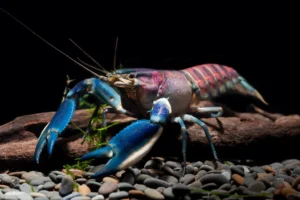
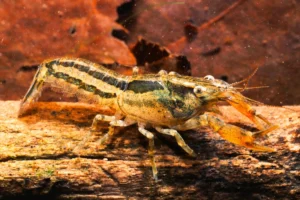
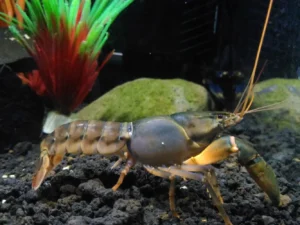
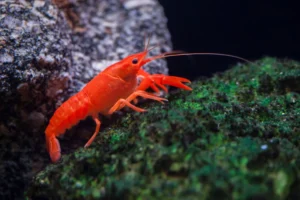
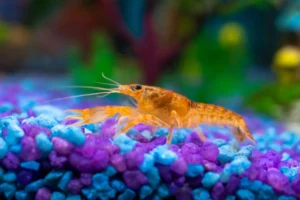
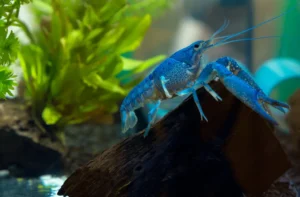
Red Claw Crayfish (Cherax quadricarinatus) is a robust freshwater crayfish known for its colorful claws and confident behavior. It grows into a large, stocky crustacean with noticeable chelae and a tendency to explore the tank floor. Red Claw is not plant-safe and will dig, nibble, or uproot delicate plants while scavenging. Care is straightforward with stable water, plenty of hides, and calcium-rich food to support healthy moulting.

Quick overview
Red Claw Crayfish, Redclaw, Australian redclaw
Territorial, opportunistic
80 liters (20 gallons) for one
Ideal aquarium setup
Provide a well-filtered aquarium with stable parameters, a mix of rock and driftwood, and plenty of hiding places to reduce aggression. Keep water chemistry steady and offer calcium sources to support moulting. Avoid delicate carpeting plants and use robust stems or potted plants if you want greenery.
Aim for at least 80–120 liters (20–30 gallons) for a single adult with a broad footprint so the crayfish has room to roam and establish territory. More floor space is better than height because they occupy the substrate.
Moderate to low lighting suits their mostly nocturnal habits and helps protect plants from constant grazing, while subdued light encourages activity at dusk and night.
Not plant-safe; expect digging, uprooting, and nibbling so use tough plants in pots, floating plants, or accept sparse planting. Hardy species like Java fern tied to wood may fare best.
Moderate, to keep water oxygenated without strong currents that stress the crayfish.
Use sand or smooth gravel to allow natural digging and to avoid abrasion to sensitive legs and antennae.
Provide multiple caves, PVC pipes, and rock piles to serve as hides and visual barriers; break line-of-sight to reduce fights and establish territories.

Behavior and temperament
Red Claw are territorial and will defend shelters and food, especially at night. They are active scavengers and will dig or disturb substrate and plants while foraging. During moulting they are vulnerable and retreat to hides until their shell hardens. They can attack slow or small tankmates that share the bottom.
Diet and feeding
Omnivorous scavengers that readily accept prepared foods but benefit from variety and protein. They will eat plant matter, algae, detritus, and will opportunistically feed on slow or injured tankmates.
What they eat in nature
detritus, algae, plant matter, small invertebrates, carrion
What to feed in the aquarium
- Sinking pellets or wafers designed for crustaceans
- Blanched vegetables like zucchini and spinach
- Frozen meaty foods such as bloodworms or brine shrimp
Feeding schedule
Feed a small portion once daily and remove uneaten food after a few hours to maintain water quality; increase feeding slightly during moulting or breeding.
Special dietary needs
Provide calcium-rich foods or cuttlebone to support healthy shell hardening during and after moults.
Daily:
Offer a small feeding once per day, removing leftovers to prevent ammonia spikes.
Weekly:
Include at least one richer protein meal per week such as frozen shrimp or fish to support growth and reproduction.
Always:
Always provide clean water, stable parameters, and several secure hides so moulting individuals have safe refuge.
Tankmate compatibility
They will prey on and harass slow-moving or bottom-dwelling species, so red claw crayfish are best kept in species-only tanks or with fast midwater fish. Always supervise mixed setups and provide abundant hiding places if keeping with fish.
No No, shrimp are highly likely to be eaten or attacked by red claw crayfish.
Snails are often harassed and many will be eaten, though large or heavily-shelled species may survive temporarily.
Fast midwater schooling fish like danios or barbs can work because they occupy different zones and are quick enough to avoid predation. Avoid slow bottom dwellers and very small fish that can be targeted at night.
Large or territorial cichlids can both injure and be injured by a crayfish, and bottom-dwelling loaches or catfish may be harassed; mixing requires caution and space.
Crayfish are generally solitary and will fight conspecifics unless a very large tank with multiple distinct territories is provided. Keep singles unless you have a large species-only setup with many hides.
Breeding
Breeding is possible in aquariums with stable, warm water and good nutrition; females carry eggs under their tail until hatching. Juveniles disperse after a few molts and need plentiful microhabitat and food to survive.
Difficulty
Moderate Breeding requires careful timing around moulting, stable water, and sufficient hiding places for juveniles, plus potential separation to prevent cannibalism.
How they breed
Females carry eggs under the tail until they hatch and then guard young for a short period.
Best setup for breeding
Provide many small caves and dense coverage for juveniles, maintain pristine water quality, and consider separating adults after mating to reduce cannibalism. Stable temperature and calcium-rich water improve survival and growth.
Feeding the babies
Young feed on biofilm and microfauna at first and accept powdered foods and finely crushed pellets as they grow. Offer frequent small meals and plentiful hiding spots to reduce predation by adults.
Pro tips
Offer a cuttlebone or crushed coral to keep calcium levels up for moulting.
Lock the lid securely as they are escape-prone and can crawl out at night.
Cycle the tank thoroughly and maintain low nitrate to reduce moulting stress.
Moulting issues
Poor water chemistry or low calcium can cause failed moults; correct hardness and provide calcium supplements to improve success.
Escapes
They explore and can climb or crawl out of tanks at night; use a tight-fitting lid and seal gaps to prevent escapes.
Plant damage
Digging and nibbling will uproot fragile plants; protect plants in pots or choose hardy epiphytes tied to hardscape.
Typical beginner mistakes
- Keeping them with small slow bottom fish
- Insufficient hides leading to constant fights
- Soft water without calcium causing moulting failures
Short summary
The Red Claw Crayfish (Cherax quadricarinatus) is a large, bold, territorial scavenger that is not safe with delicate plants or small bottom dwellers. It is suitable for hobbyists who can provide stable water, plenty of hides, and calcium support, and it does best in species-focused setups.
Frequently asked questions (FAQs)
Are Red Claw Crayfish good for planted tanks?
No, they commonly uproot and eat plants; use potted or tough epiphytic plants if you want greenery.
Can I keep them with shrimp?
No, shrimp are likely to be eaten or attacked by adult crayfish.
How often should I feed a Red Claw Crayfish?
Feed a small portion once daily and remove leftovers after a few hours, with one richer protein meal per week.
What water hardness do they need?
Moderate hardness around 8–14 dGH is ideal to support healthy moulting and shell formation.
Yes, multiple hides reduce aggression, provide moulting refuge, and improve survival of juveniles.
Will they attack fish at night?
They may hunt or scavenge slow or small fish at night, so choose fast midwater tankmates or keep the crayfish in a species-only tank.