At a glance
Territorial
Plant-shredder
Nocturnal
Bold
Description
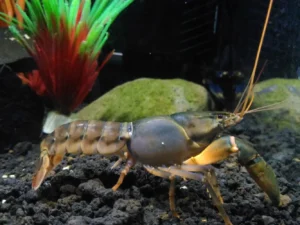
The Hoa Creek Crayfish is a robust, medium-sized crayfish often sold under locality names and reported in the hobby as Procambarus sp. 'Hoa Creek'. It displays strong claws and a mottled coloration that helps it stand out in aquascapes. This species is bold and territorial, will dig and rearrange substrate, and can damage delicate plants. Care is straightforward with stable water, calcium for moulting, and plenty of hides.

Quick overview
Hoa Creek Crayfish, Hoa crayfish
Procambarus sp. 'Hoa Creek'
Territorial, opportunistic
40 liters (10 gallons) for one
Ideal aquarium setup
Provide a planted hardscape with plenty of rockwork and driftwood to create hiding spots and line-of-sight breaks; stable water parameters and regular water changes keep moulting healthy. Use secure lids and stable temperatures with moderate filtration to avoid strong currents that stress crayfish.
Aim for at least 40–60 liters (10–15 gallons) with a wide footprint so the crayfish has floor space to roam and dig; larger tanks reduce aggression and allow multiple hides.
Low to moderate lighting suits this mostly nocturnal species and helps reduce plant stress and algal growth that crayfish may graze on at night.
Not plant-safe for delicate stems and carpeting plants; protect prized plants in pots or use robust species like Anubias, Java fern, and Vallisneria anchored to hardscape.
Moderate, to keep detritus moving without creating strong currents that hinder digging or stress the crayfish.
Fine gravel or sand is best to allow natural digging and burrowing while preventing trapped debris.
Provide multiple caves, terracotta pots, and rock crevices for daytime hiding and moulting security, and use driftwood or rocks to break lines of sight and reduce territorial conflicts.
Behavior and temperament
Hoa Creek Crayfish are territorial and will defend chosen shelters, especially at night when they forage. They are bold diggers that may uproot or nibble plants and will scavenge aggressively. During moulting they are vulnerable and need secure hiding places and stable water chemistry. They can prey on slow or small tankmates if given the chance.
Diet and feeding
They are opportunistic omnivores and active scavengers, eating plant matter, detritus, and animal protein; offer a varied diet to keep them healthy. They will also take advantage of slow or injured tankmates when hungry.
What they eat in nature
detritus, algae, plant matter, small invertebrates, carrion
What to feed in the aquarium
- Sinking omnivore pellets or wafers
- Blanched vegetables like zucchini and spinach
- Frozen bloodworms and chopped shrimp
Feeding schedule
Feed daily a portion they finish in 10–15 minutes, with vegetables offered every other day and occasional protein treats several times a week.
Special dietary needs
Provide calcium-rich foods or cuttlebone and ensure stable minerals to support healthy moulting.
Daily:
Offer a small portion of pellets or fresh vegetable each day and remove uneaten food after 10–15 minutes to keep water quality high.
Weekly:
Provide one to two protein-rich feedings such as frozen meaty foods and check for molting signs and hiding-site use.
Always:
Always ensure there is a clean hiding place and access to calcium sources to reduce moulting problems.
Tankmate compatibility
They often do best in species-only tanks or with fast midwater fish because they will hunt slow or bottom-dwelling animals and defend territory. Consider tank size and plenty of hides to reduce conflict if mixing with other species.
Yes with caution No small shrimp are safe long-term because crayfish will hunt and eat most ornamental shrimp species, especially at night.
Many snails are at risk and will be eaten over time, though larger, heavily-shelled species may survive if the crayfish is well fed.
Fast midwater swimmers like danios, rasboras, and larger tetras can work because they stay out of the crayfish's reach and are quick. Livebearers and robust schooling fish are also reasonable choices in a well-sized tank.
Avoid slow or bottom-dwelling species and territorial cichlids; large semi-aggressive fish may harass or be harassed by the crayfish, leading to injury on both sides.
Same-species housing requires significant space and multiple hides because individuals are territorial; singles or a large tank with several shelters is usually best to prevent fights.
Breeding
Breeding is possible in aquaria and females carry eggs under the tail until they hatch, but juveniles and adults may be aggressive. Stable water quality, ample hides, and plenty of food increase success and juvenile survival.
Difficulty
Moderate because synchronized moulting and territorial behavior complicate keeping pairs or groups together and young are vulnerable to adults.
How they breed
Females carry eggs under the tail until hatching and release free-swimming or crawl-away juveniles depending on species.
Best setup for breeding
Provide many small caves and dense hiding spots for females and juveniles, maintain excellent water quality, and separate overly aggressive adults if needed. Keep stable temperatures and good mineral levels to support egg development and moulting.
Feeding the babies
Young feed on biofilm and microalgae at first and will accept powdered foods and finely crushed pellets as they grow. Offer frequent small portions and shelter to reduce predation from adults.
Pro tips
Always provide multiple hides so moulting individuals can escape aggression.
Supplement diet with a calcium source like cuttlebone to prevent moulting problems.
Use potted plants or heavy-rooted species to protect greenery from digging and uprooting.
Moulting issues
Moulting problems usually stem from soft water or low calcium; raise hardness slightly and add calcium supplements while ensuring stable water parameters to improve molts.
Escapes
Crayfish are adept climbers and will escape through gaps; secure the lid, seal filter and heater exits, and provide surface cover to prevent escapes.
Plant damage
They will uproot or eat delicate plants while digging; use tough, anchored plants or pots and protect new growth until established.
Typical beginner mistakes
- Keeping with small shrimp or bottom fish
- Insufficient hides for moulting
- Soft water without calcium supplementation
Short summary
The Hoa Creek Crayfish is a bold, territorial freshwater crayfish that will dig and can damage delicate plants, making it better for species tanks or robust aquascapes. Care is manageable at an easy to medium level with stable water, good hides, and calcium for healthy moulting.
Frequently asked questions (FAQs)
Is this crayfish safe with live plants?
Not entirely; it will uproot and snack on delicate plants, so use hardy or potted plants and anchor stems securely.
Can I keep shrimp with this crayfish?
Generally no; small ornamental shrimp are likely to be eaten unless the tank is enormous and juveniles are heavily protected.
Frequency varies with age and growth, juveniles moult more often while adults moult every few months; provide calcium and hides to support the process.
They can prey on slow, bottom-dwelling, or injured fish, so choose fast midwater species or house the crayfish alone.
Do they need special water chemistry?
They prefer stable freshwater with moderate hardness and a pH around 6.5–8.0; slightly higher hardness helps moulting.
Can I keep more than one in a tank?
You can, but only in larger tanks with many hides to prevent territorial fights and with careful monitoring during moulting.