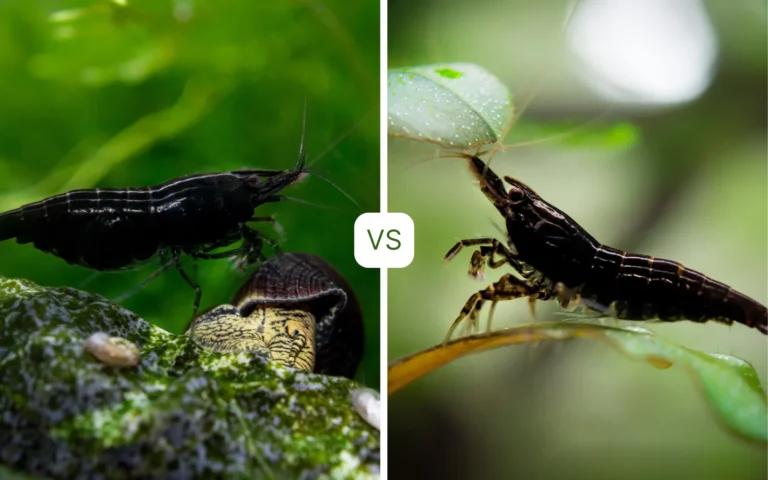
Comparing
Black Rose Shrimp and
Black Sakura Shrimp means looking beyond just their names and spotting differences in how they brighten your tank. Both are solid choices from the
Neocaridina davidi species, but their color depth and overall look vary. This article helps you understand these differences and decide which fits your aquascape and aquarium setup best.
Quick comparison guide
Feature
Red Cherry Shrimp
Black Sakura Shrimp
Deep black with subtle dark blue hints.
Jet black base with occasional reddish highlights, softer than Black Rose.
Velvety, rich appearance that looks solid and premium in the tank.
Glossy with a slight shimmer that creates a lively, lighter tank presence than Black Rose.
Strong, even coverage with high-grade specimens showing near full opacity and intense color depth.
Good coverage overall but can vary more between grades, with some showing patchier color areas.
Breeds mostly true when kept in pure lines; color fading can occur if mixed with lighter or wild-type shrimp.
Breeds reasonably true but with more variation than Black Rose; careful line separation helps maintain quality.
Ideal for aquascapers seeking bold color contrast and serious breeders.
Great for beginners and hobbyists wanting a striking but manageable black shrimp.
Typically reliable when parameters are stable; watch for gradual color loss if mixed indiscriminately.
Easier to breed true with consistent care; more forgiving of slight parameter swings.
Mixing with other Neocaridina lines risks color dilution and reversion towards wild-type shades.
Similar mixing risks apply; lines lose color purity over generations if mixed carelessly.
Moderate; requires more attention to maintain peak coloration.
Beginner-friendly; more resilient and easier to keep color vibrant.
Color variations and grading: What sets Black Rose Shrimp and Black Sakura Shrimp apart?
Neocaridina shrimp lines often have grading based on color strength and coverage. Higher grades feature deeper, more solid pigmentation, which hobbyists prefer for show tanks. Selective breeding increases consistency but some variation is natural. Mid-grade shrimp can be more affordable while low grades tend to be less marketed due to weaker colors.
Black Rose shrimp color characteristics
Black Rose Shrimp are seen as a premium color line because they showcase a deep, opaque black with a dense, velvety finish. Their rich color is due to strong pigmentation layers and less translucency, making them stand out sharply in most setups.
- Selective breeding focuses on solid black opacity
- Most sold as mid to high grades
- Lower grades exist but rarely marketed
They often have subtle blue undertones that enhance their uniqueness.
Black Sakura shrimp color characteristics
Black Sakura Shrimp have a jet black tone with a glossier, slightly translucent look that gives them a lighter appearance. Color depth varies more than Black Rose shrimp, reflecting a wider grading scale. Their reddish highlights add some warmth to the otherwise deep black.
- Color varies more across grades
- Selective breeding improves but less uniform than Black Rose
- Mid-grade more common and affordable
These traits make them lively and visually distinct in a planted tank.
What you should consider in your aquascape when choosing color
Choose Black Rose Shrimp if you want a strong, solid contrast in darker, moodier aquascapes or aim for high-grade show tanks. Black Sakura Shrimp fit well in peaceful setups where shimmer and subtle color variations add interest. Consider whether you prefer pure color lines for breeding or a mixed display for visual texture.
1. Substrate color
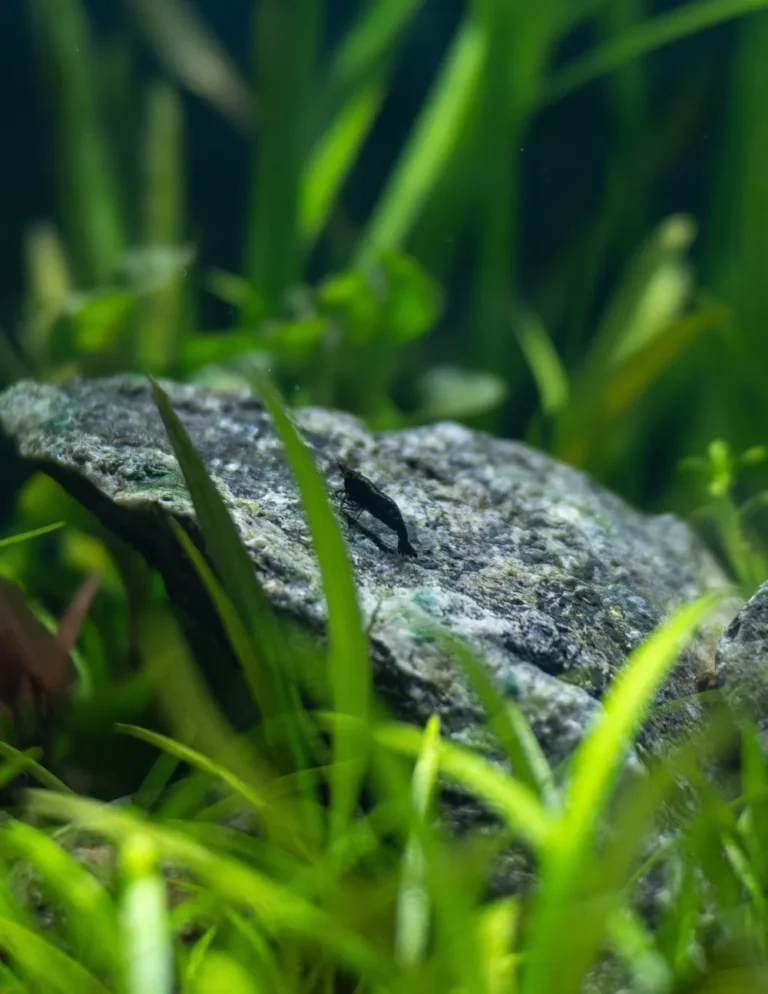
- Black Rose Shrimp really pop against dark substrates like ADA Aqua Soil that enhance their deep black tones.
- Black Sakura Shrimp stand out well on mid-tone or slightly lighter soils, which bring out their subtle red highlights.
2. Plant density
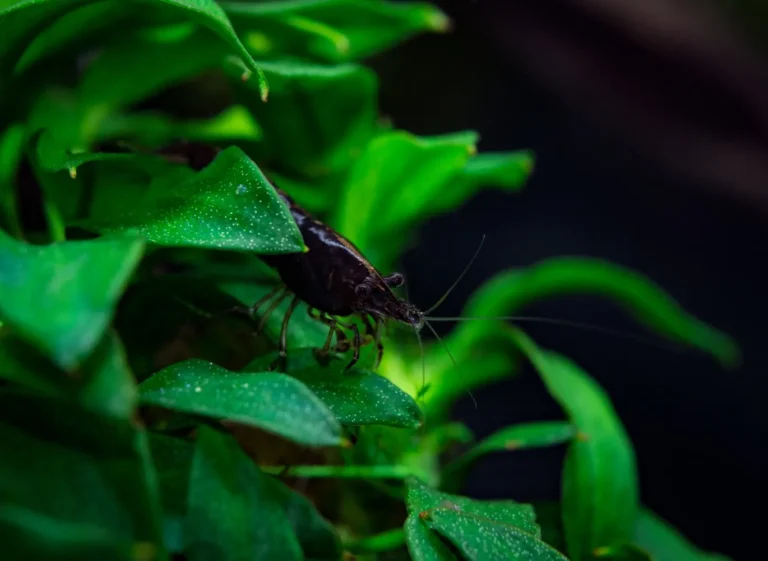
- Black Rose Shrimp create a striking contrast in dense green planted tanks, accentuating their velvet-like color.
- Black Sakura Shrimp blend softly with plants but show off their shimmer nicely in moderately planted aquariums.
3. Lighting intensity
- Under 6,000–7,000K lighting, Black Rose Shrimp's color appears rich and matte, with subtle blue reflections.
- Black Sakura Shrimp display a glossy brightness and mild shimmer that make them more eye-catching under typical aquascape lights.
4. Colony consistency
Colony consistency means how uniform the shrimp offspring look compared to their parents, which is key for maintaining prized colors. Selective breeding keeps the color stable by focusing on the strongest examples.
- Cull weak or faded color shrimp early
- Separate lines by grade when breeding
- Breed only from the richest colored parents
Care requirements
Both shrimp share the same care requirements as
Neocaridina davidi. Stability in water parameters is more important than chasing exact numbers, ensuring healthy, stress-free colonies.
- Temperature: 20–26°C
- pH: 6.5–8.0
- GH: 6–12 dGH
- KH: 2–8 dKH
- Ammonia/Nitrite: 0 ppm
- Nitrate: below 20 ppm
Price and availability for both shrimp
Black Rose Shrimp typically command higher prices due to their rarer deep black color and tougher breeding standards. Black Sakura Shrimp are more common and generally less costly, making them easier to find locally. Availability depends on breeders and demand within your region.
Factor
Red Cherry Shrimp
Black Sakura Shrimp
Expect to pay higher prices for Black Rose Shrimp because of their premium color and lower availability.
Black Sakura Shrimp are moderately priced due to their wider availability and easier breeding success.
Uncommon; fewer breeders maintain true Black Rose lines consistently.
Fairly common; widely bred and available in most shrimp supplier networks.
Breeding Black Rose Shrimp vs Black Sakura Shrimp
Both shrimp are fairly straightforward to breed if kept in stable water conditions with good food. Black Rose Shrimp require more care to maintain their deep coloration and avoid fading. Black Sakura Shrimp breed a bit easier with slightly more forgiving color genetics. Separating lines early and avoiding mixing with other morphs helps keep colors true. Feeding high-quality foods and paying attention to water stability also improve outcomes.
Can I mix Black Rose Shrimp and Black Sakura Shrimp?
Mixing Black Rose and Black Sakura shrimp means their offspring will likely have muddier colors and increased reversion toward wild-type browns over generations. To keep their distinct colors, it’s best to breed them separately. Mixing is fine for casual tanks but not recommended for someone focused on pure lines or show-quality shrimp.
General advice:
- Keep lines separate to maintain color purity
- Use separate tanks or containers when breeding
- Avoid mixing if aiming for bright, consistent colors
Which shrimp is easier for beginners?
Black Sakura Shrimp generally are easier to keep and breed due to their forgiving genetics and wider tolerance of water variations. They are more available locally, lowering initial cost and allowing for larger colonies. Black Rose Shrimp require more attention to maintain quality coloring and avoid fading, making them better for experienced hobbyists focused on show tanks. Both share the same basic care, but the Sakura line is friendlier to beginners aiming for a lively black shrimp.
My personal advice
"I recommend starting with Black Sakura Shrimp if you’re new or want a lively colony with less fuss about color fading. If you love deep, dramatic colors and don’t mind extra care, Black Rose is worth the effort. Remember to keep your water stable and separate lines if you want consistent colors. Avoid mixing different Neocaridina colors unless you’re okay with color blending. Happy shrimp keeping!" –
MSo, which one should you choose for your aquarium?
Both Black Rose Shrimp and Black Sakura Shrimp can thrive in well-maintained tanks. Your choice depends on if you value deeper black tones and show-quality lines or prefer easier care with vibrant but less intense color.
Choose Black Rose Shrimp for bold color
Pick Black Rose Shrimp if you want a strikingly solid black shrimp with a velvety appearance that stands out strongly in dark aquascapes. They suit aquascapers aiming for premium, high-contrast tanks and hobbyists dedicated to selective breeding to maintain color purity.
Choose Black Sakura Shrimp for easy care
If you’re looking for an easier-to-maintain black shrimp that still looks beautiful and shows some natural shimmer, Black Sakura Shrimp are a great choice. They breed well under varied conditions and appeal to beginners or hobbyists wanting a lively, resilient colony.
Frequently asked questions (FAQs)
How does Black Rose color differ from Black Sakura?
Black Rose shrimp have deeper, more opaque black coloring with a velvet look, while Black Sakura shrimp are glossy with subtle red highlights and a lighter black base.
Which shrimp breed truer to color, Black Rose or Black Sakura?
Black Rose shrimp tend to breed more consistently true if kept in pure lines, but both benefit from line separation to maintain color stability.
Can Black Rose and Black Sakura shrimp be kept together?
They can be kept together, but their colors will mix over time leading to faded or muddier offspring, so separate lines are best for pure colors.
Do substrate choices affect shrimp color appearance?
Yes, dark substrates bring out the depth in Black Rose shrimp while medium to lighter soils highlight the shine and red hints in Black Sakura shrimp.
Which shrimp is better for beginners, Black Rose or Black Sakura?
Black Sakura shrimp are easier for beginners due to their resilience and forgiving color genetics compared to the more delicate Black Rose shrimp.
What water parameters are ideal for both Black Rose and Black Sakura shrimp?
Both thrive in similar stable conditions around 20–26°C temperature, pH 6.5–8.0, GH 6–12, and low ammonia and nitrite levels.