At a glance
Peaceful
Pair-forming
Colorful
Sensitive
Description
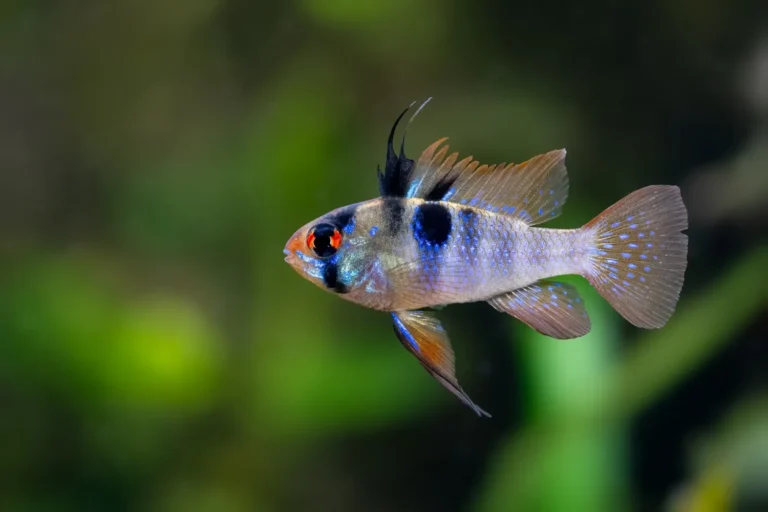
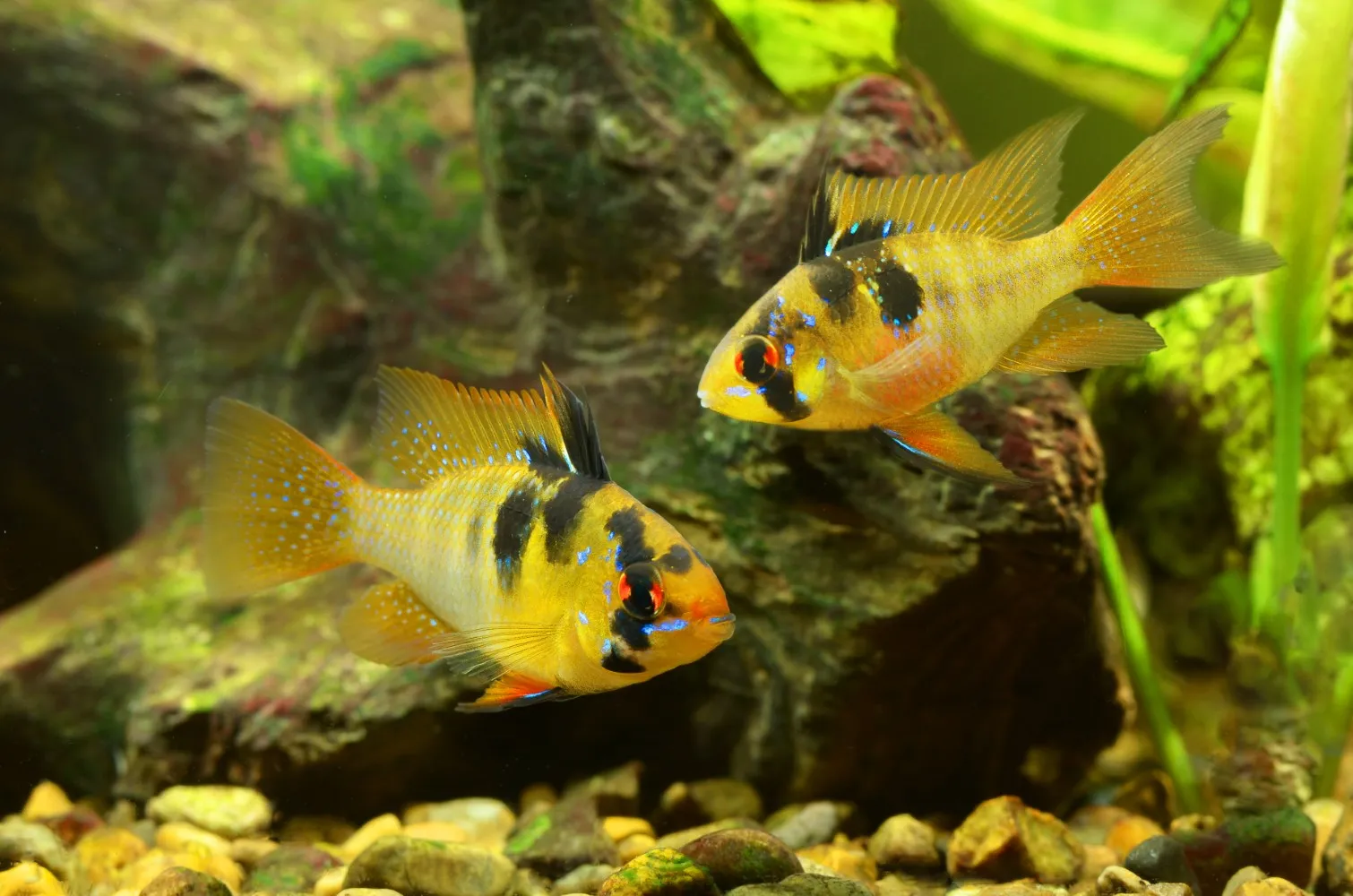
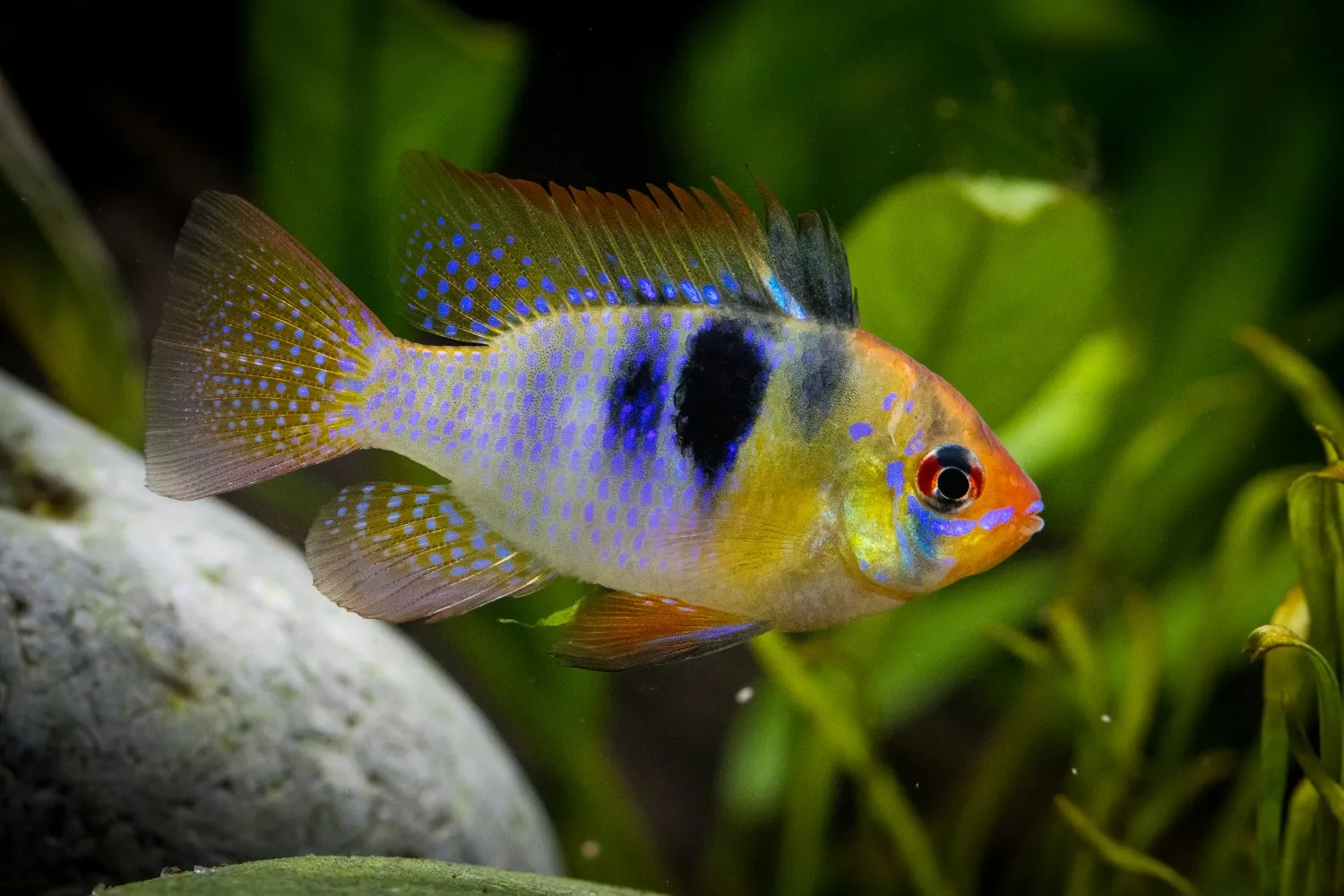
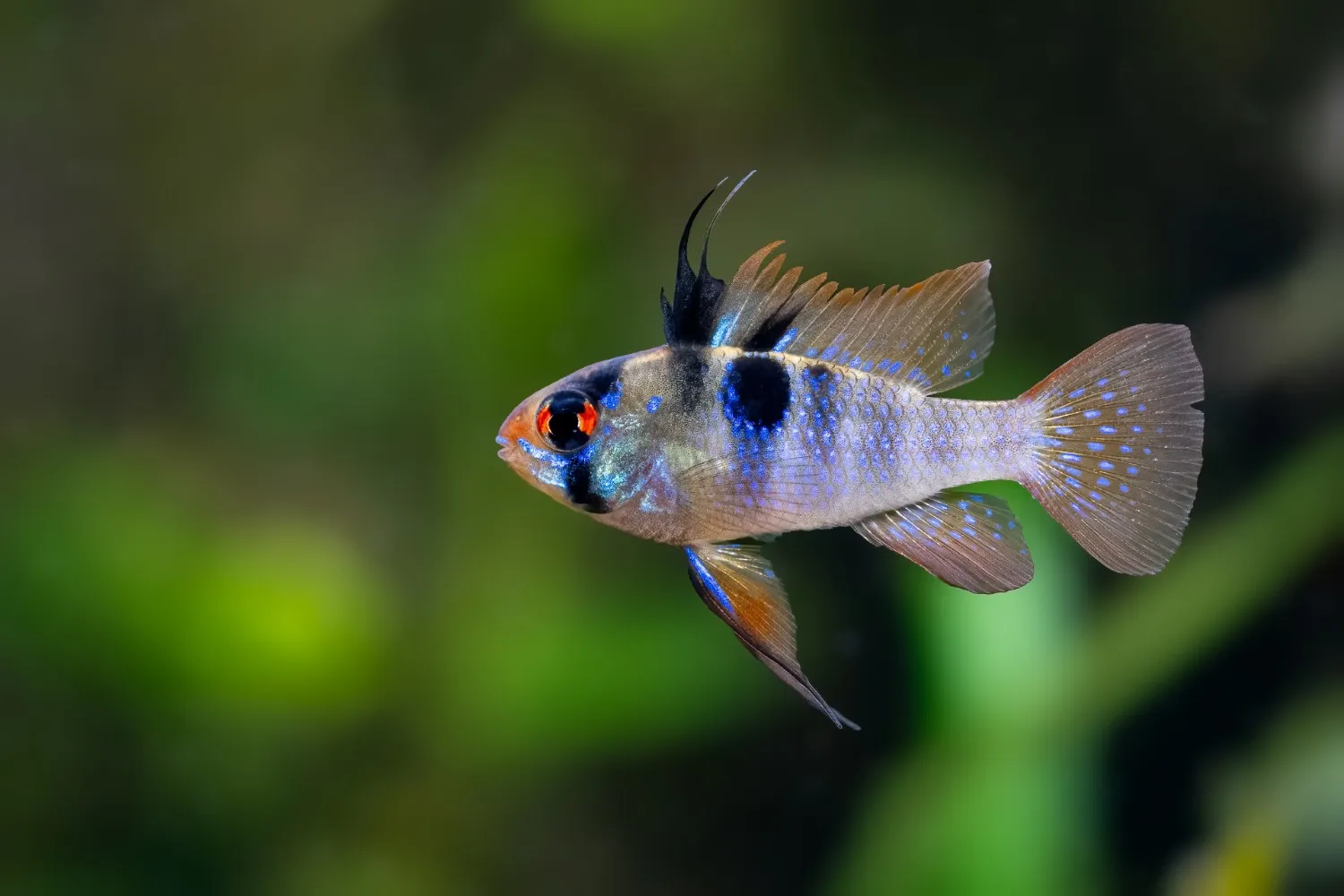
German Blue Ram is a popular, colorful dwarf cichlid prized for its blue hues and compact size. Native to warm slow-moving South American waters, Mikrogeophagus ramirezi shows striking iridescent blues, reds, and distinctive eye markings. It prefers stable, planted aquariums with soft slightly acidic water and gentle flow. Care requires attention to water quality and a varied diet to keep colors bright and behavior healthy.

Quick overview
German blue ram, Blue ram, Ram cichlid
60 liters (15 gallons) for a pair
Ideal aquarium setup
German Blue Rams do best in a well-planted, stable aquarium that mimics slow South American streams, with warm soft water and plenty of hiding spots. Provide gentle filtration, regular small water changes, and mature biological filtration to avoid sudden parameter swings. A mix of open swimming space and shaded cover helps reduce stress and encourages natural behavior.
For a bonded pair aim for at least 60 liters (15 gallons); for a small community with multiple pairs choose 100 liters (26 gallons) or more. Allow room for territories and include bottom-dwelling tankmates to reduce conflict.
Moderate to low lighting is ideal; bright light can stress rams so provide shaded areas with floating plants or taller stems. Dimmable or plant-friendly fixtures work well and help plants thrive without overexposing the fish.
Dense planting with broad-leaf species like Amazon swords, crypts, and Java fern suits them and provides shelter during breeding. Floating plants and low-light midground stems create shaded zones that calm nervous individuals.
Low to moderate flow, as they prefer gentle current similar to slow streams and will avoid strong filtration outflow.
Fine sand or smooth rounded gravel is preferred to mimic natural habitats and allow for gentle sifting behavior.
Use driftwood, smooth river rocks, and leaf litter to create sheltered territories and natural-looking hiding spots. Keep open areas for swimming and a few flat stones or broad leaves for spawning sites.

Behavior and temperament
German Blue Rams form monogamous pairs and can be quite peaceful with the right tankmates, but they become territorial during breeding. They are relatively shy and will appreciate calm, low-traffic aquariums with plenty of cover. Sudden water changes, poor water quality, or aggressive tankmates quickly stress them and can lead to illness.
Diet and feeding
Rams are omnivores with a preference for protein-rich foods; they accept flakes, pellets, frozen and live foods but have small stomachs so need appropriately sized foods. Offer a varied diet to support coloration and overall health, and avoid overfeeding.
What they eat in nature
Small invertebrates, insect larvae, crustaceans, and some plant material.
What to feed in the aquarium
- High-quality micro pellets or small sinking granules tailored for cichlids.
- Frozen foods such as brine shrimp, daphnia, and bloodworms.
- Occasional live foods like blackworms or micro worm cultures.
Feeding schedule
Feed small amounts two to three times daily, offering only what they eat within about two minutes.
Special dietary needs
No strict needs, but regular inclusion of live or frozen high-protein foods improves breeding condition and coloration.
Daily:
Offer small portions of staple food twice daily, plus one protein-rich treat if desired.
Weekly:
Include a couple of frozen or live food feedings per week and one day of lighter feeding to prevent overfeeding.
Always:
Always remove uneaten food promptly and maintain a varied diet to support color and health.
Tankmate compatibility
They do best with peaceful, similarly sized community fish that tolerate slightly acidic soft water and quiet aquariums. Avoid large boisterous or highly territorial species that will stress rams. Choose tankmates that occupy different zones to minimize territorial overlap.
Yes with caution: Adult rams usually ignore larger shrimp but may eat baby shrimp or very small species, so dwarf shrimp are at risk unless the tank is mature with lots of hiding places.
Generally compatible with most snail species; snails help with cleanup and are usually left alone by rams unless food is scarce.
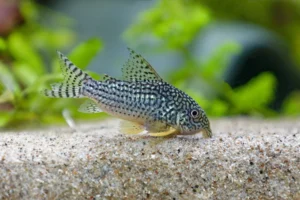
Suitable companions include small tetras like cardinals or ember tetras, small rasboras, and Corydoras catfish which occupy lower levels and reduce conflict.
Avoid semi-aggressive or fast fin-nippers such as tiger barbs, larger cichlids, or very boisterous species that can harass or stress rams into illness.
Best kept as a mated pair in smaller tanks; in larger aquariums you can keep a small group but expect hierarchy formation and potential territorial disputes during breeding.
Breeding
German Blue Rams are popular breeders in the hobby and will form strong pairs; breeding success depends on stable warm, soft, slightly acidic water and good conditioning with protein-rich foods. Pairs generally select a flat surface or broad leaf for eggs and both parents guard the brood aggressively until fry are free-swimming.
Difficulty
Breeding is medium difficulty because they require stable water chemistry, warm temperatures, and careful conditioning to spawn reliably. Sudden parameter changes or stress commonly disrupt spawning and parental care.
How they breed
Substrate spawners with biparental care.
Best setup for breeding
Use a small breeding tank with gentle filtration, a flat rock or broad leaf for laying, warm soft water around 28°C (82°F), and low lighting. Keep parameters stable and condition the pair with live and frozen protein-rich foods.
Feeding the babies
Start fry on infusoria or liquid fry food for the first few days, then introduce newly hatched baby brine shrimp as they grow. Transition to finely crushed flakes or micro pellets as the fry get larger.
Pro tips
Perform small frequent water changes rather than large single changes to keep water very stable.
Provide flat stones or broad leaves to encourage spawning and make parental care easier.
Condition breeding pairs with live or frozen protein foods for several weeks before attempting to breed.
Stress and fading
Rams quickly lose color and become lethargic when water quality fluctuates or the tank is too bright; stabilize parameters and add shaded hiding spots to restore health.
Bacterial and parasitic infections
Poor water conditions and stress make rams prone to fin rot, ich, and bacterial infections; improving water quality, quarantining new fish, and prompt treatment are essential.
Poor breeding success
Failure to breed often stems from incorrect parameters or insufficient conditioning; maintain warm soft acidic water and feed high-quality live or frozen foods to encourage spawning.
Typical beginner mistakes
- Using hard alkaline tap water without adjustment.
- Keeping them with aggressive or fast-moving tankmates.
- Performing large sudden water changes that stress the fish.
Short summary
German Blue Rams are small, colorful dwarf cichlids that reward attentive aquarists with striking color and interesting pair behavior. They need stable warm soft water, a planted tank with gentle flow, and a varied diet to thrive.
Frequently asked questions (FAQs)
Are German Blue Rams good for beginners?
They are better for beginners with some aquarium experience because they are sensitive to water quality and temperature swings.
What temperature do they prefer?
They do best around 25–29°C (77–84°F), with stable warmth encouraging activity and breeding.
Can I keep them with tetras?
Yes, peaceful tetras that prefer similar water conditions make excellent tankmates as long as they are not fin-nippers.
How often should I change the water?
Do small frequent changes such as 20–30% weekly to keep water stable and maintain good water quality.
Do they require live food to breed?
Live and frozen high-protein foods greatly improve breeding condition but are not strictly required if a varied diet is provided.
Will they eat shrimp in my tank?
They may eat very small or baby shrimp, so keep caution with dwarf shrimp unless there are plenty of hiding places and a mature tank.