Both
Yellow Shrimp and
Yellow Sakura Shrimp are popular color morphs of
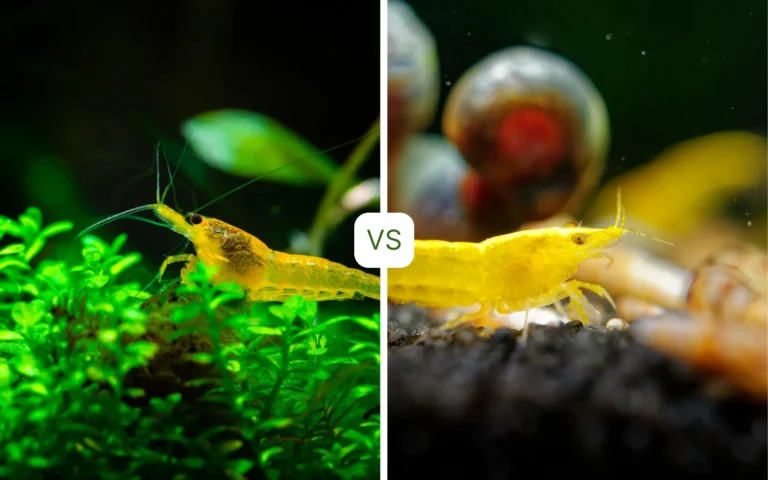
Neocaridina davidi that hobbyists often compare due to their vibrant yellow hues. While they share a similar color family, their different yellows affect how they brighten up an aquascape under varying light and plant setups. This article will help you understand the key differences in color, breeding, price, and care to pick the best option for your tank.
Quick comparison guide
Feature
Red Cherry Shrimp
Yellow Sakura Shrimp
Warm, solid mustard yellow tone.
Brighter, almost translucent lemon yellow.
Shows a rich, opaque color that really stands out against dark backgrounds.
Has a delicate, glowing effect that appears lighter and softer in the tank.
Has deep, consistent coverage; higher grades have more uniform opacity and less translucence.
Color is less dense and more translucent, with visible body details; higher grades are more saturated but still light.
Breeds fairly true when kept in a pure line with stable water; mixing risks color dilution over generations.
Breeds less true due to translucent pigmentation; mixing often results in muddier colors or fades.
Great for beginners and aquascapers wanting a bold yellow contrast.
Best for hobbyists wanting a lighter, more glowing yellow with a delicate look.
Breeds reliably when paired with stable water and quality food; watch for less pigmented offspring in mixed tanks.
Requires careful line management to maintain color; stable water and selective breeding are essential.
Mixing with other Neocaridina often leads to color fading and wild-type traits.
Mixing leads to fast color loss and increased wild-type offspring risk.
Beginner-friendly; hardy and adaptable with solid color lines.
Moderate; needs more care to maintain color lines and avoid fading.
Color variations and grading: What sets Yellow Shrimp and Yellow Sakura Shrimp apart?
Neocaridina colors come in grades based on pigmentation strength and coverage. Higher grades show deeper, more uniform color with less translucence. Selective breeding improves color consistency but some lines may still produce varied offspring. Picking higher-grade shrimp ensures a more impressive and stable color display.
Yellow shrimp color characteristics
Yellow Shrimp’s color is rich thanks to deep pigmentation and thick opacity, making it a stand-out choice for intense yellows. The color looks dense and solid, providing a premium feel compared to paler morphs.
- Selective breeding maintains mostly mid to high grade shrimp
- Lower grades rarely marketed or sold separately
- Color lines are relatively stable and consistent
These shrimp usually show less translucence than Sakura types.
Yellow Sakura shrimp color characteristics
Yellow Sakura Shrimp have a lighter and more translucent yellow, giving them a delicate and glowing appearance. This softer coloration is prized for a subtle and elegant look but tends to be less dense than standard Yellow Shrimp.
- Selective breeding targets brighter saturation but translucence remains
- Color lines can vary more widely
- More visible grading in individual colony quality
They are often sought for their unique glowing effect despite the lighter color.
What you should consider in your aquascape when choosing color
Choosing between Yellow and Yellow Sakura Shrimp depends on your tank style and goals. If you want a bold, solid yellow for strong contrast, Yellow Shrimp is ideal. For quieter, lighter hues that show delicate glow among plants, Yellow Sakura works well. Also consider whether you prefer maintaining a pure line or don’t mind a mixed display with some color variation.
1. Substrate color
- Yellow Shrimp pop best on dark substrates like black or dark brown soil for vivid contrast.
- Yellow Sakura Shrimp also stand out on darker substrates but can look more natural on medium tones.
2. Plant density
- Yellow Shrimp’s intense color contrasts sharply against lush green plants, making them easy to spot.
- Yellow Sakura Shrimp’s softer color blends gently with dense greenery, adding subtle warmth.
3. Lighting intensity
- Under typical aquascape light, Yellow Shrimp’s rich color appears bright and solid.
- Yellow Sakura Shrimp’s translucent tones shimmer under the same light, creating a glowing effect.
4. Colony consistency
Colony consistency means how uniform shrimp colors stay through generations, which relies on selective breeding. Stable water conditions and eliminating lower-grade shrimp help preserve lines.
- Regularly separate and cull less pigmented shrimp
- Breed from the strongest color specimens
- Keep color lines isolated from other morphs
Care requirements
Both shrimp are
Neocaridina davidi and share the same basic care needs. Stability in water parameters holds more value than hitting exact numbers for healthy, vibrant shrimp.
- Temperature: 20–26°C
- pH: 6.5–8.0
- GH: 6–12 dGH
- KH: 2–8 dKH
- Ammonia/Nitrite: 0 ppm
- Nitrate: Below 20 ppm
Price and availability for both shrimp
Yellow Sakura Shrimp generally cost more due to their delicate color and difficulty in maintaining stable lines. Yellow Shrimp are more affordable and easier to find, thanks to their hardier color and popularity. Local availability can vary depending on breeders and region demand.
Factor
Red Cherry Shrimp
Yellow Sakura Shrimp
Yellow Shrimp are generally medium priced because they’re widely available and easier to breed consistently.
Yellow Sakura Shrimp often command a higher price due to their rarer, more delicate coloration and line maintenance challenges.
Fairly common; widely bred by hobbyists and readily stocked in many stores.
Uncommon; fewer breeders specialize in maintaining pure Yellow Sakura lines.
Breeding Yellow Shrimp vs Yellow Sakura Shrimp
Both shrimp breed similarly under stable conditions with good food and water quality. Yellow Shrimp tend to breed truer to color, making it easier to maintain clean lines. Yellow Sakura Shrimp require more care to avoid fading or muddy offspring, needing selective culling and line separation. Separating pure lines from mixed colonies is important for both to keep colors strong. Good filtration and stable parameters encourage healthier and more vibrant offspring for either morph.
Can I mix Yellow Shrimp and Yellow Sakura Shrimp?
Mixing Yellow and Yellow Sakura shrimp often results in offspring with muddier, less defined colors, often leaning towards the wild-type look after a few generations. To preserve bright, pure colors, it's best to keep these morphs separate. Mixing complicates breeding efforts and makes maintaining vibrancy more difficult.
General advice:
- Keep color lines in separate tanks if possible.
- Regularly select and remove less pigmented shrimp from breeding.
- If mixing, expect some fading and loss of pure traits over time.
Which shrimp is easier for beginners?
Generally, Yellow Shrimp are easier to keep and breed due to their hardier coloration and better availability. Their color line is more stable, making it simpler to maintain pure colonies without heavy culling. Yellow Sakura Shrimp require more attention to water stability and selective breeding to avoid muddier colors. They can be rewarding but are better suited for more experienced aquarists comfortable with careful line management. Price and availability also favor Yellow Shrimp for beginners or those wanting less hassle.
My personal advice
"I recommend starting with Yellow Shrimp if you’re new to aquatic shrimp or want an easy-to-maintain, bold color. They provide great visual impact without demanding strict care routines. If you love working on color genetics and want a glowing, delicate yellow, then Yellow Sakura is a fun challenge once you have basic experience. In any case, focus on stable water conditions and avoid mixing lines to keep colors vibrant. Happy shrimp keeping!" –
MSo, which one should you choose for your aquarium?
Both Yellow Shrimp and Yellow Sakura Shrimp can thrive in an aquascape with good care. The best choice depends on whether you prefer a bold, opaque yellow or a softer glowing effect and how much breeding effort you want to invest.
Choose Yellow Shrimp for bold color
Pick Yellow Shrimp if you want a solid, deep yellow that stands out strongly in your tank. They are easier to breed true and a bit more forgiving if you’re a beginner. Their vibrant color contrasts well with dark substrates and lush plants for a striking display.
Choose Yellow Sakura Shrimp for delicate glow
Yellow Sakura Shrimp are ideal if you prefer a lighter, more translucent yellow shade with a subtle glowing look. They suit aquascapists interested in color nuance and line maintenance. These shrimp add a soft, elegant touch but require more care to keep their unique color bright.
Frequently asked questions (FAQs)
How different are their color tones in aquascapes?
Yellow Shrimp have a deeper, solid yellow tone, while Yellow Sakura are lighter and more translucent, creating a glowing effect.
Do they breed true when kept together?
No, mixing these color morphs typically results in muddier colors and loss of pure traits over generations.
Which shrimp is easier for beginners to keep?
Yellow Shrimp are generally easier due to their hardier coloration and better color stability.
What substrate makes their colors stand out best?
Both show off best on dark substrates, with Yellow Shrimp especially popping against black or dark brown soil.
Are lighting requirements different for these shrimp?
Both do well under typical 6000–7000K aquascape lighting, but Yellow Sakura shrimp’s translucent color glows more under bright light.
Can I mix these shrimps for a colorful colony?
Mixing is possible but not recommended if you want to preserve strong color lines, as offspring color tends to fade and become mixed.