At a glance
Peaceful
Schooling
Colorful
Midwater
Description
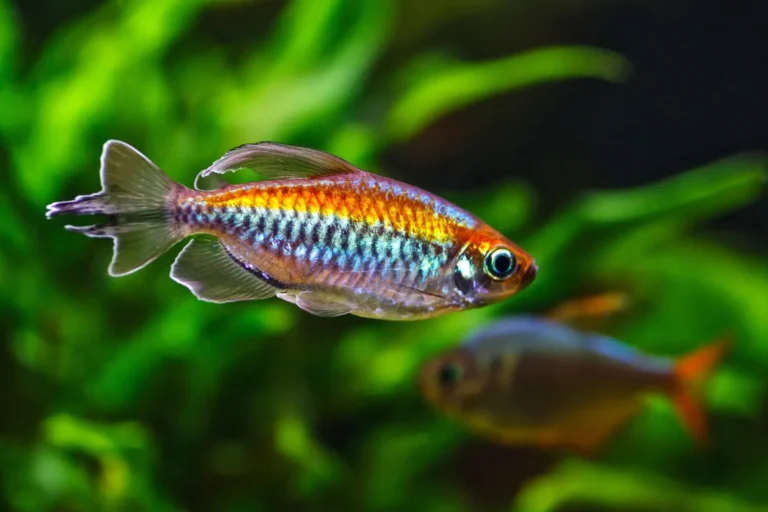
The Congo Tetra (Phenacogrammus interruptus) is a large, shimmering tetra prized for its metallic blue body and flowing, iridescent fins. Males develop dramatic fins and a purple-gold sheen that stands out in planted aquascapes. These fish are peaceful schooling midwater swimmers that thrive in stable, slightly acidic to neutral water with plenty of space to move. They suit hobbyists who can provide a planted tank with soft water, gentle flow, and a calm community setting.

Quick overview
Congo tetra, Congo characin
Phenacogrammus interruptus
Peaceful, social, schooling
100 liters (25 gallons) for a group
Ideal aquarium setup
Congo tetras do best in a planted aquarium that mimics slow African river tributaries with open midwater swimming lanes and shaded areas created by plants and driftwood. Maintain stable temperatures around 24–27°C and slightly acidic to neutral water, and provide gentle filtration to avoid strong currents. A soft substrate, leaf litter, and subdued lighting help reduce stress and bring out their colors.
Recommend at least 100 liters for a small school of 6, and 150 liters or more for larger groups to allow males to display and for comfortable swimming.
Moderate to low lighting is preferred so plants can grow without causing the fish to feel exposed; very bright light can make them shy and reduce color display.
Background stem plants, midground Cryptocoryne and Anubias, and floating plants work well; plants provide shelter and diffuse light which helps shy individuals feel secure.
Low to moderate flow to simulate slow-moving waters while keeping water oxygenated without stressing fins.
Fine gravel or soft sand works well and complements leaf litter to recreate natural riverbed conditions.
Use driftwood, smooth rocks, and leaf litter to create shaded areas and visual contrast while leaving open midwater zones for schooling and display.
Behavior and temperament
Congo tetras are peaceful, social fish that do best in schools of six or more and become more confident and colorful in larger groups. They are midwater swimmers and can be shy if kept singly or with aggressive tankmates. Males may flare fins and display to each other but rarely escalate to serious aggression. Sudden water changes, overcrowding, or strong currents cause stress and dull their colors.
Diet and feeding
Omnivorous and not picky, Congo tetras accept high-quality flakes and micro pellets but benefit from regular live or frozen protein to enhance color and health. Feed small portions and offer variety to prevent deficiencies and encourage natural foraging behavior.
What they eat in nature
Insects, small crustaceans, zooplankton, plant matter.
What to feed in the aquarium
- High-quality flake food.
- Small pellets or micro granules.
- Frozen or live foods like brine shrimp and bloodworms.
Feeding schedule
Feed small portions once or twice daily, only what the school can eat in 2–3 minutes.
Special dietary needs
No strict needs, but regular live or frozen protein improves coloration and overall condition.
Daily:
Provide a staple of flakes or micro pellets once a day, with a second small feeding of live or frozen protein when possible.
Weekly:
Offer a protein boost such as frozen bloodworms, daphnia, or brine shrimp two to three times per week for conditioning and color.
Always:
Always rotate foods to include plant and animal matter and avoid overfeeding to keep water quality high.
Tankmate compatibility
Best kept with other peaceful, similarly sized community fish that occupy complementary zones so there is minimal competition and stress. Avoid nippy species and aggressive fish that harass fins or chase slow-moving tetras. Larger, peaceful tankmates that tolerate slightly acidic soft water are ideal.
Yes with caution: Adult shrimp like Amano may coexist but Congo tetras will eat baby shrimp, so expect losses unless there are many hiding places.
Hardy snails like Nerites or Mystery snails usually do well and are not threatened by adult Congo tetras, though small top-shell snails may be at risk.
Rasboras, peaceful barbs, and Corydoras catfish make good tankmates because they share similar water preferences and are non-aggressive, allowing Congo tetras to school and display without stress.
Large or territorial cichlids and very boisterous barbs can bully Congo tetras and nip fins, so avoid those species in the same aquarium or provide much larger tanks with plenty of hiding spaces.
Keep Congo tetras in groups of at least six, though ten or more is better; males show best colors and simplified hierarchy in larger schools.
Breeding
Breeding Congo tetras requires a separate tank with soft, slightly acidic water and dim lighting; they are egg scatterers that deposit eggs among fine-leaved plants or spawning mops. Adults may eat eggs and fry, so remove parents after spawning or use a lined breeding tank to protect eggs.
Difficulty
Moderate because they need conditioned water, a quiet breeding environment, and protection for eggs and fry; successful breeders prepare separate tanks and carefully manage parameters.
How they breed
Egg scatterer with parents depositing eggs over plants or spawning mops and no parental care.
Best setup for breeding
Use a small breeding tank with very soft, slightly acidic water, subdued light, fine-leaved plants or a spawning mop, gentle sponge filtration, and peat-filtered or aged water to lower hardness.
Feeding the babies
Start with infusoria or commercially prepared liquid fry food for the first days, then transition to newly hatched baby brine shrimp and finely crushed high-quality foods as they grow.
Pro tips
Keep them in larger schools to reduce shyness and improve color display.
Use driftwood and leaf litter to gently lower pH and create natural shelter.
Condition males with live foods before breeding to encourage fin development and color.
Fin rot
Fin damage and rot occur with poor water quality or aggressive tankmates; improve water parameters and treat bacterial infections promptly while removing bullies.
Stress and hiding
Shy behavior often results from insufficient schooling numbers, bright light, or strong flow; add more conspecifics, provide cover, and reduce current and light.
Color fading
Dull coloration can come from poor diet, stress, or aging; increase high-quality protein, stabilize water quality, and ensure a comfortable environment.
Typical beginner mistakes
- Keeping them in too-small groups or tanks
- Placing them with aggressive or nippy species
- Failing to provide stable soft slightly acidic water
Short summary
Congo tetras are peaceful, schooling midwater fish prized for dramatic fins and metallic colors that shine in planted aquascapes. They need stable, slightly soft water, moderate lighting, and a school of companions to show their best colors and behavior.
Frequently asked questions (FAQs)
How many Congo tetras should I keep?
Keep at least six, but a school of eight to twelve is better to reduce stress and improve displays.
What temperature do they prefer?
They do best between 24–27°C (75–81°F) with stable, gradual changes avoided.
They will usually eat baby shrimp and may harass small species, so keep adult shrimp with caution and provide hiding places.
Are Congo tetras good for planted tanks?
Yes, they are excellent in planted aquascapes because plants offer cover and natural contrast to their colors.
Do males fight each other?
Males display and may flare fins but serious fights are uncommon if the group is large and the tank has hiding spots.
How often should I feed them?
Feed small portions once or twice daily, making sure food is consumed within a few minutes to avoid water quality issues.